Europe’s Top Festivals: Celebrating Tradition and Joy Across the Continent
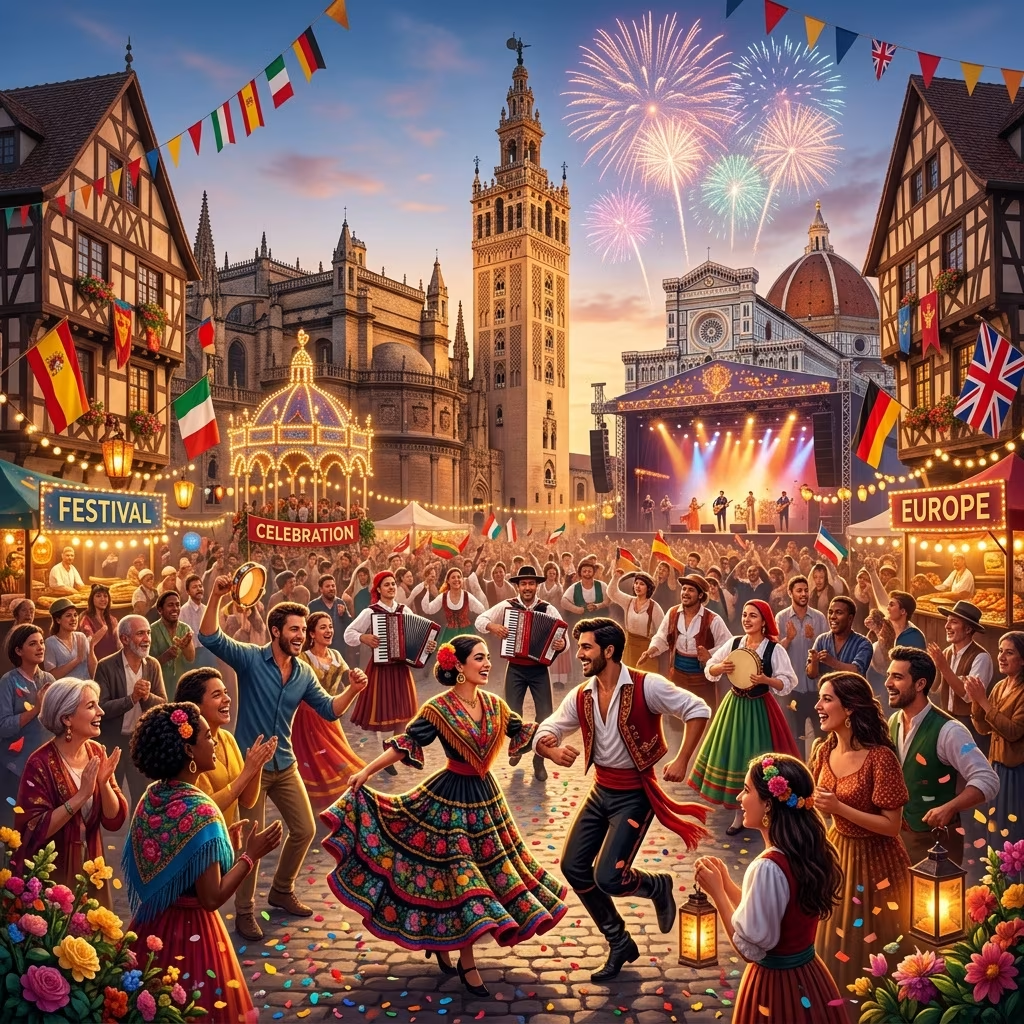
Europe is replete with time-honored festivals that burst with color, music, and centuries-old tradition. Each celebration offers a window into the soul of a local community, where old rituals blend with modern revelry and everyone, including travelers, is invited to join the fun. This guide takes you on a tour of Europe’s most iconic festivals, from the elegant masked balls of Venice to the wild running of the bulls in Spain, revealing what makes these gatherings unique and why they should be on every traveler’s bucket list.
Why Experience European Festivals?
- Immerse Yourself in Local Culture: Festivals let you witness and participate in the living heritage of a region, from traditional music and dance to food and costumes.
- Savor Culinary Delights: Many events feature special treats and regional specialties unavailable at other times.
- Create Unforgettable Memories: There’s no better way to connect with locals and make lasting memories than by celebrating together.
- Enjoy Seasonal and Historic Settings: Festivals often take over beautiful city squares, medieval towns, or even stunning countrysides at their most vibrant.
Europe’s Top 10 Must-See Festivals
Each of these festivals showcases the best of European pageantry, local pride, and exuberant fun. Let’s explore the highlights by season and region.
1. Carnevale di Venezia (Venice Carnival, Italy)
When: February (dates vary)
Where: Venice, Italy
The Venice Carnival is famed for its mysterious masked balls and ornate costumes. Each February, as the city fills with revelers draped in brocade and donning feathered masks, Venice transforms into a living theater. The celebration—a blend of fantasy and history—features gondola parades, masquerade balls, and open-air performances. Visitors can join in by renting costumes or simply wander the labyrinthine streets, admiring the spellbinding pageantry.
- Features elaborate masks and costumes
- Highlights include the “Flight of the Angel” from St. Mark’s Square
- Open-air concerts, feasts, and lively street performances
2. Kurentovanje (Ptuj Carnival, Slovenia)
When: February/March (around Shrove Tuesday)
Where: Ptuj, Slovenia
Kurentovanje is Slovenia’s premier celebration of winter’s end and the approach of spring. The stars of the festival are the Kurenti—costumed figures in sheepskin adorned with horns and bells, who parade noisily through the town to banish evil spirits and cold weather. The effect is both haunting and exhilarating, blending pagan ritual with joyous community spirit.
- Traditional rituals to “chase” winter away
- Colorful parades, folk dances, and local music
- A family-friendly, immersive cultural event
3. Luzerner Fasnacht (Lucerne Carnival, Switzerland)
When: February/March (six days before Ash Wednesday)
Where: Lucerne, Switzerland
Lucerne’s raucous Fasnacht explodes with satirical floats, masked bands known as Guggenmusik, and whirling confetti storms. Locals and visitors alike don elaborate costumes, flooding the old town’s streets and lakefront. Mouthwatering market stalls serve up Swiss treats amid nonstop dancing and revelry that last until the early morning hours.
- Highlight: “Dirty Thursday” parade launching festivities at dawn
- Costumed bands performing wacky, irreverent music
- Unexpected pranks, making it a true citywide party
4. Semana Santa (Holy Week, Seville, Spain)
When: March/April (the week before Easter Sunday)
Where: Seville, Spain
Seville’s Holy Week is Spain’s most solemn and spectacular religious festival. Brotherhoods carry enormous floats (pasos) depicting scenes from the Passion of Christ through candle-lit streets, accompanied by processions of penitents in traditional robes. The blend of art, community devotion, and centuries-old ritual makes this a profound and moving experience.
- Nighttime processions filled with incense and somber music
- Floats adorned with baroque sculptures and fresh flowers
- A chance to witness Spanish spirituality and tradition up close
5. Greek Orthodox Easter (Greece)
When: Varied (usually in April)
Where: Nationwide in Greece
Easter is the most significant celebration in the Greek Orthodox calendar. The festival spans a week of ancient customs—candlelit processions, midnight fireworks, and the joyful breaking of the fast with magiritsa soup and lamb. Every village and island brings its own flavor to the celebration, but unity through faith and family pervades the air.
- Good Friday processions with flower-decked biers
- Resurrection ceremonies and lavish midnight feasts
- A sense of deep communal and spiritual joy
6. Feria de Abril (April Fair, Seville, Spain)
When: Two weeks after Easter
Where: Seville, Spain
After the solemnity of Holy Week comes the exuberant April Fair. Seville’s fairgrounds fill with vibrantly decorated tents (casetas), prancing horses, flamenco dancers, and riders in traditional Andalusian dress. By day, enjoy carriage parades and equestrian displays; by night, dance, eat tapas, and soak up the electric atmosphere.
- Colorful horse-drawn parades
- Flamenco music, local sherry, and traditional costumes
- Continuous dancing and friendly local celebrations
7. Il Palio (Siena, Italy)
When: July 2 and August 16
Where: Siena, Italy
The Palio is a fiercely contested and centuries-old horse race in Siena’s heart. Ten horses, each representing a city district (contrada), hurtle three laps around the stunning Piazza del Campo, cheered on by thousands of passionate locals. The race is fast and rough (often without saddles) and the pride at stake is immense. Leading up to the race, expect elaborate pageantry, medieval parades, and feasts.
- A dazzling medieval procession precedes the race
- District rivalries and alliances add drama
- Uniquely immersive time to experience Sienese culture
8. San Fermín (Running of the Bulls, Pamplona, Spain)
When: July 6–14
Where: Pamplona, Spain
Pamplona’s San Fermín festival is famous world-wide for its early morning “running of the bulls,” where brave (or foolhardy) runners dash ahead of a herd of bulls through the city streets. Beyond the adrenaline, daily celebrations fill the city with music, fireworks, dancing, and communal feasting. It’s as much a celebration of Navarrese culture as a thrill-seeker’s dream.
- Morning bull runs for the daring or for spectators
- Traditional Basque costumes
- 24/7 street parties and fireworks
9. Bastille Day (La Fête Nationale, Paris, France)
When: July 14
Where: Paris and throughout France
Bastille Day marks the French Revolution’s pivotal moment. In Paris, the day explodes in patriotic pride with a grand military parade along the Champs-Élysées, spectacular fireworks over the Eiffel Tower, and public dances in city plazas. Across France, towns host concerts, fairs, and communal meals. It’s the best time to witness the French love of liberté, égalité, fraternité.
- Champs-Élysées parade with elaborate floats and flyovers
- Evening fireworks at major landmarks
- Citywide parties and outdoor celebrations
10. Highland Games (Scotland)
When: May–September (dates vary by location)
Where: Throughout Scotland
Scotland’s Highland Games are a rollicking celebration of traditional sports, music, and dance. Tossing the caber, tug-of-war, piping competitions, and highland dancing all take center stage. Even those without a drop of Scottish blood will find themselves swept up in the energy and pride. Visitors can sample haggis, cheer for their favorite athletes, and enjoy the spectacle of men in kilts.
- Caber tossing and hammer throw events
- Bagpipe bands and traditional Scottish food
- Family-friendly, outdoor events in beautiful settings
11. Oktoberfest (Munich, Germany)
When: Late September–First Sunday in October
Where: Munich, Germany
The world’s largest folk festival, Oktoberfest, draws millions to Munich for 16 days of beer, music, and hearty Bavarian fare. Inside vast beer tents, locals and travelers alike raise steins to traditional tunes, don lederhosen and dirndls, and sample bratwurst, pretzels, and roast chicken. Family rides, parades, and a vibrant fairground add to the revelry.
- Opening parade with horse-drawn beer wagons
- Traditional oompah bands and festival attire
- A vast selection of local draft beers and Bavarian specialties
12. Christmas Markets and Traditions (throughout Europe)
When: December (Advent season)
Where: Germany, Austria, Switzerland, France, and beyond
Europe’s Christmas markets are magical spectacles of light, music, and aroma. Central squares transform into fantastical villages—wooden stalls sell handcrafts, mulled wine (Glühwein), roast chestnuts, and gingerbread. Some cities feature living nativity scenes or torch-lit alpine sledding in Switzerland, while others showcase grand Christmas trees and classical concerts.
- Iconic markets in Nuremberg, Strasbourg, and Vienna
- Regional Christmas foods and handmade gifts
- Traditional carols, festive illuminations, and communal cheer
More All-Time European Festival Favorites
- La Tomatina (Spain): A tomato-throwing extravaganza where the whole town participates.
- Notting Hill Carnival (London): A celebration of Caribbean culture with dazzling costumes and parades.
- King’s Day (Amsterdam): The Dutch public holiday transforms the city into a sea of orange, with boat parades and street parties.
- White Nights Festival (St. Petersburg, Russia): Classical music and arts mark the season of nonstop summer sunlight.
- Edinburgh Fringe Festival (Scotland): The world’s largest arts festival, with thousands of performances in just a few weeks.
- Fête de la Musique (France): Free concerts and music fill the streets on the summer solstice.
Tips for Experiencing European Festivals
- Book accommodations well in advance—hotels fill up quickly during festival weeks.
- Pack for all weather; many events are outdoors.
- Be respectful of local customs, especially during religious or somber festivals.
- Try local festival foods and participate in traditional dances or games.
- Arrive early for good viewpoints and be prepared for crowds.
Frequently Asked Questions (FAQs)
Q: Do I need tickets for most European festivals?
A: Many festivals, including parades and street events, are free and open to the public. However, certain events—like balls at Venice Carnival or tent reservations at Oktoberfest—do require tickets booked in advance.
Q: What should I wear to a European festival?
A: Dress codes vary by festival. For Carnevale or Oktoberfest, renting or purchasing traditional costume (masks, lederhosen, or dirndl) enhances the experience. For outdoor festivals, layers and comfortable shoes are essential.
Q: Are festivals family-friendly?
A: Most festivals welcome families, but some, like the Running of the Bulls or late-night street parties, are best for adults or older teens. Christmas markets and Highland Games are popular with all ages.
Q: Should I be concerned about safety during large festivals?
A: Major festivals generally have robust security, but it’s wise to keep an eye on your belongings, stay aware in dense crowds, and follow local advice regarding safety or restricted areas.
Q: What are the best souvenirs to bring back from a European festival?
A: Festival markets are ideal for picking up unique gifts: hand-painted masks from Venice, beer steins from Munich, or hand-crafted ornaments from Christmas markets make lasting mementos.
References
- https://store.ricksteves.com/shop/p/european-festivals-book
- https://www.ricksteves.com/tv-programmers/specials/european-festivals
- https://www.youtube.com/watch?v=EBNbUnUk6YE
- https://www.ricksteves.com/watch-read-listen/video/tv-show/festivals-1
- https://www.ricksteves.com/europe/festivals
- https://www.ricksteves.com/watch-read-listen/video/tv-show/european-festivals
- https://www.youtube.com/playlist?list=PL1OajwstW05EKdMjlrgMVzzWkBKYeiRIW