Hitler’s Eagle’s Nest at Berchtesgaden: A Historic Overview
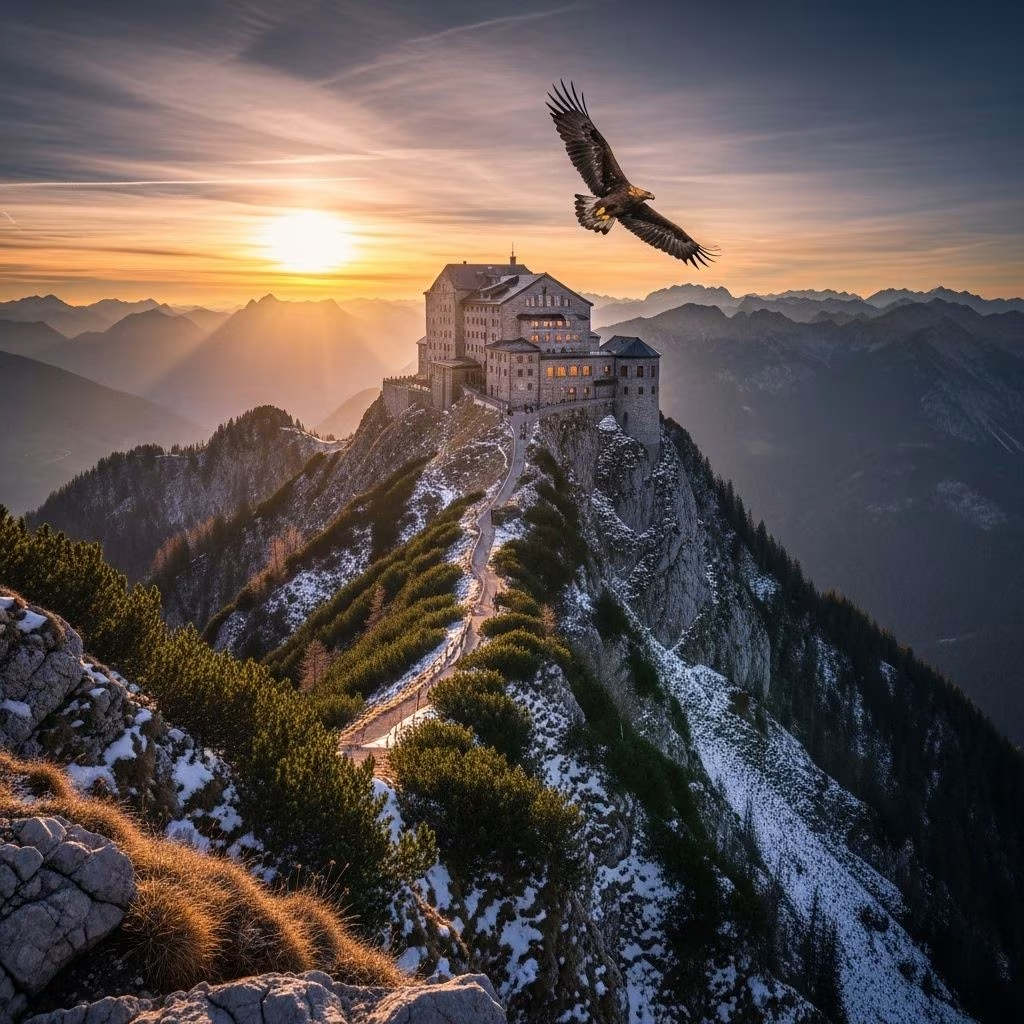
Perched atop a sheer rock promontory above the Bavarian town of Berchtesgaden stands one of the most notorious relics of World War II: the Eagle’s Nest (German: Kehlsteinhaus). Once a symbol of Nazi power and mountain grandeur, it is now a place of reflection, drawing thousands each year to witness both its panoramic beauty and the indelible scars of history.
The Symbolism of Berchtesgaden and the Obersalzberg
To understand the Eagle’s Nest, one must place it within its broader context. Berchtesgaden lies deep in the Bavarian Alps, but its serene appearance belies a formidable historical importance. From 1933 to 1945, the adjacent Obersalzberg area became the second nerve center of the Nazi regime after Berlin. Here, Hitler and his top lieutenants—including Göring, Goebbels, Himmler, and Bormann—built their homes, plotted strategies, and stored treasures plundered from across Europe. The area became a private fortress, shielded from public scrutiny and connected by elaborate bunker systems. Within these compounds, fateful decisions leading to war, genocide, and devastation were conceived.
The Eagle’s Nest: Construction, Purpose, and Nazi Grandeur
The Eagle’s Nest was conceived as part prestige project, part political stage. Built atop Kehlstein mountain, soaring 1,834 meters (6,017 ft) above sea level, this mountaintop teahouse was completed in 1938—a 50th birthday gift for Adolf Hitler from his inner circle, designed by Martin Bormann.
- Engineering Marvel: A 6.5-kilometer road was blasted through cliffs and switchbacks—a bold feat given the unforgiving terrain and harsh Alpine weather. The final 124 meters are traversed via a brass-plated elevator tunneled through solid rock.
- Architectural Style: The building stands as an example of precise, cold stonework, exuding both ambition and obedience—mirroring the fascist ideals of the era.
- Stunning Vistas: The terrace offers a magnificent alpine panorama, once intended to impress statesmen and dazzle visitors with the regime’s control over nature as well as politics.
- Intended Function: Ostensibly, the Eagle’s Nest was meant for diplomatic gatherings and high-profile meetings. In reality, Hitler rarely visited—he was afraid of heights and mountain roads, preferring to conduct state business from his nearby home, the Berghof.
The Obersalzberg Compound
While the Eagle’s Nest garners global attention, the true heart of Nazi activity in the area lay in the Obersalzberg compound below. This sprawling estate grew to more than 80 buildings, including headquarters, barracks, staff residences, and a complex labyrinth of bunkers—crucial to the regime’s security and eventual plans for a last stand. After 1936, the zone was walled off, its activities shielded from Bavarian locals and prying eyes alike.
The Fall of the Regime and Allied Capture
As WWII drew to a close, the Obersalzberg became a crown symbol of Nazi rule. In April 1945, as Allied forces swept through Europe, Britain’s Royal Air Force bombed the compound, flattening most of the Nazi infrastructure—including Hitler’s Berghof. Ironically, the Eagle’s Nest, more difficult to target due to its mountaintop position, emerged from the raids largely unscathed.
On May 4, 1945, American troops of the 3rd Infantry Division reached Berchtesgaden, followed by Easy Company of the 101st Airborne, immortalized in the Band of Brothers series. They found the Eagle’s Nest abandoned—its opulent wine cellar, storied rooms, and breathtaking vistas soon serving as the backdrop to captured celebrations and victory photos. The symbolism was unmistakable: conquering the Nazis’ mountain redoubt marked the end of an era.
Postwar Decisions and Destruction
After Germany’s surrender, the region fell under American control. For several years, only authorized personnel and their guests could ascend by bus to the Eagle’s Nest, paying a small fare for the privilege. As the occupation waned, the Bavarian government made a pivotal choice: to eliminate most remaining Nazi structures at Obersalzberg, lest they become altars for neo-Nazi pilgrimage. Systematic demolitions erased all but a few functional postwar buildings and the enigmatic Eagle’s Nest itself.
The Bunker Remnants
Not all traces vanished. Large sections of the Nazi-era bunker system were too deep, fortified, or irrelevant to destroy. Today, these dark underground passages remain, some open to guided tours—silent testimony to the paranoia and dread that haunted the regime’s final days.
The Eagle’s Nest Today: Memorial, Restaurant, and Reflection
In 1952, the Eagle’s Nest took on an unexpected new life as a mountain guesthouse and restaurant. Original features, including the elevator, fireplaces, and railings, have been largely preserved. The impact of time and weather, as well as conservation measures, ensure its continued existence—a rare survivor among Nazi-era architecture.
- Memorial Role: Informational displays and guided tours recount the site’s history, emphasizing its relevance as a place to confront the legacy of dictatorship, terror, and war.
- Tourist Destination: Thousands of visitors come each season, not for luxury dining, but to grapple with history, gaze at the panoramas, and reflect on the contrasts between beauty and barbarism.
- Access and Preservation: The road to the Eagle’s Nest is open only to authorized buses—pedestrian traffic is prohibited for safety. Springtime brings engineering crews to clear rockfalls caused by ice and snow, a reminder of nature’s challenges at high altitude.
Architectural Details and Historical Legacies
| Aspect | Description |
|---|---|
| Location | Kehlstein Peak, Berchtesgaden Alps, Bavaria, Germany |
| Elevation | 1,834 meters (6,017 feet) |
| Construction Period | 1937–1938 |
| Purpose | Gift for Hitler’s 50th birthday; Political representation; Hospitality for diplomats |
| Architect | Martin Bormann (project overseer) |
| Access | Steep mountain road; Brass-lined elevator through rock tunnel |
| Status Today | Restaurant, memorial, and historical site |
Why Visit the Eagle’s Nest?
- Historical Insight: Witness firsthand the site where dark chapters of European history unfolded, standing in the very heart of the Nazi power network outside Berlin.
- Architectural Curiosity: Explore an Alpine marvel—juxtaposing sublime natural beauty with chilling historical associations.
- Cultural Reflection: The Eagle’s Nest is a place to remember, learn, and ensure that the atrocities and grandeur of totalitarianism are never forgotten.
- Scenery: Experience sweeping views of the Bavarian Alps, where the vistas today inspire contemplation, not conquest.
Frequently Asked Questions (FAQs)
Q: Who actually used the Eagle’s Nest during the Nazi era?
A: While built for Hitler, he rarely visited due to his fear of heights and closed spaces. It was more commonly used by party officials and for receptions, but held minimal strategic importance compared to the compounds below.
Q: Was the Eagle’s Nest destroyed after World War II?
A: Unlike much of the Obersalzberg complex, the Eagle’s Nest escaped Allied bombings due to its remote position and remained intact. Most other Nazi buildings were demolished to prevent neo-Nazi pilgrimage.
Q: What is the Eagle’s Nest used for today?
A: The building serves as a mountain restaurant, a memorial site, and a vantage point for visitors. Informational displays recount its dark past to promote remembrance and education.
Q: How do you access the Eagle’s Nest?
A: Visitors ascend via special buses along the Kehlstein road. The final ascent is made through a tunnel and historical brass elevator. Walking on the road is not permitted for safety reasons.
Q: What happened to the bunkers and other Nazi structures?
A: Most surface buildings were demolished postwar. However, lengths of the underground bunker system beneath Obersalzberg remain and can be visited on guided tours.
Visitor Insights and Responsible Tourism
- Visit for understanding, not glorification—acknowledge the lessons history offers.
- Respect ongoing conservation efforts. The Eagle’s Nest is maintained through regular safety checks and restoration against natural hazards like avalanches and rockfalls.
- Review museum exhibits and memorials in Berchtesgaden for broader historical context, including stories of local inhabitants, victims, and the aftermath of war.
Final Reflections
The Eagle’s Nest at Berchtesgaden remains a potent site—one where the beauty of the Bavarian Alps contrasts sharply with the sinister ambitions of its original builders. Whether you go to gaze at the mountains, to reflect on the dangers of totalitarian power, or to wrestle with the complexities of memory and place, your visit is sure to leave a lasting impression. In preserving such places, we do not honor past villains; instead, we reaffirm our duty to remember and teach the lessons learned atop these haunted heights.
References
- https://www.berchtesgaden.de/en/the-eagles-s-nest
- https://www.kehlsteinhaus.de/english/
- https://destinationwwii.com/truth-about-visiting-hitlers-eagles-nest-berchtesgaden-germany/
- https://www.ricksteves.com/watch-read-listen/read/articles/hitlers-eagles-nest-at-berchtesgaden
- https://www.uncommon-travel-germany.com/hitlers-eagles-nest.html
- https://www.youtube.com/watch?v=KFI7wnTE81E
- https://www.salzburg.info/en/sights/excursions/kehlsteinhaus
- https://www.kehlsteinhaus.com/en/