Inside McKamey Manor: America’s Most Extreme Haunted House
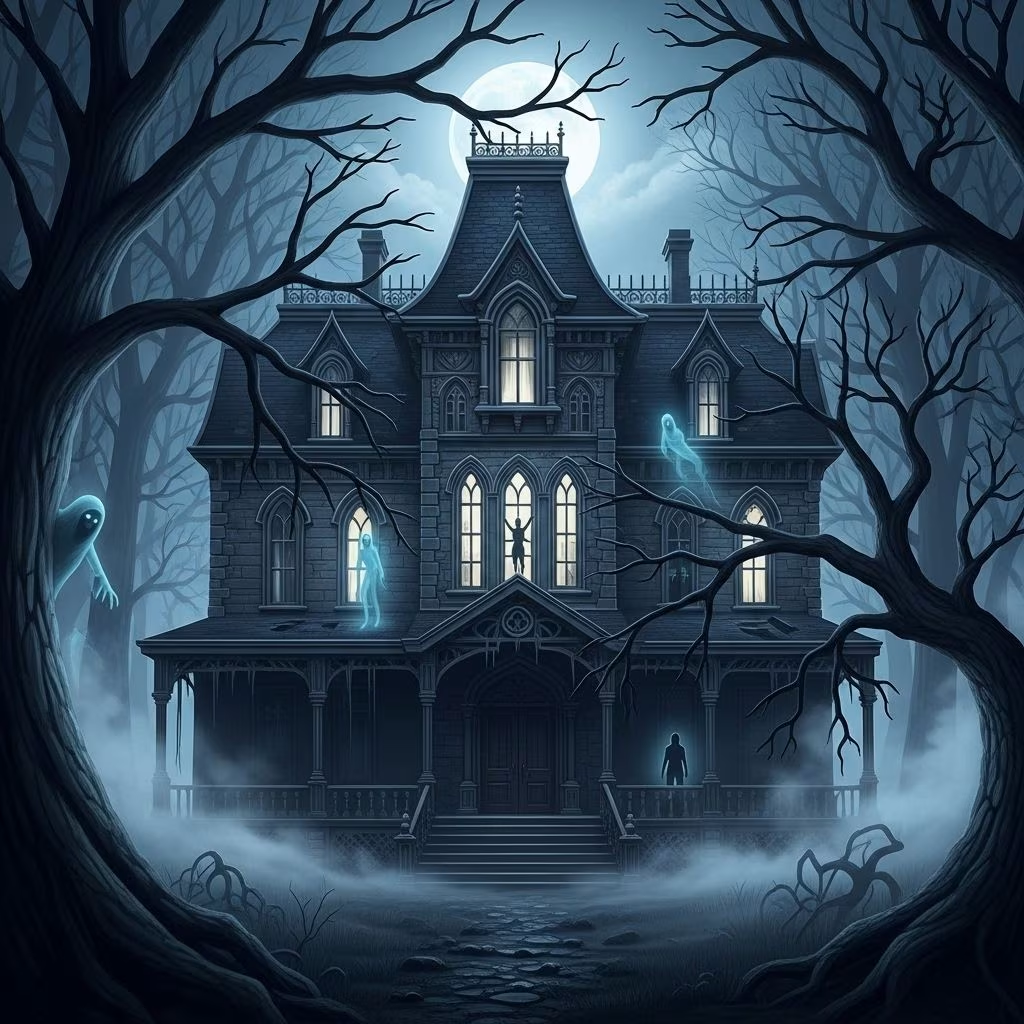
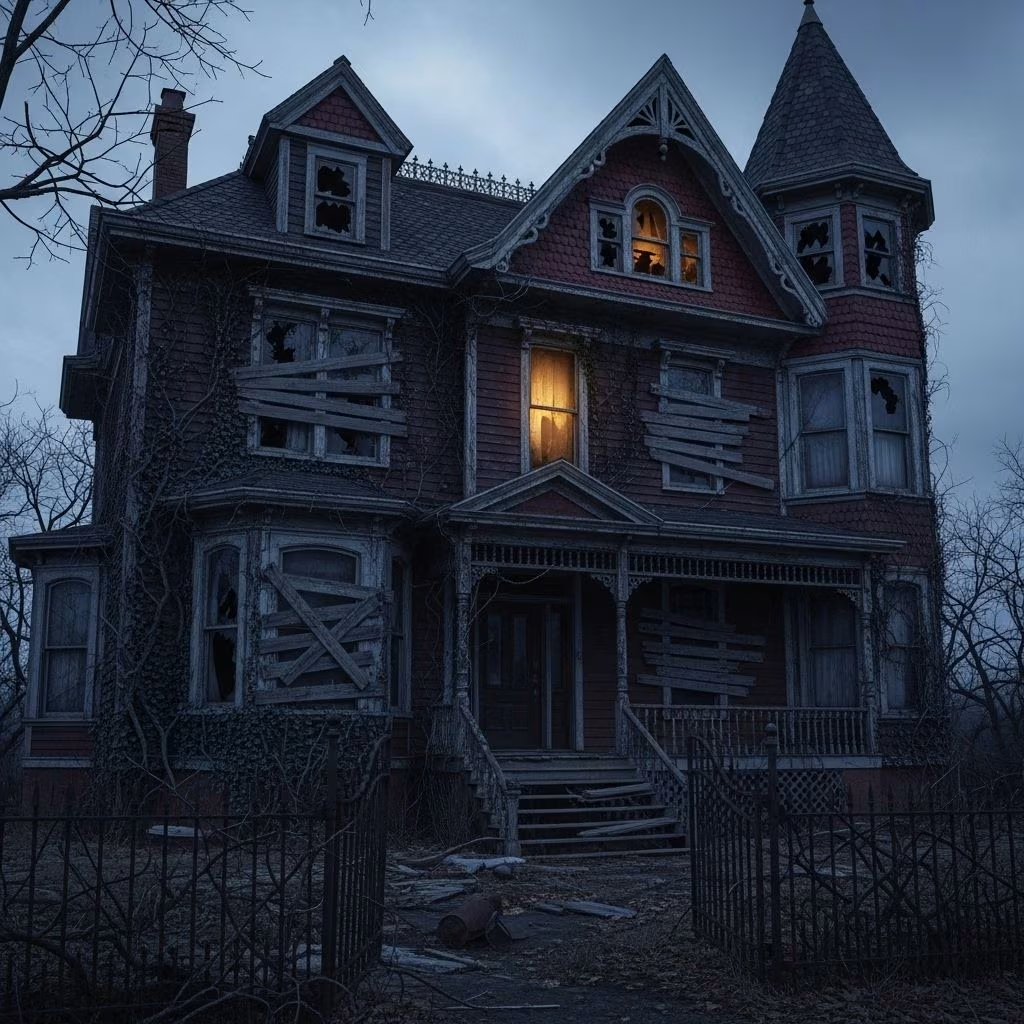
Hidden behind an ordinary facade in Tennessee, McKamey Manor has earned a global reputation as the world’s most extreme haunted house. Neither a conventional Halloween haunt nor a theatrical fright-fest, this attraction is notorious for testing the limits of physical and psychological endurance. Its story is one of controversy, daring, and the ever-blurring line between entertainment and harm.
What Is McKamey Manor?
McKamey Manor is not the typical haunted house. Founded in San Diego in 1989 by Russ McKamey, it began as a home-grown labor of love and transformed into an international phenomenon. Today, it operates in Summertown, Tennessee, with a separate branch in Huntsville, Alabama . Rather than monsters and fake blood, participants encounter real-world endurance tests—often crossing into what critics call torture.
- Originally an interactive Halloween haunt created by horror enthusiast Russ McKamey
- Moved from California to Tennessee and Alabama due to rising controversy and legal pressure
- Experiences that last up to ten hours and require a waiting list with thousands of would-be participants
The Extreme Reputation
This is not an attraction for the faint of heart. McKamey Manor gained global notoriety once word spread that guests were subjected to physically and psychologically intense challenges, many designed to break even those with the strongest willpower.
- Notorious for requiring a 40-page legal waiver
- Experiences can last as long as 10 hours
- Participants are physically and psychologically tested in ways that critics—and several past guests—argue go beyond entertainment and into abuse
The Rules and Requirements: Enter at Your Own Risk
Unlike other haunted attractions, McKamey Manor has an extensive and rigorous entry process that’s designed to weed out the faint-hearted and ensure full legal protection.
- Age restriction: Participants must be at least 21 (or 18 with parental approval)
- Medical requirements: Prospective guests must present a doctor’s note stating they’re physically and mentally fit
- Background check: Each applicant undergoes a formal screening
- Personal phone interview: Conducted by Russ McKamey himself
- Waiver: Nearly 40 pages long, covering every imaginable risk and scenario
Finally, participants must watch a two-hour video compilation of past experiences entitled “And Then There Were None.” Designed to warn off the unprepared, the video is a montage of failed attempts and the distress of previous participants.
What Happens Inside McKamey Manor?
While the Manor markets itself as an extreme haunted house adventure, reports from participants and observers paint an unsettling, sometimes disturbing portrait.
- Physical harm: Visitors may be slapped, forced to eat or drink unknown substances, bound, gagged, or even waterboarded
- Psychological manipulation: Hypnosis, mind control, and manipulation used to instill intense fear
- Endurance trials: Guests are bombarded with challenges that test their stamina, both mentally and physically
- No clear safe word (originally): In the past, guests reported that safe words were ignored, leading to public outrage and changes in policy
| Type of Challenge | Description |
|---|---|
| Physical Restriction | Being tied up, locked in boxes, or contained in tight spaces |
| Forced Ingestion | Required to eat or drink foul, often unknown substances |
| Waterboarding | Simulated drowning used as a scare technique |
| Mental Manipulation | Subject to hypnosis, mind games, or humiliation |
| Physical Assault | Pushed, shoved, slapped (within waiver boundaries) |
The experience is carefully documented—Russ McKamey films every session. He claims this footage helps guard against lawsuits, showing guests’ supposed consent every step of the way. He maintains the philosophy: “You really don’t want to do this.” Yet, interest fuels a waiting list reportedly exceeding 24,000 people at any given time.
The Infamous Waiver: A Legal Grey Area
One of McKamey Manor’s most talked-about features is its infamous waiver. This document details every type of possible risk, from physical injury to severe psychological distress. Potential participants are required to initial beside acknowledgments of hazards that might include teeth being pulled, bones being broken, exposure to extreme temperatures, and more.
- Intimidating length: Almost 40 pages covering every legal angle
- Explicit risks: Details potential for real harm, up to and including death
- No entrance fee: participation “costs” only a bag of dog food for McKamey’s pets, avoiding commercial regulations imposed on paid attractions
This waiver helps explain how the Manor remains in business despite police inquiries and mounting public concern. Authorities often point out that participants are adults who consent in writing to every aspect of the ordeal.
Why Do People Volunteer for McKamey Manor?
The appeal of McKamey Manor is both psychological and social. Thrill seekers, horror fanatics, and endurance junkies are drawn to its lore—the “unbeatable” haunted house with a cash prize (once $20,000, now discontinued) for anyone who completes the full ordeal . Many describe it as a way to test their limits, achieve a unique form of bragging rights, or simply prove they can withstand what others cannot.
- The allure of fear and survival
- The prospect (now removed) of a monetary reward
- Desire for record-setting accomplishment and social media attention
Controversy and Backlash
For every fan, there is a critic. McKamey Manor has triggered a tidal wave of backlash from former guests, neighbors, psychologists, and legal experts who argue that it crosses critical lines.
- Some past participants claim that their safewords were ignored or they were psychologically manipulated into staying longer than desired
- Allegations of injuries—including bruises, cuts, and PTSD-like symptoms—have surfaced
- Petitions with tens of thousands of signatures have called for its immediate closure
- Local police have been called, but generally conclude, “they signed the waiver,” so there is little recourse
- Legality remains hotly debated, hinging on issues of consent versus actual bodily harm
Who Is Russ McKamey?
The controversial creator of McKamey Manor, Russ McKamey, is as polarizing as his attraction. A US Navy veteran and former wedding DJ, McKamey brings a theatrical flair and strict control to the haunt. He claims the experience is about psychological art, not torture, and that everything is done legally and “with consent.” Detractors, including several former actors and spouses, have publicly criticized his methods and character.
- Extensive military background, familiar with interrogation and endurance methods
- Uses video evidence to protect from lawsuits and accusations
- Background in theatre and the horror industry
The Community’s Response
Residents living near McKamey Manor often express confusion and anxiety about how the haunt remains legal and operational. Many argue that the Manor taints the reputation of the local community, attracts unwanted attention, and brings up ethical concerns. Nearby residents have lobbied for local ordinances that would further restrict or outright ban the operation, but as long as legal loopholes remain, the Manor endures.
The Changing Face of Extreme Haunting
Haunted attractions have evolved from innocuous jump-scares to immersive, boundary-pushing simulations. McKamey Manor sits at the very edge of this evolution, pushing questions about what should be permissible in the name of entertainment. It is a phenomenon that both reflects and shapes the shifting landscape of horror-based amusement, challenging assumptions about fear, endurance, and consent every season.
- Occasional increases in mainstream media coverage during October (haunted house season)
- Significant influence on the movement toward “extreme haunted attractions” worldwide
- Vital role in sparking national debate about what constitutes entertainment versus abuse
The Prize That Was (and Why It Disappeared)
For several years, McKamey Manor tempted would-be participants with a $20,000 cash prize—awarded to anyone who could complete the entire experience without quitting or failing challenges. However, McKamey deducted $500 from the reward for missed tasks or if a participant swore. No one ever won the prize, and it has since been discontinued out of concerns that people were entering “for the wrong reasons.” The challenge now centers purely on endurance and personal satisfaction.
Is McKamey Manor Legal?
This is a central issue and source of ongoing debate. While countless police reports and legal challenges have been filed, authorities almost always arrive at the same conclusion: participants sign ironclad waivers acknowledging every risk. Local residents, however, highlight stories of ignored safe words and physical injuries as justification for further scrutiny or shutdown. For the foreseeable future, McKamey Manor’s operations skirt the boundaries of legality, fueled by ironclad contracts and the explicit consent of its guests .
Inside the Waiting List
The promise of a once-in-a-lifetime challenge has created a waiting list with tens of thousands of names. Many are drawn by the Manor’s dark notoriety, others by the sheer spectacle of pushing human limits. Each guest is screened, interviewed, and asked question after question to be sure they understand what they’re attempting. Only a handful make it to the front every year.
- Estimated waiting list exceeds 24,000 people
- Applicants undergo intensive pre-screening and interviews
- Selection is partly randomized, partly at the discretion of Russ McKamey
The Legacy and Impact of McKamey Manor
No other haunted house has ignited such a heated and complex debate about the limits of entertainment. McKamey Manor redefines what “horror” can mean in a real-world setting. Its impact is felt in:
- Pop culture discussions of fear and consent
- The rise of “survival horror” attractions
- New state and local legislation aimed at regulating extreme haunts
- Countless podcasts, documentaries, and think pieces about the psychology of terror
Frequently Asked Questions (FAQs)
Is McKamey Manor free?
There is no ticket price, but participants must bring a bag of dog food as a donation for Russ McKamey’s dogs. This loophole allows the haunt to avoid some commercial regulations.
Has anyone ever completed the full experience?
No, no one has finished. The physical and psychological challenges have so far defeated all attempts at completion.
What makes McKamey Manor different from other haunted houses?
Unlike most haunted attractions that use actors, props, and staged scares, McKamey Manor thrusts participants into real physical and psychological stress, blending simulated torture methods with relentless endurance trials.
Is there really a risk of injury?
Yes. The waiver explicitly acknowledges the possibility of broken bones, bruising, dental injuries, and even psychological trauma.
Does the Manor still offer a cash prize?
No. The $20,000 prize was discontinued, but the challenge to “survive” remains a major lure.
Final Thoughts: Fact, Fear, and the Fascination with McKamey Manor
Love it or loathe it, McKamey Manor stands as the most infamous (and arguably, controversial) haunted house in America. Its mere existence challenges our ideas about entertainment, personal freedom, and the ethics of consent. For those captivated by the darkest corners of fear, it remains an enduring, if divisive, legend in the horror landscape.
References
- https://en.wikipedia.org/wiki/McKamey_Manor
- https://podcasts.apple.com/gb/podcast/inside-mckamey-manor/id1772855704
- https://www.youtube.com/watch?v=zS7Gtj7bFmY
- https://www.disneyplus.com/en-ca/browse/entity-419144e3-7e3a-47d4-aa07-5c23797861d7
- https://press.hulu.com/shows/monster-inside-americas-most-extreme-haunted-house/