Siena: Italy’s Medieval Heart and Soul
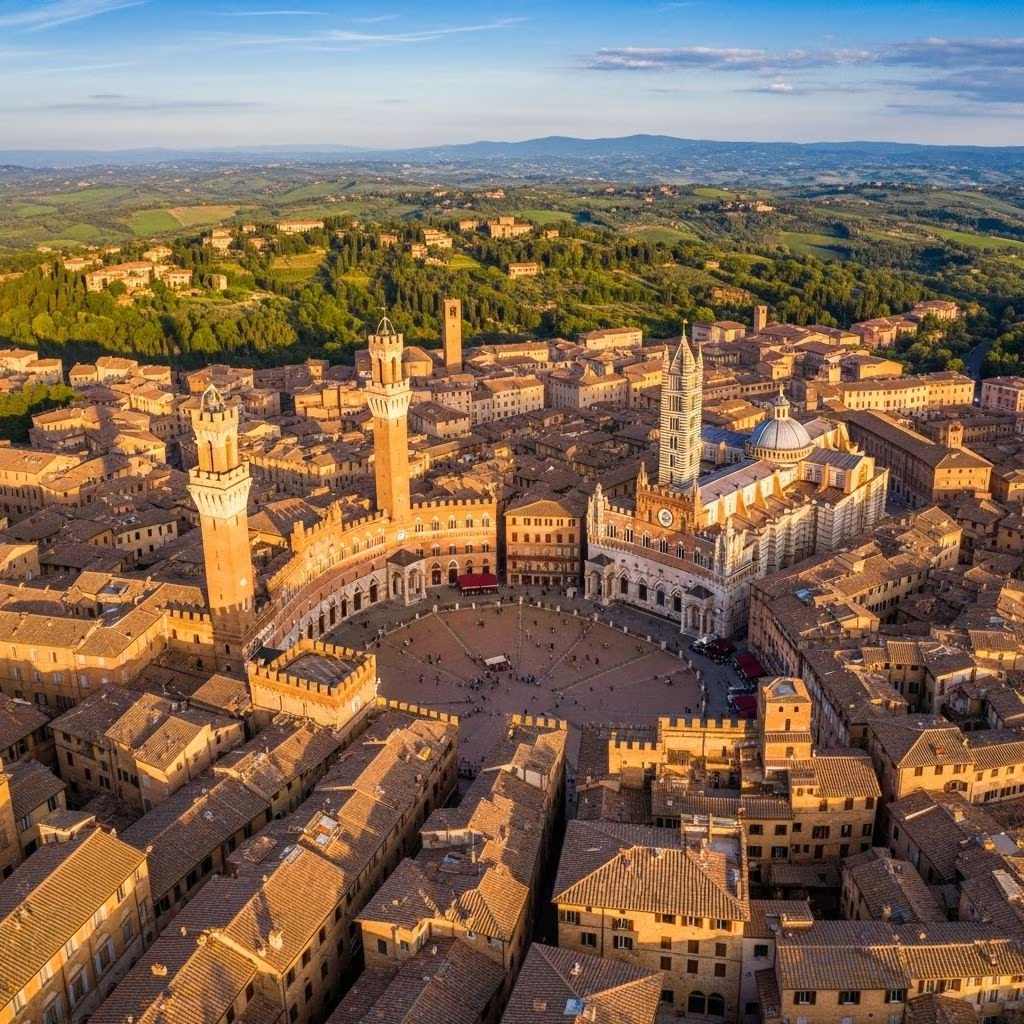
Siena, nestled on three hills in central Tuscany, is renowned as Italy’s quintessential medieval city. With its tangle of narrow lanes, vibrant local spirit, and stunning architectural wonders, Siena offers visitors not just a glimpse of the past—but a full immersion in Italian traditions and daily life. Far removed from the congestion of larger cities, pedestrians reign in Siena’s core, where every alley, square, and flag seems to whisper stories of centuries gone by.
Introduction to Siena
Situated between Florence and Rome, Siena stands as a beacon of Tuscany’s history. Once a powerful trading and banking force rivaling Venice, Florence, and Genoa, Siena played a pivotal role in shaping European life during the Middle Ages. Its population reached 50,000 in the 1300s—comparable to Paris at the time—until the plague and rivalry with Florence redirected its trajectory. Today, Siena is a proud haven where medieval architecture, local traditions, and a strong sense of identity endure in every piazza and neighborhood.
- Location: Central Tuscany, Italy
- Population: About 50,000 (in the 14th century)
- Distinctive Features: Medieval cityscape, hilltop views, traffic-free historical center
Il Campo: The Heart of Siena
No visit to Siena is complete without experiencing Il Campo, arguably Italy’s most beautiful square. Sprawled out like a shell, Il Campo is the stage for daily life—social gatherings, student meetups, and, twice yearly, the spectacular Palio horse race. Flanked by medieval palaces and dominated by the striking city tower, the square invites visitors to linger over drinks, admire the artistry of its paving, and soak in the continuous buzz of Sienese life.
- Main Attractions:
- Shell-shaped piazza
- 330-foot city tower (Torre del Mangia)
- Historic palaces and cafes
- Activities:
- Enjoying aperitivo while people-watching
- Strolling (passeggiata) and exploring hidden corners
- Savoring the vibrant atmosphere during the Palio
The Duomo: Siena’s Dazzling Cathedral
Siena’s Duomo stands as a commanding symbol of the city’s spiritual and artistic legacy. Built in black-and-white marble stripes, the cathedral is a masterpiece of Gothic architecture. Its interior brims with treasures: the intricately inlaid floors, sculptures by Michelangelo and Bernini, and the illuminated Piccolomini Library, festooned with frescoes from the Renaissance that celebrate local hero Pope Pius II.
- Highlights:
- Mosaic floors depicting biblical stories
- Sculptures and statues by Michelangelo and Bernini
- Piccolomini Library: Vivid Renaissance frescoes
- Views from the Duomo Museum—overlooking Tuscan hills
The Duomo is not just a place for worship, but a gallery that preserves Siena’s characteristic exuberance and artistic ambition from the Middle Ages to the Renaissance.
Siena’s Civic Art and Museums
Art and civic pride go hand-in-hand in Siena, with several impressive museums nestled within its old walls:
- Civic Museum: Located in the City Hall, home to remarkable Sienese frescoes, including Ambrogio Lorenzetti’s Effects of Good and Bad Government, offering vivid insights into medieval politics and daily life.
- Duomo Museum: Famous for Duccio’s Maestà and panoramic Tuscan views.
- Santa Maria della Scala: Once a hospital, now a museum housing the original Fountain of Joy, Byzantine reliquaries, and frescoes illustrating daily medieval hospital life.
- Pinacoteca: Features fine paintings that showcase the distinct Sienese style.
- Baptistery of San Giovanni: Unique cave-like building offering a glimpse of the city’s religious artistry, including baptismal fonts decorated by Ghiberti and Donatello.
- Sanctuary of St. Catherine: A revered site dedicated to the city’s patron saint.
The Palio di Siena: Tradition and Rivalry
Siena’s civic spirit culminates in the Palio di Siena—the wildest horse race in Italy. For over 500 years, the Palio (held every July 2nd and August 16th) has electrified the city. Tens of thousands fill Il Campo to cheer on the horses and celebrate the enduring rivalry among the city’s 17 contrade, or neighborhoods. Each has its own church, fountain, and fiercely defended pride.
| Palio Feature | Description |
|---|---|
| Number of Contrade | 17 (each with unique symbols and traditions) |
| Racing Contrade per Palio | 10 (selected by lottery) |
| Main Dates | July 2nd and August 16th annually |
| Event Location | Il Campo |
| Duration | About 90 seconds per race |
The Palio is far more than a competition—it is the city’s heartbeat. Horses chosen by lottery become symbols of neighborhood pride. Contrade shower their horses with love and care. Rivalries are intense, alliances are forged and broken, and allegiances span generations. For many Sienese, every phase of life is punctuated by the Palio: birth, living in the contrada, and finally, the race itself. This tradition shapes local identity and brings the city together like nothing else.
- Preparations: Contrade decorate, rehearse, and host banquets to support their horses and riders.
- Alliances and Rivalries: Neighboring contrade form temporary alliances or fierce feuds over decades.
To witness the Palio is to see Siena’s soul laid bare—an eruption of passion, color, and community pride.
Local Life: Passeggiata and Aperitivo
At dusk, Siena’s stony wonderland comes alive with the tradition of the passeggiata—the early-evening stroll. Locals and visitors wander, exchanging greetings, admiring sunset views, and eventually congregating at Il Campo for an aperitivo. This daily ritual blends socializing with the enjoyment of fine snacks and cocktails, all while basking in the square’s golden light.
- Meet friends or family for a leisurely stroll through winding lanes
- Savor an aperitivo in sidewalk cafés, pairing Tuscan wines with olives, cheese, and prosciutto
- Enjoy spontaneous street performances, laughter, and the joy of communal life
In Siena, this evening ritual is more than a routine—it is a celebration of daily life and the traditions that have defined the city for centuries.
Sienese Culinary Delights
The flavors of Siena are as memorable as its architecture. Shops across town tempt visitors with local specialties:
- Sienese Salami: Finocchiona, a local salami flavored with fennel seeds
- Prosciutto: Wild-boar prosciutto is especially prized
- Pecorino Cheeses: A spread of sheep’s milk cheeses, ideal with honey or jams
- Pasta: Pici—thick, hand-rolled noodles typical of the region
- Local Bread: Rustic, unsalted bread served with olive oil
Siena’s food culture is woven from rural traditions. Many families keep recipes alive through generations, sharing their bounty at home and in trattorias. Produce, cheeses, and meats reflect the best of Tuscany’s farmland, and local butchers and cheesemongers proudly display their wares.
Exploring Tuscany’s Wine Country
Just beyond Siena, rolling hills covered in vineyards, olive groves, and golden wheat define the Tuscan countryside. The region’s wineries, particularly around Montepulciano and Montalcino, have achieved international fame. Producing classic wines like Chianti and Brunello requires patience, knowledge, and family tradition—every bottle embodies the soul of Tuscany.
- Chianti: A robust, fruit-forward red wine best paired with cheeses and prosciutto
- Brunello di Montalcino: World-renowned, complex aged wine
- Family Traditions: Many estates are managed across three generations, with tasting and bottling involving the whole family
- Farmhouse Stays: Rural bed-and-breakfasts offer immersive experiences—homemade pasta workshops, cheese tasting, and direct insight into Tuscan hospitality
Visitors can tour wine cellars, witness production from vineyards to barrel, and participate in the slow, celebratory rhythm that defines Tuscan life. At the table, la vita è bella—life is beautiful, especially when shared over a fine local wine.
Frequently Asked Questions (FAQs)
Q: What makes Siena unique compared to other Tuscan cities?
A: Siena stands apart for its well-preserved medieval city center, pedestrian-friendly lifestyle, and passionate local identity centered around the 17 contrade and the twice-annual Palio race.
Q: When is the best time to visit Siena?
A: Early summer and late summer, coinciding with the Palio races (July 2nd and August 16th), are the most vibrant times, but spring and autumn also offer excellent weather and fewer crowds.
Q: Is Il Campo accessible to tourists?
A: Yes, Il Campo is pedestrian-only and open for visitors year-round. Many cafes and restaurants line the square, and it is the focal point for major events and daily life.
Q: Are guided tours available for the Duomo and museums?
A: Yes, guided tours are widely available and recommended to fully appreciate the art, architecture, and stories within the Duomo, Civic Museum, and other landmarks.
Q: Can visitors participate in the passeggiata or Palio festivities?
A: Visitors are welcome to join locals in the passeggiata and enjoy the vibrant energy of Palio days—but only residents of the contrade compete in the race itself.
Embracing Siena’s Medieval Soul
Siena’s enduring appeal lies not just in its grand monuments or picturesque streets, but in the lived experience of its traditions, culinary treasures, and communal pride. Whether strolling through timeless alleys, raising a glass at Il Campo, or feeling the thundering drama of the Palio, visitors are warmly drawn into the city’s medieval heart and soul—a legacy that continues to define Siena, Tuscany, and all who fall under its spell.
References
- https://www.ricksteves.com/europe/italy/siena
- https://www.ricksteves.com/watch-read-listen/video/tv-show/siena-tuscany-wine-country
- https://www.ricksteves.com/watch-read-listen/video/siena
- https://www.ricksteves.com/watch-read-listen/read/articles/siena-palio
- https://www.youtube.com/watch?v=RxlHDc_pkQE
- https://www.ricksteves.com/watch-read-listen/read/tms/siena-italys-medieval-heart-and-soul
- https://blog.ricksteves.com/blog/siena-italys-medieval-soul/
- https://www.ricksteves.com/watch-read-listen/video/siena-piazza-del-campo