Split, Croatia: The Dalmatian Gem on the Adriatic
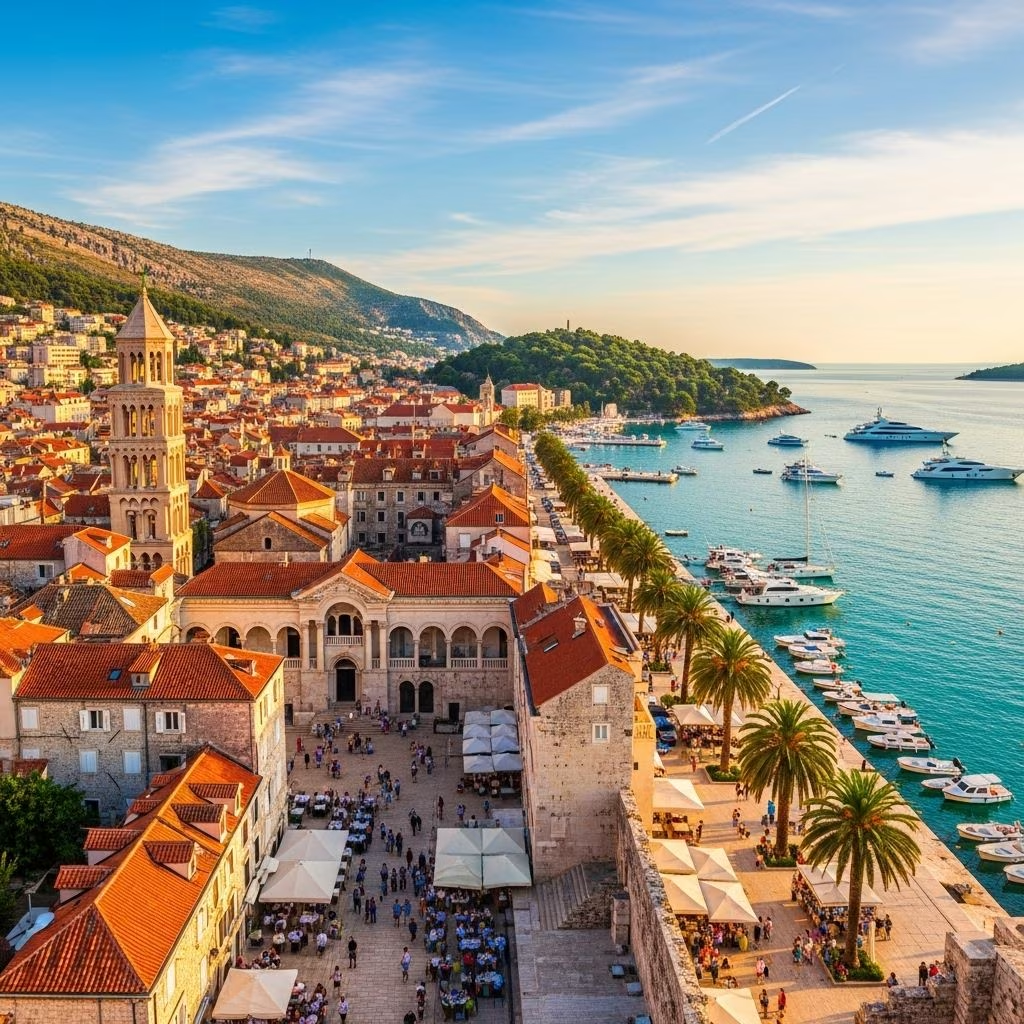
Split, perched comfortably alongside the turquoise waters of the Adriatic Sea, stands as Croatia’s second-largest city—a vibrant port, a living Roman monument, and the bustling heart of the famed Dalmatian Coast. Across nearly two millennia, Split has transformed from an imperial retirement residence to a captivating urban blend of ancient ruins, Mediterranean spirit, and modern city life. For travelers seeking a window into European history, lively culture, and spectacular seaside vistas, Split is both an essential stop and a destination to savor.
The Legacy of Diocletian’s Palace
The core of Split’s allure lies within Diocletian’s Palace, the sprawling complex constructed in the fourth century AD by the Roman Emperor Diocletian. This wondrous maze, once confining imperial luxury, now seamlessly integrates into the city’s street plan, making the palace less a museum and more a vital, lived-in neighbourhood. Lose yourself among its marble corridors: the alleys are, quite literally, Diocletian’s hallways repurposed as city streets.
- Historic Transformation: After the fall of Rome, the palace was gradually repurposed. Stone and precious materials were scavenged, and medieval homes began to sprout from the ancient walls. The mausoleum became the city’s cathedral, and the Peristyle—originally the main hallway—transformed into Split’s central square, alive with local life day and night.
- Integrated Ruins: Exploring the ruins is mostly free except for some specific sites, such as the palace’s cellars and the cathedral. Marvel at the architecture and imagine imperial grandeur now interlaced with cafés, markets, and everyday Croatian routines.
Highlights of Diocletian’s Palace
- The Cellars: These stone vaults, originally meant for storage and support, today host souvenir stalls and local exhibitions. For a quieter experience, visit in the afternoon, after most cruise-ship crowds have departed.
- The Peristyle: Arguably the palace’s dramatic heart, the Peristyle remains a social hub—especially after sunset. Lounge on red cushions at the marble steps (courtesy of Luxor Café), soak in the balmy sea breezes, and enjoy live musical performances echoing through history.
- The Iron Gate, Golden Gate, Silver Gate, and Brass Gate: These imposing entrances, remnants of Roman engineering, link visitors past and present.
Cathedral of St. Domnius
Within the palace, the emperor’s octagonal mausoleum was marvelously transformed into the Cathedral of St. Domnius after Rome’s decline—a symbolic reclamation of pagan grandeur for Christian worship. This cathedral, complete with a Venetian-style bell tower, is considered one of the oldest Catholic cathedrals still in use in its original structure.
- Visiting the Cathedral: Entry requires a ticket, which typically includes access to several areas—the cathedral itself, the treasury/museum, the crypt, and, for those with a head for heights, the bell tower. Nearby, the former temple to Jupiter serves as the cathedral’s baptistery, fusing Roman and Christian heritage.
- Architectural Details: Notice the carved stonework and intricate art, testament to centuries of faith layered atop imperial ambition.
- Experience Tip: To truly grasp the cathedral’s history, climb the bell tower for breathtaking panoramas over Split and the Adriatic.
Old Town Split: Living History Meets Modern Life
Strolling through Old Town Split means winding through narrow alleys and bustling squares, each echoing with centuries of stories. The city’s fascinating evolution—from Roman retreat to medieval colony to modern-day metropolis—remains palpable in every stone and street corner.
- Medieval and Venetian Influences: Beyond the palace walls, Split’s old town radiates with Venetian, Gothic, and Baroque architectural touches—and a sense of lived-in authenticity, free from the sterilized feel of more curated tourist sites.
- Local Life: Residents continue to inhabit buildings grafted onto the palace structure; laundry flaps above centuries-old lanes, markets erupt just outside ancient gates, and the city pulses with both tradition and youthful energy.
- Cafés and Bars: From the iconic Luxor Café, where you can enjoy music beneath the stars, to hidden eateries serving international cuisine and Croatian microbrews, Split’s lanes offer countless surprises and memorable encounters.
Split After Dark: Nightlife and Social Scene
As the sun sets, the energy in Split intensifies. The entire Old Town morphs into a massive Adriatic cocktail party, with both locals and travelers drawn to lively bars, dancing cafés, and open-air music performances.
- Top Nightlife Spots: Start at the Peristyle, join the crowd on the steps, and select any of the buzzing bars and cafés tucked throughout the palace ruins. From Luxor Café’s cushions to contemporary cocktail lounges, Split’s nightlife is democratic—just pick a spot that feels right and be swept up in the conviviality.
- Tips for Nightlife: The best advice, according to seasoned travelers: show up at the Peristyle, relax on the marble steps, order a drink as the stars come out, and revel in the vibrant scene. Specific venues change, but Split’s animated atmosphere endures.
- Atmosphere: Music covers everything from Dalmatian folk to classic international hits; the streets fill with laughter and conversation well into the night.
The Riva: Split’s Seaside Promenade
The Riva—Split’s gleaming waterfront promenade—offers both a dramatic backdrop to the city and a lively corridor filled with cafés, shops, and strolling locals. Walk the Riva at sunrise for serene beauty, or in the evening for a festive atmosphere where locals and visitors mingle under Mediterranean skies.
- Views and Atmosphere: Stretching along the harbor, the Riva showcases palm trees, outdoor terraces, and panoramic views out towards the islands. It’s ideal for a relaxed stroll or watching the busy port activity.
- Café Culture: Outdoor tables line the promenade, making it a perfect spot for morning coffee or a sunset cocktail.
- Events: The Riva hosts public celebrations, concerts, and festivals throughout the year, further anchoring its role as the social hub of Split.
Art and Culture: Ivan Meštrović Museum
Just outside Split’s Old Town, the Ivan Meštrović Gallery honors one of Croatia’s greatest sculptors. Ivan Meštrović—a peer of Rodin, whose works grace city squares and museums throughout Croatia and abroad—imbued his sculptures with emotion and cultural resonance.
- Museum Highlights: View masterpieces such as the Roman Pietà and Job, works that reflect suffering, resilience, and classical themes.
- International Influence: Meštrović’s sculptures appear globally, from Croatian markets to Chicago’s Grant Park.
- Visiting Details: The gallery houses works spanning mythological, religious, and everyday subjects, offering a meditative counterpoint to Split’s bustling streets.
Day Trips from Split: Plitvice Lakes National Park
For those seeking natural splendor beyond the city, Plitvice Lakes National Park is a must-see. Renowned for its stunning cascade of turquoise lakes and countless waterfalls, Plitvice is best experienced on a three-to-four-hour hike across mostly level terrain.
- Visiting Tips: The park is a convenient stop between Zagreb and Split; spend a night nearby to enjoy an early, crowd-free morning in the park before heading onwards.
- Park Experience: Wooden walkways snake over crystal-clear springs; the scenery compels both photographers and nature lovers.
- Accessibility: The hike suits most visitors, with options to shorten or lengthen your route depending on energy and timing.
Other Notable Attractions in Croatia
- Croatian Museum of Naive Art (Zagreb): This 1952-founded gallery showcases masterpieces mostly by untaught artists—charming, colorful, and uniquely evocative works that reveal Croatia’s creative spirit.
- Valentino Champagne and Cocktail Bar (Rovinj): While Valentino is now a pricey, exclusive spot, Rovinj’s seaside restaurant row remains a romantic destination for sunset drinks, with other popular options like Mediterraneo and La Puntulina.
Split Essentials: Practical Travel Info
| Feature | Details |
|---|---|
| Language | Croatian (English widely understood in tourist areas) |
| Currency | Euro |
| Best Time to Visit | Late spring to early autumn for warm weather and lively events |
| Transport | Regional ferries, trains, buses; Split is a hub for island-hopping in the Adriatic |
| Accommodations | Options range from harbor-side hotels to Old Town guesthouses and modern apartments |
| Food & Drink | Dalmatian seafood, Italian-style pizzas, international cuisine, Croatian wines |
Frequently Asked Questions (FAQs)
Q: What is the main attraction in Split?
A: The top attraction is Diocletian’s Palace, an ancient Roman complex integrated into the city’s Old Town, featuring alleys, squares, and historic buildings now in daily use.
Q: Is the Old Town of Split expensive?
A: While Split offers luxury experiences, it also caters to various budgets, with affordable street food, cozy guesthouses, and lively bars alongside high-end restaurants and hotels.
Q: When is the best time to visit Split?
A: The most popular months are late spring and early autumn, when weather is pleasant, beaches are accessible, and festivals enliven the city without the peak-season crowds.
Q: How do I get to Plitvice Lakes from Split?
A: Plitvice Lakes National Park is an easy day trip or overnight stop between Zagreb and Split, served by regular buses and organized tours.
Q: What local dishes should I try in Split?
A: Sample fresh Adriatic seafood, peka (slow-cooked meat and vegetables), risotto, and gelato, as well as local wines and microbrews served in Split’s bustling bars and market stalls.
Travel Tips: Making the Most of Your Split Experience
- Arrive Early: Visit major sites like Diocletian’s Palace cellars and Plitvice Lakes early in the day to avoid large groups and take advantage of peaceful morning light.
- Embrace Local Culture: Join locals on the Riva after sunset, or wander Old Town lanes to discover hidden eateries and shops with authentic Croatian charm.
- Plan for Mobility: Split is pedestrian-friendly within the Old Town, but use ferries and buses for exploring nearby towns and islands.
- Stay Overnight: To fully enjoy Split’s nightlife and historic ambience, plan at least one night in the city or nearby.
- Capture the Magic: Bring a camera—Split showcases spectacular scenes from ancient ruins to sparkling Adriatic panoramas.
Conclusion: Split’s Lasting Allure
Split is a city where time layers gracefully—a place where emperors built and musicians now play, where medieval rooftops crowd Roman pillars, and where the Adriatic breeze carries stories across centuries. Whether you’re wandering ancient corridors, dining under Venetian facades, or sipping cocktails on the Riva, Split is sure to kindle lasting memories of history, culture, and Croatian spirit. For those yearning to plunge into the heart of the Adriatic, Split extends a warm, unforgettable welcome.
References
- https://www.ricksteves.com/watch-read-listen/video/tv-show/croatia-adriatic-delights
- https://blog.ricksteves.com/cameron/2017/11/split-port-resort
- https://www.youtube.com/watch?v=g4sw6Zasv4U
- https://www.ricksteves.com/watch-read-listen/croatias-past-lives-on-in-modern-day-split
- https://www.ricksteves.com/europe/croatia/split
- https://community.ricksteves.com/travel-forum/croatia/split-for-a-day
- https://www.ricksteves.com/europe/croatia
- https://www.youtube.com/watch?v=WdXs2BsIcio