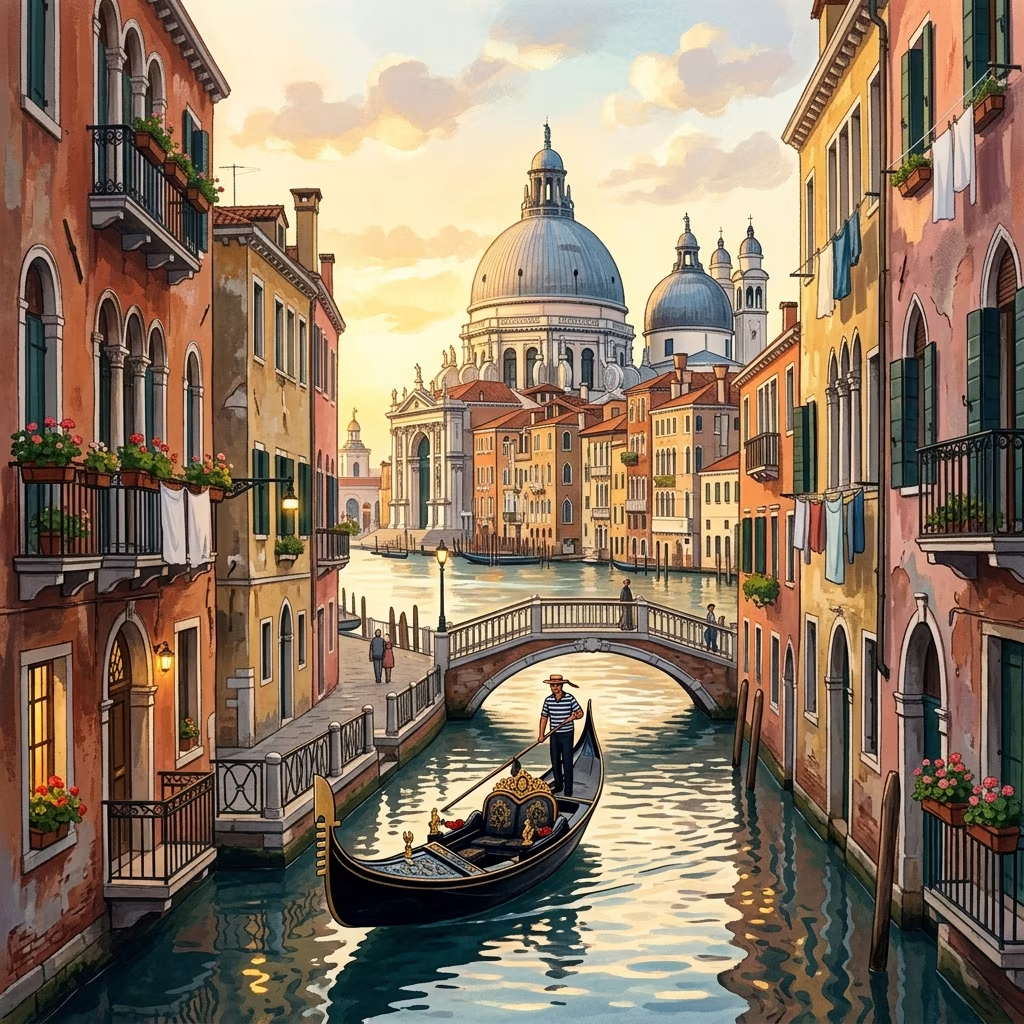
Venice: City of Dreams
Venice—the mystical city rising from the Adriatic, celebrated through centuries as La Serenissima—remains Europe’s most romantic destination. Built on water and built for dreams, Venice seduces travelers with its singular beauty, storied past, and artistic vibrancy. This guide journeys through the city’s monuments, treasures, flavors, and secrets, illuminating why Venice remains one of the world’s most exquisite cities.
The Fascination of Venice: An Introduction
Though a relatively small fish-shaped island, Venice commands a magnetic presence. Nicknamed “The Most Serene One,” the city’s charm lies not just in its iconic architecture and grand piazzas, but in the poetic symphony of shimmering canals, centuries-old bridges, and the echoes of masked revelers from a distant golden age. In Venice, time floats. Quiet alleys give way to splendid palazzos, while gondolas glide beneath ancient archways as they have for generations.
Venice’s uniqueness is a product of improbable engineering, maritime ambition, and an artistic soul. This travel chronicle guides you through:
- The legendary Grand Canal
- The splendor of Doge’s Palace and St. Mark’s Basilica
- The masterpieces of the Venetian Renaissance
- Delectable Venetian cuisine and traditions
- Gondola journeys and a glimpse into everyday Venetian life
City of Water: Venice’s Geography and Foundations
Venice blossoms at the north end of the Adriatic Sea, its city center rising from over one hundred small islands laced together by a labyrinth of stone bridges and narrow walkways. Interwoven canals replace roads; here, boats and gondolas reign supreme.
The city’s main artery—the sinuous Grand Canal—runs like a watery main street through Venice, arched over by the famous Rialto Bridge and flanked by centuries-old palaces.
- Unique Layout: Within a 10-minute stroll, you can reach from bustling St. Mark’s Square to lively open-air markets and quiet backwaters.
- No Cars, No Noise: Absent of cars and honking horns, Venice’s ambiance is defined by footsteps, lapping water, and the serenade of gondoliers.
Icons of Venice: Grand Canal, Rialto Bridge, and St. Mark’s Square
The Grand Canal is Venice’s lifeline, lined with faded yet opulent palaces that hint at the city’s former wealth and power. Every building tells a story—of doges, merchants, and artists who shaped Venice’s destiny.
The Rialto Bridge, arching gracefully over the canal’s narrowest point, has been the city’s commercial hub since medieval days. Its lively market stalls and picturesque marble structure anchor the community’s daily rhythms.
St. Mark’s Square (Piazza San Marco) is Venice’s stage, known for its sweeping grandeur, flocks of pigeons, and the mesmerizing soundscape from historic cafés. Here you’ll find:
- St. Mark’s Basilica — a masterpiece of Italo-Byzantine architecture, crowned with gilded domes and shimmering mosaics.
- The Campanile — the towering bell tower that offers panoramic city views.
- The Clock Tower — with its blue-gold face and striking bronze figures.
The Doge’s Palace: Seat of Venetian Splendor
Overlooking the Venetian lagoon, the Doge’s Palace (Palazzo Ducale) stands as the symbol of Venice’s might and refined taste. For centuries, it was the residence of the Doge (Venice’s elected ruler), the seat of government, and the city’s judicial heart.
The palace’s architecture reflects both Gothic exuberance and the city’s maritime ambitions. Ornate facades, grand staircases, and gilded council chambers dazzle visitors as they once bedazzled visiting dignitaries. Within:
- Golden Staircase: An opulent entryway lined with gold-leaf.
- Il Paradiso: The largest oil painting in the world, by Tintoretto, presides over the Grand Council Hall.
- The Bridge of Sighs: Connecting the palace to the prison cells, this enclosed bridge gained its name from the sighs of condemned prisoners glimpsing Venice for the last time.
St. Mark’s Basilica: Spiritual and Artistic Jewel
The crowning glory of Venice, St. Mark’s Basilica, fuses East and West, Christian and Byzantine, in a dazzling tapestry of art and devotion. Originally built to house the relics of St. Mark the Evangelist, the basilica’s:
- Five onion-domed cupolas evoke Byzantine influences.
- Intricate mosaics cover both interior and exterior, telling biblical stories in shimmering glass and gold.
- Pala d’Oro, a golden altarpiece studded with enamels and jewels, stands as a testament to medieval craftsmanship.
- Four Bronze Horses: These ancient Greco-Roman statues, once looted from Constantinople, stand above the main portal as icons of Venetian conquest and artistry.
Venetian Renaissance: Art, Innovation, and Influence
Venice flourished as a wellspring of artistic creativity during the Renaissance, giving birth to master painters such as Titian, Tintoretto, and Veronese. Their works grace grand churches, galleries, and palaces throughout the city.
- Tintoretto’s ‘Last Supper’: A striking interpretation on display in the Church of San Giorgio Maggiore.
- Bellini’s Madonnas and lavish altarpieces trace the evolution of Venetian color and light.
- Peggy Guggenheim Collection: For a taste of modernity, this renowned gallery houses 20th-century masterpieces right on the Grand Canal.
Feasting in Venice: Flavors of the Lagoon
Venetian cuisine is a product of its geography—fresh seafood, aromatic herbs, rice, and polenta form the backbone of many dishes. Among the classic tastes:
- Sarde in saor: Sweet-and-sour sardines, marinated with onions and raisins.
- Risotto al nero di seppia: Black risotto colored with cuttlefish ink.
- Cicchetti: Bite-sized delicacies similar to Spanish tapas, enjoyed with a glass of wine in bustling bacari (wine bars).
- Pastries and gelato: Perfect for an afternoon treat along a shaded canal.
The Gondola: Venice’s Signature Experience
No visit is complete without a journey by gondola, the city’s iconic black boats. Originally designed for stealth and speed by 18th-century playboys, today’s gondolas carry travelers through secluded waterways, beneath lonely bridges, and past dazzling facades. The experience is:
- Part romantic escapade, part journey through history
- Enhanced by choosing a charismatic gondolier and setting off at twilight, when the city glows and crowds ebb
- Unrivaled for those seeking a glimpse of Venice’s quiet magic, far from the bustle of foot traffic
Modern Art and Contemporary Venice
While Venice is celebrated for its heritage, it also pulses with contemporary creativity. The city honors the avant-garde at the Venice Biennale, hosting international exhibitions of modern art, architecture, and film in noble palazzos and pavilions throughout the city.
The Peggy Guggenheim Collection presents surrealism, cubism, and abstract art in a sunlit medley along the Grand Canal, providing balance to the rich tapestry of old masters.
Venetian Traditions: Masks, Festivals, and Local Life
Venetian culture is perhaps best expressed through its timeless festivals and traditions:
- Carnevale: The city’s iconic masked festival, when locals and visitors alike don splendid disguises and indulge in theatrical revels.
- Caffè culture: Venice is renowned for elegant old-world cafés, like Caffè Florian, where you can sip espresso beneath gilded ceilings.
- Night in Venice: As dusk descends and tourists depart, Venice reveals a mellower, even mystical side—softly illuminated by lanterns and accompanied by the distant echoes of music and laughter.
Venice’s Enduring Enchantment
Though tides of time and tourism inevitably change Venice’s face, the city endures, suspended between history and myth. Whether you’re gazing at golden mosaics, savoring a plate of fresh canal-side seafood, gliding along a moonlit canal, or simply wandering the winding alleyways, Venice rewards you with wonder at every turn. The most serene city ultimately invites you to slow down, savor beauty, and—at least for a moment—be lost in a reverie of dreams.
Frequently Asked Questions (FAQs)
Q: When is the best time to visit Venice to avoid crowds?
A: Early spring (March-April) and late fall (October-November) generally offer milder weather and fewer tourists, providing a more peaceful Venice experience.
Q: What are the absolute must-see sites for a first-time visitor?
A: The Grand Canal, Doge’s Palace, St. Mark’s Basilica (including the mosaics and Bronze Horses), the Rialto Bridge, and a stroll or gondola ride through quieter backwaters are essential for sampling the city’s highlights.
Q: Is Venice accessible for travelers with mobility issues?
A: Venice’s many bridges and steps pose challenges, but some routes and public vaporetto boats are accessible. Planning ahead and consulting accessibility guides is recommended.
Q: How do you travel around Venice?
A: On foot and by water! Walking is the primary way, with water buses (vaporetti), water taxis, and gondolas providing transportation across and along the canals.
Q: What is the story behind Venice’s famous masks?
A: Masks are a storied part of Venetian tradition, most famously worn during Carnevale to give wearers anonymity and freedom, reflecting the city’s playful and mysterious spirit.
References
- https://www.kpbs.org/news/arts-culture/2017/07/11/rick-steves-europe-venice-city-dreams
- https://www.imdb.com/title/tt7147622/
- https://www.youtube.com/watch?v=uxhKZGcPxkc
- https://www.ricksteves.com/watch-read-listen/video/tv-show/venice-city-of-dreams
- https://www.cliffsnotes.com/study-notes/27778875
- https://www.pbssocal.org/shows/rick-steves-europe/episodes/rick-steves-europe-venice-city-dreams
- https://www.ctpublic.org/shows/rick-steves-europe/episodes/rick-steves-europe-venice-city-dreams
- https://www.tpt.org/rick-steves-europe/video/rick-steves-europe-venice-city-dreams/
- https://www.ricksteves.com/europe/italy/venice