25 Bible Verses and Insights About Communion and the Lord’s Supper
The Lord’s Supper—also known as Communion or the Eucharist—is a central practice in Christianity, celebrated in remembrance of Jesus Christ’s sacrifice and resurrection. This article brings together 25 foundational Bible verses about communion, along with explanations of their meaning, the importance of the Lord’s Supper, its spiritual significance, and guidance for participating with genuine faith and reverence.
Understanding Communion: Meaning and Significance
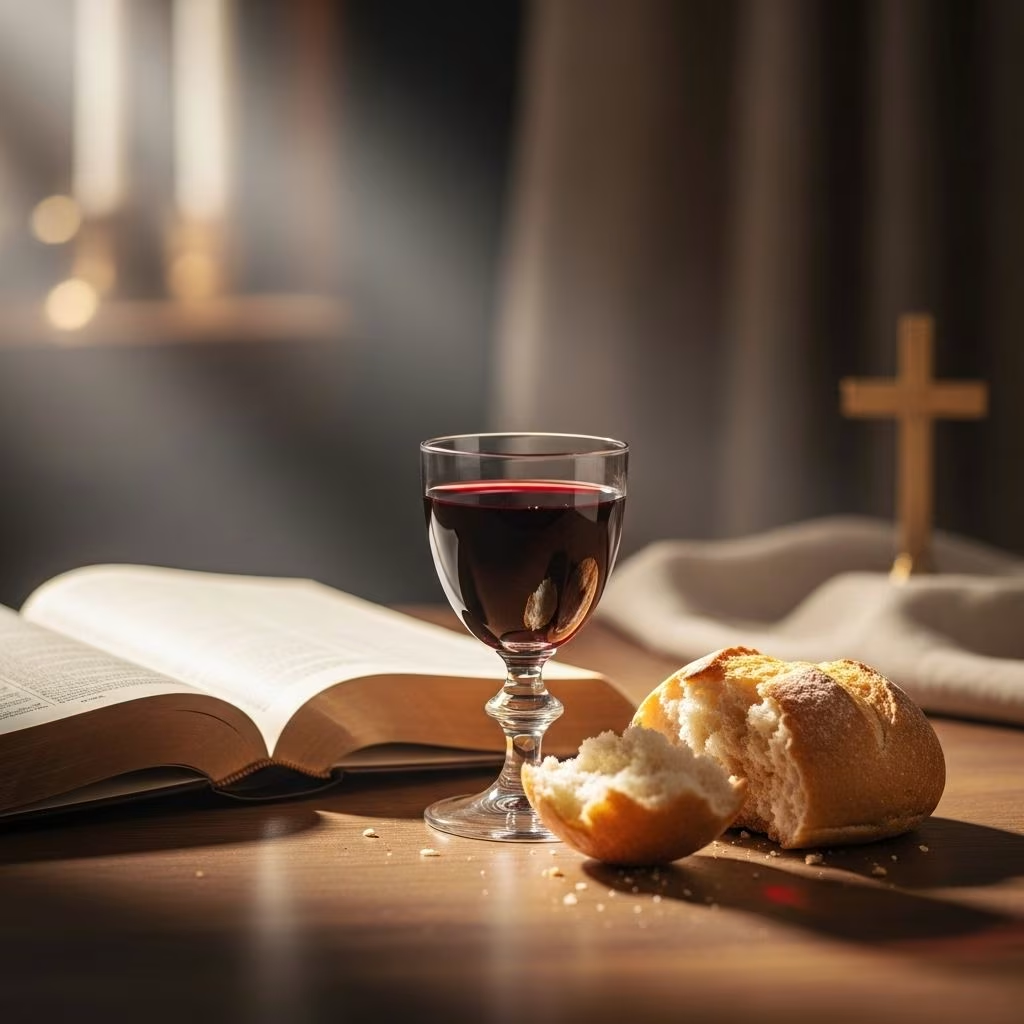
Communion, or the Lord’s Supper, is the ceremonial sharing of bread and wine (or juice), representing Christ’s body and blood. Instituted by Jesus during the Last Supper, this sacred act calls believers to:
- Remember Christ’s sacrifice: Reflect on His atoning death and resurrection.
- Proclaim faith: Declare the hope and forgiveness available through Jesus.
- Celebrate unity: Join with other believers in spiritual fellowship.
- Engage in self-examination: Approach the Lord’s Table with humility, faith, and repentance.
This solemn and joyful observance unites Christians across denominations and generations, affirming the heart of the gospel message.
Top Bible Verses About Communion
- 1 Corinthians 11:23-26 – “For I received from the Lord what I also delivered to you, that the Lord Jesus on the night when he was betrayed took bread, and when he had given thanks, he broke it, and said, ‘This is my body which is for you. Do this in remembrance of me.’ In the same way also he took the cup, after supper, saying, ‘This cup is the new covenant in my blood. Do this, as often as you drink it, in remembrance of me.’ For as often as you eat this bread and drink the cup, you proclaim the Lord’s death until he comes.”
- Matthew 26:26–28 – “Now as they were eating, Jesus took bread, and after blessing it broke it and gave it to the disciples, and said, ‘Take, eat; this is my body.’ And he took a cup, and when he had given thanks he gave it to them, saying, ‘Drink of it, all of you, for this is my blood of the covenant, which is poured out for many for the forgiveness of sins.’”
- 1 Corinthians 10:16 – “The cup of blessing that we bless, is it not a participation in the blood of Christ? The bread that we break, is it not a participation in the body of Christ?”
- Acts 2:42 – “And they devoted themselves to the apostles’ teaching and the fellowship, to the breaking of bread and the prayers.”
- Luke 22:19-20 – “And he took bread, and when he had given thanks, he broke it and gave it to them, saying, ‘This is my body, which is given for you. Do this in remembrance of me.’ And likewise the cup after they had eaten, saying, ‘This cup that is poured out for you is the new covenant in my blood.’”
- John 6:53-56 – “So Jesus said to them, ‘Truly, truly, I say to you, unless you eat the flesh of the Son of Man and drink his blood, you have no life in you. Whoever feeds on my flesh and drinks my blood has eternal life, and I will raise him up on the last day. For my flesh is true food, and my blood is true drink. Whoever feeds on my flesh and drinks my blood abides in me, and I in him.’”
- Mark 14:22-24 – “And as they were eating, he took bread, and after blessing it broke it and gave it to them, and said, ‘Take; this is my body.’ And he took a cup, and when he had given thanks he gave it to them, and they all drank of it. And he said to them, ‘This is my blood of the covenant, which is poured out for many.’”
- 1 Corinthians 11:27-29 – “Whoever, therefore, eats the bread or drinks the cup of the Lord in an unworthy manner will be guilty concerning the body and blood of the Lord. Let a person examine himself, then, and so eat of the bread and drink of the cup. For anyone who eats and drinks without discerning the body eats and drinks judgment on himself.”
- Acts 20:7 – “On the first day of the week, when we were gathered together to break bread, Paul talked with them, intending to depart on the next day, and he prolonged his speech until midnight.”
- John 6:35 – “Jesus said to them, ‘I am the bread of life; whoever comes to me shall not hunger, and whoever believes in me shall never thirst.’”
- Romans 6:3–4 – “Do you not know that all of us who have been baptized into Christ Jesus were baptized into his death? We were buried therefore with him by baptism into death, in order that, just as Christ was raised from the dead by the glory of the Father, we too might walk in newness of life.”
- 1 Corinthians 10:21 – “You cannot drink the cup of the Lord and the cup of demons. You cannot partake of the table of the Lord and the table of demons.”
Note: These are among the 25 well-loved passages often cited about communion. For a comprehensive reading and study, believers may wish to read further into 1 Corinthians 10–11, the Gospels’ Last Supper accounts, and additional references in Acts and early church history.
Themes and Theology of Communion
- Remembrance: Communion is a deliberate act of remembering Christ’s death, His suffering, and the love demonstrated at Calvary. See Luke 22:19 – “Do this in remembrance of me.”
- Covenant: Jesus’ words—“This cup is the new covenant in my blood”—emphasize a new agreement between God and humanity, fulfilled in Christ.
- Unity: Sharing in the bread and cup expresses the unity of all believers as a single body in Christ (see 1 Corinthians 10:17).
- Proclamation: The Lord’s Supper is also a proclamation, publicly declaring Christ’s death and its saving power until He returns (1 Corinthians 11:26).
- Reflection and Examination: Paul urges believers to examine their hearts, repent, and approach the table with reverence (1 Corinthians 11:28-29).
- Blessing and Thanksgiving: The name “Eucharist” comes from the Greek for “thanksgiving.” Communion inspires gratitude for grace and redemption.
Names and Terms for Communion
| Term | Biblical Reference | Meaning/Emphasis |
|---|---|---|
| The Lord’s Supper | 1 Corinthians 11:20 | Meal instituted by Jesus, commemorating His sacrifice |
| Communion | 1 Corinthians 10:16 | “Fellowship” or “sharing” in Christ’s body and blood |
| The Breaking of Bread | Acts 2:42, 46 | Practice and fellowship of the early church |
| The Table of the Lord | 1 Corinthians 10:21 | The sacred table of Christian gathering |
| Eucharist | Mark 14:23 | Thanksgiving and praise |
Who Should Take Communion?
- Those in Christ: Only those who have trusted in Christ as Savior, professing faith and union with Him, should partake in communion (see 1 Corinthians 11:28).
- Self-Examination: Believers should examine their hearts, confess any known sin, and approach reverently (1 Corinthians 11:27-29).
- The Unconverted: Scripture warns that those without faith or who live in unrepentant sin should refrain (John 6:56; 1 Corinthians 11:27-29).
How Should Christians Prepare for Communion?
- Reflect on Christ: Meditate on His suffering, death, and resurrection with gratitude.
- Repentance: Confess any known sin and seek forgiveness in preparation for the sacred meal.
- Unity: Commit to loving others in the church, seeking reconciliation where needed (1 Corinthians 11:18-22).
- Faith: Trust wholeheartedly in Christ’s finished work for salvation.
Frequently Asked Questions (FAQs)
Q: What is the purpose of Communion?
A: The purpose of communion is to remember Jesus’ sacrifice, proclaim His death and resurrection, and encourage unity among believers, while prompting believers to examine their own lives in light of Christ’s gift.
Q: Why is it called the Lord’s Supper, Communion, and Eucharist?
A: These names reflect different aspects of the practice: “Lord’s Supper” emphasizes Jesus’ institution of the meal, “Communion” highlights fellowship with Christ and the church, and “Eucharist” refers to thanksgiving for God’s grace.
Q: Who can take communion?
A: Communion is for believers—those who have confessed faith in Jesus Christ, repented of sin, and seek to walk in obedience and unity with other Christians.
Q: How often should communion be celebrated?
A: The Bible does not specify an exact frequency. Early Christians celebrated often (Acts 2:42), and churches today may observe weekly, monthly, or less often, as tradition and conviction lead.
Q: What should one do before taking communion?
A: Before taking communion, believers should honestly examine their hearts, confess sin, forgive others, and recommit to living in faith and unity.
Q: What does the bread and cup symbolize?
A: The bread symbolizes Christ’s body broken for believers; the cup, His blood shed for forgiveness and a new covenant with God.
Q: Can children participate in communion?
A: Practices vary, but most churches require a child to have made a genuine profession of faith and understand the meaning of the Lord’s Supper before participating.
Q: What should a Christian do if they feel unworthy to take communion?
A: Scripture encourages honest self-examination and repentance. If a believer confesses sin and trusts Jesus, they are invited to participate in faith, not to remain absent due to guilt, but to receive grace.
Conclusion
Communion is a biblical command and a cherished tradition linking Christians with Christ and each other. Rooted in Scripture, it invites ongoing remembrance, gratitude, and joyful proclamation until Jesus returns.
References
- https://www.biblestudytools.com/topical-verses/communion-bible-verses/
- https://watermarkwaves.com/blogs/explore-the-bible/communion-scripture-a-guide-to-biblical-verses-on-the-lord-s-supper
- https://bible.org/seriespage/lesson-11-how-come-lord-s-supper-1-corinthians-1117-34
- http://www.reformedworship.org/article/march-1990/until-he-comes-six-themes-lords-supper
- https://learn.ligonier.org/articles/when-should-you-not-take-communion