Anti-Motion Sickness Glasses: Do They Work and Should You Try Them?
Motion sickness has plagued travelers for generations, but a new, attention-grabbing device has surged in popularity—anti-motion sickness glasses. Spotlighted by viral social media posts and manufacturers’ bold promises, these unconventional glasses claim to stop nausea, dizziness, and headaches in their tracks. But do they live up to the hype, and what science backs their effectiveness?
What Is Motion Sickness?
Motion sickness refers to a collection of symptoms—nausea, dizziness, headaches, sweating, and sometimes vomiting—many people experience when traveling by car, plane, boat, or even virtual reality devices. The culprit is a disconnect between the signals your eyes send to your brain and what your inner ear (the body’s balance center) senses during movement.
- Visual input mismatch: Reading or focusing on a stationary object while in a moving vehicle means your eyes tell your brain that you’re still, but your vestibular system senses motion.
- Vestibular disturbance: The inner ear detects changes in position and movement that do not match visual perceptions, resulting in confusion within your brain’s processing center.
- Symptoms: Typical reactions include nausea, dizziness, fatigue, headaches, sweating, and sometimes vomiting. In severe cases, people may also experience blurred vision and drowsiness.
Estimates suggest that between 25% to 60% of cruise ship passengers and 1 in 3 land travelers experience some form of motion sickness during their journeys.
How Do Anti-Motion Sickness Glasses Work?
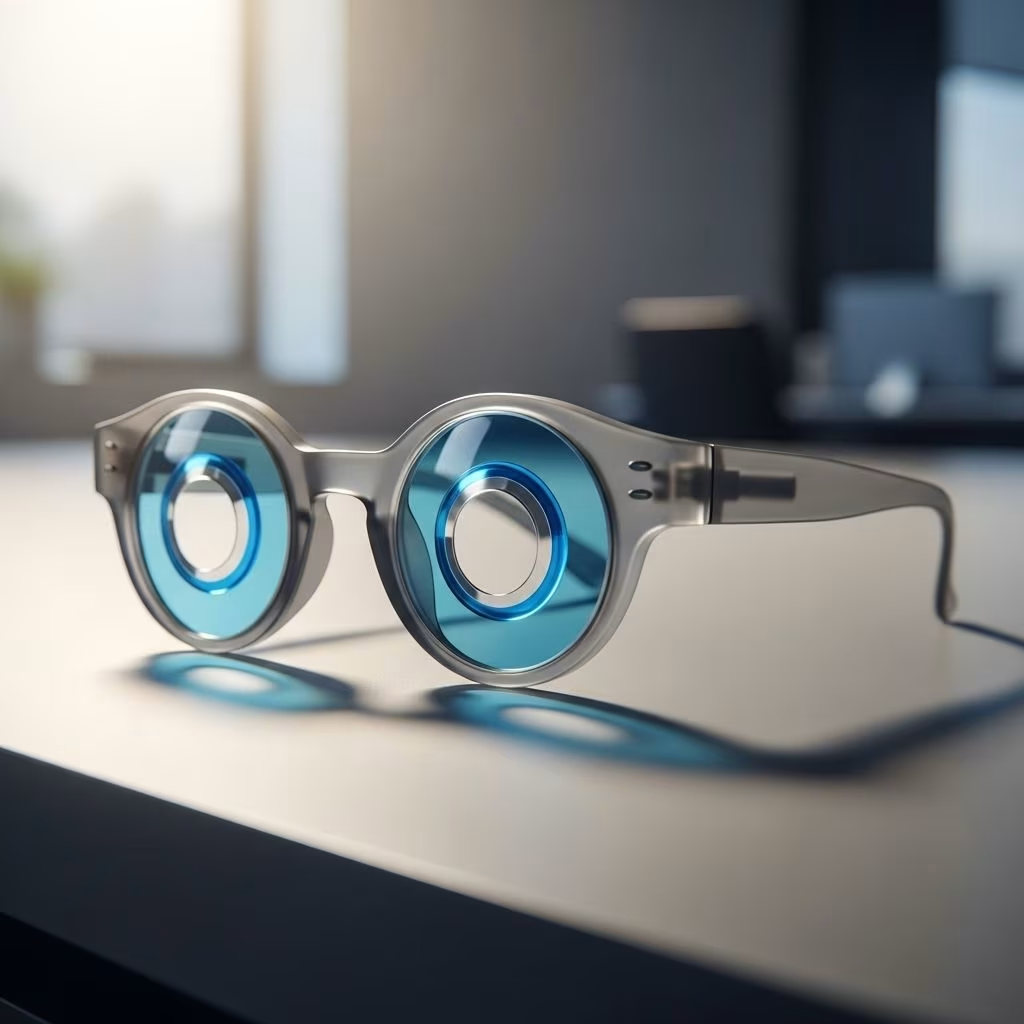
Unlike ordinary sunglasses or prescription eyeglasses, motion sickness glasses are unusual in design and function. Their standout feature is futuristic-looking, lens-free frames often equipped with four circular rims per pair: two in front and one on each side, partially filled with colored (commonly blue) liquid.
Mechanism: The Artificial Horizon
Motion sickness glasses attempt to combat the sensory mismatch by creating what medical experts call an artificial horizon in your field of vision:
- Liquid Response: As your car (or boat, or plane) moves, the liquid inside the frames shifts position, producing a visible, moving ‘horizon’ line in your periphery and central vision.
- Sensory Synchronization: The shifting fluid gives your eyes an extra cue about movement that is aligned with what your inner ear senses, theoretically reducing confusion for your brain.
- Reduced Sensory Conflict: By presenting a visual frame of reference that mirrors the motion detected by your balance system, the device is intended to reduce, or even prevent, symptoms like dizziness, nausea, and headaches.
Medical experts explain it this way: With both your eyes and ears reporting similar movement, your brain no longer receives ‘mixed messages,’ potentially minimizing motion sickness triggers.
How to Use the Glasses
- Manufacturers suggest putting on the glasses at the first sign of symptoms.
- Wear for 10 to 14 minutes—or until symptoms subside.
- You do not need to wear them for the entire duration of a trip (unless symptoms persist).
- They are designed for use in cars, planes, boats, and similar environments.
Types of Motion Sickness Glasses
| Type | Design Features | Mechanism | Status |
|---|---|---|---|
| Liquid-Filled Rim Glasses | Four circular frames, blue or red liquid inside | Moves with vehicle to create artificial horizon | Commercially available |
| Tunnel Vision Glasses | Blocks peripheral vision with smart polymer technology | Reduces number of visual cues reaching brain | Experimental, not widely available |
| Strobing Light Glasses (e.g., Xpand) | LED flashes to balance visual/balance mismatch | Alters sensory input with strobing light | Available, but with warnings |
Liquid-Filled Rim Glasses
This design is most widely seen among viral content and brand offerings such as Boarding Glasses and Seetroën. The moving fluid is visible in both central and peripheral vision, aiming to restore the connection between visual and vestibular cues.
Tunnel Vision Glasses
Still under development and not broadly available to consumers, these glasses use technology to limit the field of vision. By suppressing peripheral cues, they may reduce the sensory overload that leads to motion sickness. Early studies show promise, but more research and commercial investment are needed before widespread use.
Strobing Light Glasses
Less common but increasingly available, these devices (such as Xpand) use brief LED light flashes to synchronize brain input. However, they are not recommended for individuals with epilepsy, migraines, certain eye conditions, or those taking specific medications.
Are Anti-Motion Sickness Glasses Effective?
The science is promising but not conclusive. Here’s what peer review, initial studies, and medical professionals report:
- Company claims: Some manufacturers tout that their design alleviates up to 95% of cases in preliminary tests, but these studies have not been rigorously peer-reviewed or independently verified.
- Expert opinion: Physicians agree that the logic behind creating an artificial horizon is sound. If eyes and ears send harmonious messages to the brain, motion sickness should decrease.
- Lack of independent research: No published, peer-reviewed studies conclusively prove that these glasses outperform other standard remedies or placebos.
- User testimonials: Social media posts, especially on TikTok, feature numerous travelers praising the glasses for allowing comfortable car rides, reading in the back seat, and using smartphones in motion without nausea.
- Placebo effect: Medical experts warn that excitement and expectant belief may play a significant role in perceived effectiveness, especially given the lack of robust clinical trials.
Bottom line: While some users report significant relief, the scientific evidence remains limited. If you wish to try these glasses, do so with balanced expectations and consult with a doctor if you have existing conditions or are unsure about suitability.
Side Effects and Safety Considerations
- Generally safe: Liquid-filled rim glasses are not associated with significant side effects for most users.
- Potential discomfort: Some individuals may experience initial visual confusion or feel self-conscious due to the unusual appearance of the glasses.
- Strobing light eyewear warnings: Those with epilepsy, migraines, glaucoma, or certain mental health and neurological conditions should avoid LED-based designs.
- Medication interactions: Users taking medicines for ADHD, mood disorders, anxiety, sleep, or antibiotics should consult their doctor before using strobing varieties.
Other Remedies for Motion Sickness
If you experience motion sickness regularly or want to try proven strategies, consider the following standard options:
- Medications: OTC antihistamines (dimenhydrinate, meclizine), scopolamine patches, and prescription drugs are established treatments.
- Acupressure Bands: Wristbands that apply pressure to the P6 point can offer mild relief for susceptible individuals.
- Behavioral changes: Sit in the front seat, focus on the horizon, avoid reading or screens, keep your head still, and ensure good ventilation.
- Diet modifications: Eat light meals, stay hydrated, and avoid fatty or spicy foods before traveling.
- Ginger: Ginger tablets, candies, or teas are popular natural remedies for mild nausea.
Frequently Asked Questions (FAQs)
Q: Do anti-motion sickness glasses work for everyone?
A: No. While some users find significant relief, others do not experience much benefit. Their efficacy has not been proven in large, independent clinical trials. The perceived benefit may also depend on your susceptibility, specific motion triggers, and belief in the product.
Q: Who invented anti-motion sickness glasses?
A: French automaker Citroën is often credited with popularizing the first widely marketed pair, known as Seetroën. Since then, several manufacturers have introduced similar designs worldwide.
Q: How should I wear anti-motion sickness glasses for best results?
A: Experts and product instructions recommend putting the glasses on at the start of symptoms, not as a preventive measure before they occur. Most advice suggests wearing them for 10–14 minutes, then removing them once relief is achieved.
Q: Are these glasses suitable for children?
A: Most designs are sized for adults. Always check specific product labeling and consult a pediatrician before having children use any wearable remedy for motion sickness.
Q: Can I wear motion sickness glasses with prescription eyewear?
A: Most are lens-free and can be worn over regular glasses. However, this may cause some bulkiness and discomfort, depending on the size and design of both pairs.
Q: Are there any situations where you should never use anti-motion sickness glasses?
A: People with certain neurological or visual disorders, or those using strobing light-based designs while on contraindicated medications, should consult their physician before use.
Q: How do anti-motion sickness glasses compare to medication?
A: While motion sickness glasses offer a non-pharmacological approach, standardized medications have a longer track record of safety and efficacy in double-blind research studies. Glasses are worth trying for those seeking natural or non-drug methods, but severe cases still require a doctor’s advice.
Final Thoughts: Should You Try Anti-Motion Sickness Glasses?
Anti-motion sickness glasses represent a creative attempt to tackle a centuries-old travel nuisance. Their unusual design and viral fame have made them a popular alternative remedy—but their real-world effectiveness is still up for debate. Before purchasing, weigh the cost, style, and practicality. If you experience persistent or severe motion sickness, consult with a healthcare professional for the most reliable advice and treatment options.
References
- https://www.allaboutvision.com/eyewear/eyeglasses/types/do-motion-sickness-glasses-work/
- https://www.goodhousekeeping.com/health/a40477653/anti-motion-sickness-glasses/
- https://www.healthline.com/health/glasses-for-motion-sickness
- https://www.youtube.com/watch?v=dW38r8cdvQI
- https://pmc.ncbi.nlm.nih.gov/articles/PMC4769875/
- https://boardingglasses.com/en-na