Aphakia: Causes, Symptoms, and Treatment Options
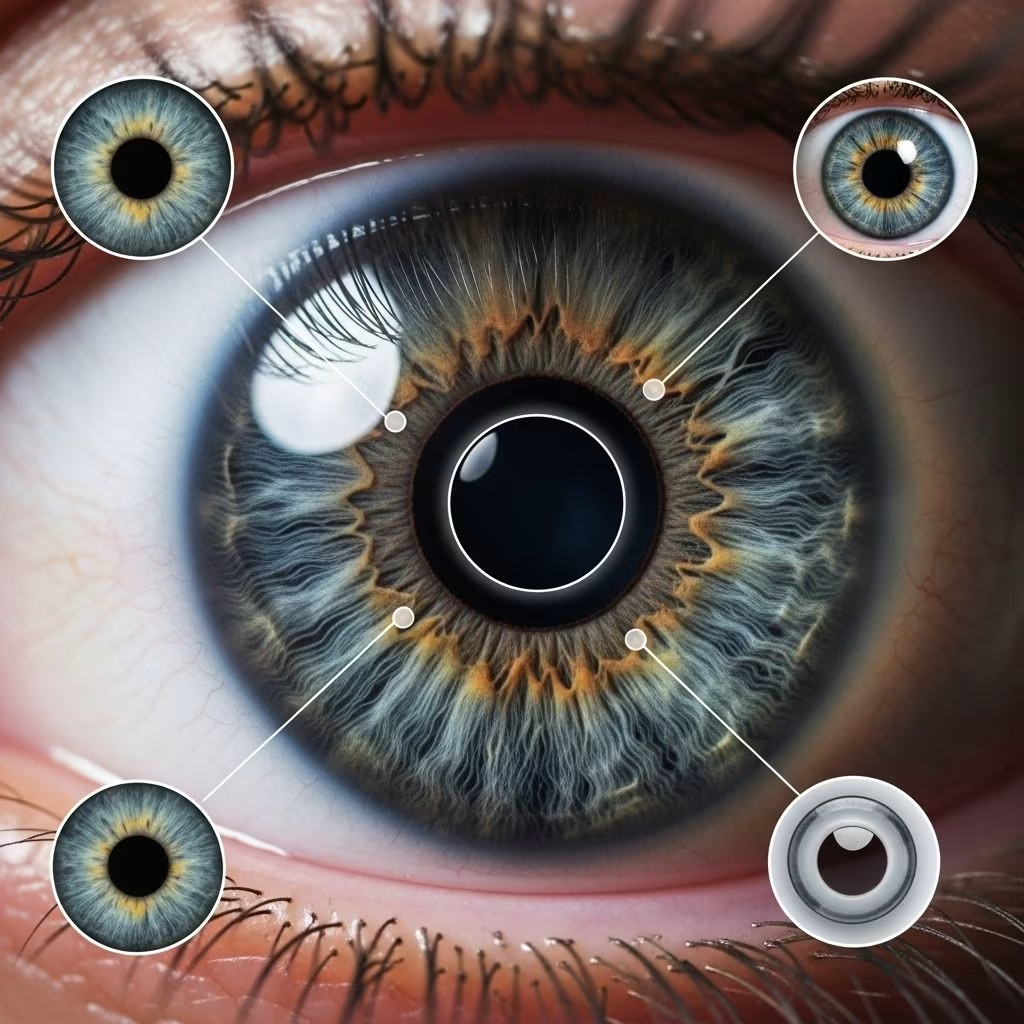
Aphakia is a medical term that refers to the absence of the lens in one or both eyes. The lens, located behind the iris, is essential for focusing light onto the retina, enabling clear vision. When the lens is missing, visual function is profoundly affected. Aphakia may be congenital (present at birth) or acquired due to surgery, trauma, or certain medical conditions. This article provides an in-depth look at aphakia, including causes, symptoms, diagnosis, treatment strategies, and management tips.
What Is Aphakia?
Aphakia is characterized by the complete absence of the natural lens from the eye’s anatomical structure. The lens is vital for accommodating visual focus and clarity at various distances.
- Congenital aphakia: Rare, usually associated with genetic defects and other ocular abnormalities such as microphthalmia (abnormally small eye) and absence of the iris.
- Acquired aphakia: Commonly results from surgical removal (e.g., cataract extraction), eye trauma, or lens dislocation due to disease or injury.
The removal or absence of the lens causes significant refractive errors and loss of accommodation, affecting the ability to see clearly at different distances.
Quick Facts About Aphakia
- Aphakia can affect people of all ages, including infants and older adults.
- Most cases in adults are acquired after cataract surgery when an artificial intraocular lens (IOL) is not implanted.
- Congenital aphakia is rare and typically part of a syndrome involving additional eye abnormalities.
Causes of Aphakia
The absence of the lens in the eye can result from several causes. Understanding these causes is important for prevention, management, and prognosis.
| Type | Origin | Description |
|---|---|---|
| Congenital | Birth (genetic or developmental) | Results from failure of lens development; often associated with other eye defects. |
| Acquired | Post-birth (surgical, injury, disease) | Most often follows cataract surgery where no IOL is implanted; can also occur after trauma or lens dislocation. |
- Surgical Causes: Most acquired cases stem from cataract removal, particularly when not followed by IOL implantation.
- Traumatic Causes: Blunt or penetrating injuries can dislodge or destroy the lens.
- Pathological Causes: Certain infections, inflammations, or inherited disorders accelerate lens deterioration or impedes its formation.
Symptoms of Aphakia
The symptoms of aphakia are directly tied to the loss of the eye’s ability to focus light. Individuals may experience:
- Severe blurry vision: Especially for near objects; loss of accommodation means difficulty focusing on varying distances.
- Extreme farsightedness (hyperopia): The eye can’t bring close objects into focus.
- Reduced visual acuity: Overall sharpness of vision is impaired.
- Distorted vision: Objects may appear smaller or stretched.
- Increased sensitivity to light (photophobia): Absence of the lens reduces the eye’s ability to filter and focus light.
- Haloes and glare: Light scatters abnormally without the lens.
Children with congenital aphakia may show delayed visual development or abnormal eye movement. In some cases, nystagmus (uncontrolled eye movement) is present.
Diagnosing Aphakia
Diagnosis requires a comprehensive eye examination performed by an ophthalmologist or optometrist. Diagnostic steps may include:
- Visual acuity test: Measures the sharpness of vision at various distances.
- Slit-lamp examination: Allows detailed inspection of the eye’s anterior and posterior segments to confirm the lens absence.
- Refraction assessment: Determines the magnitude of hyperopia and loss of accommodation.
- Ophthalmoscopy: Inspects the retina and structures behind the iris for lens remnants or complications.
- Imaging: In selected cases, ultrasound or other imaging modalities are used to confirm complete lens absence and rule out abnormalities.
A congenital origin often requires additional genetic and systemic evaluation to identify associated syndromes and inform long-term care.
Treatment Options for Aphakia
The main objective of treating aphakia is to restore vision to functional levels and address related complications. Treatment varies depending on the patient’s age and overall health.
Non-Surgical Treatments
- Corrective lenses: Thick, high-powered glasses or specialized contact lenses can compensate for the absence of the lens and allow focusing of light on the retina.
- Contact lenses: Preferred in infants and young children due to practical and cosmetic reasons. Various types, including rigid gas-permeable and soft lenses, may be used.
- Protective eyewear: Minimizes risk of injury to the vulnerable eye.
Contact lenses are often used for children because they provide better visual quality and peripheral vision than aphakic glasses, which are very thick and may distort the appearance of the eye.
Surgical Treatments: Intraocular Lens (IOL) Implantation
- IOLs: Artificial lenses can be implanted to replace the natural lens. This is the standard solution for many adult patients.
- Indications: The decision to implant an IOL depends on age, eye health, and anatomical considerations. For very young children, contact lenses or glasses are often recommended instead because of surgical risks and long-term complications with IOLs.
- Procedure: IOLs are surgically positioned in the anterior or posterior chamber, restoring much of the focusing ability previously provided by the natural lens.
Surgical intervention with IOLs may not always be suitable or safe in cases of congenital aphakia, especially in infants. Sometimes, surgery is delayed until the child is older and eye structures have matured.
Comparing Treatment Strategies for Aphakia
| Treatment Option | Advantages | Challenges |
|---|---|---|
| Aphakic Glasses | Non-invasive, easy to use, suitable for older adults | Bulky, may distort appearance, limited peripheral vision, uncomfortable for young children |
| Contact Lenses | Better vision, good cosmesis, wider field of view | Requires careful handling, hygiene, regular replacements, not suitable for all patients |
| IOL Implant | Restores near-normal vision, no need for external devices | Surgical risks (especially in infants), potential for complications, may require future procedures |
Living with Aphakia: Management and Outlook
Long-term management focuses on optimizing visual function, monitoring eye health, and preventing complications. Patients and parents (in pediatric cases) must work closely with healthcare providers to ensure appropriate management.
Tips for Maximizing Vision and Eye Health
- Wear corrective lenses as instructed to achieve maximum visual potential.
- Maintain excellent hygiene with contact lenses to reduce infection risk.
- Attend regular follow-up appointments with your eye care provider.
- Protect your eyes from trauma with glasses or shields, especially in children or active adults.
- Monitor for changes in vision, discomfort, redness, or discharge, and report to your ophthalmologist promptly.
Many people with aphakia—whether acquired or congenital—can achieve functional vision with appropriate interventions.
Complications of Aphakia
Aphakia, if untreated or poorly managed, presents several risks and complications:
- Retinal detachment: Higher risk due to structural changes following lens removal or trauma.
- Glaucoma: Aphakic eyes may have altered fluid dynamics, increasing pressure and risk of optic nerve damage.
- Corneal edema: Swelling of the cornea, possibly from surgical trauma or long-term contact lens use.
- Secondary infections: Particularly in cases of trauma or post-surgical care.
- Visual disability: Without adequate correction, severe vision loss can impair independence, development (in children), and daily activities.
Proactive management and monitoring are crucial for early detection and treatment of these complications.
Special Considerations: Pediatric Aphakia
In children, especially infants and toddlers, aphakia presents unique challenges. Early diagnosis and intervention are crucial to ensure normal visual development and prevent amblyopia (lazy eye). Management strategies for pediatric aphakia include:
- Contact lenses: Preferred for infants; easier to maintain vision and avoid glasses-related stigma or discomfort.
- Glasses: May be used when contact lenses are impractical or in older children.
- IOL implantation: Considered for selected cases as the child grows; timing depends on ocular development and risk assessment.
- Monitor for amblyopia: Frequent assessment to identify and treat vision loss in one eye, often with patching therapy.
- Involve family caregivers: Active participation in managing care routines, attending appointments, and providing feedback to healthcare teams.
Support resources, education, and patient-family engagement play a vital role in successful outcomes for young children with aphakia.
Prevention and Future Outlook
Aphakia often cannot be prevented, particularly congenital cases. For surgical or traumatic aphakia, risk reduction involves:
- Using eye protection during high-risk activities or occupations.
- Following medical advice and post-operative instructions after cataract surgery.
- Prompt management of eye injuries or infections to mitigate the risk of lens loss.
Advances in surgical techniques and medical devices, such as IOLs, continue to improve outcomes and quality of life for patients with aphakia.
Frequently Asked Questions (FAQs)
Q: What is aphakia?
Aphakia is the absence of the eye’s natural lens, resulting in significant visual impairment and refractive errors.
Q: What causes aphakia?
Aphakia can be congenital (due to genetic defects causing failure of lens development) or acquired from surgical removal (most often after cataract extraction), trauma, or disease.
Q: Can aphakia be cured?
Aphakia cannot be reversed, but vision can often be restored through corrective lenses, contact lenses, or surgical implantation of intraocular lenses (IOLs).
Q: Is aphakia common?
Acquired aphakia is more common, especially in adults following cataract surgery. Congenital aphakia is rare.
Q: How is aphakia treated in children?
Young children are commonly treated with contact lenses due to the challenges of glasses or IOLs. Ongoing monitoring and family involvement are critical for optimal outcomes.
Summary
Aphakia is a serious eye condition involving the absence of the lens, most commonly from surgery, trauma, or rare genetic causes. Diagnosis and management require collaboration between patients and eye care professionals. Through the use of corrective lenses, contact lenses, surgical implants, and ongoing monitoring, many individuals with aphakia can lead active and visually fulfilling lives.
References
- https://www.ncbi.nlm.nih.gov/books/NBK595386/
- https://www.bcbstx.com/bb/grp/bb_ghsg15bavstxo_tx_2025.pdf
- https://my.clevelandclinic.org/health/diseases/24207-aphakia
- https://www.healthline.com/health/pseudophakia
- https://www.healthline.com/health/eye-health/glaucoma-after-cataract-surgery
- https://www.ncbi.nlm.nih.gov/sites/books/NBK592414/
- https://www.bcbsil.com/bb/grp/bb_spsg15bcesilo_il_2025.pdf
- https://healthy.kaiserpermanente.org/content/dam/kporg/final/documents/health-plan-documents/eoc/ga/individual-family/2024/on-kp-ga-signature-silver-850-15-87-csr-ga-en.pdf