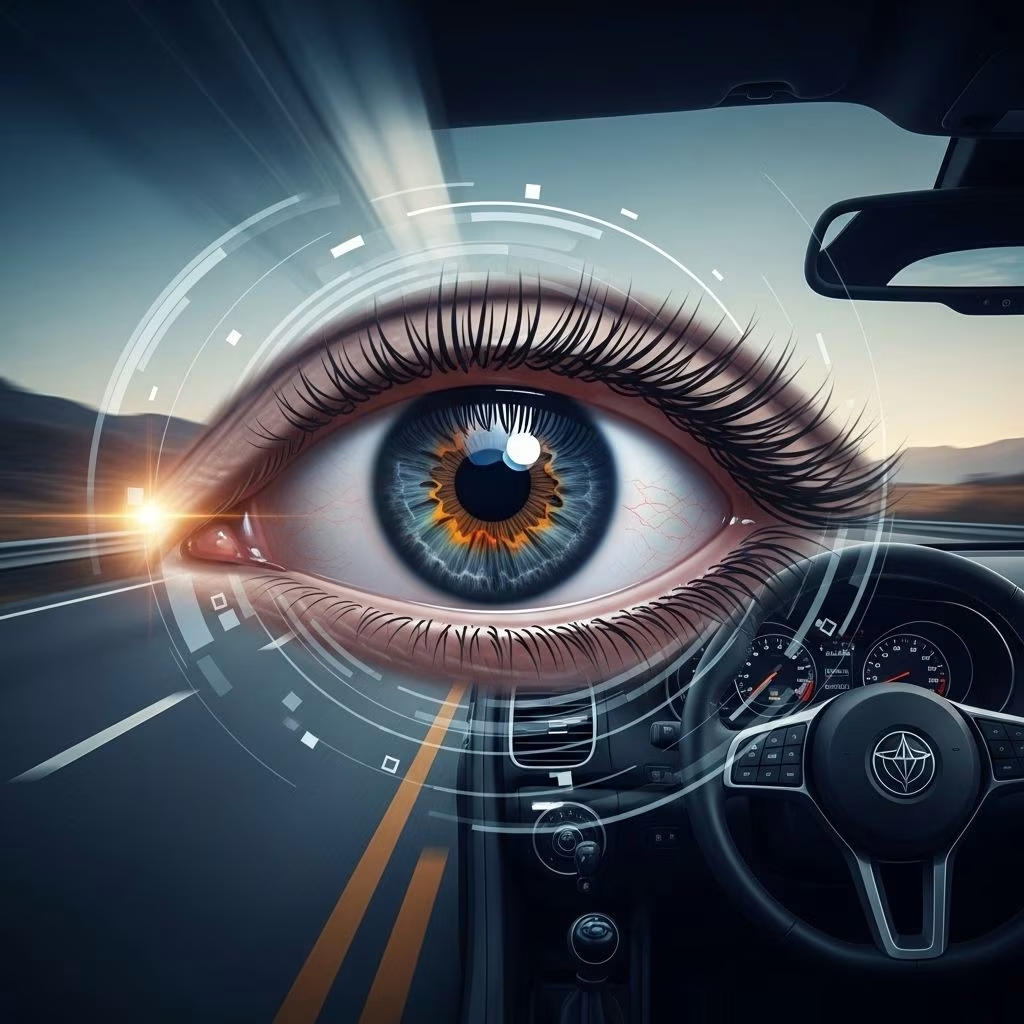
Driving is central to independence and mobility for many, but what if you have sight in only one eye? People with monocular vision—whether from injury, disease, or congenital conditions—often ask if safe and legal driving is possible. The answer is yes in most regions, provided certain vision requirements are met. This comprehensive guide covers the necessary steps, legal standards, safety precautions, and adaptation strategies for those navigating the road with vision in just one eye.
Is It Legal to Drive with One Eye?
In most jurisdictions across the United States, Canada, and the United Kingdom, it is legal to drive with one eye as long as your remaining eye meets minimum vision requirements. The Department of Motor Vehicles (DMV), Driver and Vehicle Licensing Agency (DVLA), and similar agencies focus on visual acuity and peripheral vision rather than the number of functioning eyes.
- Almost all U.S. states require a minimum visual acuity of 20/40 or better in your functioning eye, with or without corrective lenses.
- Canada and the UK (DVLA) set similar standards; always check your local regulations.
- If you wear glasses or contact lenses to achieve this standard, you must wear them when driving.
The focus is on safety—ensuring drivers can distinguish objects, signs, hazards, and road markings from a safe distance.
Vision Standards and Screening for Drivers
Understanding Visual Acuity and Peripheral Vision
Organizations like DMVs and optometrists use specific benchmarks during driving tests:
- Visual Acuity: Sharpness and clarity of vision, typically measured by reading letters on a chart.
- Peripheral Vision: Ability to detect objects outside your direct line of sight while focused straight ahead.
If your vision in the functioning eye meets 20/40 or better, you are usually eligible for a standard driver’s license. You must pass a vision screening, which is often similar to the test at your eye doctor’s office. Bring your corrective lenses for the test if you use them.
- Visual Field Requirements: Tests may assess how well you see peripherally (side vision), crucial for merging and changing lanes.
- Documentation: Some states or countries may require a report from an ophthalmologist confirming your visual status.
Receiving a Driving License
- If you pass the vision test, you may receive a full driver’s license.
- If your vision has limitations, you may receive a restricted license (for example, requiring corrective lenses or placing limits on night driving).
- Some regions may require additional mirrors or other vehicle adaptations.
Regulations can vary. Always verify requirements with your local DMV, DVLA, or equivalent agency.
Monocular Vision: Causes, Challenges, and Adaptation
What Is Monocular Vision?
Monocular vision refers to having vision in only one eye due to loss or impairment of the other. Causes include:
- Trauma or injury to the eye
- Eye diseases (such as glaucoma or diabetic retinopathy)
- Infections that damage the eye
- Ocular cancers (like retinoblastoma or melanoma)
- Birth conditions (anophthalmia: missing one or both eyes at birth)
- Crossed or lazy eye (strabismus or amblyopia)
- Nerve damage or brain injury affecting vision
The loss may be permanent or temporary and can happen at any age.
Effects of Monocular Vision on Driving
- Reduced depth perception: With one eye, judging how near or far objects are becomes more challenging, especially for close-up tasks.
- Narrowed peripheral vision: Reduced awareness of activity or hazards on the side with impaired vision. This can affect tasks like merging, lane changes, and reacting to vehicles or pedestrians approaching from that direction.
- Increased need for head movement: To compensate for lost peripheral vision, drivers must turn their heads more frequently to check blind spots.
Most individuals with monocular vision adapt over time, usually within several months to a year, learning new ways to judge distance and scan their environment for safety.
Vision Screening and Requirements by Region
| Region | Legal to Drive with One Eye? | Minimum Vision Standard | Possible Restrictions |
|---|---|---|---|
| United States | Yes | 20/40 visual acuity in one eye | Corrective lenses, restricted hours, additional mirrors |
| Canada | Yes | Similar to U.S.; varies by province | Same as above |
| United Kingdom | Yes | DVLA standards, usually 20/40 or 6/12 in one eye | Same as above |
Always confirm country/state-specific rules. Local authorities may require periodic vision re-testing, documentation from a specialist, and medical clearance if the eye condition is progressive.
Potential Driving Restrictions and License Conditions
- Daylight-only driving: If your night vision is impaired, licensing agencies may restrict you to driving during daylight hours.
- Additional mirrors: You may be required to install larger or extra exterior mirrors—especially on the side with vision loss—to increase your field of view.
- Speed and road restrictions: Some licenses prevent driving on highways or freeways, or place speed limits for safety.
- Periodic renewal: If you have progressive eye disease, you may need regular vision checks to maintain licensure.
Adapting to Driving With One Eye: Practical Tips
The transition to driving with monocular vision can be challenging. Adaptation usually takes several months, but can extend up to a year as your brain learns to compensate for the loss of depth perception and field of view. Below are essential tips for safer driving:
- Get a comprehensive eye exam: Have an optometrist assess your vision and provide written documentation for licensing.
- Use corrective lenses if needed: Wear prescribed glasses or contacts to maximize visual acuity.
- Install additional or larger mirrors: Enhance your side and rear visibility, especially on the side with limited peripheral vision.
- Increase head movements: Routinely turn your head further to check blind spots and traffic.
- Practice safe following distance: Maintain extra space behind other vehicles to allow for compensating slower reaction times due to depth perception limitations.
- Drive at moderate speeds: Avoid rapid changes and aggressive maneuvers until fully adapted.
- Limit night driving: If night vision is compromised or adaptation is incomplete, drive only during daylight hours.
- Participate in rehabilitation: Occupational therapists and orientation specialists can provide targeted training in scanning techniques, distance judgment, and hazard awareness.
Safety Considerations: Risks and Best Practices
Driving with one eye presents unique risks, but these can be mitigated with practice, preparation, and awareness:
- Impaired depth perception can make it harder to judge distance while parking, overtaking, or merging. Take time with these maneuvers and consider seeking professional driver training if new to monocular vision.
- Reduced peripheral awareness elevates the risk of side-swipes and missed hazards. Frequent scanning and extra mirrors help.
- Temporary adaptation phase (up to one year) requires patience. Don’t rush into high-risk environments (busy highways, unfamiliar routes) until you feel comfortable.
Most people successfully adjust, but ongoing self-monitoring is crucial. If you experience worsening vision or difficulty, consult an eye care professional promptly.
Medical Conditions Leading to Monocular Vision
Many conditions can result in loss of vision in one eye:
- Eye injury or trauma (accidents, chemical burns)
- Infectious diseases (e.g., severe eye infection)
- Retinoblastoma (childhood eye cancer)
- Ocular melanoma (adult eye cancer)
- Diabetic retinopathy (due to uncontrolled diabetes)
- Glaucoma (increased pressure damages the optic nerve)
- Congenital conditions (anophthalmia: missing eye at birth)
Loss may be sudden or gradual. Early eye care intervention—regardless of cause—helps preserve vision, maximize function, and ensure road safety.
Getting Help and Support
Adapting to life and driving with monocular vision will take time and resources. Consider:
- Vision rehabilitation services: Specialized therapists teach strategies for mobility, hazard awareness, and confidence building.
- Support groups: Connect with others experiencing similar adjustment challenges for advice and encouragement.
- Professional driver training: Some driving schools offer tailored courses for people with special vision requirements.
Frequently Asked Questions (FAQs)
Q: Is it safe to drive with only one eye?
A: Yes, many people drive safely with monocular vision. With proper adaptation and compliance with legal standards, risks can be minimized.
Q: How long does it take to adapt to monocular vision for driving?
A: People generally adjust within 6 months to a year, although individuals vary. Rehabilitation and driver training can help speed the process.
Q: Are there specific vehicle adaptations I should consider?
A: Yes, larger or extra mirrors—especially on the side of the blind eye—are often recommended and sometimes required.
Q: Will I need frequent vision tests?
A: Most jurisdictions require periodic vision re-testing, particularly if you have a progressive condition in your functioning eye.
Q: Does monocular vision affect all areas of driving?
A: The most significant impact is on depth perception and peripheral awareness. Driving techniques and environmental adaptation help reduce risk.
Q: Can children born with one eye learn to drive when older?
A: Yes, as long as their single eye meets required visual acuity standards. Early rehabilitation and occupational therapy support may be needed.
Key Takeaways
- Driving with vision in only one eye is legal across most areas, contingent on passing a vision screening.
- Minimum standard is usually 20/40 visual acuity in the functioning eye.
- Adaptation strategies—including use of extra mirrors, increased head movement, and rehabilitation—improve safety.
- Periodic medical review may be required, especially in cases of progressive eye disease.
- Consult your local DMV or equivalent agency for specific legal and testing requirements in your area.
Safe driving with monocular vision is possible for most, with proper preparation, ongoing vigilance, and support. Check with professionals as needed, and stay proactive about your visual health and licensing status.
References
- https://cvopt.com/can-you-drive-with-one-eye/
- https://mycorneacare.com/eye-health-and-wellness/can-you-drive-with-one-eye/
- https://nweyeclinic.com/can-you-drive-with-one-eye-essential-steps-for-safe-driving/
- https://www.healthline.com/health/eye-health/can-you-drive-with-one-eye
- https://dmvcheatsheets.com/blogs/articles/can-you-get-a-driver-s-license-if-you-are-blind-in-one-eye
- https://ialvs.com/ways-we-can-help/help-with-tasks/driving-with-low-vision/
- https://journalofethics.ama-assn.org/article/legal-vision-requirements-drivers-united-states/2010-12
- https://reynoldsopticians.com/is-it-safe-to-drive-with-one-eye/