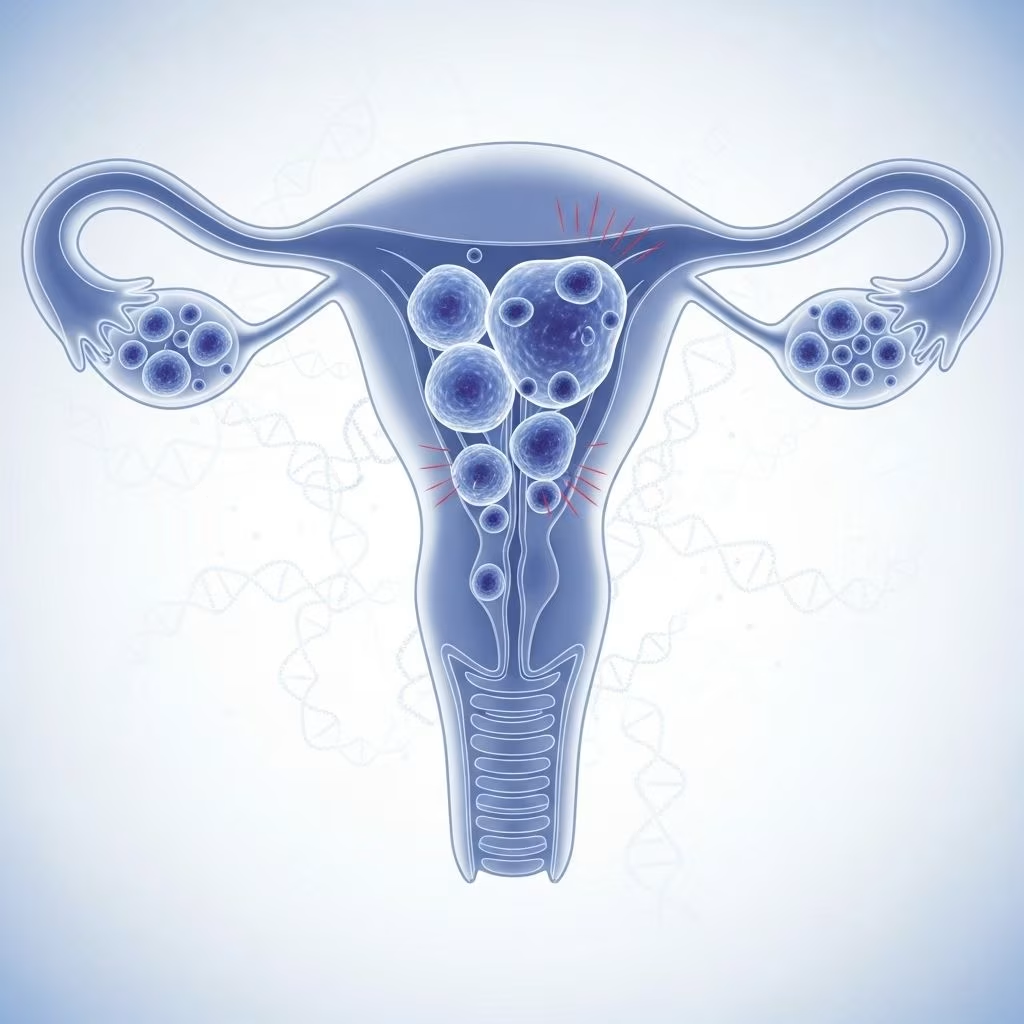
Gestational trophoblastic disease (GTD) refers to a group of rare tumors that involve abnormal growth of cells inside a woman’s uterus. Most forms of GTD develop in association with pregnancy and originate from the tissues that would normally develop into the placenta. Understanding GTD is crucial as timely diagnosis and appropriate management can ensure excellent recovery rates.
What is Gestational Trophoblastic Disease?
Gestational trophoblastic disease encompasses a spectrum of disorders derived from trophoblastic tissue, which forms part of the placenta during pregnancy. These conditions range from benign to malignant and are characterized by the abnormal proliferation of trophoblasts, the cells that normally help an embryo attach to the uterine wall and form the placenta.
- GTD can be benign (non-cancerous) or malignant (cancerous).
- Most types are curable, especially when diagnosed early.
- GTD is rare, but important to recognize because of its potential complications.
Types of Gestational Trophoblastic Disease
There are several major types of gestational trophoblastic disease, differentiated by their histological features, biological behavior, and clinical implications. The primary types are:
- Hydatidiform mole (Molar pregnancy)
- Gestational trophoblastic neoplasia (GTN)
Hydatidiform Mole
The hydatidiform mole is the most common form of GTD. It results from abnormal fertilization and does not result in a viable pregnancy. The tissue that forms instead is an abnormal mass of cysts.
- Complete hydatidiform mole: No fetal tissue present; only abnormal placental tissue grows in the uterus.
- Partial hydatidiform mole: Contains some fetal or embryonic tissue, but is always abnormal and cannot result in a living infant.
Hydatidiform moles are usually benign but can evolve into malignant forms if left untreated.
Gestational Trophoblastic Neoplasia (GTN)
While most hydatidiform moles are benign, gestational trophoblastic neoplasia (GTN) refers to forms of GTD that are considered cancerous. GTN may arise after any kind of pregnancy, but most commonly follow molar pregnancies.
GTN is divided into several types:
- Invasive mole: Grows into the muscle layer of the uterus (myometrium). Can sometimes resolve on its own but often requires treatment.
- Choriocarcinoma: A highly malignant, fast-growing tumor that arises from trophoblasts. Can spread to other parts of the body, such as lungs and brain.
- Placental-site trophoblastic tumor (PSTT): A rare form often originating at the site where the placenta was attached. Grows slowly and symptoms may appear months or even years after pregnancy.
- Epithelioid trophoblastic tumor (ETT): Another rare type that may be benign or malignant; malignant forms may spread to lungs or bones.
Who is at Risk?
Although GTD can occur in any woman who becomes pregnant, certain factors may increase risk:
- Women younger than 20 or older than 35 are at higher risk.
- Previous history of molar pregnancy increases risk of recurrence.
- Certain genetic and regional factors may contribute to the likelihood of developing GTD.
What Causes Gestational Trophoblastic Disease?
GTD develops due to genetic and biological errors during fertilization, which leads to abnormal multiplication and transformation of placental cells. The precise causes can differ among the types:
- Complete hydatidiform mole: Usually develops when an egg with no genetic material is fertilized by a sperm, which then duplicates its genetic material or, less often, when two sperm fertilize an empty egg.
- Partial hydatidiform mole: Results from an egg fertilized by two sperm, leading to an abnormal number of chromosomes and formation of both abnormal placental and fetal tissues.
- Other forms of GTD arise due to continued abnormal trophoblastic proliferation after any pregnancy event, including miscarriage, ectopic pregnancy, or full-term delivery.
Symptoms of Gestational Trophoblastic Disease
Symptoms may mimic normal pregnancy but certain warning signs can suggest GTD:
- Abnormal vaginal bleeding during or after pregnancy, often in the first trimester
- High levels of human chorionic gonadotropin (hCG) hormone
- Significantly larger or smaller uterus than expected for gestational age
- Severe nausea and vomiting (more than usual in pregnancy)
- Pelvic pain or pressure
- Passage of grape-like cysts or tissue from the vagina
- Absence of fetal movement or heartbeat when expected
- Rare: Symptoms related to metastasis (e.g., cough, headache, seizures) if cancer has spread
How is GTD Diagnosed?
Diagnosing GTD requires a combination of medical history, examination, laboratory tests, and imaging studies. Key diagnostic steps include:
- Pelvic examination to assess uterine size and shape.
- Ultrasound is the most effective imaging technique for identifying molar pregnancies or unusual growths within the uterus. Classic features may include a “snowstorm” appearance for complete moles or identification of abnormal fetal tissue in partial moles.
- Blood tests to measure hCG levels, which are usually much higher in GTD than in normal pregnancies.
- Histopathological examination of tissue removed from the uterus can confirm the diagnosis and specify the exact type of GTD.
- Additional tests (like chest X-ray or CT/MRI) may be needed if cancerous forms are suspected to have spread.
Treatment Options for Gestational Trophoblastic Disease
Treatment for GTD depends on the type, extent, and whether the disease has spread, as well as the patient’s overall health and reproductive desires.
Surgical Treatment
- Suction dilation and curettage (D&C): Main treatment for hydatidiform moles. The abnormal tissue is removed from the uterus, which often cures the condition.
- Hysterectomy: Surgical removal of the uterus may be recommended for women who no longer wish to have children or who have invasive forms not amenable to less invasive therapy.
Chemotherapy
- Chemotherapy is highly effective for malignant forms (such as invasive mole and choriocarcinoma) and is often curative, even when cancer has spread.
- Drugs such as methotrexate and dactinomycin are commonly used.
- Treatment regimens vary according to risk stratification (single vs. multi-drug chemotherapy).
Other Treatments
- Radiation therapy is rarely used, but may be considered if cancer has spread to the brain or other sites.
- Immunotherapy and molecular targeted therapies are under research but not standard.
Prognosis and Follow-Up
The prognosis for gestational trophoblastic disease is excellent, especially when diagnosed early and treated appropriately. Most women recover fully and retain fertility. However, close monitoring is vital:
- Regular blood tests to monitor hCG levels after treatment.
- Ongoing follow-up for at least 6-12 months to ensure no recurrence.
- Effective contraception during follow-up to avoid interference with hCG monitoring.
Potential Complications
If untreated, GTD can lead to serious health problems, including:
- Severe uterine bleeding
- Uterine rupture
- Spread of malignant disease (most often to lungs, less commonly to brain, liver, or other organs)
- Infertility, though rare with modern treatments
Prevention and Risk Reduction
There are no guaranteed methods to prevent gestational trophoblastic disease, but awareness of the risk factors and early intervention after abnormal pregnancies can reduce complications.
- Prompt evaluation after any abnormal pregnancy event, especially if previous molar pregnancy occurred.
- Genetic counseling for women with a strong personal or family history of GTD.
Living with Gestational Trophoblastic Disease
A diagnosis of GTD can be emotionally challenging. Key recommendations for women include:
- Seek support from health care professionals and support groups.
- Adhere strictly to follow-up appointments and testing.
- Discuss future pregnancies and family planning with your medical team.
Frequently Asked Questions (FAQs)
Q: When does gestational trophoblastic disease usually develop?
A: GTD typically develops within weeks after fertilization, often being diagnosed within the first trimester of what would have been a pregnancy.
Q: Is gestational trophoblastic disease fatal?
A: Most cases of GTD are not fatal, as most tumors are benign or highly treatable. Some forms can become cancerous and, if left untreated or unresponsive to therapy and spread extensively, may be life-threatening. However, the five-year survival rate is over 80% even for cancerous types, provided proper treatment is given.
Q: Can GTD come back after treatment?
A: There is a risk of recurrence, particularly in women who have had a molar pregnancy. Close monitoring and regular hCG testing during follow-up are crucial for early detection and management of recurrence.
Q: Can I have a normal pregnancy after having GTD?
A: Yes, most women have healthy pregnancies after successful treatment of GTD. It is important to strictly follow medical guidance regarding when it is safe to conceive again after treatment and monitoring have concluded.
Q: Are these tumors hereditary?
A: Most cases of GTD are not hereditary. Rarely, genetic factors can play a role, especially in women with repeat molar pregnancies. Your doctor may recommend genetic counseling if you have a family history or multiple occurrences.
Summary Table: Types of Gestational Trophoblastic Disease
| Type | Description | Malignant? | Treatment |
|---|---|---|---|
| Complete Hydatidiform Mole | No fetus, abnormal placental growth | No (but can become malignant) | Surgery, monitoring |
| Partial Hydatidiform Mole | Abnormal fetus and placenta | No (but can become malignant) | Surgery, monitoring |
| Invasive Mole | Trophoblast invades uterine muscle | Usually yes | Chemotherapy, surgery |
| Choriocarcinoma | Highly malignant tumor, can metastasize | Yes | Chemotherapy, rarely surgery |
| Placental-site Trophoblastic Tumor | Tumor at placental attachment site | Yes (rare, usually slow-growing) | Surgery, sometimes chemotherapy |
| Epithelioid Trophoblastic Tumor | Very rare, may be benign or malignant | Can be | Surgery, chemotherapy (if malignant) |
Key Points to Remember
- Gestational trophoblastic disease refers to a spectrum of rare tumors related to pregnancy and placental tissues.
- It includes benign growths (molar pregnancies) and malignant cancers (GTN such as choriocarcinoma).
- Symptoms commonly include abnormal bleeding in early pregnancy and very high hCG levels.
- Most women recover completely with treatment and follow-up.
- Early detection, appropriate therapy, and consistent follow-up are essential to achieving the best outcomes.
References
- https://www.canceraustralia.gov.au/cancer-types/gestational-trophoblastic-disease-gtd/types-gestational-trophoblastic-disease
- https://www.webmd.com/cancer/gestational_trophoblastic_disease
- https://pure.johnshopkins.edu/en/publications/molecular-basis-of-gestational-trophoblastic-diseases-4
- https://pubmed.ncbi.nlm.nih.gov/17613426/
- https://pure.johnshopkins.edu/en/publications/gestational-trophoblastic-neoplasia-version-22019-2
- https://pubmed.ncbi.nlm.nih.gov/31693991/