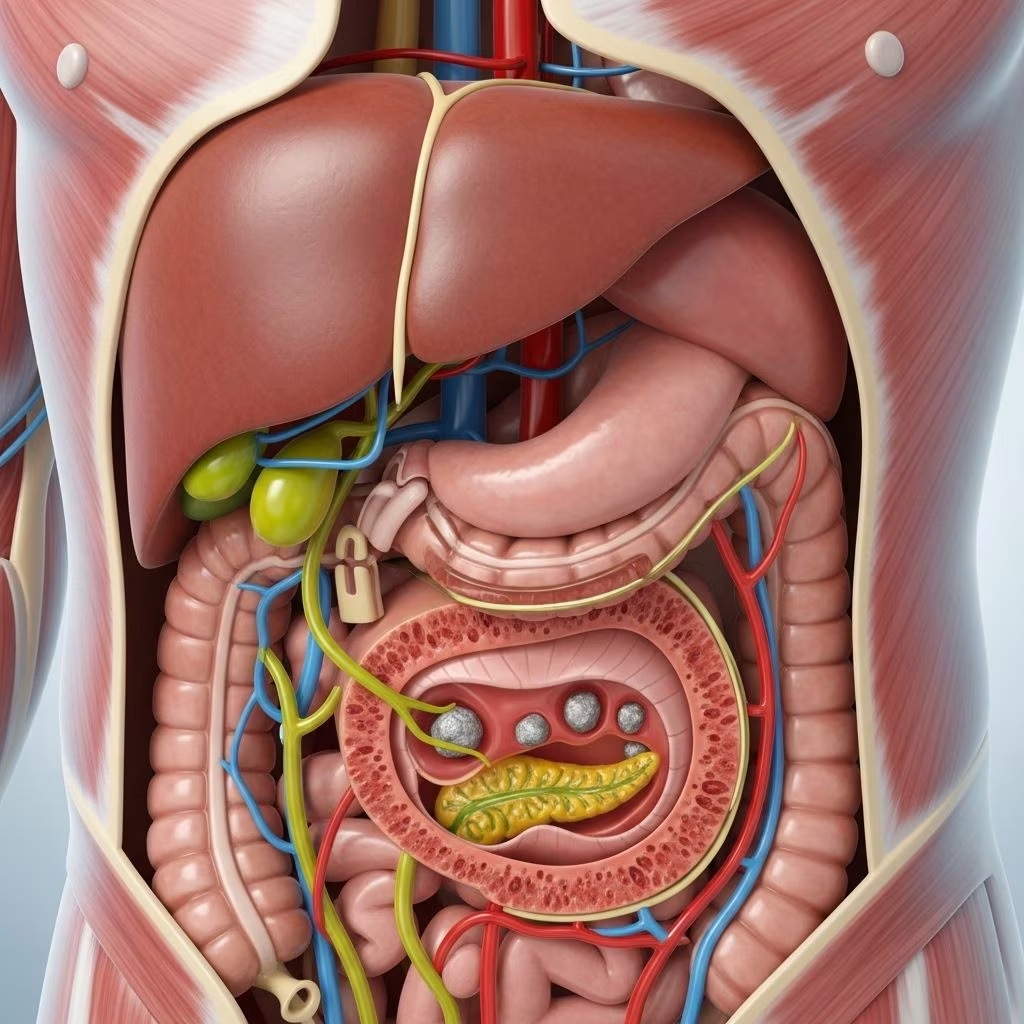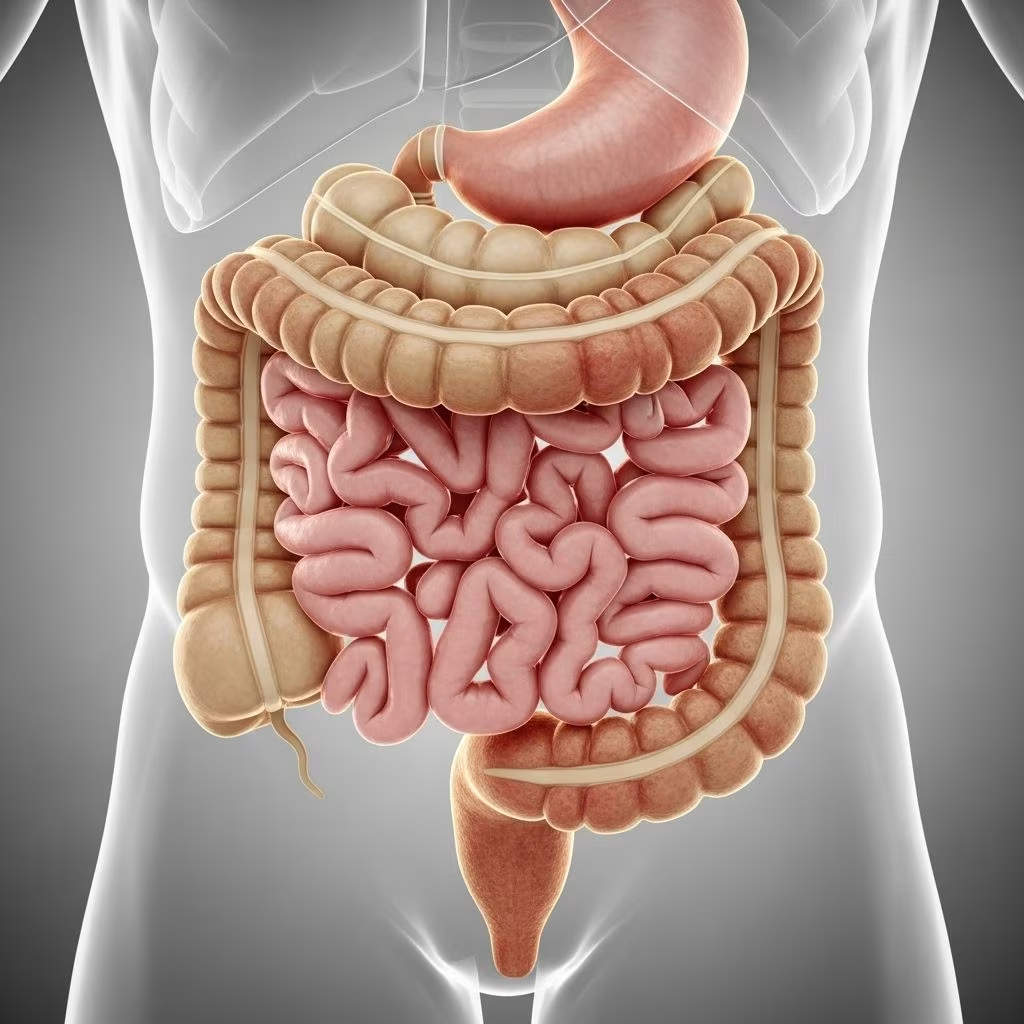
How Long Are Your Intestines? Length, Structure, and Function
Your intestines are a vital part of your digestive system, responsible for breaking down food, absorbing nutrients, and supporting overall health. But their structure and length might surprise you. Although compactly coiled in your abdomen, stretching them out reveals remarkable dimensions and complex functions. This guide explores the length, key sections, and health aspects of both small and large intestines.
Overview: The Intestines and Digestive Health
The human digestive system consists of several specialized organs working in sequence. After food leaves the stomach, it enters the intestines, which complete the breakdown, absorb crucial nutrients, and prepare waste for excretion. Understanding the intestines’ length and structure provides insight into their indispensable role in nutrition and wellbeing.
- Small intestines: Absorb most nutrients and water.
- Large intestines: Reclaim water, form and store feces, and absorb remaining salts.
Small Intestine: Length and Sections
The small intestine connects your stomach to the large intestine, driving most digestion and nutrient absorption. Despite being called “small,” its length is impressive.
How long is the small intestine?
Estimates vary due to measurement techniques and individual differences. In most adults, the small intestine measures:
- About 9 to 16 feet (2.7 to 4.8 meters) in length, with the average being around 15 feet (4.5 meters)
- Diameter: About 1 inch (2.5 cm) wide
The length depends on genetics, body size, and the way it is measured (in a living person vs. after death). Taller individuals usually have longer intestines.
Sections of the Small Intestine
The small intestine consists of three parts:
- Duodenum: The first and shortest segment (about 8 to 10 inches long). It receives partially digested food from the stomach and enzymes from the pancreas and liver, continuing chemical digestion.
- Jejunum: The central section (about 8 feet), where the majority of nutrient absorption occurs through specialized structures called villi and plicae circulares (folds).
- Ileum: The final and longest segment (about 9-10 feet). It completes absorption, especially of vitamin B12 and bile acids, connecting to the large intestine’s first region (cecum).
Functions of the Small Intestine
- Absorbs roughly 90% of nutrients from food.
- Completes digestion with gut enzymes.
- Transfers digested nutrients into the bloodstream for cellular use throughout the body.
Common Small Intestine Disorders
- Infections (e.g., gastroenteritis)
- Ulcers
- Lactose intolerance
- Irritable bowel syndrome (IBS)
- Celiac disease
- Crohn’s disease
- Intestinal obstruction
Large Intestine: Length and Structure
The large intestine follows the small intestine, processing the remaining material and extracting moisture, electrolytes, and salts before forming waste. It’s considerably wider than the small intestine, but shorter in length.
How long is the large intestine?
- Typically about 5 feet (1.5 meters) long
- Diameter: About 3 inches (7.5 cm) wide
In most people, the large intestine fits snugly around the perimeter of the abdominal cavity. Its length can vary based on age, sex, and body size. In particular, males and heavier or younger people often have slightly longer intestines.
Sections of the Large Intestine
| Section | Description | Approximate Length |
|---|---|---|
| Cecum | Connects to the small intestine via the ileocecal junction; absorbs water and salts. | 2.4 inches (6 cm) |
| Colon | Main segment; absorbs water, electrolytes, and forms feces. | Longest part of large intestine |
| Rectum | Holds fecal matter after digestion. | Short (around 4-5 inches/10-12 cm) |
| Anal Canal | Final segment enabling bowel movements. | A few inches |
Functions of the Large Intestine
- Absorbs remaining water and electrolytes
- Converts digested food into stool
- Stores waste until elimination
- Houses beneficial gut bacteria for fermentation
Common Large Intestine Disorders
- Diverticulitis
- Colorectal cancer
- Irritable bowel disease (IBD)
- Constipation
- Diarrhea
Total Length and Surface Area of the Intestines
Together, the small and large intestines make up about 15 feet or more in length in the average adult. The total surface area is surprisingly extensive—around half the size of a badminton court—thanks to numerous folds and microscopic projections (villi and microvilli) that facilitate absorption.
- Total length: ~15 feet (varies by individual)
- Surface area: About 250-400 square feet (24-37 square meters)
This advanced design enables the intestines to efficiently absorb nutrients, vitamins, minerals, and water to nourish your entire body.
How Do the Intestines Work Together?
Food follows a specific path through the digestive system:
- The stomach starts breaking down food with acid and enzymes.
- Small intestine: Receives digested food; absorbs the majority of nutrients and water with help from liver and pancreas enzymes.
- Large intestine: Receives leftovers; reclaims water, electrolytes, and compacts feces for elimination.
- Rectum and anus: Store and release waste during bowel movements.
This process is essential for transforming food into energy and removing unwanted waste from the body.
Why Is Intestinal Length Important?
Despite how long the intestines are, their impressive surface area and internal structure ensure maximum absorption. Experts note that intestinal length varies naturally, and there is no direct correlation between a longer intestine and better digestive health in otherwise healthy individuals. However, any significant change in length (from surgery or disease) can impact nutrient absorption.
Factors That Can Influence Intestinal Length
- Genetics and height
- Age (younger people tend to have longer intestines)
- Sex (males usually have longer intestines)
- Weight/body size
Measuring intestinal length in living people is difficult; most estimates come from anatomical studies or post-mortem examinations.
Common Conditions Affecting the Intestines
The intestines are susceptible to various conditions, which may affect length, structure, or function. Here’s an overview:
- Inflammatory bowel disease (IBD): Includes Crohn’s disease and ulcerative colitis, causing chronic inflammation.
- Celiac disease: An immune response to gluten damaging the lining of the small intestine.
- Infections: Such as gastroenteritis, from bacteria, viruses, or parasites.
- Intestinal obstruction: A blockage that interferes with digestion and waste elimination.
- Colon cancer and polyps: Abnormal growths that may impact the colon’s function.
- Irritable Bowel Syndrome (IBS): Characterized by symptoms like cramping, bloating, and altered bowel habits.
Supporting Digestive Health: Tips and Insights
The intestines are resilient organs, but maintaining digestive health is crucial. Here are evidence-based tips for supporting intestinal well-being:
- Adequate hydration for proper absorption and regular bowel movements
- High-fiber diet including fruits, vegetables, and whole grains for colon health
- Probiotics and fermented foods to support healthy gut bacteria
- Regular physical activity enhances gut motility
- Avoiding excessive processed foods or irritants (especially for those with sensitivities)
If you experience persistent digestive symptoms, consult a physician or gastroenterologist for diagnosis and management.
Frequently Asked Questions (FAQs) About the Intestines
Q: How long are the small and large intestines in total?
A: Combined, the small and large intestines measure about 15 feet or more in an average adult, but individual lengths can vary by several feet.
Q: Why is the small intestine so much longer than the large intestine?
A: The small intestine’s greater length provides an expansive area for nutrient absorption, while the large intestine’s width and structure focus on reclaiming water and forming stool.
Q: Does intestinal length affect how well you digest food?
A: In healthy people, intestinal length varies but doesn’t significantly affect digestion. Problems may arise with diseases, surgeries, or structural abnormalities.
Q: What health issues can affect the intestines?
A: Common issues include infections, chronic inflammatory conditions (like Crohn’s disease and ulcerative colitis), celiac disease, IBS, and colorectal cancer.
Q: How can I keep my intestines healthy?
A: Maintain a balanced diet rich in fiber, stay hydrated, exercise regularly, and avoid excessive stress or processed foods.
Key Takeaways
- Your intestines play a central role in breaking down food, absorbing nutrients, and eliminating waste.
- The small intestine is longer (around 9–16 feet) but narrower, while the large intestine is shorter (about 5 feet) but wider.
- Together, their combined length and surface area allow efficient absorption of everything your body needs.
- Maintaining digestive health enables your intestines to function optimally throughout life.
References
- https://www.healthline.com/health/digestive-health/how-long-are-your-intestines
- https://www.medicalnewstoday.com/articles/how-long-are-your-intestines
- https://en.wikipedia.org/wiki/Small_intestine
- https://www.healthline.com/health/small-intestine
- https://www.medicalnewstoday.com/articles/intestines
- https://muschealth.org/medical-services/ddc/patients/digestive-organs/small-intestine
- https://pubmed.ncbi.nlm.nih.gov/12497219/
- https://www.britannica.com/science/ileum
- https://www.enterogermina.com/en-ae/your-intestine