Invasive Ductal Carcinoma (IDC): A Comprehensive Overview
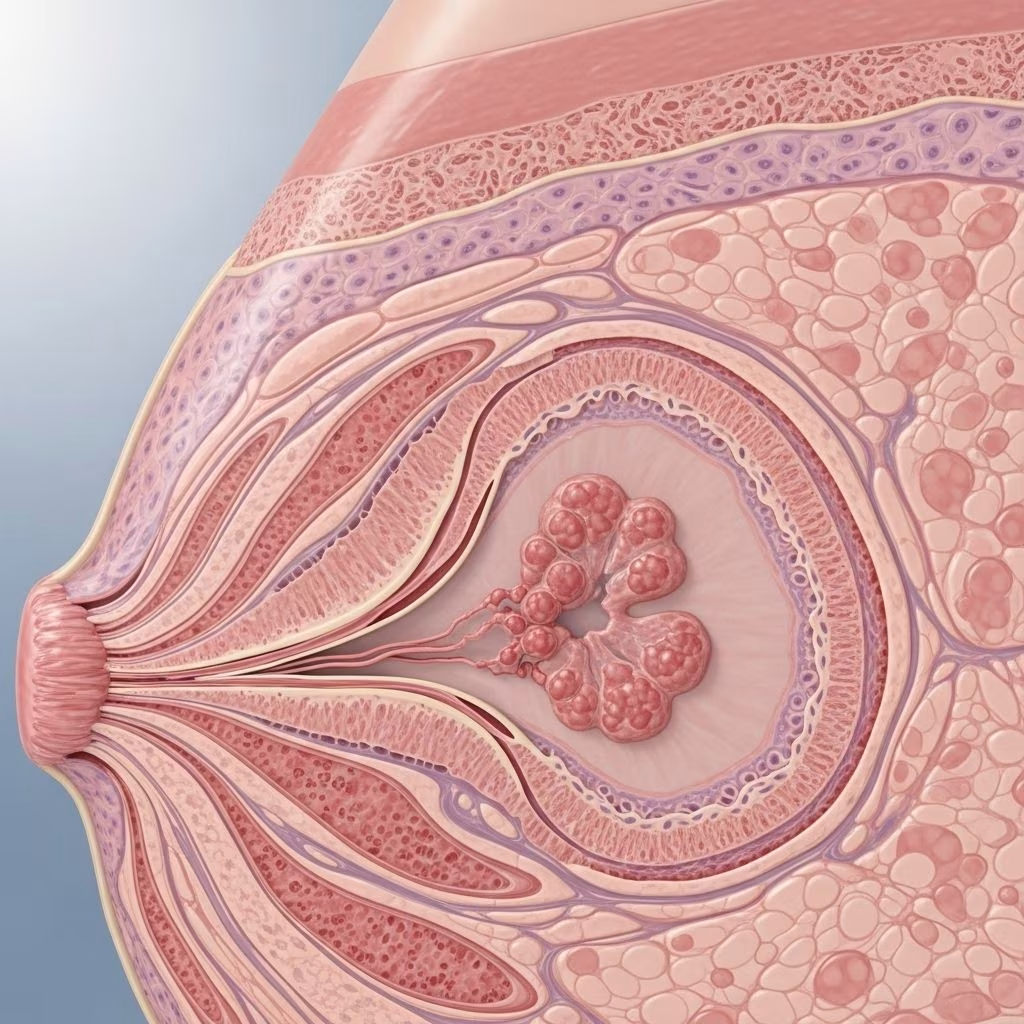
Invasive ductal carcinoma (IDC) is the most commonly diagnosed type of breast cancer. Accounting for approximately 80% of all breast cancers in women and a significant number in men, IDC emerges in the milk ducts—the channels that carry milk from the lobules to the nipple—and spreads into the surrounding breast tissue. This article covers the causes, symptoms, diagnosis, progression, treatment options, and frequently asked questions about IDC, equipping patients and families with the essential knowledge for informed health decisions.
What Is Invasive Ductal Carcinoma?
Invasive ductal carcinoma refers to cancer that originates in the cells lining the milk ducts and subsequently spreads (invades) into the nearby breast tissue. “Invasive” distinguishes it from non-invasive forms (such as ductal carcinoma in situ), indicating the tumor’s ability to extend beyond its initial site within the duct and possibly metastasize to lymph nodes or distant organs.
This breast cancer subtype is also referred to as infiltrating ductal carcinoma. IDC can affect both women and men, although it is much rarer in males.
IDC vs. Other Breast Cancer Types
| Cancer Type | Origin | Invasiveness | Prevalence |
|---|---|---|---|
| Invasive Ductal Carcinoma (IDC) | Milk ducts | Can invade surrounding tissue | Most common (≈80%) |
| Ductal Carcinoma In Situ (DCIS) | Milk ducts | Non-invasive | Common |
| Invasive Lobular Carcinoma (ILC) | Lobules | Can invade surrounding tissue | Less common (≈10%) |
| Inflammatory Breast Cancer | Ducts/lobules | Highly invasive | Rare (≈0.3%) |
Understanding the Progression of IDC
IDC begins with changes in ductal cells, which become abnormal and proliferate. Over time, these cancerous cells can penetrate the duct wall (basement membrane), infiltrate nearby tissue, and eventually spread via lymphatic or blood vessels to other organs. Early diagnosis is crucial to prevent metastatic disease, where cancer travels beyond the breast.
Causes and Risk Factors
- Genetic mutations: BRCA1, BRCA2, PALB2, CHEK2, and ATM mutations heighten risk.
- Age: The risk increases with age, most cases occurring after age 55.
- Sex: Women are more commonly affected, but men can also develop IDC.
- Family history: A close relative with breast cancer may raise an individual’s risk.
- Hormonal factors: Extended exposure to estrogen (early menstruation, late menopause, hormone therapy) can be a contributor.
- Density of breast tissue: Dense breasts present increased risk and make mammogram interpretation more challenging.
- Lifestyle factors: Alcohol, obesity, and lack of exercise increase risk.
Signs and Symptoms of Invasive Ductal Carcinoma
IDC is often asymptomatic in its early stages and may only be discovered through routine screening. As it advances, signs and symptoms may include:
- Lump or mass: Often painless, may be felt in the breast or underarm.
- Swelling of all or part of the breast.
- Skin irritation or dimpling (resembles an orange peel).
- Breast or nipple pain.
- Nipple retraction (turning inward).
- Nipple discharge not related to breast milk.
- Redness, scaliness, or thickening of the nipple or breast skin.
- Lump or swelling in the underarm area, indicating possible lymph node involvement.
Notably, some patients experience no symptoms, emphasizing the importance of regular breast cancer screening.
IDC Detection and Diagnosis
Early and accurate diagnosis is vital for effective treatment. Diagnostic methods typically include:
- Screening mammography: Primary tool for detecting suspicious masses and calcifications.
- Ultrasound: Useful in evaluating breast lumps and guiding biopsies.
- Magnetic resonance imaging (MRI): Recommended for high-risk patients or difficult-to-detect lesions; helps define cancer extent.
- Biopsy: Core needle biopsy or fine needle aspiration confirms diagnosis by examining tissue under a microscope.
- Pathologic grading and staging: Once diagnosed, IDC is graded (based on how abnormal the cancer cells look) and staged (extent of spread), using systems such as TNM (Tumor size, Node involvement, Metastasis).
IDC Staging and Molecular Subtyping
Cancer stage influences treatment strategies and prognosis:
- Stage 0: Non-invasive, such as DCIS.
- Stage I-II: Early-stage, localized to the breast.
- Stage III: Regional, including nearby lymph nodes.
- Stage IV: Metastatic, spread beyond breast and lymph nodes.
Molecular subtyping refines treatment approaches. Subtypes are defined by receptor status:
- Hormone receptor-positive (HR+): Driven by estrogen/progesterone receptors. About 69% of invasive breast cancers (mainly IDC).
- HER2-positive: Overexpression of HER2 protein; accounts for about 4% (HER2+/HR-) and 10% (HER2+/HR+) of cases.
- Triple negative breast cancer (TNBC): Lacks estrogen, progesterone, and HER2 receptors; ~10% of invasive breast cancers.
Treatment Options for Invasive Ductal Carcinoma
The chosen treatment depends on tumor size, stage, molecular subtype, and spread. Modalities are often combined for maximum effectiveness. Common approaches include:
- Surgery:
- Lumpectomy: Removes the tumor, sparing much of the breast, used in early stages.
- Mastectomy: Removes the entire breast, necessary for larger or multiple tumors.
- Radiation therapy: Targets any residual cancer cells after surgery, reducing recurrence risks.
- Systemic therapies:
- Chemotherapy: Kills cancer cells throughout the body; recommended for higher-risk or advanced stages.
- Hormone therapy: Used if cancer is HR+; blocks hormone-driven growth with agents like tamoxifen or aromatase inhibitors.
- Targeted therapy: Specific for molecular features, especially HER2-positive cancers (e.g., trastuzumab/Herceptin).
- Emerging treatments: Clinical trials offer access to new therapies, especially for advanced or resistant IDC.
Prognosis of IDC
Prognosis varies greatly depending on the diagnosis stage and cancer features:
- Early-stage IDC (Stage I): 5-year survival rates can approach 100%.
- Advanced IDC (Stage IV/metastatic): Survival rates decline, but ongoing improvements in therapy are helping extend and improve quality of life.
- Key prognostic factors include tumor grade, size, lymph node involvement, and molecular subtype.
Earlier detection leads to better outcomes, reinforcing the value of routine screenings and prompt medical attention when symptoms arise.
Risk Reduction and Prevention
- Regular screening via mammograms for women aged 40 and older.
- Genetic counseling and testing for those with a strong family history.
- Maintaining a healthy lifestyle: limiting alcohol, exercising regularly, and managing weight.
- Being aware of personal risk factors and discussing preventive options with a healthcare provider.
IDC in Men
While rare, male breast cancer can manifest as IDC. Symptoms mirror those in women: breast lump, skin changes, and nipple issues. The approach to diagnosis and treatment follows similar protocols. Men with a family history or genetic predispositions should be vigilant about symptoms.
Living With IDC: Support and Resources
- Emotional support: Counseling, support groups, and mental health resources help patients and families cope.
- Physical rehabilitation: Post-surgical physical therapy can aid in recovery.
- Nutrition and wellbeing: Optimal dietary habits and exercise contribute to overall health.
- Follow-up care: Routine check-ups to monitor for recurrence and manage long-term side effects.
Frequently Asked Questions (FAQs)
Q: What is the difference between IDC and DCIS?
A: DCIS (ductal carcinoma in situ) is a non-invasive tumor contained within the milk duct, while IDC is invasive and can spread to surrounding breast tissue and beyond.
Q: Can IDC spread to other body parts?
A: Yes. If untreated, IDC can metastasize to lymph nodes, bones, liver, lungs, or other organs, emphasizing the need for prompt diagnosis and treatment.
Q: How serious is IDC?
A: The seriousness depends on cancer stage and molecular subtype at diagnosis. Early detection generally leads to a very good prognosis, while advanced stages require more aggressive treatment and may lower survival rates.
Q: What treatments are available for IDC?
A: IDC treatment may include surgery (lumpectomy or mastectomy), radiation, chemotherapy, hormone therapy, and targeted therapies. The exact regimen depends on individual cancer characteristics and stage.
Q: How often should I be screened for breast cancer?
A: For most women, annual or biennial mammograms starting at age 40 are recommended. Those with higher risk may need earlier and more frequent screening.
Q: Are there ways to reduce my risk for IDC?
A: Regular screenings, maintaining a healthy weight, limiting alcohol, exercising, and knowing your family history aids in prevention and early detection.
Q: Is IDC treatable in men?
A: Yes. Men with IDC follow similar treatment protocols as women. Awareness and timely action are essential for better outcomes.
Key Takeaways
- IDC is the most common form of breast cancer, affecting both women and men.
- Symptoms may be absent; regular screening is crucial for early detection.
- Diagnosis involves imaging, biopsy, and molecular subtyping.
- Treatment is multifaceted, tailored to cancer stage and characteristics.
- Survival rates are highest when IDC is caught and managed early.
References
- American Cancer Society
- National Breast Cancer Foundation
- Breast Cancer Research Foundation
- Breastcancer.org
References
- https://www.breastcancer.org/types/invasive-ductal-carcinoma
- https://www.nationalbreastcancer.org/invasive-ductal-carcinoma/
- https://www.bcrf.org/about-breast-cancer/invasive-ductal-carcinoma/
- https://www.pennmedicine.org/conditions/invasive-ductal-carcinoma
- https://my.clevelandclinic.org/health/diseases/22117-invasive-ductal-carcinoma-idc
- https://www.mdanderson.org/cancerwise/invasive-ductal-carcinoma–6-things-to-know-about-this-common-breast-cancer.h00-159775656.html
- https://www.uofmhealth.org/our-care/specialties-services/breast-cancer/invasive-ductal-carcinoma-idc
- https://www.ncbi.nlm.nih.gov/books/NBK482286/
- https://www.cancercenter.com/cancer-types/breast-cancer/types/common-breast-cancer-types/invasive-ductal-carcinoma