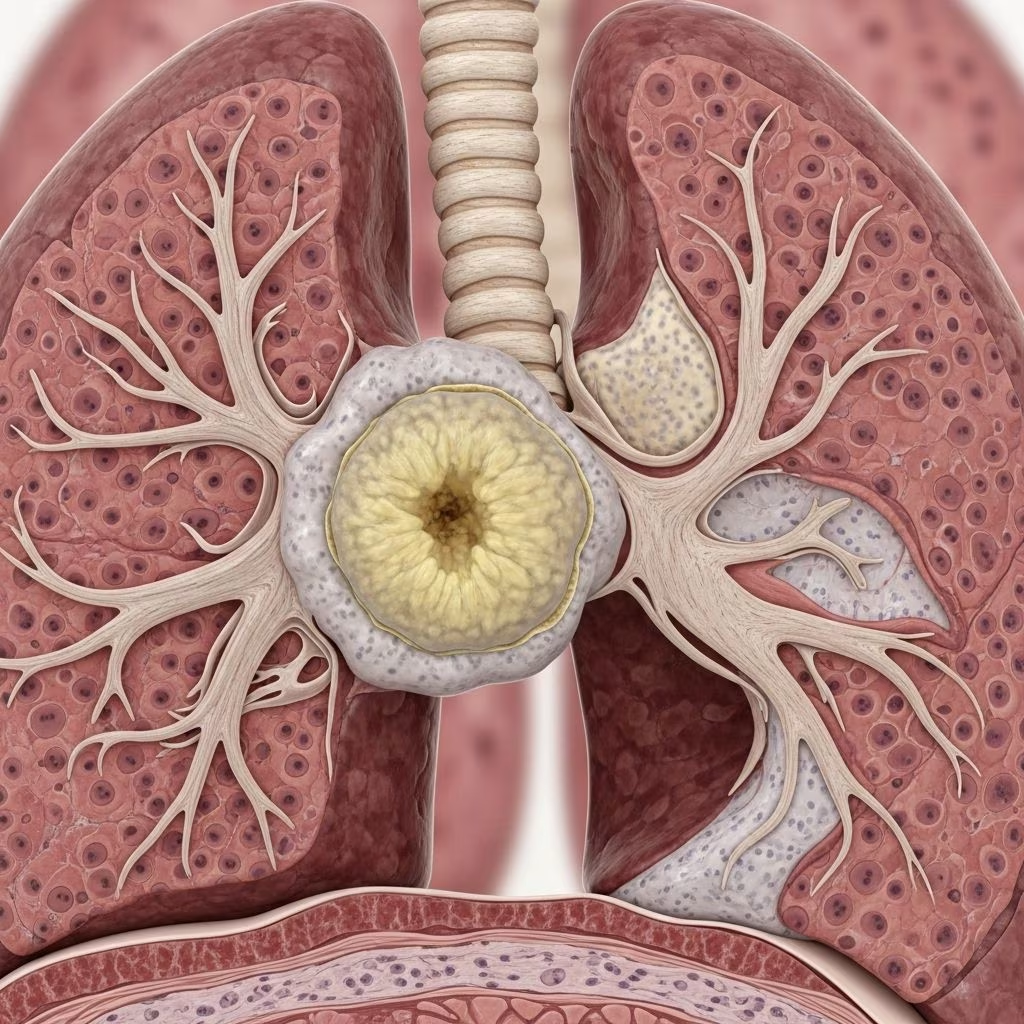
Large cell lung carcinoma (LCLC) is one of the main subtypes of non-small cell lung cancer (NSCLC). Known for its rapid growth and aggressive spread, LCLC remains challenging in terms of early detection and treatment. This comprehensive guide explores LCLC, its symptoms, causes, diagnosis, treatment strategies, and what to expect after a diagnosis.
What is Large Cell Lung Carcinoma?
LCLC is a subtype of non-small cell lung cancer, accounting for a significant portion of lung cancer cases worldwide. The tumor cells in LCLC are typically large and lack the distinct structures that define other types of NSCLC, such as squamous cell carcinoma or adenocarcinoma. Unlike more specific subtypes, LCLC serves as a catch-all diagnosis for those lung tumors that do not fit established categories.
LCLC can form anywhere within the lungs but is most commonly found on the outer edges (periphery) of the lungs. This distinguishes it from some other lung cancers, which may be more centrally located. While NSCLC constitutes approximately 80% to 85% of all lung cancer cases, LCLC is among the rarer forms within this group.
Types of Non-Small Cell Lung Cancer
NSCLC itself has several major forms, with LCLC being one of three predominant types:
- Adenocarcinoma: The most common type of lung cancer, often arising in the outer regions of the lungs.
- Squamous cell carcinoma: Tends to originate in the central part of the lungs, typically linked to smoking.
- Large cell carcinoma (LCLC): Characterized by large, undifferentiated cancer cells and can occur in any part of the lung.
How is LCLC Different From Small Cell Lung Carcinoma?
While small cell lung carcinoma (SCLC) is distinct for its small, round, fast-growing cells and high aggressiveness, LCLC is made up of larger, undifferentiated cells. SCLC and LCLC differ in terms of cellular appearance, typical patient symptoms, and preferred treatment options. The treatment approach also varies due to the biology and growth rate of each cancer type.
Symptoms of Large Cell Lung Carcinoma
LCLC symptoms largely overlap with other lung cancers, especially in early stages when symptoms may be nonexistent or subtle. As the disease progresses, symptoms often become more evident:
- Persistent cough
- Shortness of breath (dyspnea)
- Chest pain (may worsen with deep breathing or coughing)
- Wheezing
- Unexplained weight loss
- Loss of appetite
- Chronic fatigue or weakness
- Coughing up blood (hemoptysis)
- Recurring lung infections, such as pneumonia or bronchitis
- Hoarseness
- Difficulty swallowing
- Fever and night sweats
It’s important to note that many of these symptoms are common to other respiratory conditions, which can sometimes delay diagnosis.
Causes and Risk Factors
The precise cause of LCLC, like most lung cancers, involves genetic mutations that alter normal cell growth. Several risk factors increase the likelihood of developing LCLC:
- Tobacco smoking: The leading risk factor for all major types of lung cancer. The majority of LCLC patients have histories of smoking.
- Exposure to secondhand smoke: Regular exposure also heightens risk.
- Occupational exposures: Contact with carcinogens like asbestos, arsenic, or radon increases lung cancer risk.
- Air pollution: Long-term exposure to polluted air can contribute to lung cancer development.
- Genetics: Family history of lung cancer may increase susceptibility, though most cases are tied to external exposures.
Diagnosis of Large Cell Lung Carcinoma
Because early-stage LCLC rarely produces symptoms, it is often diagnosed incidentally or after symptoms appear. The diagnostic process typically involves several steps to confirm LCLC and determine its extent:
Diagnostic Tests Frequently Used:
- Imaging studies: Chest X-rays, CT (computed tomography) scans, and PET (positron emission tomography) scans to locate lung masses and check for spread.
- Sputum cytology: Examination of coughed-up sputum for cancer cells.
- Biopsy: Removal and microscopic analysis of lung tissue. This may be performed by bronchoscopy, CT-guided needle biopsy, or surgical methods.
- Lung function tests: To assess pulmonary capacity, especially if surgery is being considered.
- Blood tests: Evaluation of general health and detection of tumor markers.
Biopsy is essential for diagnosis, allowing confirmation that the cancer is indeed LCLC (typically featuring large, undifferentiated cancer cells).
Staging of Large Cell Lung Carcinoma
Staging describes how much the cancer has grown or spread and guides treatment decisions. The TNM (Tumor, Node, Metastasis) system is commonly used, classifying LCLC into the following stages:
| Stage | Description |
|---|---|
| Stage 0 | Cancer is confined to the top lining of the lung and has not spread. |
| Stage I (IA/IB) | Cancer has not reached lymph nodes; size and lung lining invasion distinguish IA from IB. |
| Stage II (IIA/IIB) | Cancer is larger and may involve nearby lymph nodes or tissues but hasn’t reached distant organs. |
| Stage III (IIIA/IIIB/IIIC) | Cancer is more extensive, involving lymph nodes and possibly other local structures; may be hard to remove surgically. |
| Stage IV | Cancer has metastasized to distant organs or sites. |
Treatment Options for Large Cell Lung Carcinoma
The treatment for LCLC depends largely on the cancer’s stage at diagnosis, the patient’s overall health, and specific characteristics of the tumor. Standard treatments include:
Surgical Treatment
- Wedge resection: Removal of the tumor with a small margin of healthy tissue.
- Lobectomy: Removal of an entire lobe of the lung.
- Pneumonectomy: Removal of an entire lung (possible if one lung remains healthy).
Surgery is most effective for early-stage LCLC, before the cancer has spread beyond the lung.
Radiation Therapy
Radiation uses high-energy beams to kill cancer cells. It may be given alone or post-surgically to destroy residual tumor cells, or in combination with other treatments such as chemotherapy.
Chemotherapy
Chemotherapy uses drugs administered orally or via injection to destroy rapidly dividing cancer cells throughout the body. It is commonly used in stages II-IV and may be employed before surgery (to shrink tumors) or after surgery to reduce recurrence risk.
Targeted Therapy
Targeted therapy involves drugs designed to attack specific genetic mutations or proteins present only in cancer cells, minimizing damage to normal cells. Not all patients will qualify for targeted therapies; tumor biomarker testing is recommended to determine eligibility.
Immunotherapy
Immunotherapy treatments stimulate the patient’s own immune system to identify and destroy cancer cells, and can offer effective results for some individuals with advanced or metastatic LCLC. Immuno-oncology is a rapidly developing field, with several drugs now approved for NSCLC.
Supportive (Palliative) Care
Palliative care focuses on symptom management and quality of life, especially for patients not eligible for curative treatment or with advanced disease.
Prognosis and Outlook
The prognosis for LCLC depends on several variables, including stage at diagnosis, general health, response to treatment, and whether the cancer has spread. In general, prognosis for advanced and metastatic LCLC is less favorable than for tumors detected early. This is due to the tumor’s tendency to grow and metastasize rapidly.
- Early-stage LCLC may be curable with surgery and/or radiation.
- Advanced stages typically require systemic treatments and have lower long-term survival rates.
- Ongoing research is improving outcomes, particularly with new targeted therapy and immunotherapy options.
Early detection remains critical to improving survival chances, highlighting the value of prompt evaluation for concerning respiratory symptoms, especially in high-risk individuals.
Frequently Asked Questions (FAQs)
What is the main difference between large cell and small cell lung carcinoma?
Large cell lung carcinoma has large, undifferentiated tumor cells visible under a microscope. Small cell lung carcinoma contains much smaller cells, tends to grow even faster, and spreads more rapidly than LCLC. Treatment and prognosis are also quite different between the two.
Is large cell lung carcinoma rare?
LCLC is less common than adenocarcinoma or squamous cell carcinoma but remains a significant subtype of NSCLC. It is considered rare compared to other NSCLC types.
Can non-smokers develop large cell lung carcinoma?
Although most cases of LCLC are linked to smoking, non-smokers can develop the disease, especially if exposed to significant environmental or occupational risk factors.
What are the typical first symptoms of LCLC?
Common early symptoms are a persistent cough, shortness of breath, and chest pain. However, symptoms may be subtle or absent until the cancer advances.
Does a diagnosis of LCLC always require surgery?
No. Surgical treatment is often possible in early stages but may not be recommended if the cancer has spread extensively. Other treatments such as chemotherapy, radiation, targeted therapies, or immunotherapies are important options.
Key Points to Remember
- Large cell lung carcinoma is an aggressive, fast-growing form of non-small cell lung cancer.
- Early symptoms may be mild or absent, contributing to later-stage diagnoses.
- Early detection and advanced multi-modality treatment approaches improve prognosis.
- Smoking cessation, reducing environmental toxin exposure, and regular health screenings are vital for prevention, particularly in high-risk groups.
References
- https://pixorize.com/view/2783
- https://en.wikipedia.org/wiki/Large-cell_lung_carcinoma
- https://lcfamerica.org/about-lung-cancer/diagnosis/types/large-cell-carcinomas/
- https://www.healthline.com/health/lung-cancer/large-cell-carcinoma
- https://www.lungevity.org/lung-cancer-basics/types-of-lung-cancer/large-cell-lung-cancer
- https://pmc.ncbi.nlm.nih.gov/articles/PMC8799166/
- https://www.lungcancerresearchfoundation.org/for-patients/print-and-digital-resources/living-with-lung-cancer/lung-cancer-overview/