Macular Pucker vs. Macular Degeneration: Key Differences, Symptoms, and Treatment
Macular pucker and macular degeneration are two common disorders affecting the central retina (the macula)—often causing visual distortion, especially in older adults. While they share some symptoms, their underlying causes, treatments, and prognoses differ substantially. This article covers how to distinguish between each condition, risk factors, diagnosis, symptoms, treatment options, outlook, and answers to frequently asked questions.
Overview: What Is the Macula?
The macula is located at the very center of your retina—the light-sensing layer at the back of your eye. It is responsible for sharp central vision, critical for reading, driving, and recognizing faces. Damage to this area can significantly impact daily activities and quality of life.
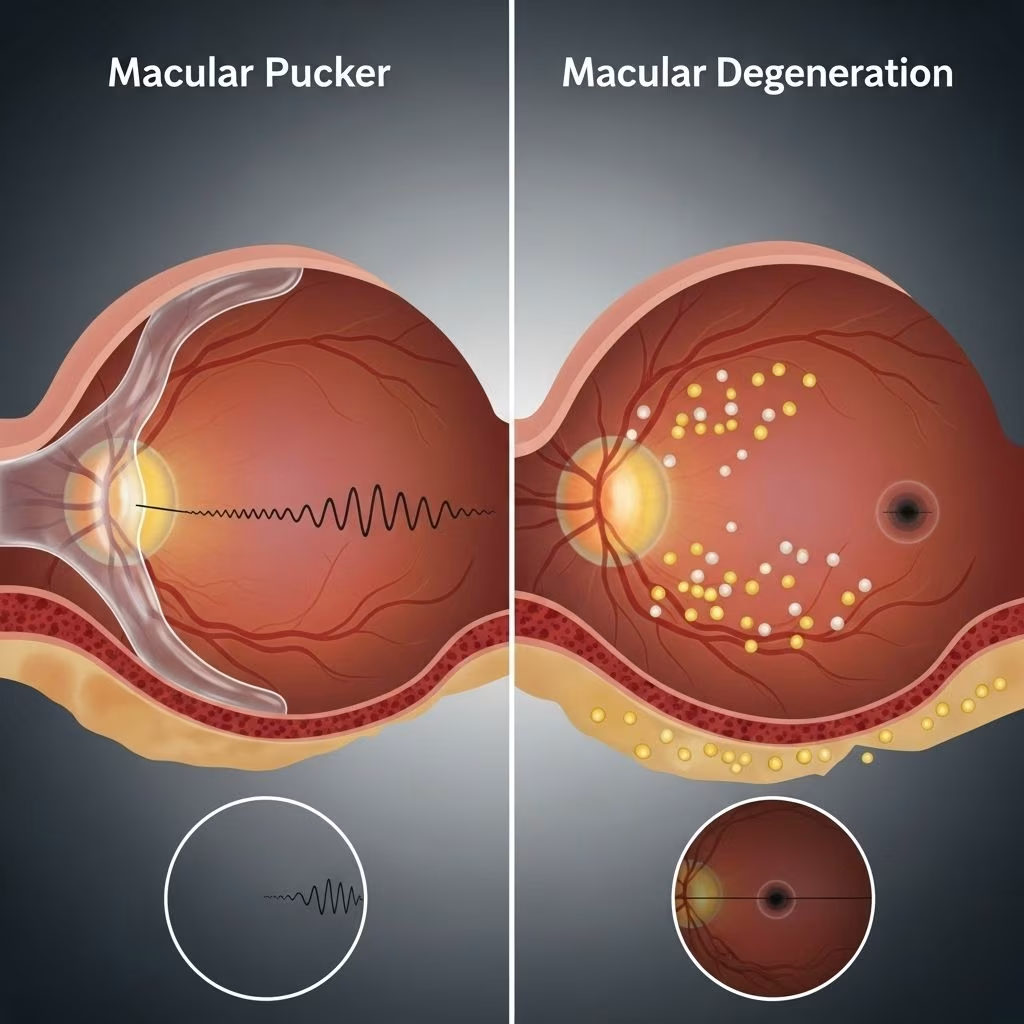
- Macular degeneration: Involves the progressive breakdown or damage to the macula, most often due to aging, genetics, or abnormal blood vessel growth.
- Macular pucker: Caused by the formation of a thin, semi-transparent layer of scar tissue or membrane on the macula that wrinkles or contracts, distorting the retinal surface.
Symptoms: How Macular Pucker and Macular Degeneration Present
Common Symptoms
| Symptom | Macular Pucker | Macular Degeneration |
|---|---|---|
| Central blurry vision | Possible, often mild early on | Often, progressively worsens |
| Distorted vision (straight lines appear wavy) | Common | Common |
| Difficulty with fine details (reading, recognizing faces) | Possible | Common |
| Loss of central vision | Rare (possible with severe cases) | Possible, especially in advanced stages |
| Trouble seeing in low light | Rare | Common |
| Colors appear dimmer | Uncommon | Possible |
| Vision blank spots | Rare (may indicate macular hole) | Possible in advanced AMD |
Symptoms may not appear in the early stages of either condition and might only develop once the disease has progressed to moderate or severe levels. In most cases:
- Macular pucker: Usually affects one eye, often stabilizes after progressive early worsening.
- Macular degeneration: Can start in one or both eyes, often progresses over time, especially in Age-Related Macular Degeneration (AMD).
Rare Complications
- Macular hole: Rarely, a macular pucker can progress to a macular hole—a tear in the macula that causes a central blind spot and requires different treatment.
Causes: Why Do These Conditions Develop?
Macular Pucker Causes
- Primary cause: Age-related changes, especially when the vitreous gel shrinks and pulls away from the retina (posterior vitreous detachment).
- Less common causes:
- Eye injuries or trauma
- Retinal detachment surgery
- Eye infections
- Diabetic retinopathy
- Tumors
Macular Degeneration Causes
- Primary cause: Typically occurs due to age-related changes (especially in AMD).
- Genetic syndromes: Certain inherited retinal conditions such as Stargardt disease or Best disease can also cause degeneration.
- Vascular factors: Formation and leakage of abnormal blood vessels (wet AMD) can rapidly worsen vision loss.
Terminology
- Macular pucker synonyms: Epiretinal membrane, cellophane maculopathy, premacular fibrosis, retina wrinkle.
Risk Factors: Who Is at Risk?
| Condition | Major Risk Factors |
|---|---|
| Macular Degeneration |
|
| Macular Pucker |
|
Diagnosis: How Are These Conditions Diagnosed?
Diagnosis is crucial for effective management since treatment options and prognosis vary widely. Eye doctors use advanced imaging and clinical examination to distinguish between macular pucker and macular degeneration.
- Ophthalmoscopy: Direct examination of the retina and macula using a special lens.
- Optical Coherence Tomography (OCT): Noninvasive imaging providing cross-sectional views to detect wrinkles, swelling, or degeneration.
- Visual acuity tests: Assessing reading, clarity, and distortion.
- Amsler grid: Used to screen for wavy or missing areas in central vision.
- Fluorescein angiography: Used for AMD, to detect leaking blood vessels.
Early and accurate diagnosis is essential to guide management—especially to distinguish between a macular pucker, macular degeneration, or rare conditions like a macular hole.
Treatment Options: Managing Macular Pucker and Macular Degeneration
Macular Pucker Treatments
- Mild cases: Observation, lifestyle adaptation (larger print, brighter lighting).
- Significant symptoms: Vitrectomy surgery—removes the wrinkled membrane and may improve vision, though not always restoring it to normal.
- Recovery: Most people see notable improvement post-surgery, though some may have persistent vision changes.
Macular Degeneration Treatments
- Dry AMD:
- Special vitamin and mineral supplements (AREDS formulation)
- Lifestyle modification (diet, quitting smoking)
- Wet AMD:
- Anti-VEGF injections (to block abnormal blood vessel growth and leakage)
- Photodynamic therapy (laser-based treatment)
- No cure yet, but therapies can slow progression and help preserve vision.
Prognosis: What Is the Outlook?
- Macular pucker: Most people do not need surgery and maintain stable vision. Surgery is successful for most patients who develop significant symptoms, but rarely some may experience severe vision loss.
- Macular degeneration: No cure, but proper treatment slows progression. The wet form requires rapid treatment to prevent sudden loss. Vision loss is often permanent if not managed properly.
Comparison Table: Macular Pucker vs. Macular Degeneration
| Feature | Macular Pucker | Macular Degeneration |
|---|---|---|
| Description | Wrinkling or folding of membrane on macula surface | Breakdown or progressive degeneration of macula |
| Symptoms | Distorted vision that stabilizes | Progressive visual distortion, worsening in low light |
| Treatment | Observation, possible surgery | Vitamins, injections, laser therapy |
| Main Causes | Age-related membrane changes or eye trauma | Age-related changes, genetic syndromes, vascular abnormalities |
| Typical age group | Older adults | Older adults |
| Central blindness | Rare | Occasional, especially advanced AMD |
When to Seek Medical Care?
If you notice any changes in central vision—such as blurriness, distortion, trouble seeing fine details, or new blank spots—seek prompt advice from an eye care professional. Early intervention, especially in wet AMD, makes a significant difference in the preservation of vision.
Frequently Asked Questions
Q: Can macular pucker turn into macular degeneration?
A: No. Macular pucker and macular degeneration have different underlying causes. While symptoms can overlap, a macular pucker does not progress into macular degeneration.
Q: Which condition causes more severe vision loss?
A: Macular degeneration generally carries a greater risk for progressive and severe central vision loss, especially if wet AMD is untreated. Most macular puckers stabilize or improve with treatment.
Q: What are the first signs I should watch for?
A: Early signs include difficulty seeing fine details, reading, or recognizing faces, central blurry vision, and distortion (straight lines appear wavy). Always report new or worsening symptoms to your eye doctor.
Q: Are there ways to prevent these conditions?
A: While aging is the main risk factor, you can reduce the risk of macular degeneration by avoiding smoking, managing cardiovascular health, eating a diet rich in leafy greens, and protecting your eyes from UV light. There is currently no known way to prevent macular pucker, though regular eye exams can catch early changes.
Q: Is treatment painful?
A: Most procedures, such as injections for AMD or vitrectomy for macular pucker, are performed under anesthesia to minimize discomfort.
Takeaway: Comparing Macular Pucker and Macular Degeneration
- Both conditions affect the macula and can cause central visual distortion but differ in causes, progression, and treatments.
- Macular degeneration is primarily age-related and progressive; macular pucker is due to wrinkling from scar tissue, often stabilizing after initial worsening.
- Early professional assessment is vital for preserving sight and preventing complications.
References
- https://www.healthline.com/health/eye-health/macular-pucker-vs-macular-degeneration
- https://maculardegeneration.net/clinical/macular-degeneration-pucker
- https://www.retinalmd.com/blog/macular-hole-vs-macular-pucker-symptoms-treatment-and-when-surgery-is-needed
- https://my.clevelandclinic.org/health/diseases/14207-macular-pucker
- https://www.downstate.edu/patient-care/find-treatment/areas-of-care/ophthalmology/eye-disorders/macular-pucker.html
- https://www.retinaeyecenter.com/blog/epiretinal-membranes-vs-macular-holes-understanding-the-difference
- https://premiermedicalgrp.com/services/eye/ophthalmology/retina-diseases-surgery/macular-pucker/
- https://www.nei.nih.gov/learn-about-eye-health/eye-conditions-and-diseases/macular-pucker
- https://www.brightfocus.org/resource/macular-pucker/