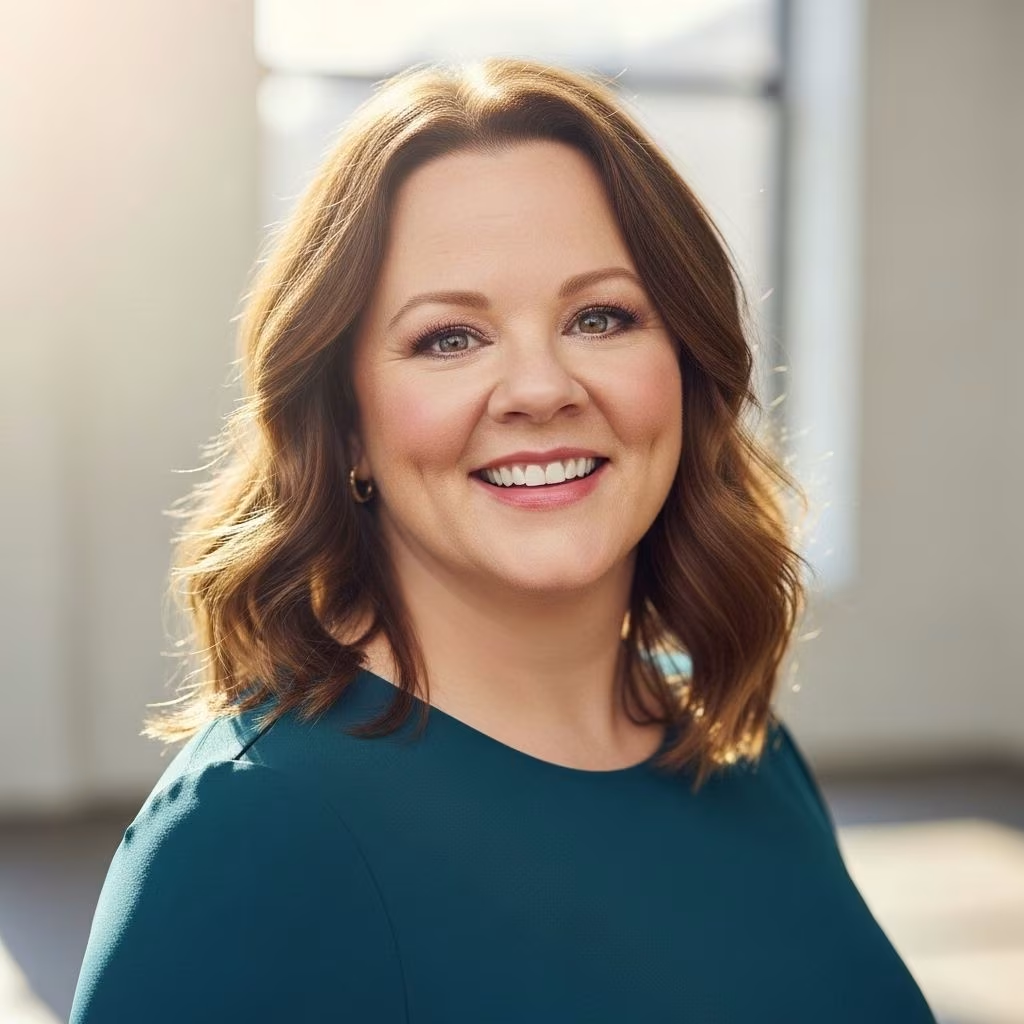
Melissa McCarthy’s Weight-Loss Journey: Confidence, Hollywood, and Body Image
Melissa McCarthy has emerged as one of Hollywood’s most beloved and bankable stars, known for her fearless comedic performances and, more recently, her remarkable transformation in both her career and attitude toward body image. Her journey—from a self-conscious teenager in rural Illinois to a celebrated actress and producer recognized for her outstanding work across genres—has become an inspiration for millions. Central to this journey is her honest and nuanced approach to weight loss, the pressures of the entertainment industry, and the complex subject of body positivity.
On Her Childhood: The Early Roots of Self-Image
Born and raised on a farm in rural Illinois, McCarthy began her foray into performance by entertaining her mother in the family’s laundry room. While physically active and involved in sports during her youth—cheerleading, gymnastics, tennis, and weightlifting—she still found herself anxious about her body image even when she maintained a healthy size.
Recalling her formative years, McCarthy told Rolling Stone: “I do think I worried about weight too soon, when it was only little-kid weight. I thought I battled weight throughout high school, but I look back at pictures of me as a cheerleader, doing sprints, lifting weights, doing gymnastics, playing tennis, and while I wasn’t reed-thin like some girls… I was a size six the entire time. So, what on Earth was I freaking out about?”
Her journey took an unexpected turn after moving to Los Angeles to join the famed improv troupe, The Groundlings. She recounted how this significant transition caused her to fall into unhealthy eating patterns, leading to a 25-pound weight gain and the beginning of a more complicated relationship with weight.
Exploring Extreme Diets: Lessons Learned
Like many seeking solutions, McCarthy experimented with extreme weight-loss approaches early in her career. After her breakout role on Gilmore Girls, she tried a doctor-supervised all-liquid diet. The diet was grueling: “I’d never do that again… I felt starved and crazy half the time,” McCarthy reflected when describing how she lost 70 pounds in four months.
- Doctor-supervised liquid diets: Rapid weight loss, but unsustainable and physically taxing.
- Impact: Extreme restriction led to feeling unwell and mentally drained.
- Lesson: McCarthy does not recommend such methods, underscoring the importance of a sustainable and healthy mindset.
Her experience is a vivid reminder that quick fixes seldom deliver lasting satisfaction or true well-being.
Recent Weight Loss: A Focus on Moderation and Lifestyle Change
Over the years, rumors and headlines have speculated about McCarthy’s weight transformation—reports have frequently cited a figure of 75 pounds lost. However, McCarthy is clear about the true “secret” behind her success. Her approach is simple, grounded in routine, moderation, and a renewed lifestyle:
- She described her regimen as “just super boring life.”
- Key principles include going to bed early, cutting out exciting or indulgent activities, and establishing healthy routines.
- “No trick, nothing to tell… you bring it real down, you don’t do anything fun, and you go to bed at 7:30 — that’s the trick.”
Importantly, McCarthy emphasizes that she does not focus on a number on the scale. Instead, she notes that her weight may fluctuate throughout her life. “I have [lost weight], but I’ll be back again… I’ll be up, I’ll be down, probably for the rest of my life. The thing is, if that’s the most interesting thing about me, I need to go have a lavender farm in Minnesota and give this up. There has to be something more.”
Hollywood Roles and Self-Acceptance
Despite the pressures of Hollywood, McCarthy never aspired to play traditional leading parts that centered only on appearance. Instead, she sought roles with substance, humor, and impact. Her characters—from Sookie St. James in Gilmore Girls to Michelle Darnell in The Boss—consistently stand out for their wit and vibrancy.
- McCarthy told Rolling Stone: “It wasn’t like I ever wanted to play the stunning-girl lead part who just says 17 dry lines. That didn’t seem like fun to me. But you go through everything, like maybe if I was taller, prettier, thinner, would I be going out on more auditions? But then in the back of my head, I didn’t want to do those parts.”
Her filmography reflects not just comedic prowess but a conscious effort to broaden the narrative about what female characters can be on screen—dynamic, complex, and deeply human.
Reacting to Sexist Standards in the Entertainment Industry
McCarthy has been open about her disdain for Hollywood’s double standards regarding body image. The scrutiny she faces is rarely endured by her male counterparts. This disparity is not lost on her:
“I just find it dumb and boring. I really do. No one’s asking a man, ‘How do you keep your legs in shape?’ which I’ve been asked. I think every time we categorize people—by weight, by race, by gender—we put them in boxes and it’s not a good thing for the world.”
This critique extends from her own experience to a broader societal observation—questioning why the conversation so often revolves around appearance instead of talent or character.
Championing Body Image and Confidence
As a mother of two daughters—Vivian and Georgette—with husband and creative partner Ben Falcone, McCarthy is keenly aware of how early these discussions about body and self-esteem begin in the next generation. She believes it’s crucial to cultivate a healthy sense of worth from childhood onward.
“There’s an epidemic in our country of girls and women feeling bad about themselves based on what 0.5% of the human race looks like… My message is that as long as everybody’s healthy, enjoy and embrace whatever body type you have.”
McCarthy’s philosophy revolves around rejecting prescriptive beauty ideals and instead urging women—and especially young girls—to embrace diversity and prioritize health and happiness over unattainable perfection.
Key Takeaways from Melissa McCarthy’s Perspective
- No magic solution: Sustainable weight management requires consistency in healthy habits rather than dramatic, short-term fixes.
- Mental well-being is as important as physical health: The psychological cost of extreme dieting or societal pressure can be high; prioritizing peace of mind and self-acceptance leads to genuine confidence.
- Reject the beauty myth: Hollywood’s version of “ideal” beauty is narrow and not representative—resisting these norms can open up space for authentic self-expression.
- Keep the conversation open: For today’s youth, honest dialogue about body image, confidence, and individuality is essential for fostering resilience and self-love.
Melissa McCarthy’s Holistic Approach: Balance, Family, and Joy
Alongside her thriving career, McCarthy maintains that family and well-being form the foundation of her happiness. Her relationship with her husband Ben Falcone is marked by humor and mutual respect, and their home life is a source of grounding amid Hollywood’s distractions.
| Aspect | McCarthy’s Approach |
|---|---|
| Diet | No extreme diets; focus on simple, healthy habits and moderation. |
| Exercise | Active lifestyle, but not obsessive about fitness routines; values energy and strength. |
| Body Image | Body positivity and acceptance at every size; rejects narrow standards of beauty. |
| Mental Well-being | Embraces self-love, confidence, and prioritizes joy and family over societal approval. |
| Celebrity Pressure | Refuses to let industry norms dictate her self-worth or career choices. |
Frequently Asked Questions (FAQs)
Q: What motivated Melissa McCarthy’s weight-loss journey?
A: McCarthy’s journey was motivated less by a desire for thinness and more by the pursuit of a healthier and happier lifestyle. She wanted routines that supported her energy, career, and overall well-being rather than short-term, appearance-focused results.
Q: Did Melissa McCarthy use any fad diets or supplements?
A: While she briefly tried a supervised liquid diet early on, McCarthy advises against such methods due to the intense physical and mental side effects. She emphasizes moderation and sustainable changes instead.
Q: Does she have a specific exercise routine?
A: McCarthy has mentioned staying active but does not follow a strict or regimented exercise plan. Sports and activities were part of her youth, but as an adult, her focus is generally on energy and feeling good.
Q: How does Melissa McCarthy handle body-shaming and Hollywood pressures?
A: She openly criticizes the double standards and unrealistic beauty expectations within the industry, reminding fans and peers to value individuality and talent over appearance.
Q: What is her message to young women and girls about body image?
A: McCarthy believes all body types should be celebrated and pushes for positive, healthy conversations about self-worth, starting from a young age. Her example encourages resisting societal pressure and embracing one’s own unique appearance and health.
Conclusion: Redefining Worth and Success
Melissa McCarthy’s public journey—from relatable struggles with weight to outspoken advocacy for self-love—underscores that worth and success are defined by much more than physical appearance. Her honesty about failed diets, career aspirations, and motherly wisdom provides comfort and inspiration to those navigating their own body image challenges.
In a world that often prioritizes narrow beauty ideals, McCarthy’s message is refreshingly simple: Focus on health, find joy in your own skin, and let your individuality shine both on and off the screen.