Osgood-Schlatter Disease: Comprehensive Guide for Parents and Adolescents
Osgood-Schlatter Disease is a common condition affecting the knees of children and adolescents during periods of rapid growth. It is characterized by pain, swelling, and a noticeable bump just below the knee. This guide provides an in-depth look at what Osgood-Schlatter Disease is, why it occurs, risk factors, symptoms, diagnostic methods, and evidence-based treatment approaches.
What is Osgood-Schlatter Disease?
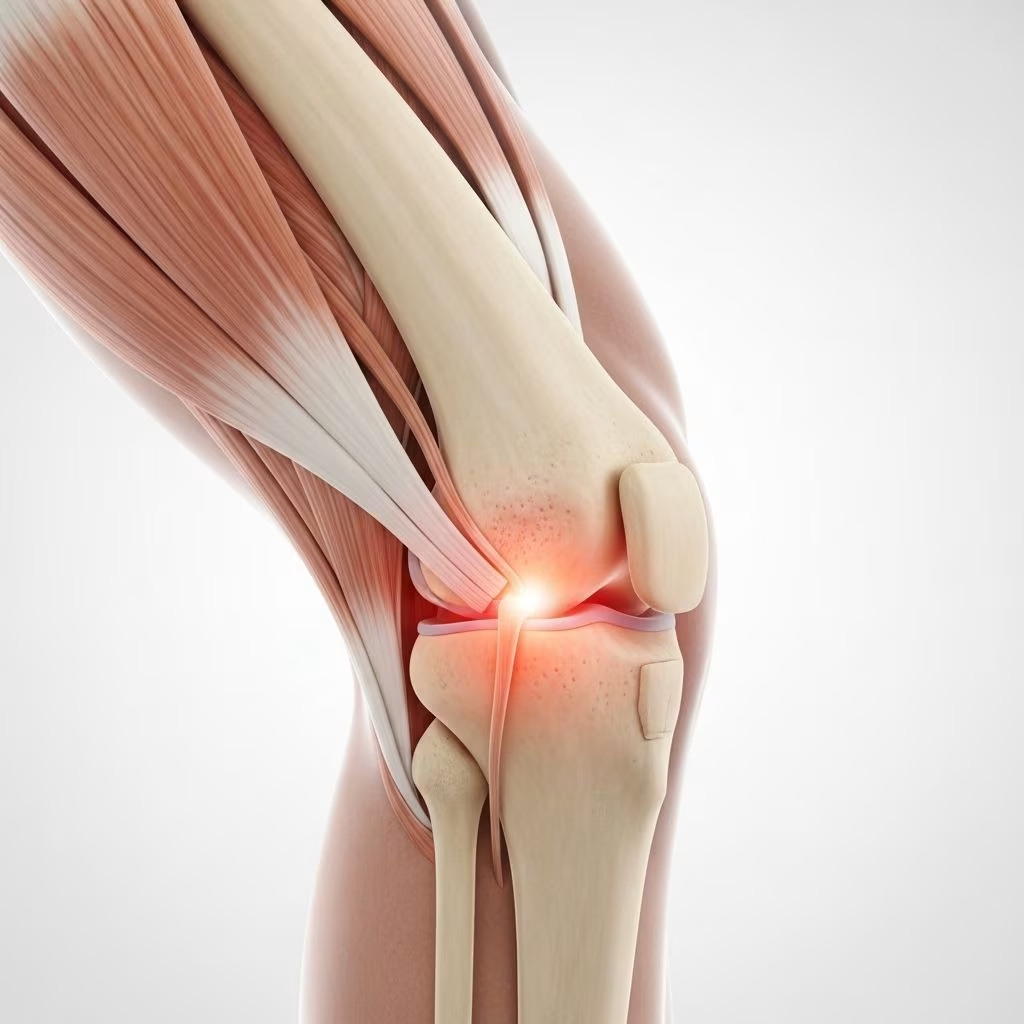
Osgood-Schlatter Disease (OSD), sometimes called tibial tubercle apophysitis, refers to irritation and inflammation where the patellar tendon attaches to the top of the shinbone (tibia) just below the kneecap. Typically, the disease manifests in older children and teenagers, especially those experiencing growth spurts. Many cases occur in those who participate in running and jumping sports, such as soccer, basketball, and gymnastics.
- Most often affects children aged 1015 years
- Usually occurs during puberty or periods of rapid growth
- Associated with repetitive stress on the knee from physical activities
- Causes pain, swelling, and sometimes a visible bump below the knee
History and Nomenclature
The condition was first described in the late 19th century by physicians Robert Bayley Osgood and Carl Schlatter, after whom the disease is named.
Causes of Osgood-Schlatter Disease
The underlying mechanism of Osgood-Schlatter Disease is repetitive stress and traction on the growth plate at the tibial tuberosity, where the kneecap tendon attaches to the shinbone. This repetitive tension causes inflammation, pain, and occasionally a bony prominence as the body responds to the stress.
- Growth Spurts: Bones grow rapidly during adolescence, but muscles and tendons may not keep pace, resulting in tension at attachment points.
- Sports and Physical Activity: Activities involving frequent running, jumping, or kneeling place additional strain on the knee’s growth plate.
- Muscle Imbalances: Weak or tight quadriceps and hamstrings may increase traction forces on the tibial tuberosity.
- Anatomical Factors: High-riding kneecap or tight Achilles tendon may predispose individuals to OSD.
Risk Factors
- Age: Most common in children ages 1015 during puberty
- Sex: Slightly more prevalent in boys, though increasingly common in girls participating in sports
- Sports Participation: Soccer, basketball, track, volleyball, and gymnastics are most frequently implicated
- Muscle Tightness: Tight quadriceps or hamstring muscles may amplify stress on the growth plate
- Obesity: Higher body mass can increase the risk in adolescents
Symptoms of Osgood-Schlatter Disease
Osgood-Schlatter Disease presents in a fairly predictable manner, with primary symptoms focused around the knee:
- Pain: Discomfort below the kneecap during physical activity, especially running or jumping
- Swelling: Puffiness or inflammation just under the knee
- Tenderness: Soreness to touch over the tibial tuberosity
- Bony Bump: A firm, sometimes large bump just below the kneecap
- Difficulty Kneeling: Pain when kneeling on hard surfaces
- Limited Mobility: Trouble fully extending or flexing the knee in severe cases
Progression and Duration
Symptoms typically fluctuate; they may worsen with activity and improve with rest. Many adolescents experience OSD for several months, though symptoms usually resolve once the growth spurt ends and skeletal maturity is reached.
Diagnosis of Osgood-Schlatter Disease
The diagnosis of OSD relies primarily on clinical assessment, incorporating medical history and a physical exam. Imaging studies may be used to rule out other conditions or assess complications.
Diagnostic Steps
- Medical History: Discussion of symptoms, onset, and aggravating activities
- Physical Examination: Checking for tenderness, swelling, and the presence of a bony bump below the kneecap
- Imaging: X-rays can visualize bone changes; MRI may be used rarely to assess tendon involvement
| Diagnostic Tool | Purpose | When Used |
|---|---|---|
| Physical Exam | Identify pain location, swelling, and bump | Mainstay of diagnosis |
| X-ray | Assess bone changes and rule out fractures | Uncertain or severe cases |
| MRI | Analyze soft tissue and tendon | Unusual presentations or complications |
Treatment of Osgood-Schlatter Disease
Treatment focuses on pain management, swelling reduction, and maintaining knee function. OSD is typically self-limited and resolves with skeletal maturity, so non-surgical approaches are prioritized.
Main Conservative Approaches
- Activity Modification: Reducing or temporarily stopping activities that provoke pain (e.g., jumping, running)
- Rest: Allowing inflamed tissue to recover during periods of acute pain
- Ice Therapy: Applying ice packs for 1520 minutes several times per day to reduce swelling
- Compression: Using elastic bandages or knee sleeves to help limit swelling
- Physical Therapy: Structured exercises to stretch and strengthen the quadriceps, hamstrings, and calf muscles
- Pain Medication: Over-the-counter non-steroidal anti-inflammatory drugs (NSAIDs) like ibuprofen or acetaminophen
Additional Supportive Measures
- Bracing or Taping: Knee braces or tape to provide gentle support during physical activity
- Correction of Muscle Imbalances: Targeted physiotherapy to address tightness or weakness in leg muscles
- Gradual Return to Sports: Resuming sports gradually once pain subsides and strength is restored
Rare and Advanced Management
- Corticosteroid Injections: Occasionally considered for severe persistent cases, though not routinely recommended
- Surgery: Rarely required; considered only when chronic pain or mobility limits persist after skeletal maturity
Expected Outcome
Most adolescents recover fully as they complete their growth spurt. The bump may remain but usually becomes painless and non-problematic. In very rare cases, surgical intervention is required to remove persistent bony growths or address chronic dysfunction.
Prevention and Long-term Care
While it is challenging to prevent Osgood-Schlatter Disease entirely—especially in active, growing children—certain steps may reduce risk and improve outcomes:
- Encourage regular stretching of quadriceps and hamstrings
- Promote balanced strength in lower leg muscles
- Teach proper warm-up and cool-down routines before and after sports
- Monitor any knee pain and address promptly to avoid worse symptoms
- Modify activity intensity during growth spurts as necessary
Frequently Asked Questions (FAQs)
Q: Who gets Osgood-Schlatter Disease?
A: Most commonly, children aged 10 to 15 who are experiencing rapid growth and participate in sports, especially those involving running and jumping.
Q: Is Osgood-Schlatter Disease permanent?
A: No. Symptoms typically resolve once the adolescent finishes growing, although a bony bump may remain, usually without pain.
Q: Can my child continue sports with Osgood-Schlatter Disease?
A: Activity may need to be modified or reduced during flare-ups. With effective pain management, many children can continue participating in sports as symptoms allow.
Q: What happens if Osgood-Schlatter Disease goes untreated?
A: Most cases resolve without lasting effects, but untreated severe pain or inability to exercise may require further evaluation to rule out other issues or complications.
Q: Is surgery ever necessary for Osgood-Schlatter Disease?
A: Surgery is extremely rare and only considered if pain or mobility limitations persist beyond skeletal maturity and do not respond to conservative treatment.
Summary Table: Osgood-Schlatter Disease Key Facts
| Aspect | Detail |
|---|---|
| Age Group | 1015 years (puberty/growth spurts) |
| Primary Symptoms | Knee pain, tenderness, swelling, bony bump under kneecap |
| Main Causes | Repetitive stress from sports, rapid growth, muscle tightness |
| Diagnosis | History, physical exam, X-ray as needed |
| Treatment | Rest, ice, NSAIDs, physical therapy, rare surgery |
| Outcome | Usually resolves after growth ends |
Support and Resources for Families
Parents and caregivers can support children with Osgood-Schlatter Disease by:
- Encouraging open communication about knee pain and limitations
- Working closely with healthcare providers to devise appropriate rest and activity plans
- Focusing on gradual strengthening and flexibility training
- Providing emotional support during recovery and adaptation phases
When to Consult a Healthcare Professional
Medical advice should be sought if:
- Pain persists despite rest or conservative management
- There is difficulty moving the knee or limping
- Swelling and redness worsen or are associated with fever
- Symptoms last beyond adolescence or are severe
Key Takeaways
- Osgood-Schlatter Disease is a common and treatable condition in growing children and teens, most frequently requiring conservative management
- With appropriate care—including rest, stretching, and strength training—most children return to activity with little or no long-term effects
- Parental understanding and support are critical to a successful recovery
References
- https://www.evanjsmithmd.com/osgood-schlatter-disease-orthopedic-surgeon-fairfield-west-chester-cincinnati/
- https://alignedortho.com/what-is-osgood-schlatters-disease-cause-symptoms-and-treatments/
- https://orthopedicreviews.openmedicalpublishing.org/article/121395-diagnosis-and-management-of-osgood-schlatter-disease
- https://www.shrinerschildrens.org/en/pediatric-care/osgood-schlatter-disease
- https://orthoinfo.aaos.org/en/diseases–conditions/osgood-schlatter-disease-knee-pain/
- https://www.upmc.com/services/orthopaedics/conditions/osgood-schlatter
- https://www.ncbi.nlm.nih.gov/books/NBK441995/
- https://kidshealth.org/en/parents/osgood.html