The pinhole test is a simple and effective tool that eye care professionals use to investigate the cause of vision changes, especially when there is concern for macular degeneration or other ocular conditions. By helping doctors distinguish between vision loss caused by refractive errors and those due to more serious retinal or optic nerve problems, this test is a first step in diagnosing the origin of your vision issues and planning for treatment or corrective measures.
What Is the Pinhole Test?
The pinhole test is a quick assessment performed during eye exams to help determine whether diminished visual acuity is due to a refractive error—such as myopia (nearsightedness), hyperopia (farsightedness), or astigmatism—or if it results from deeper structural problems in the eye, such as those caused by macular degeneration or opacities like cataracts.
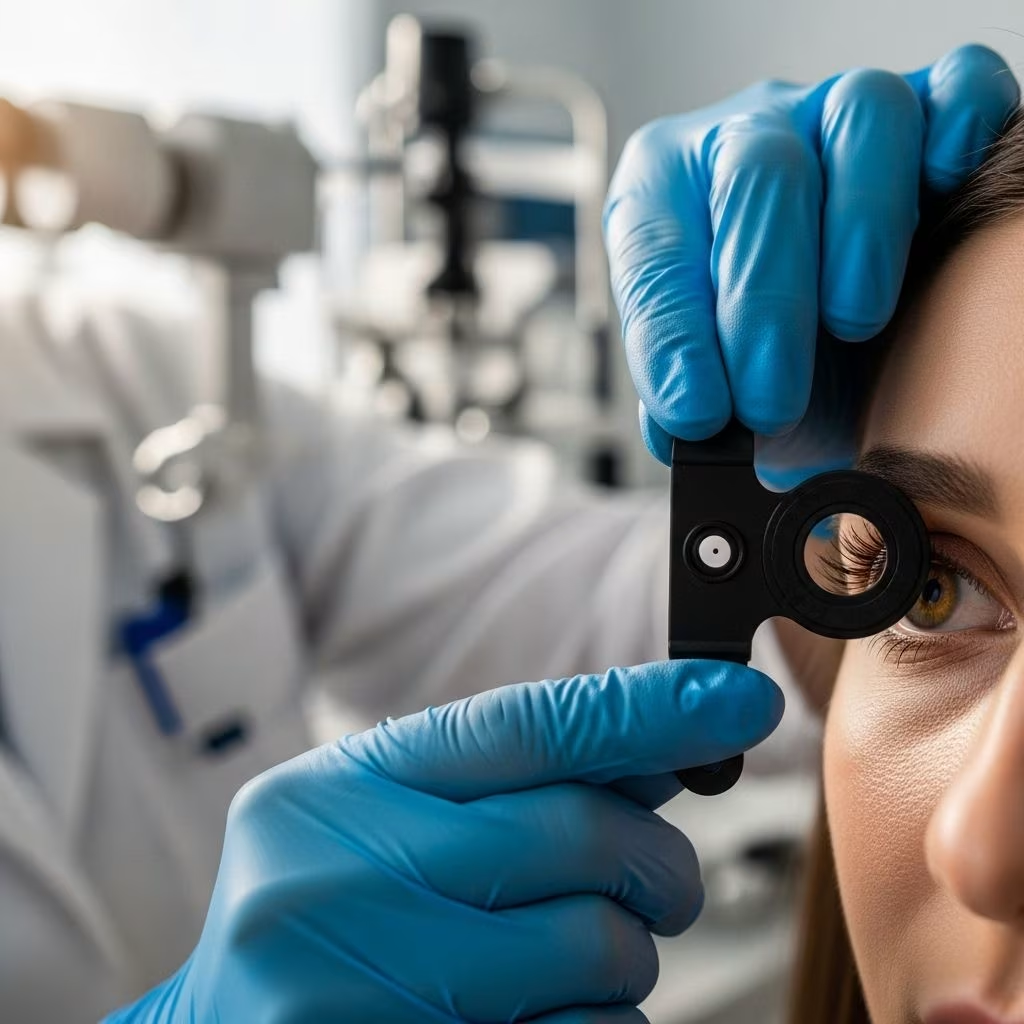
- The occluder (pinhole device) is a small card or disc with a single tiny hole, held in front of one eye at a time.
- Purpose: Looking through the pinhole helps focus incoming light more directly onto the retina, momentarily reducing the impact of refractive errors and clarifying vision if the problem is primarily lens-related.
The test is painless, non-invasive, and suitable for most adults and older children, though adaptations or alternatives may be needed for younger patients or those with cognitive impairments.
What Conditions Does the Pinhole Test Diagnose?
The pinhole test helps identify the underlying cause of vision impairment by answering the central question: Is the vision loss correctable with lenses, or is it due to an irreversible issue in the retina or optic nerve?
- Refractive Error: If vision improves when looking through the pinhole, the decline is likely due to myopia, hyperopia, or astigmatism—conditions easily addressed with corrective lenses.
- Macular Degeneration or Other Retinal Disease: Persistent blurry or distorted vision not improved by the pinhole points to a probable issue in the retina, such as macular degeneration.
- Media Opacities: If the test suggests cataracts (clouding of the eye’s lens), further assessments will confirm and guide treatment.
- Optic Nerve Issues: No improvement may also signal problems with the optic nerve or deeper visual pathways.
Because the pinhole test cannot diagnose macular degeneration outright, it is one component of a comprehensive evaluation protocol. A lack of improvement in vision during the test supports further investigations for macular or retinal conditions.
How Is a Pinhole Test for Macular Degeneration Performed?
The procedure is straightforward, usually performed in minutes during a standard eye exam. Here’s how it works:
- Preparation: The patient is seated in front of an eye chart (often a Snellen chart with progressively smaller letters).
- Testing Each Eye: One eye is covered using the occluder with the pinhole; the patient looks through the hole using the uncovered eye. For accuracy, each eye is tested separately.
- Vision Chart Reading: The patient is asked to read the smallest line of letters possible on the chart while looking through the pinhole.
- Standard Vision Comparison: The process is repeated with the pinhole removed so the patient uses their own eye without the device, for comparison.
- Interpretation: Vision that improves with the pinhole generally means a refractive error; no improvement suggests retinal, macular, or optic nerve involvement.
It is crucial that the pinhole occluder is clean and dry before use to avoid contamination or irritation. For children under 7 or those who cannot cooperate, multiple pinhole occluders or referral for advanced assessment may be necessary.
Why Is the Pinhole Test Important in Eye Health?
The pinhole test is an essential diagnostic tool for several reasons:
- Simplicity: It is quick, painless, and cost-effective, requiring only basic equipment and minimal training.
- Accuracy: It offers a reliable way to screen for refractive errors versus more serious conditions.
- Diagnostic Value: By narrowing down the cause of vision loss, it expedites referrals for more advanced treatment or specialty care when there is suspicion of retinal disease or macular degeneration.
- Potential Outcome Guidance: Helps predict if vision correction with glasses or surgery (e.g., cataract) could restore sight, or if progression is likely and vision loss might become permanent.
What Happens After the Pinhole Test?
Depending on the results, your doctor may take several paths:
- Improved Vision with Pinhole: Indicates a refractive error (e.g., myopia, hyperopia). A prescription for corrective lenses, or further refraction tests, typically follows.
- No Improvement with Pinhole: Suggests a deeper retinal issue, such as macular degeneration, cataracts affecting central vision, amblyopia, or optic nerve disorders. Further assessments (optical coherence tomography, retinal scans, or specialist referral) are warranted.
- Vision Worsens: May indicate macular disease or dense cataract requiring tailored investigations.
How Does the Pinhole Test Compare to Other Diagnostic Tools?
| Test Name | Primary Use | Advantages | Limitations |
|---|---|---|---|
| Pinhole Test | Differentiate refractive error from retinal/nerve disease | Fast, inexpensive, non-invasive; immediate results | Cannot localize/diagnose the exact ocular disease |
| Visual Acuity Test (Snellen Chart) | Assess overall clarity of vision | Quick, widely available | Does not specify cause of low vision |
| Refraction | Measure prescription for corrective lenses | Accurate refractive error assessment | Requires trained staff; not appropriate for all causes of vision loss |
| Optical Coherence Tomography (OCT) | Detailed imaging of retinal layers | Detects macular changes, edema, atrophy | Costly, needs specialized equipment |
| Fundus Photography | Images of the retina for diagnosis/monitoring | Non-invasive, helps track progression | Cannot assess functional vision change in real time |
What Is Macular Degeneration?
Macular degeneration is a chronic, progressive eye disorder that damages the macula—the central part of the retina responsible for sharp vision. Over time, this can lead to central vision loss while peripheral (side) vision often remains intact.
- Types: Dry (atrophic, more gradual) and wet (neovascular, usually more severe and sudden).
- Symptoms: Blurred or distorted central vision, dark spots, difficulty reading or recognizing faces.
- Risk Factors: Age, genetics, smoking, high blood pressure, and cardiovascular disease.
Because macular degeneration impairs the retina, vision typically does not improve when looking through the pinhole occluder, helping doctors distinguish it from vision problems due to refractive error alone.
What’s the Outlook for People with a Positive Pinhole Test for Macular Degeneration?
The outcome depends strongly on the test findings and the precise cause behind visual changes:
- If the pinhole test indicates macular degeneration: This is considered a progressive condition—vision may gradually worsen, and current treatments target slowing progression, not reversal.
- If the vision improves with pinhole: The change is likely reversible with glasses or refractive correction.
- If lens opacity (cataract) is identified: Surgery is a well-established and highly successful treatment, often restoring vision significantly.
Early identification is critical, as it enables timely interventions to slow disease progression, protect remaining vision, and maximize quality of life through assistive aids and therapy.
Takeaway
The pinhole test is an invaluable first-line screening method for determining whether vision loss is likely due to a simple refractive error, cataract opacity, or a deeper retinal/optic nerve cause such as macular degeneration. Clear guidelines on interpreting test outcomes help guide follow-up diagnostic steps and inform patients and providers about what treatment or management may be most effective. If you experience sudden changes in vision or ongoing visual decline, scheduling a comprehensive eye exam including the pinhole test can help illuminate the best path forward for your ocular health.
Frequently Asked Questions (FAQs)
What does it mean if my vision improves with the pinhole test?
If your vision significantly improves when looking through the pinhole, the underlying issue is likely a refractive error (such as nearsightedness, farsightedness, or astigmatism), which can be corrected with prescription lenses.
Can the pinhole test diagnose macular degeneration directly?
No, the test does not diagnose macular degeneration by itself. A lack of improvement with the pinhole is a sign there may be a retinal or macular disorder, but further testing—such as optical coherence tomography or fundus examination—is needed for definitive diagnosis.
Is the pinhole test painful or risky?
The test is painless, low-risk, requires no dilation or special preparation, and can be completed in a few minutes during a standard eye exam.
Who should undergo the pinhole test?
Anyone reporting new or unexplained vision loss should undergo the pinhole test as part of a comprehensive eye evaluation, especially adults and older children. Adaptations or alternative approaches may be necessary for young children or non-communicative patients.
What if the pinhole test suggests a serious condition?
If your vision does not improve, your eye doctor will perform or refer you for additional diagnostic tests to determine if macular degeneration, cataract, or another disease is present. Early intervention can help preserve vision and quality of life.
References
- https://www.healthline.com/health/eye-health/macular-degeneration-pinhole-test
- https://www.youtube.com/watch?v=0DTiaIlNv-I
- https://pmc.ncbi.nlm.nih.gov/articles/PMC6688402/
- https://www.reviewofoptometry.com/article/a-peek-at-the-pinhole
- https://www.webmd.com/eye-health/what-are-pinhole-glasses
- https://lowvisionaids.org/blog/pinhole-test-for-macular-degeneration/
- https://rvaf.com/visualacuity/
- https://bondeye.com/eye-doctor-pinhole-test/