Rich Dad Poor Dad Summary
Rich Dad Poor Dad by Robert T. Kiyosaki is a groundbreaking personal finance book that contrasts the mindsets and financial habits of two fathers—his biological father (the ‘Poor Dad’) and his friend’s father (the ‘Rich Dad’). Through simple lessons and real-life anecdotes, Kiyosaki reveals how financial choices and beliefs differentiate those who build lasting wealth from those who struggle financially, regardless of income level.
The Five Big Ideas
- The poor and middle class work for money; the rich have money work for them.
- It’s not how much money you make, but how much you keep and how effectively it works for you.
- Rich people acquire assets; the poor and middle class acquire liabilities they think are assets.
- Financial education is key to building wealth.
- Understanding the difference between assets and liabilities is essential.
The Story of Two Dads
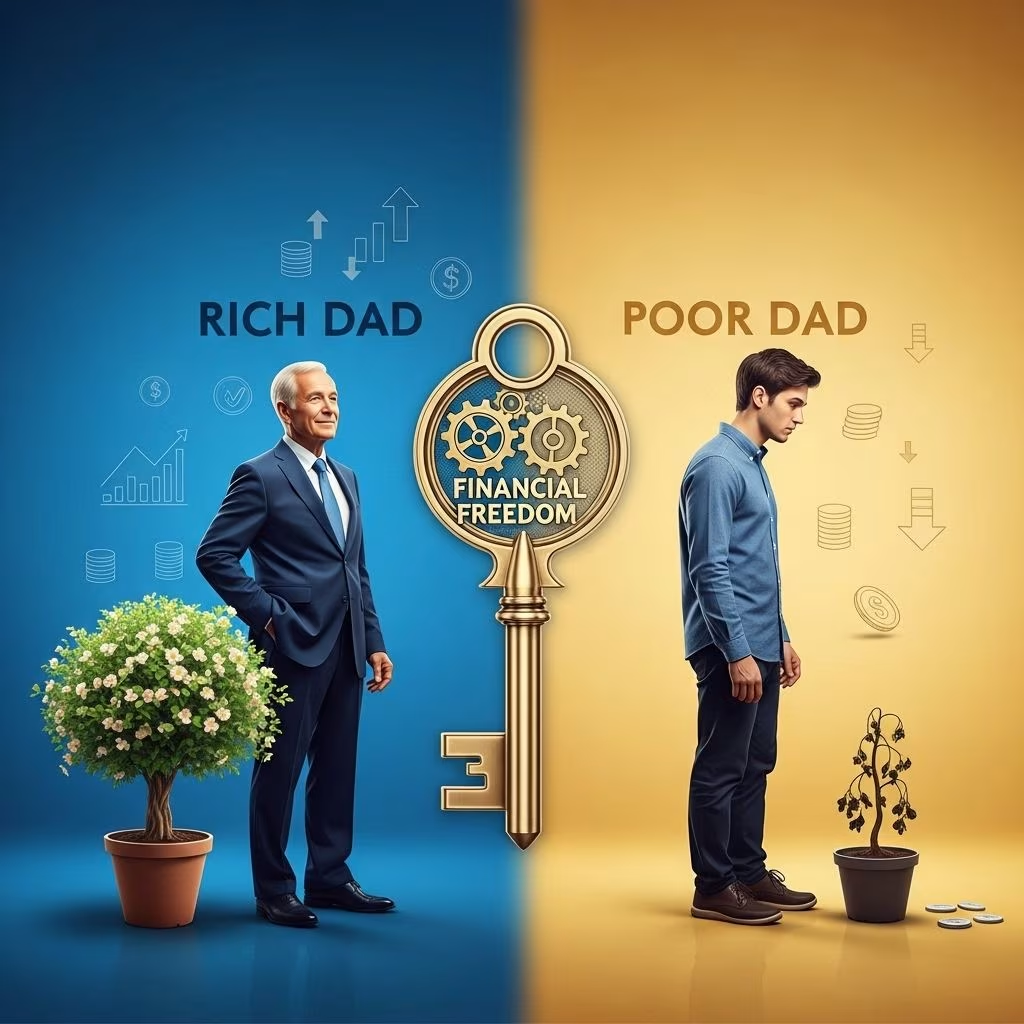
Kiyosaki shares the stories of his two fathers, distilling critical differences in their approach to money and life. His biological father, or ‘Poor Dad,’ was educated and held a stable job, emphasizing academic achievements and job security. In contrast, ‘Rich Dad’ was a successful entrepreneur, advocating for financial education, investing, and the creation of assets. Their diverging philosophies form the framework for the book’s core teachings.
| Philosophy | Poor Dad | Rich Dad |
|---|---|---|
| Education | Formal, academic, traditional school | Financial, practical, real-world learning |
| Career Approach | Work for a paycheck | Own businesses and investments |
| View on Money | Money is scarce; save and minimize spending | Money is abundant; invest to create more |
| Assets | House as the greatest asset | Income-generating ventures as true assets |
Core Lessons from Rich Dad Poor Dad
1. The Difference Between Assets and Liabilities
The book’s central theme is the vital difference between assets (things that put money into your pocket) and liabilities (things that take money out of your pocket). Many people mistakenly count their homes or cars as assets, but unless these generate income, they are considered liabilities. True wealth comes from buying assets — such as real estate, stocks, or businesses — that offer cash flow and appreciate over time.
- Assets: Rental properties, dividend-paying stocks, businesses, intellectual property
- Liabilities: Mortgages (on homes you live in), car loans, credit card debt, unnecessary expenses
2. Working for Money vs. Making Money Work for You
Kiyosaki emphasizes that the majority of people are stuck in the ‘rat race’: they work for money in a cycle driven by fear (of not having enough) and desire (wanting more). He posits that it’s more powerful to have money working for you, which allows for financial independence and freedom. This shift comes from building passive income through assets.
3. The Importance of Financial Education
Traditional education teaches academic and professional skills, but rarely addresses financial literacy. Kiyosaki argues that financial ignorance leads to lifelong struggle with money, regardless of how much you earn. Understanding concepts like cash flow, taxation, investment, and the difference between assets and liabilities is crucial.
Key areas of financial education:
- Reading financial statements
- Tax laws and how they impact your income
- Identifying, acquiring, and building assets
- Understanding debt and leveraging it for wealth
4. Why Many Smart People Struggle Financially
Even highly intelligent and professionally successful individuals may struggle with money due to lack of financial education. Schools often prioritize learning how to earn money, not how to manage, invest, or multiply it effectively. This explains why doctors, lawyers, and engineers might still live paycheck to paycheck despite high incomes.
5. The Power of Mindset and Emotions in Financial Decisions
Fear and greed are driving forces behind most financial decisions. Fear of losing money keeps people stuck in jobs or afraid to take calculated risks. Greed compels them to spend more as they earn more, ultimately leading to more expenses and little wealth accumulation. Kiyosaki encourages readers to become aware of these emotions, master them, and use them to their advantage rather than being controlled by them.
Key Money Lessons and Quotes
- “Broke is temporary. Poor is eternal.”
- “It’s not how much money you make. It’s how much money you keep.”
- “You must know the difference between an asset and a liability.”
- “The number one expense for most people is taxes.”
- “More money seldom solves someone’s money problems.”
Contrasting Lessons: Rich Dad vs. Poor Dad
- Poor Dad: Emphasizes job security, climbing the corporate ladder, and living within one’s means. Sees the house and education as the biggest assets. Pays bills first; writes resumes to get better jobs.
- Rich Dad: Stresses the creation of income-generating assets, investing, understanding tax strategies, and entrepreneurship. Delays paying bills to keep his money working; focuses on creating and funding great financial plans. Teaches that studying hard helps you find opportunities — not just jobs.
The Cash Flow Quadrant
Kiyosaki introduces the Cash Flow Quadrant, a framework for understanding the sources of income:
- E (Employee): Works for someone else; earns a salary
- S (Self-Employed): Owns their job; works for themselves
- B (Business Owner): Owns a system; people work for them
- I (Investor): Money works for them; investments generate income
True financial independence is more easily achieved as a Business Owner and Investor. Most people remain in the Employee or Self-Employed categories, trading time for money and missing out on opportunities to generate passive income.
Cash Flow: The Story of Financial Health
Kiyosaki asserts that “cash flow tells the story of how a person handles money.” Most people remain unaware of their own cash flow patterns and confuse their purchasing power with wealth. By understanding and optimizing personal cash flow, individuals can build security and long-term prosperity.
Taxes and the Hidden Cost of High Income
One of the dominant themes in the book is the surprising reality that the number-one expense for most people is taxes. High earners often encounter ‘bracket creep,’ where higher salaries push them into higher tax brackets, eroding the real value of their income. The rich understand how to structure their finances to reduce taxes legally and keep more of what they earn by using corporations, investments, and appropriate deductions.
Why More Money Isn’t Always the Answer
Kiyosaki debunks the myth that earning more money solves financial problems. Without financial literacy or discipline, increased earnings can lead to higher expenses and deeper debt — a phenomenon known as “income creep.” The solution lies not in higher income, but in smarter money management and the acquisition of cash-flowing assets.
Cultivating a Mindset for Wealth
One of the most subtle but powerful messages from Rich Dad Poor Dad is that wealth is ultimately a mindset. The rich see opportunities where others see risk; they continually invest in learning, adapt to change, and are willing to fail and improve. Developing a positive relationship with wealth and investing in yourself are emphasized as key steps toward financial freedom.
Major Takeaways: Steps Toward Financial Independence
- Increase your financial IQ through self-education
- Track and evaluate your cash flow regularly
- Distinguish clearly between assets and liabilities
- Pursue opportunities to generate passive income
- Adopt a growth mindset that embraces change and lifelong learning
- Take calculated risks and learn from failures
- Leverage the power of businesses and investments, not just earned income
Frequently Asked Questions (FAQs)
What is the main lesson of Rich Dad Poor Dad?
The main lesson is that financial success depends not on how much money you make but on your financial education, specifically your understanding and accumulation of income-generating assets rather than liabilities.
What is the difference between assets and liabilities as described in the book?
Assets put money into your pocket each month (like investments and rental properties), while liabilities take money out (like your personal residence’s mortgage or credit card debt).
Do you need a high-paying job to become wealthy?
No. According to Kiyosaki, many high earners remain financially insecure because they spend most of their income and acquire liabilities. Building wealth relies on acquiring assets and managing cash flow intelligently, not solely on income.
Why does Kiyosaki say more money won’t solve money problems?
Because without financial education, increasing your income often leads to higher expenses and more debt, repeating the cycle of financial struggle at a higher level.
How can I start building assets if I have little money?
Start by investing in financial education and looking for small-scale investment opportunities. Build the habit of saving and redirecting funds into assets. As you learn, expand into larger investments.
Conclusion: Rethink Money, Rebuild Your Future
Rich Dad Poor Dad is not just a book about making money — it’s a call to rethink assumptions about jobs, income, and wealth creation. By fostering financial literacy, shifting your mindset, and focusing on acquiring assets, you can break free from the cycle of working for money and instead create a future where money works for you.