Tibia/Fibula Fracture: Open Reduction and Internal Fixation (ORIF)
Open reduction and internal fixation (ORIF) is a specialized surgical procedure designed to repair and stabilize fractures of the two major bones of the lower legthe tibia and fibula. This detailed guide provides insights into what ORIF involves, why it’s performed, what patients can expect before, during, and after surgery, and potential risks and recovery guidelines.
What Are the Tibia and Fibula?
The tibia, commonly known as the shinbone, is the larger, stronger bone in the lower leg and forms the primary load-bearing structure. Running parallel to the tibia on the outside of the leg is the fibula, a thinner bone that contributes to ankle structure and stability.
- The top of the tibia connects to the knee joint.
- The lower ends of both bones help form the ankle joint.
Understanding Tibia/Fibula Fractures
Tibia and fibula fractures range widely in severity. They can involve a single bone or both, and may occur at different locations: near the knee, along the shaft, or by the ankle. Fractures may be:
- Non-displaced: Bone fragments remain properly aligned.
- Displaced: Bone fragments move out of alignment, requiring repositioning.
- Comminuted: The bone shatters into several pieces, complicating repair.
Common causes of these fractures include vehicle collisions, falls, sports injuries, and repetitive movements. Older adults are at a higher risk due to decreased bone density.
What Is Open Reduction and Internal Fixation (ORIF)?
ORIF is a surgical procedure with two main components:
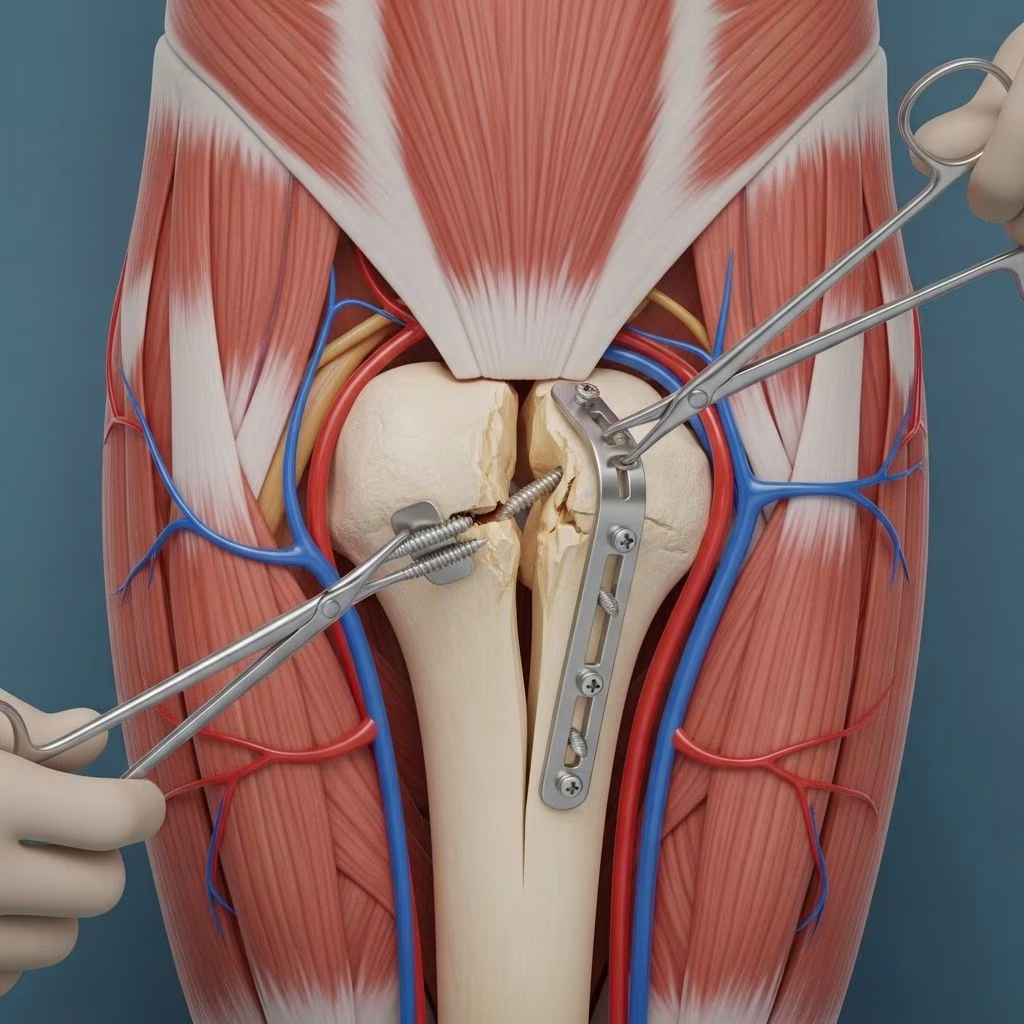
- Open Reduction: The orthopedic surgeon makes an incision to surgically expose the fractured bone and realign or ‘reduce’ the pieces into their correct anatomical position.
- Internal Fixation: Special medical hardwaresuch as screws, plates, rods, or wiresis attached to the bone, firmly holding the fragments together to enable proper healing.
This approach ensures bones heal in the correct position, preserving limb function and alignment.
Why Is ORIF Needed for Tibia/Fibula Fractures?
ORIF is typically recommended when:
- The fracture is displaced, and bone fragments are not aligned.
- The bone has broken through the skin (an open fracture).
- The fracture is comminuted (bone in several pieces).
- The fracture involves the joint surface (knee or ankle).
- Previous treatment has failed to achieve proper bone healing or alignment.
How Is ORIF Performed?
The ORIF procedure for tibia/fibula fractures is carried out by an orthopedic surgeona specialist in treating bone and joint disorders. The broad steps are as follows:
- Anesthesia: The patient is given general anesthesia to ensure comfort throughout the surgery.
- Incision: The surgeon makes a careful incision through the skin and muscle to access the fracture site.
- Reduction: The broken bone fragments are realigned into their proper position.
- Fixation: Metal implants (plates, screws, rods, wires) are used to stabilize the bones internally.
- Closure: Once the bones are secured, the incision is closed with sutures or staples, and the leg is dressed to protect the wound.
Types of Internal Fixation Hardware
- Plates and Screws: Commonly used to bridge the fracture and hold pieces together.
- Rods/Nails: Long, metal rods placed inside the bone cavity for shaft fractures.
- Wires or Pins: Less commonly, used for fragments or in children’s fractures.
Benefits of ORIF in Tibia/Fibula Fractures
- Restores normal alignment, length, and rotation of the leg.
- Provides stable fixation, allowing for early mobilization and rehabilitation.
- Reduces the risk of complications like malunion (improper healing) or nonunion (failure to heal).
- Helps preserve function of adjacent joints (knee, ankle).
Risks and Potential Complications
As with any surgical procedure, ORIF has associated risks. These may include:
- Infection at the surgical site or within the bone.
- Bleeding during or after surgery.
- Nerve or blood vessel injury in the leg.
- Hardware complications such as breakage or loosening of the implants.
- Malalignment (bones heal incorrectly).
- Nonunion (failure of the bone to heal).
- Blood clots (deep vein thrombosis).
- Fat embolism (fat globules enter bloodstream post-injury).
- Movement limitations or stiffness in the joints.
- Irritation from hardware possibly requiring a second procedure for removal.
- Anesthesia-related problems.
Risk factors such as older age, tobacco use, diabetes, or osteoporosis may increase the likelihood of complications. It is crucial to discuss your specific risk profile with your surgeon before surgery.
Preparation for ORIF
Proper preparation helps ensure a successful outcome. Typical steps may include:
- Medical Evaluation: Assessment by your surgeon and anesthesiologist, including blood work and imaging (X-rays, CT scans).
- Medication Review: Adjustment or discontinuation of certain medications (blood thinners, for example).
- Fasting: Not eating or drinking for several hours before surgery as advised.
- Consent: The surgeon will discuss the procedure, risks, alternatives, and have you sign a consent form.
What Happens After ORIF Surgery?
After the operation, patients are monitored closely in recovery. Typical post-operative care includes:
- Pain Management: Medications to relieve post-surgical pain.
- Wound Care: Keeping the incision clean and dry, monitoring for signs of infection.
- Imaging: X-rays to verify proper placement of the bones and implants.
- Mobility: Depending on the fracture and fixation, initial weight-bearing may be restricted. Crutches, walkers, or a cast/splint may be used temporarily.
- Physical Therapy: Exercise programs to restore movement, strength, and prevent stiffness. Early but cautious mobilization aids in optimal healing.
The exact recovery process depends on the type and location of the fracture, the hardware used, patient health, and the extent of soft tissue injury.
Recovery Timeline
- Most patients begin gentle movement exercises within a few days to weeks.
- Full healing may take several months depending on age, health, and fracture complexity.
- Return to normal activities is individualized, guided by your orthopedic team.
Long-Term Outlook and Follow-up
Regular follow-up appointments are essential to monitor bone healing and hardware integrity. In some cases, hardware may be removed if it causes discomfort or impedes function after complete healing.
Potential long-term issues may include subtle changes in limb length, joint stiffness, or, rarely, repeat fracture or implant issues. With proper post-surgical care and physical therapy, however, most people regain full or near-full function of the leg.
Frequently Asked Questions (FAQs)
Q: When is ORIF the best choice for tibia/fibula fractures?
A: ORIF is preferred when fractures are displaced, comminuted, involve joints, or when non-surgical management has failed to provide stable, functional outcomes.
Q: How long does it take to recover from tibia or fibula ORIF?
A: Recovery timelines vary, but full bone healing generally ranges from 3 to 6 months. Some may require a longer period depending on fracture severity and personal health.
Q: Will the hardware be permanent?
A: In many cases, implants can remain permanently unless they cause pain or interfere with activity, in which case surgical removal may be considered after healing is complete.
Q: What are signs of possible complications after surgery?
A: Alert your healthcare team if you notice redness, increasing pain, swelling, fever, drainage at the incision, new numbness, or lack of improvement as these could indicate infection, abnormal healing, or hardware problems.
Q: Can physical activity be resumed after recovery?
A: With medical guidance and gradual rehabilitation, most people regain their level of pre-injury physical activity, although high-impact sports may require more time or lasting precautions.
Key Takeaways
- ORIF is a proven surgical technique to restore function and promote reliable healing in complex tibia/fibula fractures.
- The procedure involves anatomical realignment of bones and securing them with internal devices.
- Potential complications exist but can be minimized with careful surgical technique and follow-up care.
- Rehabilitation and physical therapy are critical to optimal results.
For best outcomes, follow your healthcare provider’s instructions, attend all follow-up visits, and promptly report any troubling symptoms during recovery. The goal with ORIF is not just healing of the bone, but full restoration of movement and quality of life.
References
- https://www.urmc.rochester.edu/encyclopedia/content?contenttypeid=135&contentid=379
- https://www.ummhealth.org/health-library/understanding-tibiafibula-fracture-open-reduction-and-internal-fixation-orif
- https://surgeryreference.aofoundation.org/orthopedic-trauma/adult-trauma/distal-tibia/extraarticular-simple-fracture/orif-compression-plate
- https://www.ummhealth.org/health-library/having-tibiafibula-fracture-open-reduction-and-internal-fixation-orif
- https://www.physio.co.uk/what-we-treat/surgery/lower-leg/orif-tibia-fibula.php
- https://my.clevelandclinic.org/health/procedures/open-reduction-and-internal-fixation-orif
- https://www.orthobullets.com/trauma/1045/tibial-shaft-fractures
- https://healthlibrary.osfhealthcare.org/3,90581
- https://my.clevelandclinic.org/health/diseases/25043-tibia-and-fibula-fracture