Tonsillectomy for IgA Nephropathy: What You Should Know
Immunoglobulin A (IgA) nephropathy is a chronic autoimmune condition that affects the kidneys. In recent years, research has explored the potential of tonsillectomy—the surgical removal of the tonsils—as a treatment option for some people with this disease. While some studies suggest benefits in slowing disease progression, especially in certain populations, this potential therapy remains an area of scientific debate and ongoing study.
What Is IgA Nephropathy?
IgA nephropathy, also known as Berger’s disease, is an autoimmune disorder that occurs when Immunoglobulin A (IgA)—an antibody produced by the immune system—accumulates within the kidneys. This buildup leads to inflammation and can eventually cause kidney damage or even kidney failure. Key facts include:
- IgA is produced mainly in the mucosal-associated lymphoid tissue, including the gut and tonsils.
- The disease often progresses slowly but can lead to chronic kidney disease or end-stage renal disease over time.
- Symptoms may include blood in the urine, proteinuria, high blood pressure, and swelling.
Why Consider Tonsillectomy for IgA Nephropathy?
Tonsillectomy has traditionally been known as a treatment for chronic tonsillitis or recurrent throat infections. However, researchers have explored its potential as a therapy for IgA nephropathy based on the following:
- The tonsils are a significant source of IgA production. Removing them could potentially reduce abnormal IgA production and its deposition in the kidneys.
- Studies have focused on populations where both recurrent tonsillitis and IgA nephropathy are more prevalent.
- Tonsillectomy might be combined with other therapies, like corticosteroids, for additive benefit.
Tonsils and the Immune System
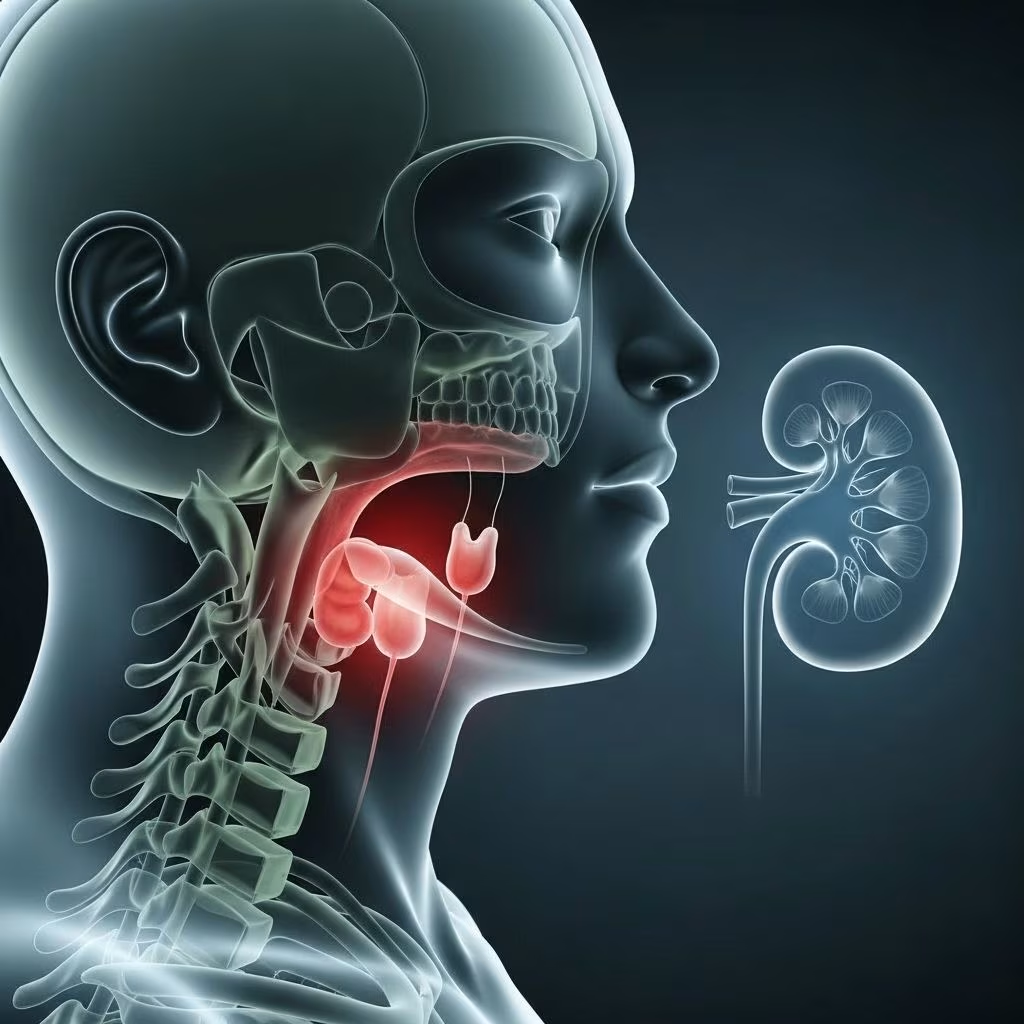
The tonsils are two lymphoid tissue masses located at the back of the throat. They:
- Produce IgA and other immune-related proteins.
- Act as part of the body’s “first line of defense,” trapping infectious particles entering through the mouth or nose.
- In some autoimmune conditions, their heightened activity may contribute to pathological immune responses, such as that seen in IgA nephropathy.
Potential Benefits of Tonsillectomy for IgA Nephropathy
Some research, particularly from Japanese and other Asian populations, has shown potential benefits of tonsillectomy for managing IgA nephropathy:
- Slows Disease Progression: Multiple large-scale studies have indicated that tonsillectomy may slow the rise of serum creatinine levels, a marker for kidney function, and may reduce the risk of progression to end-stage kidney disease or the need for dialysis.
- Lower Risk of Kidney Failure: Those who underwent tonsillectomy were less likely to develop advanced kidney disease over substantial follow-up periods.
- Enhanced Efficacy with Steroids: Combining tonsillectomy with “steroid pulse therapy” (periodic high doses of corticosteroids) showed even better outcomes than tonsillectomy alone in some studies.
| Study | Participants | Findings |
|---|---|---|
| 2019 Study | 1,065 Japanese | Lower increases in serum creatinine; reduced dialysis need for tonsillectomy group. |
| 2020 Study | 1,147 Japanese | Slower kidney disease progression and lower risk of end-stage kidney disease post-tonsillectomy. |
| 2024 Study | 123 Japanese | Greater benefit when tonsillectomy is combined with steroid pulse therapy. |
Population Considerations
Most research showing benefit for tonsillectomy as a treatment for IgA nephropathy has been conducted in Asian populations. It is unclear whether similar results would be observed in non-Asian groups. More research is needed to determine its effectiveness and safety in broader populations.
Risks and Limitations of Tonsillectomy
Although tonsillectomy is generally considered a low-risk and routine procedure, it is not without possible complications, particularly for individuals seeking it as a treatment for IgA nephropathy.
- Surgical risks: Bleeding, infection, reactions to anesthesia, and issues with wound healing.
- Limited evidence beyond Asia: The best evidence for tonsillectomy’s benefit comes from Asian cohorts; international applicability remains uncertain.
- Current guidelines: Kidney Disease: Improving Global Outcomes (KDIGO, 2021) does not recommend tonsillectomy to treat IgA nephropathy in white populations unless there is also recurrent tonsillitis.
Other Potential Downsides
- Pain and difficulty swallowing following surgery (temporary but can be severe for a few days).
- Risk of dehydration if eating/drinking is too painful.
- Not a cure: While tonsillectomy might slow disease progression, it does not cure IgA nephropathy.
Who Should Consider Tonsillectomy?
Deciding on a tonsillectomy as part of IgA nephropathy management requires personalized medical advice. You should speak with a nephrologist or immunologist experienced in IgA nephropathy to weigh the benefits and risks in your specific case.
When Is Tonsillectomy Considered?
- Recurrent Tonsillitis: Individuals with frequent or severe tonsil infections plus IgA nephropathy might have dual indications for tonsil removal.
- Asian Descent: There is stronger supporting evidence for those of Asian heritage, where practice patterns may differ.
- Inadequate Response to Other Therapy: The surgery may be considered if disease progresses despite optimal pharmaceutical management.
Guidelines may evolve as more cross-population research emerges. For now, tonsillectomy for IgA nephropathy is not universally recommended and should be considered on a case-by-case basis.
The Tonsillectomy Procedure: What to Expect
Tonsillectomy is typically a day surgery requiring general anesthesia. The main steps are:
- Preparation: Avoid anti-inflammatory medications (aspirin, ibuprofen, naproxen) for at least two weeks beforehand. Fast after midnight before the procedure. Inform your doctor of any medications, herbs, or supplements you’re taking.
- Surgery: Surgical removal takes about 30 minutes. Methods include traditional scalpel excision, electrocautery (burning away tissues), or ultrasonic vibration.
- Monitoring: You’ll be observed in a recovery room for blood pressure and heart rate monitoring.
- Discharge: Most people can return home the same day with instructions for recovery and pain management.
Recovery After Tonsillectomy
- Rest at home for about a week; avoid strenuous activities.
- Pain is common, especially when swallowing; it typically peaks within 1–3 days and improves over a week.
- Common symptoms include sore throat, ear pain, mild fever, and bad breath during initial healing.
- Fluid intake is crucial to prevent dehydration.
- Eat soft, bland foods until swallowing becomes comfortable.
- Watch for signs of excessive bleeding or dehydration and contact a doctor if they occur.
What Does the Latest Research Say?
Recent publications and clinical trials have produced key findings:
- Most benefit data are from Asian populations—particularly Japan—where tonsillectomy is sometimes part of standard care for IgA nephropathy.
- Adding steroid pulse therapy to tonsillectomy may provide additional protective effect against progression.
- Research in non-Asian populations is more limited and does not consistently show a benefit, leading to restrictive recommendations in practice guidelines outside Asia.
- More comprehensive, multi-ethnic, and randomized trials are needed to inform future recommendations globally.
Frequently Asked Questions (FAQs)
Q: What is the main reason to consider tonsillectomy for IgA nephropathy?
A: The main reason is to try to slow the buildup of harmful IgA antibodies in the kidneys, which could slow disease progression for certain patients, particularly in Asian populations where benefits have been best documented.
Q: Is tonsillectomy a cure for IgA nephropathy?
A: No, tonsillectomy is not a cure. At best, it may slow the rate of kidney damage in selected patients; you will still need regular monitoring and most likely continue with other medications.
Q: Who should avoid tonsillectomy?
A: People without recurrent tonsillitis and those outside of demographics or regions with proven benefit (such as non-Asian populations), unless participating in clinical trials or specialist care, generally are not recommended tonsillectomy solely for IgA nephropathy at this time.
Q: What are the main risks of tonsillectomy?
A: Bleeding, infection, pain, dehydration, and anesthetic complications are the primary risks, though serious events are rare with modern surgery.
Q: Will I need additional treatments after tonsillectomy?
A: Yes, medication such as corticosteroids, blood pressure control, and regular kidney function monitoring are still crucial regardless of surgical treatment.
Q: Could guidelines change in the future?
A: Yes, as more research is published, especially from diverse populations, practice guidelines and recommendations regarding tonsillectomy for IgA nephropathy may be updated.
The Takeaway
While tonsillectomy may have a role in slowing the progression of IgA nephropathy—particularly among Asian populations with supporting research—it is not a universally recommended or curative therapy. Discussion with your own healthcare provider is critical, as medical advice should always be personalized to your health history and the latest scientific evidence.