


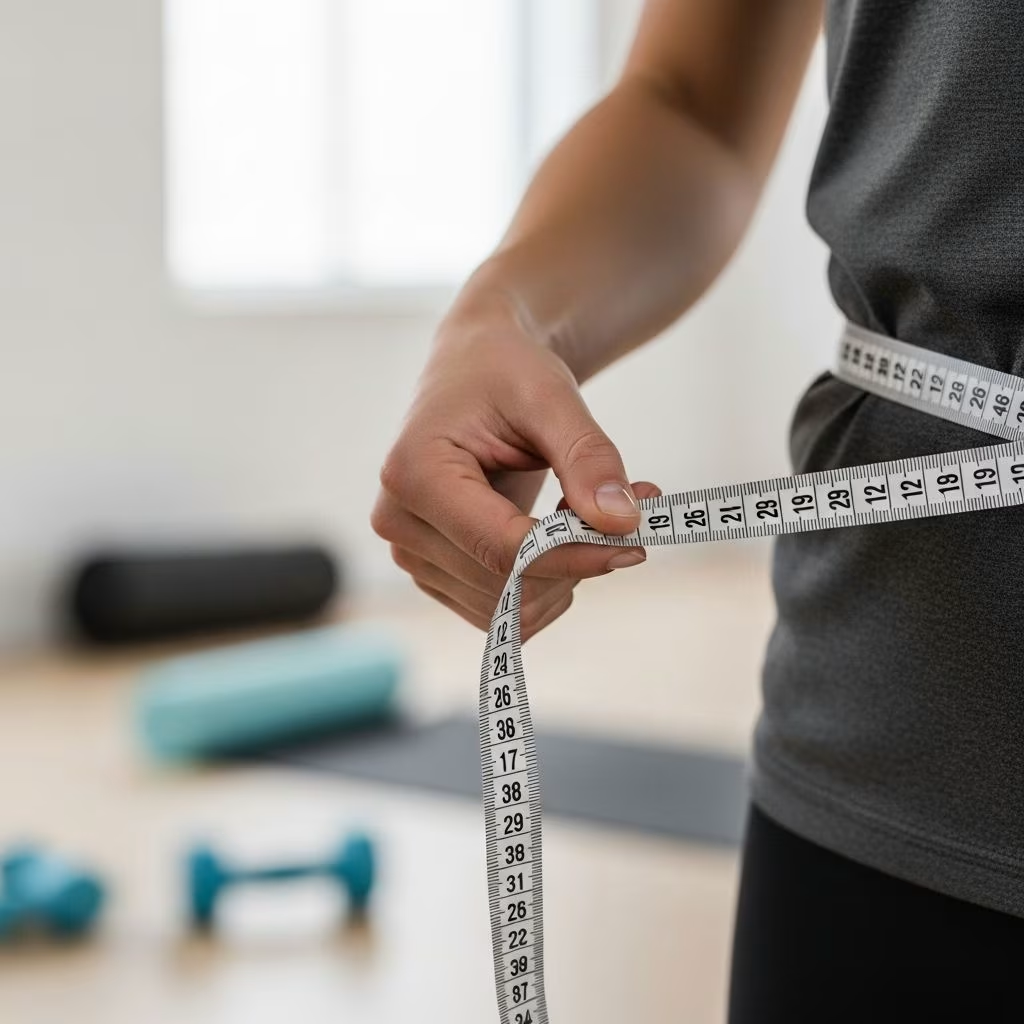
Focusing solely on the number on your bathroom scale can be demotivating, frustrating, and even misleading. If you’re looking to shed pounds, improve your health, or simply refine your habits, it’s time to explore alternative ways to measure progress. Scales can fluctuate wildly for reasons that have nothing to do with fat loss, and overreliance on them can dampen your motivation. In this comprehensive guide, learn why putting the scale aside can help you build a healthier relationship with your body and uncover expert-backed strategies to track true progress.
Why Ditch the Scale?
While weighing yourself can offer a snapshot of change, it does not provide the whole picture of health or progress. Here’s why relying on the scale may not serve your best interests:
- Weight fluctuates naturally throughout the day and by week, responding to hormones, hydration, meals, or workouts.
- Muscle weighs more than fat by volume—as your body composition improves with exercise, you may look fitter without a significant dip on the scale.
- Obsession with the scale can harm self-esteem, shifting focus from healthy habits to an arbitrary number.
- Body confidence and well-being aren’t measured in pounds. True progress includes better sleep, more energy, improved mood, and increased strength.
Letting go of the scale frees you to concentrate on the real, meaningful results of your hard work.
Powerful Non-Scale Methods to Track Your Progress
The following strategies allow you to measure your journey holistically, celebrating progress not just in appearance, but in strength, stamina, and self-worth.
1. Take Body Measurements
Tracking inches can reveal subtle, positive changes in your body shape that the scale might miss:
- Measure key areas: waist, hips, chest, arms, and thighs, using a flexible tape.
- Take measurements monthly to monitor trends and pinpoint where you’re losing fat or gaining muscle.
Pro tip: Always measure the same spots and under the same conditions for consistency (e.g., same time of day, same posture, light clothing).
2. Assess Your Fitness Progress
Improvement in physical performance is a powerful—and motivating—indicator of success. Track your fitness gains with methods such as:
- Workout endurance: Can you now walk or run longer without rest, or complete a fitness class more easily?
- Strength levels: Track increases in the weight you lift, the number of push-ups or squats you can do, or how quickly you recover post-exercise.
- Flexibility: Are stretches or yoga poses becoming easier, with a greater range of motion?
Document these milestones in a workout journal to witness tangible improvements over time.
3. Monitor How Your Clothes Fit
Clothes don’t lie—even when the scale holds steady. Noticing looser pants, a previously snug shirt fitting better, or the need to tighten your belt are all signs you’re slimmer and stronger:
- Keep a “goal outfit” you try on every few weeks to gauge fit and comfort.
- Photograph yourself in the same clothes, at regular intervals, to visualize progress.
4. Take Progress Photos
Seeing is believing. Physique changes can be so gradual that you may not notice them day-to-day. Regular progress photos act as visual proof of your transformation. For best results:
- Take full-body front, side, and back photos every four weeks.
- Use the same lighting, clothing, and background for consistency.
Comparing old and new photos side-by-side helps keep you inspired and focused on non-scale victories.
5. Celebrate New, Healthy Habits
Progress extends beyond physical appearance. Reflect on subtle improvements in your daily lifestyle:
- Are you prepping meals ahead and making more balanced food choices?
- Do you find yourself walking more, taking the stairs, or hitting your daily activity goals?
- Have you started sleeping better or experiencing more stable moods and energy?
Journaling your habits and mood will help you appreciate how your commitment is paying off in different areas of your life.
6. Monitor Your Energy and Mood
Your overall sense of well-being is one of the most rewarding markers of progress. Ask yourself:
- Are you waking up refreshed and able to focus at work?
- Do you feel less stressed, anxious, or irritable?
- Does exercise lift your spirits and help you manage your day better?
Noticing positive changes here reinforces the far-reaching benefits of healthy living—well beyond any number on a scale.
Understanding Weight Fluctuations: Why the Scale Lies
Many factors unrelated to fat loss can send your weight up or down even in a single day:
- Water retention due to sodium, hormones, or exercise-induced inflammation
- Timing of your last meal: Weight may be higher after eating, but it doesn’t mean you’ve gained fat
- Digestive changes: Bloating, constipation, or even a heavy meal can skew the scale temporarily
- Muscle gain: Adding lean muscle through strength training can cause weight to hold steady or rise, while your body composition improves dramatically
Recognizing these patterns helps prevent discouragement and places the scale’s feedback in true perspective.
How to Build a Body-Positive Mindset
The more you detach your self-worth from the numbers, the more empowered you become. Here are ways to nurture a positive, sustainable relationship with your body and wellness:
- Practice self-compassion: Replace harsh self-talk with encouragement and patience.
- Value process over outcome: Celebrate actions you take (meal prep, a long walk, trying a new veggie dish), not just results.
- Seek support: Join a workout group, connect with friends also working on health goals, or consider seeing a registered dietitian or counselor for added accountability and guidance.
- Set realistic expectations: Progress is nonlinear; even small changes add up over time.
Your fitness and health journey is unique. Learning to enjoy the path rather than fixating on fast results establishes habits you can sustain for life.
Expert Tips to Stay on Track Without a Scale
- Record your wins in a journal. Track upgrades in your eating, exercise, energy, and stress management for ongoing motivation.
- Schedule regular check-ins: Pick a monthly date to review your measurements, photos, and reflections—but no more frequent. This reduces anxiety and focuses attention on trends, not day-to-day change.
- Create habit triggers: Place a workout mat where you see it, keep cut veggies at eye level, or set calendar reminders to move. Environmental cues reinforce regular self-care behaviors.
- Find joy in movement: Diversify your routine with activities you like—dance, hiking, cycling, or team sports—to sustain motivation and accelerate results.
- Focus on function over form: Celebrate how your body performs, not just how it looks—climbing stairs tirelessly, carrying groceries with ease, or hitting a new push-up record.
A Simple Table: Scale vs. Non-Scale Victories
| Scale Victories | Non-Scale Victories |
|---|---|
| Number decreases on the scale | Clothes fit better |
| Bodyweight is tracked daily | Improved mood and energy |
| Ability to lift heavier weights | |
| Completing a fitness milestone (5K, hiking, new sport) | |
| Making smarter food choices consistently | |
| Positive feedback from friends or family |
A Practical Weekly Habit Checklist
- Did I eat at least three different vegetables most days?
- Did I do some kind of physical activity at least four times?
- Did I drink water and avoid most sugary drinks?
- Did I spend even a few minutes focusing on self-care or mindful eating?
- Did I notice a boost in my daily energy, mood, or sleep?
Repeat this checklist at the end of each week, and record your responses. Over time, you’ll notice how small shifts accumulate into major improvements—no scale required.
Frequently Asked Questions (FAQs)
Q: If I don’t use a scale, how do I know if my efforts are working?
Tracking your measurements, clothing fit, progress photos, fitness achievements, and overall mood are all reliable indicators that you’re making positive changes, even when the scale barely moves or remains stubborn.
Q: Can skipping the scale slow down my results?
There’s no evidence that frequent weigh-ins guarantee faster results; in fact, tuning into non-scale cues often leads to better long-term outcomes and a healthier psychological relationship with weight loss.
Q: How often should I check body measurements or take progress photos?
Monthly check-ins are ideal for capturing meaningful changes, reducing short-term anxiety, and keeping your focus on sustainable progress.
Q: My weight has plateaued. How do I know I’m still making progress?
Even during plateaus your strength, endurance, and energy levels may keep improving. Rely on clothing fit, photos, and how you feel to judge continued progress—plateaus are part of the journey.
Q: What’s the best way to break free from scale obsession?
Replace daily weigh-ins with other rituals: Record workouts, jot down three positive changes each week, or celebrate a fitness milestone. With practice, your focus will naturally shift away from the scale.
Key Takeaways
- The scale is just one (often flawed) measure of progress. True success is about how you eat, move, feel, and live.
- Use measurements, clothing fit, strength gains, photos, and wellness checklists to track real, sustainable results.
- Building healthy habits and a positive mindset bring both visible and invisible victories worth celebrating.
By stepping off the scale, you step into a fuller, more rewarding experience of health—and set yourself up for lasting transformation.
References
- https://www.prevention.com/weight-loss/a20505548/small-changes-that-take-off-big-pounds/
- https://www.prevention.com/weight-loss/a20492165/what-happens-when-you-stop-weighing-yourself/
- https://www.prevention.com/weight-loss/diets/a60578947/how-to-lose-weight-fast-safely/
- https://www.prevention.com/weight-loss/a20505318/lose-weight-by-eating-more-fat/
- https://www.prevention.com/weight-loss/a20501336/the-metabolism-miracle-for-women-over-40/
- https://www.prevention.com/weight-loss/a20504464/track-your-weight-loss-without-a-scale/
- https://www.prevention.com/weight-loss/
- https://www.prevention.com/weight-loss/g25832230/non-scale-victories-weight-loss/
- https://www.prevention.com/weight-loss/a20481618/right-weight-for-your-body/
- https://www.prevention.com/weight-loss/a20509771/5-things-losing-weight-will-never-fix/


