


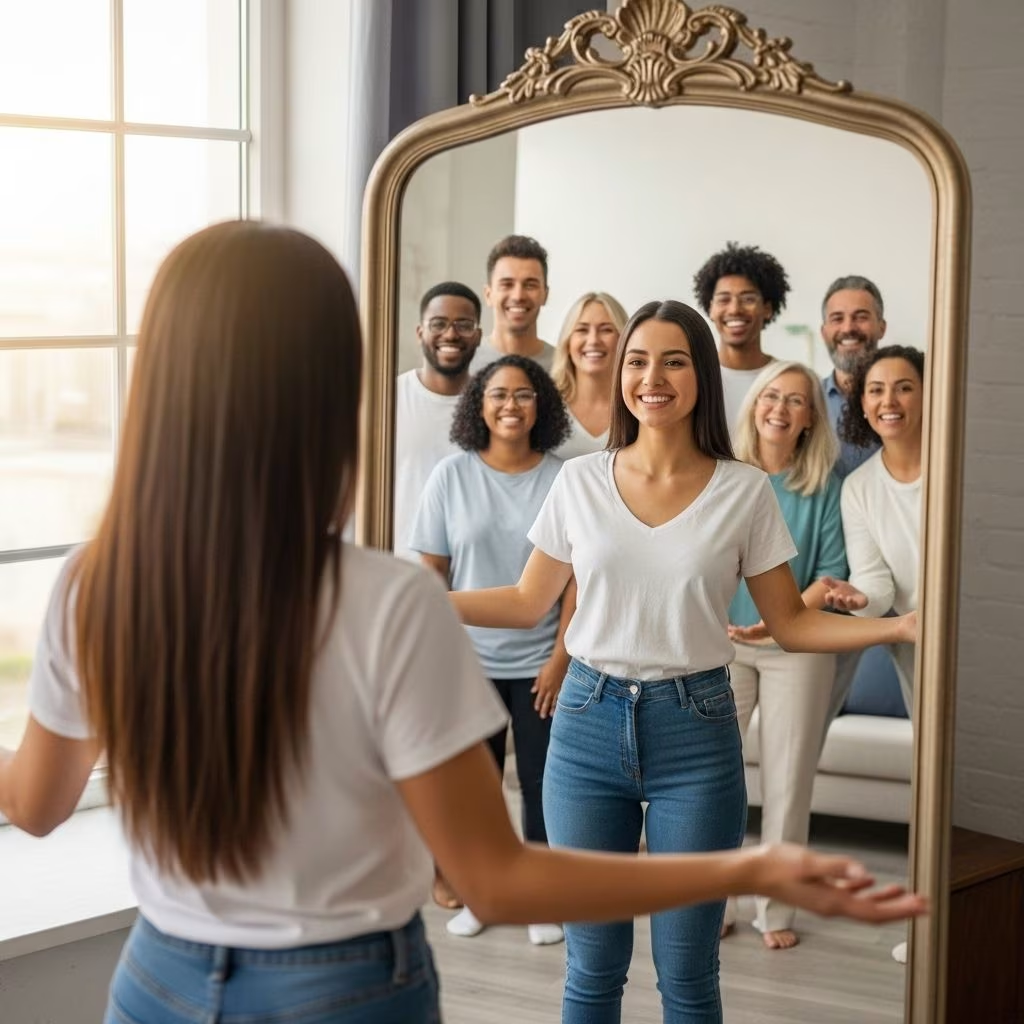
Body Image Reality Check: Embracing Your True Self
In a society relentlessly focused on youth and perfection, many women internalize harsh messages about their bodies. Yet pursuing the impossible standards broadcast by a photoshopped world only leads to self-doubt and chronic dissatisfaction. This reality check is an invitation to challenge those beliefs, celebrate what you have, and build a compassionate approach to body image—one rooted in your real, lived experience.
Faulty Comparisons: The Trap of Unrealistic Ideals
Every day, we are bombarded with images of “ideal” bodies—slim, youthful, airbrushed into perfection—that set an unattainable standard for most people. Even the models gracing magazine covers don’t look like their pictures. So why do so many of us compare ourselves to these doctored images?
- Self-criticism is common: Many women evaluate themselves harshly, focusing on perceived flaws such as thighs, arms, or wrinkles, creating a constant inner narrative of inadequacy.
- The myth of the perfect body: The programmed belief is that slim, smooth, and ageless bodies are the only bodies worth celebrating.
- Even celebrities feel the pressure: Cindy Crawford once remarked that she wished she actually looked like the image of herself people admired—underscoring the unreality of our expectations.
- Normal bodies show life: Wrinkles, softness, scars, and stretch marks are not flaws; they are physical evidence of living, loving, and experiencing life.
What happens when we base our self-worth on such comparisons? We start believing that our real, vibrant bodies are somehow a sign of laziness or failure. Worse, we ascribe moral value to our shapes, letting them define our sense of possibility and worthiness.
Action Step: Observe Real Women
Next time you’re out in public—whether at the grocery store, the gym, or the mall—pause to notice bodies that have moved beyond adolescence. Observe the diversity and humanity of real women, not photoshopped ideals. Say to yourself:
This is what living looks like. This is what loving and losing and hoping and caring do to bodies.
Allow yourself to appreciate the richness of your own lived experience, which makes your appearance uniquely yours.
Change Your Attitude: Building Compassionate Self-Perception
Once you start to accept that real bodies reflect the totality of lived experiences, your attitude towards yourself can shift. Changing ingrained beliefs is challenging, but deliberate actions can help you reshape your perspective.
The Mirror Exercise: 6 Weeks to Self-Acceptance
Consider this practice:
- Stand in front of a full-length mirror, completely unclothed.
- Look at your entire body for at least three minutes, focusing not on criticism but on observation and acceptance.
- Repeat this exercise once per week for six weeks—the length of time it takes to begin transforming ingrained attitudes.
- As you view your body, remind yourself: This is what living looks like. This is what loving looks like.
Over time, this mindful self-observation can reshape negative attitudes and foster greater self-compassion.
How the Pursuit of Perfection Fails Us
Striving to meet unattainable physical ideals keeps countless women stuck in a cycle of guilt, self-loathing, and harsh self-talk. This obsession often overshadows our accomplishments and even our happiness.
- Media messaging: Images are digitally altered; even people featured wish they looked like their portraits.
- Personal dissatisfaction: Many women equate body imperfections with personal shortcoming rather than the natural result of living fully.
- Comparative thinking: Focusing only on those younger, thinner, or richer can diminish your own unique strengths and story.
The truth is: the pursuit of perfection is a losing game. Even as you achieve one standard, another—and more unattainable—ideal appears. The cost is measured not only in time and money, but also in joy and mental health.
Reality vs. Perception: Belts and Boundaries
On days when you feel heavier or ashamed, your first instinct might be to hide—perhaps in oversized clothes or by stepping back from social engagements. However, physical tools such as a belt can offer powerful reality checks and help correct distorted self-perception.
- The feeling-fat days: Wearing a belt, rather than concealing your shape, can remind you that your body is not as large or malformed as negative self-talk claims.
- Surprising discovery: Many women, when asked to estimate the size of their own abdomen or thighs, exaggerate dramatically.
- Body dysmorphia: This disconnect between perception and actual physical form is extremely common—influenced by mood, cultural messaging, and personal history.
Putting on a belt or fitted clothing—even on challenging days—can help you reconnect with your body and restore a more balanced sense of reality. As one woman discovered, a simple accessory reminded her that she still possessed her shape, even after emotional eating.
Understanding the Root of Body Dissatisfaction
Why do so many people—especially women—internalize body shame? Several cultural, psychological, and biological factors are at play:
- Social conditioning: From an early age, women are taught that thinness equals happiness, success, and value.
- Economic interests: The diet and beauty industry profits billions annually by promoting solutions to “flaws” they themselves have defined.
- Government and health guidance: Often reinforce weight-focused health messaging, even when evidence shows health outcomes are not always tied to weight.
- Misperceptions: Equating morality and effort with appearance, rather than understanding the complex interplay of genetics, environment, and lifestyle.
The result: countless women experience unnecessary shame and anxiety, regardless of their actual health or accomplishments.
Reframing Health: Why Weight Is Not the Whole Story
A growing body of research shows that health and weight are not synonymous. Many experts now challenge the assumption that being thin automatically signals wellness, or that heavier bodies are inherently unhealthy.
- Multiple studies show that being “overweight”—and even “obese” —does not automatically result in high blood pressure, diabetes, or poor cholesterol.
- Almost half of people classified as “overweight” and over a quarter labeled “obese” had healthy glucose and lipid levels, making them cardiometabolically healthy.
- Conversely, about 30% of “normal-weight” individuals showed unhealthy metabolic markers.
For most women, obsessing over the number on the scale is less important than other measures of wellness, such as blood pressure, cholesterol, and physical fitness. Dropping some weight may have specific benefits for certain individuals, but weight alone is rarely a comprehensive indicator of health.
Key takeaway: Focusing on holistic health—physical, emotional, and mental—yields greater satisfaction and sustainability than fixating on weight alone.
Practical Steps to Cultivate a Healthier Body Image
- Challenge comparisons: Replace the habit of comparing yourself to celebrities and models with realistic perceptions. Remember: even they don’t look like their photos.
- Observe reality: Seek out and celebrate bodies that tell stories of age, experience, and individuality.
- Practice self-kindness: Speak to yourself as you would to a dear friend going through a difficult time.
- Wear fitted clothing when you feel self-conscious: Give yourself a reality check instead of retreating into baggy clothes. This physical reminder can help ground you.
- Focus on health, not size: Track your blood pressure, cholesterol, and other health markers, not just the numbers on your scale.
- Engage mindfully with social media: Limit exposure to accounts that promote unrealistic standards; instead, follow people who celebrate body diversity and authenticity.
- Seek support when needed: If body image issues interfere with your happiness, consider talking to a counselor or support group.
Frequently Asked Questions (FAQs) About Body Image
Q: Is it healthy to want to lose weight if I’m dissatisfied with my body?
A: Wanting to improve your health is reasonable, but it’s important to separate health goals from the pursuit of an ideal body. Focus on behaviors that support health rather than external appearance, and recognize that happiness is not dependent on thinness.
Q: How do I stop negative self-talk when I look in the mirror?
A: Begin by treating yourself with the compassion and encouragement you would extend to a friend. Use the mirror exercise regularly, and consciously redirect harsh thoughts with affirmations like, “This is what living looks like. I deserve kindness.”
Q: Are there proven ways to increase body satisfaction?
A: Yes. Mindfulness, gratitude practices, reducing social media exposure to unrealistic images, and focusing on what your body can do, not just how it looks, all help improve body satisfaction.
Q: What if I feel self-conscious in public?
A: Remember that most people are focused on themselves, not scrutinizing others. Direct your attention outward—notice who around you inspires confidence without fitting the cultural ideal. Ground yourself through small rituals, like wearing a favorite accessory or practicing calm breathing.
Q: Does my worth depend on my appearance?
A: Absolutely not. Your value comes from your actions, kindness, passions, and resilience—not your size or shape. Physical appearance changes with time and experience, but your capacity for happiness and accomplishment is limitless.
Recommended Resources for a Healthier Mindset
- Books: Explore works on self-acceptance and body positivity by thought leaders in the field.
- Community: Look for local or online groups that celebrate diversity and self-compassion.
- Mental Health Support: If body image issues are causing distress, seek professional support from therapists specializing in body image and eating disorders.
Summary Table: The Mindset Shift
| Old Mindset | New Mindset |
|---|---|
| Perfect body equals happiness | Every body tells a valued story |
| Thinness defines worth | Worth is intrinsic and unrelated to size |
| Flaws must be corrected | Flaws mark experience and resilience |
| Compare self to airbrushed ideals | Appreciate reality and uniqueness |
| Body image is destiny | Attitude, self-care, and action matter most |
Conclusion: You Are the Celebration
Letting go of unrealistic standards does not mean giving up on good health or happiness—it means building a sense of self-worth that is resilient, authentic, and joyful. As Mary Oliver so beautifully wrote, life is your “one wild and precious” journey. Embrace every part of it—and every part of yourself—and you’ll discover that you are the prize, the celebration, and the true source of happiness.
References
- https://www.prevention.com/weight-loss/a36065492/rethinking-body-weight/
- https://www.prevention.com/weight-loss/a20450876/body-image-reality-check/
- https://www.prevention.com/weight-loss/a20441216/feeling-fat-days/
- https://www.prevention.com/life/a20441092/tips-to-love-your-body/
- https://www.prevention.com/health/a45427429/valerie-bertinelli-body-image-instagram-video/
- https://www.prevention.com/health/a61902322/kinder-care-for-bigger-bodies/
- https://www.prevention.com/life/a20452669/study-your-body-image-shows/
- https://www.prevention.com/health/health-conditions/a44798692/weight-gain-exhaustion-hashimoto-thyroiditis-my-diagnosis/
- https://www.prevention.com


