


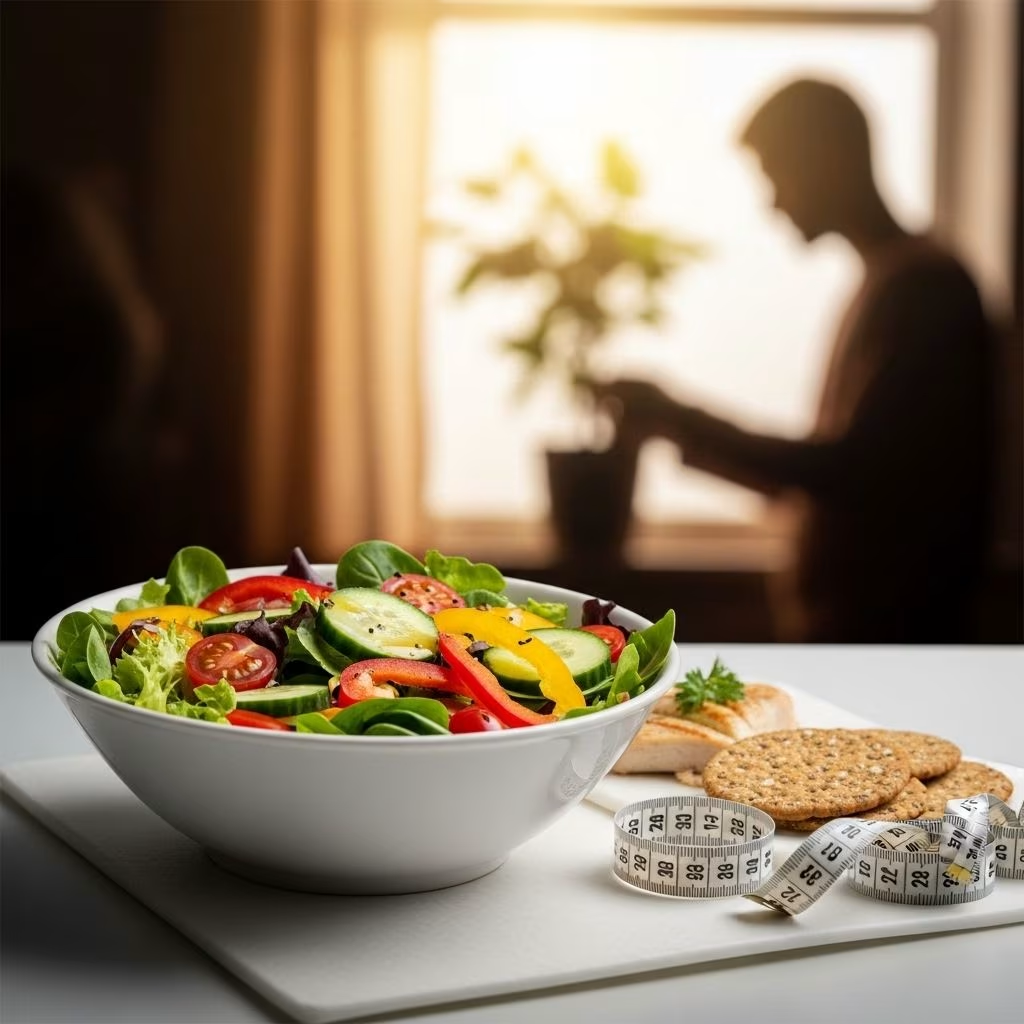
Can Eating Less Help You Live Longer?
For decades, scientists, physicians, and nutritionists have been fascinated by the question: Can eating less actually help you live longer? Emerging research continues to shed light on the role of calorie restriction (CR) and dietary composition in influencing lifespan and healthspan (the period of life spent in good health).
This article dives into the science behind calorie restriction, examines which diets are linked to healthy aging, and offers practical insights from leading experts on the connection between diet and longevity.
Understanding Calorie Restriction and Its Impact on Aging
Calorie restriction is the practice of consuming fewer calories while maintaining adequate nutrition. Early studies on animals—ranging from worms and flies to rodents—found that a consistently reduced calorie intake could extend both average and maximal lifespan. These groundbreaking results have led researchers to investigate whether similar effects apply to humans.
But what does calorie restriction look like in practice? It’s not about deprivation; it’s about reducing overall intake without causing malnutrition. For example, instead of eliminating entire food groups or following crash diets, CR involves mindful, moderate reduction paired with balanced nutrition.
Animal Studies: The Roots of Calorie Restriction Research
- Laboratory mice and rats on calorie-restricted diets lived up to 40% longer than normally fed counterparts.
- Similar increases in lifespan have been noted in yeast, worms, flies, and some primates.
- However, the results are not always consistent across species. In some monkey studies, calorie restriction led to better health markers but not necessarily increased longevity.
Although animal models provide intriguing evidence, the big question is whether these findings translate to humans.
What Does Human Research Say?
Human studies on calorie restriction are inherently more challenging due to the long timescales involved and ethical considerations. Still, there have been several notable clinical trials and population studies.
- CALERIE (Comprehensive Assessment of Long-term Effects of Reducing Intake of Energy) was a landmark trial examining the impact of sustained calorie reduction in non-obese adults. Participants reduced their calorie intake by 25% over two years.
- Results showed improvements in risk markers for cardiovascular disease, diabetes, and inflammation—all conditions linked to aging.
- No participant developed any serious nutrient deficiencies, proving that CR can be done safely under medical supervision.
While it is difficult to say whether calorie restriction directly extends human lifespan (because such research would require decades), the associated health benefits are compelling. Lower rates of chronic disease often correlate with increased longevity.
Why Less May Be More: Mechanisms Behind Calorie Restriction
Scientists have identified several biological mechanisms through which calorie restriction may promote longevity:
- Metabolic slowdown: Eating less reduces the body’s metabolic rate, potentially lowering the accumulation of cellular damage over time.
- Hormetic stress: Mild, periodic stress from fasting or lower food intake triggers beneficial cellular responses, such as autophagy (the cleaning out of damaged cells).
- Reduced inflammation: Long-term excess calorie intake increases inflammation—a driver of many age-related conditions—but CR mitigates this.
- Lower oxidative stress: Fewer calories mean less energy required, resulting in reduced production of free radicals and other damaging molecules.
- Improved insulin sensitivity: CR enhances the body’s ability to regulate blood sugar, protecting against diabetes and related diseases.
The Longevity Diet: Not Just About Eating Less, But Eating Well
While calorie restriction garners significant attention, researchers caution that what you eat is as important as how much you eat. Diets emphasizing whole, plant-based foods and minimizing processed items are consistently linked to both longer lifespan and better cognitive, physical, and mental function in older age.
The Alternative Healthy Eating Index (AHEI) diet has emerged as a top contender for promoting healthy aging.
Key Features of the AHEI Diet
- Vegetables: Aim for five servings per day
- Fruits: Four servings daily
- Whole grains: Five to six servings daily
- Nuts, legumes, and vegetable protein: At least one serving each day
- Healthy fats: Prioritize sources like olive oil, nut oils, and fatty fish
- Minimize: Red and processed meats, sugar-sweetened beverages, excess sodium, and refined grains
| Food Group | Recommended Daily Servings | Benefits for Longevity |
|---|---|---|
| Vegetables | 5 | Reduces risk of disease; high fiber and antioxidants |
| Fruits | 4 | Lowers inflammation, supports cellular health |
| Whole Grains | 5-6 | Stabilizes blood sugar, rich in vitamins |
| Nuts/Legumes | 1 | Plant protein, healthy fats, anti-inflammatory |
Plant-Based Diets and Longevity: What Makes Them Effective?
Numerous studies link plant-based diets to longer life:
- Lower risk of heart disease, diabetes, and cancer.
- Rich in fiber, antioxidants, and anti-inflammatory compounds.
- Supports a healthy gut.
- Promotes healthy weight management.
- Protects brain health, decreasing risk of cognitive decline as you age.
Importantly, a plant-forward diet does not mean strict vegetarianism or veganism—it simply means that most food choices should be plant-derived, with animal foods (such as fish, poultry, and dairy) enjoyed in moderation.
Other Healthy Habits That Boost Longevity
A healthy diet is only one piece of the longevity puzzle. Large studies show that several other lifestyle factors strongly influence how long you live and how well you age:
- No smoking: The single largest preventable risk factor
- Physical activity: At least 150 minutes of moderate exercise per week plus strength training twice weekly
- Healthy sleep: Seven to eight hours nightly
- Moderate alcohol intake: No more than one drink daily for women, two for men
- Healthy body weight: Maintaining a BMI in the normal range
Individually, each habit is associated with greater healthspan. In combination, they can add 5.5 years or more to your lifespan—even for those at greater genetic risk for early death.
Expert Perspectives: Food as Medicine or Toxin
As Dr. Scott Kaiser notes, “What we eat is really fundamental to all aspects of our existence.” Food can be either medicine—providing nutrition, healing, and prevention—or toxin—promoting disease and dysfunction. Making diet a conscious, strategic part of life is essential for longevity.
Top Foods That Support Longevity
- Leafy greens (spinach, kale): Rich in vitamins A, C, and K
- Berries: High antioxidant content
- Whole grains: Source of complex carbs and micronutrients
- Legumes (beans, lentils): Excellent plant protein and fiber
- Nuts and seeds: Healthy fats, protein, and minerals
- Fatty fish: Omega-3s for heart and brain
How to Get Started: Practical Tips for Eating for Longevity
- Start small: Make incremental changes to portion sizes and food selection.
- Prioritize plants: Fill half your plate with vegetables and fruits at every meal.
- Limit processed foods: Reduce intake of foods high in added sugars, sodium, and refined flours.
- Be mindful of protein: Choose plant-based proteins like beans and lentils, and include fish and poultry in moderation.
- Stay hydrated: Drink water and minimize sugar-sweetened beverages.
For those interested in CR, consulting a healthcare provider or licensed nutritionist is essential to ensure nutritional adequacy and safe implementation.
Frequently Asked Questions (FAQs)
Q: Is calorie restriction safe for everyone?
A: Calorie restriction can be safe when done with careful planning and medical oversight. It may not be suitable for children, pregnant women, older adults at risk of malnutrition, or those with certain medical conditions.
Q: Do I have to become vegetarian to live longer?
A: No. Many longevity diets emphasize plant-based foods but do not require complete avoidance of animal products. Moderation is key.
Q: Can I still enjoy treats and desserts if I want to age healthily?
A: Occasional treats are fine, but focus on whole, unprocessed foods as the foundation of your diet.
Q: How much should I reduce my calories for longevity benefits?
A: Research suggests moderate reductions (10–25%) can yield benefits. Extreme calorie restriction is not recommended without medical supervision.
Q: How long does it take to see results from changing my diet?
A: Improvements in blood markers and energy may occur within weeks; long-term health benefits increase with sustained change over years.
Summary: Eating Less, Eating Well, Living Longer
Science increasingly supports the connection between eating less, making smart dietary choices, and living a longer, healthier life. While animal studies suggest powerful effects from calorie restriction, human research highlights the importance of balanced, plant-forward eating patterns like the AHEI diet. Coupled with other longevity habits—physical activity, sleep, and not smoking—diet is a powerful tool to add years to your life and life to your years.
Ultimately, the message is clear: Eat mindfully, prioritize plants, be moderate, and nurture healthy habits. The pursuit of longevity starts with the choices you make at every meal.
References
- https://www.prevention.com/food-nutrition/healthy-eating/a64297964/healthy-aging-diet-study/
- https://www.ama-assn.org/public-health/prevention-wellness/diet-patterns-can-boost-longevity-cut-chronic-disease
- https://www.prevention.com/health/a60732884/healthy-habits-add-5-years-to-life-span-longevity-study/
- https://www.prevention.com/food-nutrition/healthy-eating/g26835092/best-foods-for-longevity/
- https://www.prevention.com/health/a64900252/daily-habits-for-longevity-and-happiness/
- https://www.prevention.com/health/a44675585/study-8-habits-add-years-to-life-life-span/
- https://www.prevention.com/health/a63850396/vitamin-exercise-boost-longeivty-study/
- https://www.prevention.com/health/a60486206/heal-your-body-with-food/
- https://www.prevention.com/health/a66103980/prevention-live-to-100-and-love-an-easy-road-map-to-longevity-book/


