


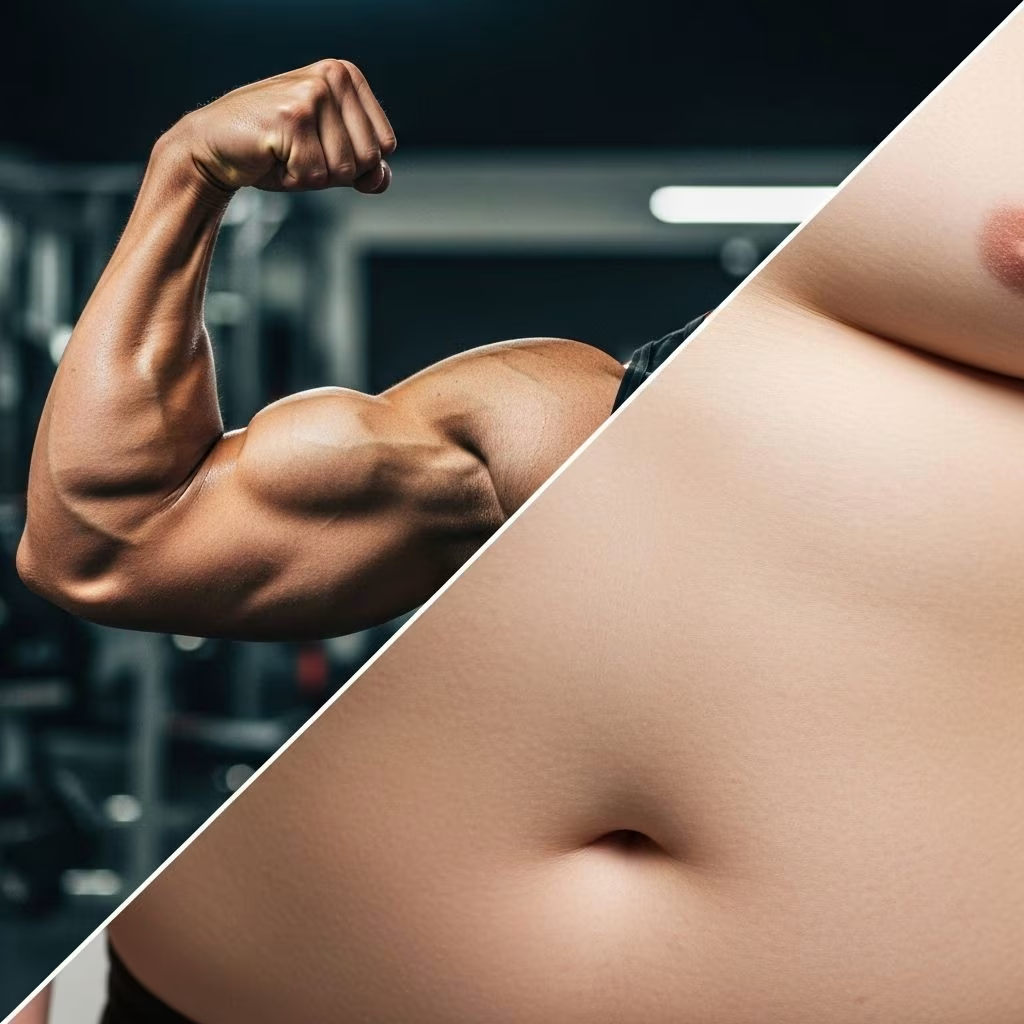
Can Muscle Turn Into Fat? The Science Separating Fact from Fiction
It’s a statement echoed in countless gyms: “If you stop working out, your muscle will turn into fat.” Yet, this notion has been labeled one of the most pervasive fitness myths. Biology simply doesn’t allow muscle to morph into fat. Instead, fat and muscle are two entirely different tissues, each with unique properties and functions in the body. Understanding the difference—and what actually happens during changes in your fitness routine—is crucial for anyone hoping to manage their body composition effectively.
Understanding the Difference: Muscle vs. Fat
Muscle and fat are as different as apples and oranges. Muscle is a metabolically active tissue responsible for movement and strength. It consists mainly of long, fibrous cells made up of protein. Fat (adipose tissue), on the other hand, is the body’s energy reserve. It stores excess energy in the form of triglycerides and provides cushioning and insulation.
- Muscle Tissue: Made up of bundles of fibers; metabolically active; burns calories even at rest.
- Fat Tissue: Composed of fat cells (adipocytes); stores energy; less metabolically active.
As Brad Schoenfeld, a leading exercise scientist, notes: “You cannot turn an orange into an apple, and by the same principle, you cannot turn muscle into fat or vice versa.”
How Body Composition Changes: What Really Happens When You Stop Working Out
When you put your training on hold—whether from injury, burnout, or a hectic schedule—your body composition does change, but not by converting muscle to fat. Instead:
- Muscle Atrophy: Without the stimulus of regular exercise, especially resistance training, your muscle fibers begin to shrink. This process is known as muscular atrophy.
- Fat Gain: If your calorie intake remains the same while your activity decreases, you’re likely to gain fat. Unused calories are stored as fat, not magically turned muscle tissue.
The simultaneous loss of muscle and gain of fat can create the sporting illusion that muscle “turned into fat,” but these are distinct, parallel processes.
The Myth Origins: Why Do People Think Muscle Turns Into Fat?
This myth persists in part because of how the body can appear during periods of inactivity. As muscle size decreases (making limbs look smaller or less defined) and fat increases (making the body appear softer), it’s natural to assume one has morphed into the other. In truth, these are separate phenomena:
- Less Muscle = Lower Basal Metabolic Rate: Muscle burns more calories at rest than fat. So losing muscle can lower your calorie requirements, making it easier to store excess calories as fat.
- Visual Deception: Since both changes can happen simultaneously—particularly if someone stops training abruptly—it’s easy to mistake a loss of muscle definition (with more body fat obscuring remaining muscle) for muscle “becoming” fat.
Can Fat Become Muscle or Muscle Become Fat?
| Concept | Biological Explanation |
|---|---|
| Muscle turning into fat | Impossible. Muscle and fat consist of different cell types; muscle cells can’t transform into fat cells, and vice versa. |
| Fat turning into muscle | Also impossible. Reducing body fat and gaining muscle are separate processes that often occur together with proper diet and exercise, but they’re not the same thing. |
What Actually Happens: Parallel Processes of Gaining Fat and Losing Muscle
During periods of reduced activity, especially when accompanied by excessive calorie intake:
- Muscle Mass Shrinks: Muscle fibers lose volume due to decreased demand and protein breakdown. This decreases overall muscle size and strength.
- Fat Mass Increases: Without increased muscular activity to burn calories, excess energy is stored as fat, leading to weight and fat gain.
Conversely, during periods of consistent strength training and proper nutrition:
- Muscle Mass Grows: Through resistance training, muscle fibers increase in size and strength (hypertrophy).
- Body Fat May Decrease: If calorie expenditure exceeds intake, fat stores shrink, revealing more muscle definition.
Why Are Muscle and Fat So Biologically Different?
The fundamental reason why muscle can’t turn into fat is cellular biology:
- Muscle Cells: Long fibers rich in protein; contain multiple nuclei; specialized for contraction.
- Fat Cells (Adipocytes): Round cells specialized in storing triglycerides; can expand to store more fat, but can’t contract like muscle.
No metabolic or genetic pathway exists for one to convert into the other. They do, however, interact through complex biochemical signaling: active muscles can influence fat breakdown and storage via hormones and molecular messengers.
The Two-Way Street: How Muscle and Fat Influence Each Other
While muscle can’t become fat, and vice versa, the two tissues do communicate. New research shows muscle and fat cells “talk” to each other via chemical signals, especially in the wake of exercise.
- Recent studies found that resistance training triggers muscles to release small vesicles packed with microRNA, which signal nearby fat cells to break down stored fat for fuel.
- Conversely, excess fat—especially the type stored deep in the abdomen—can produce inflammatory cytokines that blunt muscle growth and repair, creating a two-way interaction between tissues.
The takeaway: while you can’t swap one tissue for another, building muscle helps facilitate fat loss by increasing metabolism, and excessive fat gain can hinder your muscle’s health.
How to Lose Fat While Preserving or Building Muscle
Smart fat loss isn’t just about restricting calories; it’s about combining proper diet and exercise to encourage fat burning without sacrificing lean mass.
- Eat Enough Protein: Consuming 0.8 grams of protein per pound of body weight per day helps preserve muscle during weight loss. For a 150 lb person, that’s 120 grams of protein daily.
- Strength Train Regularly: Resistance training provides muscles with the stimulation they need to stay strong and grow even if total calorie intake is reduced.
- Create a Calorie Deficit: Burning more calories than you consume will tap into fat stores for energy. But ensure the deficit isn’t so large that you lose muscle mass.
- Don’t Slash Calories Too Low: Extreme calorie reduction can lead to muscle loss. Aim for a moderate calorie deficit.
- Prioritize Sleep and Recovery: Recovery supports muscle growth and hormonal balance, both critical for fat loss.
What Happens If You Lose Weight Without Exercise?
Calorie restriction without strength training often results in the loss of both fat and muscle. Muscles shrink because the body needs protein for vital functions and turns to muscle tissue for those amino acids if dietary intake is low.
Result: Often, the number on the scale goes down, but body fat percentage stays high, and muscle mass diminishes—leading to a “skinny fat” appearance where the body is light but soft, not firm or toned.
What Role Does Diet Play in Muscle and Fat Maintenance?
Diet is just as important as exercise:
- Ample Protein Intake: Preserves lean muscle mass during weight loss.
- Balanced Carbohydrates and Fats: Fuel workouts, support recovery, and keep hormones balanced.
- Avoiding Extreme Diets: Severely slashing calories or nutrients increases muscle loss risk.
Common Mistakes: Why People Can Lose Muscle When Dieting
- Cutting Calories Too Drastically: Starvation-level dieting cues the body to break down muscle for energy.
- Low Protein Intake: Without enough dietary protein, your body cannibalizes muscle tissue.
- Skipping Strength Training: Cardio alone without resistance training does little to preserve muscle mass during weight loss.
Body Recomposition: Losing Fat and Gaining Muscle Simultaneously
With the right combination of nutrition and training, it is possible to lose fat and gain muscle at the same time, especially for beginners or those returning after a break. This process is called body recomposition. Key strategies include:
- Eating sufficient protein daily.
- Combining progressive resistance training with moderate cardio.
- Keeping calorie intake just below maintenance (not excessively low).
This approach often takes longer, but means improvements in muscle definition while losing body fat.
Frequently Asked Questions (FAQs)
Q: Can you convert body fat into muscle if you exercise?
A: No. Fat and muscle are entirely separate tissues. Exercise can build muscle and reduce fat, but one does not turn into the other.
Q: Why do athletes look like they’ve gained fat when they stop training?
A: Inactivity leads to muscle loss and potentially fat gain if calories aren’t adjusted. This creates the appearance that muscle “turned into” fat.
Q: If I lose weight without exercising, will I lose muscle?
A: Yes. In the absence of regular strength training and adequate protein, the body breaks down muscle tissue along with fat.
Q: How much protein should I eat to preserve muscle?
A: Aim for about 0.8 grams of protein per pound of body weight per day, especially when dieting and lifting weights.
Q: Can excessive body fat affect muscle health?
A: Yes. High levels of body fat, especially visceral fat, can generate inflammatory compounds that can blunt muscle growth and speed muscle breakdown over time.
Key Takeaways and Action Steps
- Muscle does not turn into fat; they are different tissues with unique functions.
- Changes in exercise or diet can lead to losing muscle and gaining fat, creating the illusion of “muscle turning to fat.”
- Preserve muscle by strength training and eating enough protein, even when dieting.
- Focus on a moderate calorie deficit for fat loss, not starvation diets.
- Building muscle and losing fat may happen simultaneously with the right approach.
If you’re concerned about losing muscle and gaining fat, prioritize a balanced diet, regular resistance training, and pay close attention to your overall activity level.
References
- https://medicine.uky.edu/news/new-york-times-lifting-weights-your-fat-cells-2021-07-22t13-00-34
- https://www.livescience.com/60904-can-you-turn-fat-into-muscle.html
- https://pmc.ncbi.nlm.nih.gov/articles/PMC2821541/
- https://www.healthline.com/nutrition/does-fat-turn-into-muscle
- https://pmc.ncbi.nlm.nih.gov/articles/PMC3910392/
- https://www.youtube.com/watch?v=DvdJMedGQ_s


