


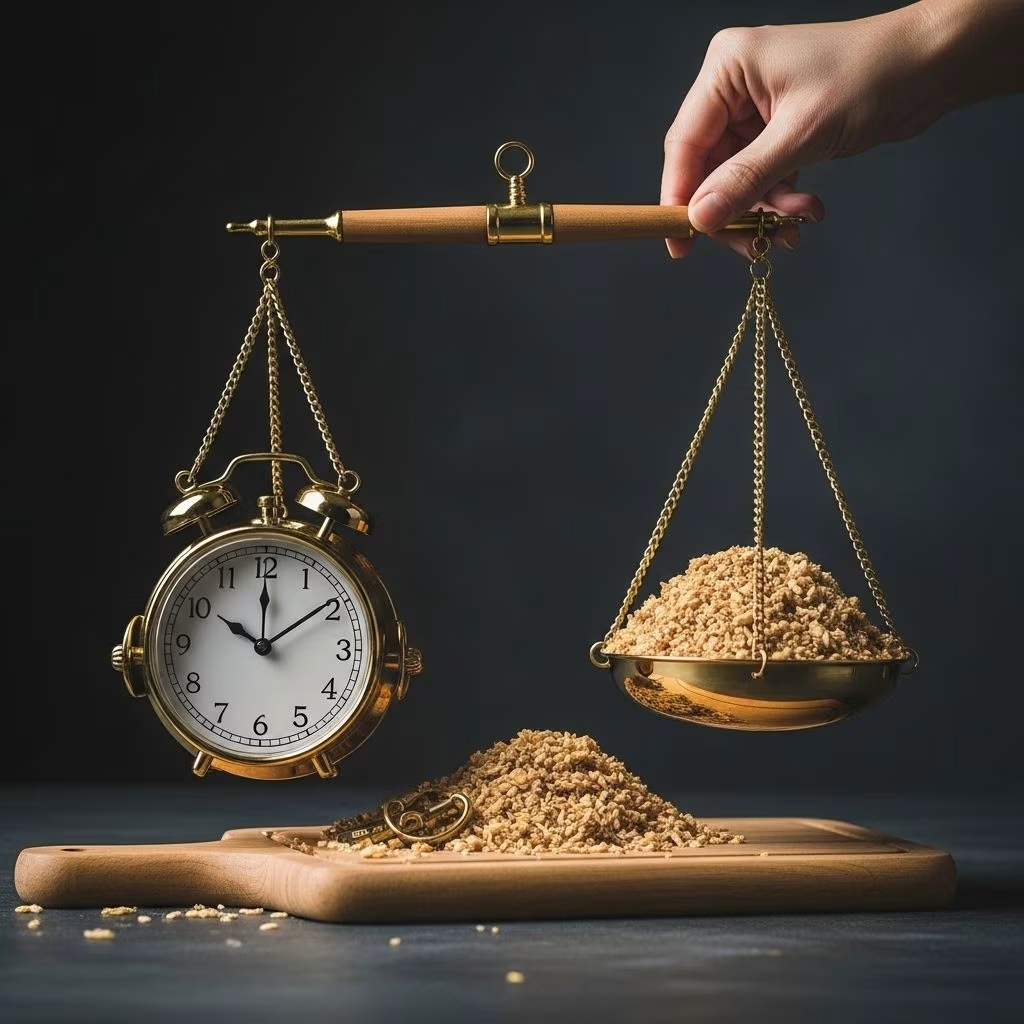
Does It Really Matter When You Eat?
For decades, the core advice for weight loss has revolved around calories: consume less and move more. Yet, recent research is making a persuasive case for an often-overlooked factor—the timing of your meals. The science suggests not only what you eat, but when you eat may play a significant role in determining your success with losing weight and keeping it off.
The Study: Meal Timing and Weight Loss in Practice
In a pivotal study published in the International Journal of Obesity, 420 overweight and obese women were observed throughout a 20-week diet intervention. Participants were split into two groups based on when they ate their largest (midday) meal—before or after 3 PM:
- Early eaters: Consumed lunch (about 40% of their daily calories) before 3 PM.
- Late eaters: Had lunch after 3 PM.
Despite eating a similar number of calories and engaging in comparable physical activity, the early eaters lost weight at a much faster rate—about 25% more than their late-eating counterparts. This striking difference hints that the body’s internal processes respond not just to what’s eaten, but also to the timing of intake.
What Science Says: Animal Studies and Meal Timing
These findings aren’t limited to humans. In research with mice, scientists restricted meal times and found that those who ate within specific periods lost more weight than those allowed to eat at any time—even with matched caloric consumption. These results reinforce the concept that timing matters, and hint at underlying biological mechanisms driving these effects.
Why Timing Might Matter: The Circadian Connection
At the heart of meal timing’s significance are circadian rhythms—the body’s innate 24-hour cycles that regulate various physiological processes. Meal timing appears to influence how well these rhythms coordinate energy storage and expenditure:
- Disruption of rhythms: Irregular meal schedules may cause an ‘uncoupling’ of the body’s internal clocks, which can decrease metabolic efficiency.
- Appetite and hormones: Poorly timed meals could dysregulate hunger and satiety hormones, affecting appetite, cravings, and ultimately, weight control.
“It’s like a conductor losing track of his orchestra, and everyone starts playing to their own tune,” says Dr. Frank Scheer, an associate neuroscientist at Brigham and Women’s Hospital in Boston.
How Meal Timing Affects Metabolism: Mechanisms Behind the Science
- Diet-Induced Thermogenesis: Metabolic rate increases after eating, but this effect appears to be stronger earlier in the day. Eating late may lead to diminished energy expenditure.
- Satiety Hormone Production: Timing can impact hormones like leptin (which suppresses appetite), ghrelin (which stimulates appetite), and others linked to fullness and hunger.
- Gut Microbiota Influence: The cycle of feeding and fasting in sync with natural light/dark cycles may impact gut bacteria, which in turn affect nutrient absorption and fat storage.
Key Research Findings at a Glance
| Study | Subjects | Intervention | Main Findings |
|---|---|---|---|
| International Journal of Obesity (Human Study) | 420 women | Early vs. late midday meal (largest meal) | Early eaters lost 25% more weight than late eaters; calories and activity were matched. |
| Cell Metabolism (Mouse Study) | Mice | Restricted vs. unrestricted meal times | Mice with restricted meal times lost more weight, despite equal calorie intake. |
| JAMA Network Open Meta-Analysis | Humans | Time-restricted eating (TRE), meal frequency, caloric distribution | Modest improvements in body weight, BMI, waist circumference; best results with calories earlier in the day. |
Deciphering the Takeaways: What Should You Do?
The body of research on meal timing is growing, but making blanket recommendations is premature. Experts like Dr. Scheer emphasize that, while findings are compelling, more high-quality studies are needed to confirm causality and to establish optimal patterns for everyone.
Still, there are practical habits you can consider:
- Eat larger meals earlier in the day when possible, aligning with natural daylight.
- Avoid eating late at night, especially substantial meals after dinner.
- Consider time-restricted eating (TRE): restrict your daily eating window (for example, eat only between 8 AM and 6 PM).
Advantages Beyond Weight Loss: The Case for Earlier Eating
- Boosted Metabolism: Hearty breakfasts and earlier meals can increase resting metabolic rate.
- Craving Control: Early eating patterns often reduce cravings for high-calorie foods later in the day.
- Improved Sleep and Energy: Avoiding heavy, late dinners can support better sleep and stable energy levels.
Frequently Asked Questions (FAQs)
Q: Does eating later in the day make it harder to lose weight?
A: Evidence from both human and animal studies suggests late eating patterns may decrease weight loss effectiveness, even when calories and activity are matched. Biological rhythms may play a role in this outcome.
Q: What is time-restricted eating (TRE) and does it work?
A: Time-restricted eating (TRE) involves consuming all meals within a fixed window each day (such as 8–10 hours). Studies show TRE leads to modest weight loss and improvements in metabolic measures, especially when calories are consumed earlier in the day.
Q: Is skipping meals or intermittent fasting safe?
A: Intermittent fasting and meal skipping can be safe for most healthy adults, but results vary, and consistency with meal timing appears to offer more lasting benefits. Consult your healthcare provider before starting any restrictive eating pattern.
Q: Does eating a big breakfast help with weight loss?
A: Consuming a substantial breakfast may boost morning metabolism and curb cravings later in the day, potentially contributing to improved weight loss, though individual needs will vary.
Expert Perspectives and Limitations of Current Research
- Cause and effect not fully established: Most research finds associations and not definitive causality between meal timing and weight outcomes.
- Study limitations: Many studies have issues such as small sample sizes, diverse populations, and varied protocols (including differences in diet quality, exercise, and support measures).
- Individual variation: Genetic factors and lifestyle may change optimal meal timing recommendations. There’s currently no universally accepted meal timing strategy for weight loss.
Tips to Optimize Your Meal Timing
- Plan main meals during daylight, ideally before late afternoon.
- Limit late-night snacking. Keep your last meal at least 2–3 hours before bed.
- Keep a consistent eating schedule for better metabolic outcomes.
- Listen to your body. Integrate a personalized approach based on how you feel and what works for your routine.
Future Directions: Where Is Research Headed?
Meal timing’s impact on weight and health is a frontier in nutrition science. Ongoing research is investigating:
- Optimal eating windows for specific health outcomes.
- Effects on metabolic diseases like type 2 diabetes and cardiovascular risk.
- Links between circadian biology, hormones, and gut bacteria.
As evidence accumulates, nutritionists and physicians will refine guidelines to help individuals not just lose weight, but also improve their overall metabolic and long-term health.
References
- Prevention.com – Does It Matter When You Eat?
- JAMA Network Open – Meal Timing Interventions for Weight Loss and Metabolic Health
- PMC – The Impact of Meal Timing on Risk of Weight Gain and Development of Obesity
References
- https://www.prevention.com/weight-loss/a20441249/timing-of-meals-might-help-weight-loss/
- https://jamanetwork.com/journals/jamanetworkopen/fullarticle/2825750
- https://pmc.ncbi.nlm.nih.gov/articles/PMC9010393/
- https://www.prevention.com/food-nutrition/healthy-eating/a20445624/does-it-matter-when-you-eat/
- https://www.prevention.com/weight-loss/g20494462/eating-habits-for-weight-loss/
- https://www.prevention.com/weight-loss/g24805401/fat-burning-foods/
- https://www.prevention.com/weight-loss/g20438484/i-photographed-everything-i-ate-for-a-month/
- https://www.prevention.com/weight-loss/g20482528/this-is-your-perfect-day-for-weight-loss/
- https://www.prevention.com/weight-loss/a20500235/intermittent-fasting/


