


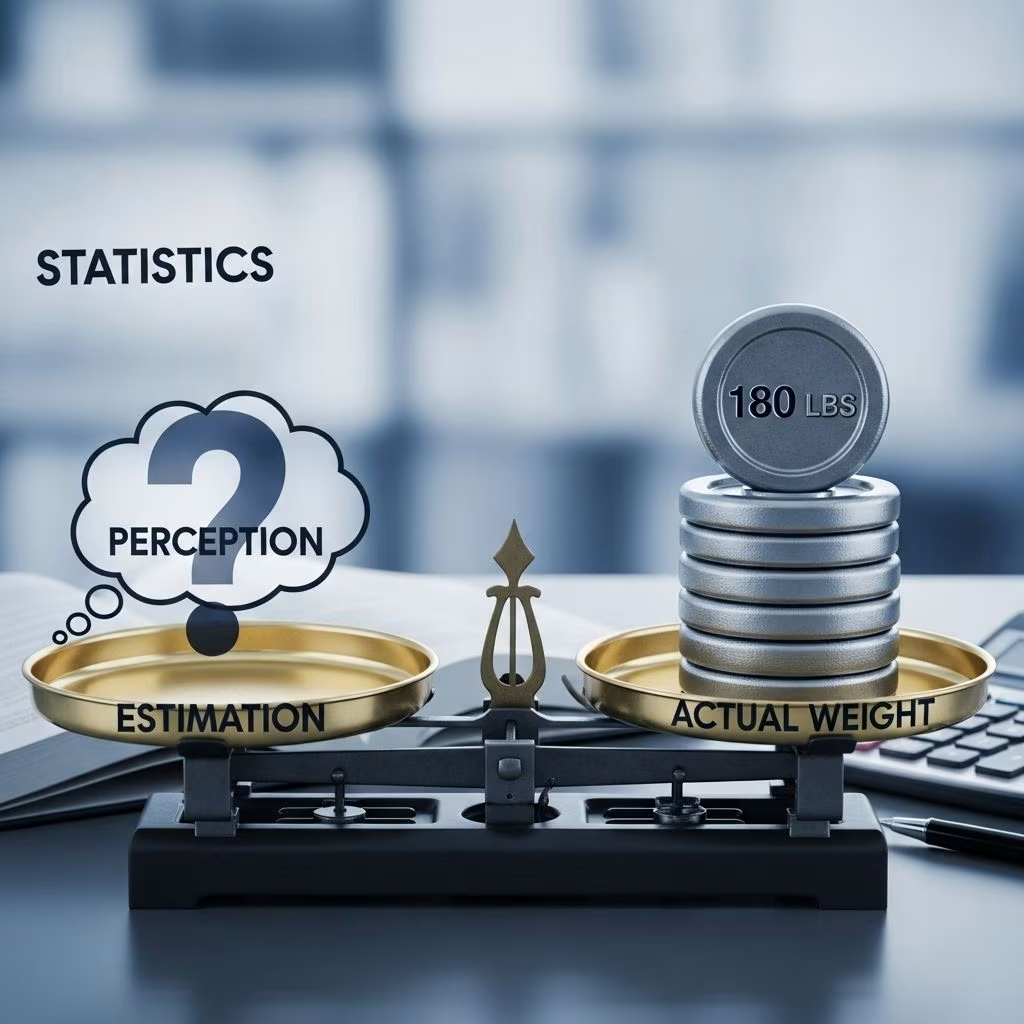
How Accurate are Americans at Estimating Their Own Body Weight?
Understanding one’s body weight is not just about stepping on a scale—it’s about perception, informed estimation, and real-world implications. Many Americans are often unaware of their actual weight, and numerous studies reveal widespread discrepancies between estimated and measured body weight. This article explores the challenges and surprising facts about how accurately Americans estimate their body weight, the psychological and social factors involved, and what alternatives exist when a scale isn’t available.
Why Estimating Body Weight Matters
- Health Monitoring: Accurate weight estimation is crucial for understanding risks related to obesity, heart disease, diabetes, and other medical conditions.
- Medication Dosing: Precise weight measurement is often needed for correct dosing in medical emergencies, especially when scales are not accessible.
- Weight Loss Efforts: Misjudgments can derail progress, affect motivation, and lead to unhealthy practices.
- Self-image and Well-being: Body weight perceptions influence self-confidence, psychological wellbeing, and lifestyle choices.
Do Most Americans Know Their Own Weight?
Numerous surveys and research indicate that a large percentage of Americans are unable to estimate their weight accurately. Many individuals either underestimate or overestimate their weight, sometimes by several pounds. This misperception varies by age, gender, weight status, and even regional and cultural factors.
- Studies show: A significant number of people, particularly those in overweight or obese categories, tend to underestimate their true body weight.
- Conversely, some individuals aiming for weight loss or concerned about appearance may exaggerate their weight in self-assessments.
Such discrepancies have real-world consequences, from missed diagnoses to flawed health tracking and misguided medical interventions.
Why is Estimating Weight So Hard?
Overestimating or underestimating one’s body weight is not purely a matter of simple arithmetic. Several complex factors contribute:
- Psychological Bias: People tend to view themselves in a more favorable light, a phenomenon known as ‘self-serving bias.’
- Societal Pressure: Social norms and media representations of the ‘ideal’ body can cause individuals to downplay their actual weight.
- Lack of Reliable Measurement: Many Americans do not own a reliable scale, or rarely use one.
- Changes in Body Composition: Muscle mass, water retention, and fat distribution are not fully reflected in simple weight numbers, causing confusion in estimation.
- Memory: People may estimate current weight based on old measurements, sometimes years out of date.
Key Research Highlights
- In surveys, over half of adults misreport their weight by more than five pounds when asked without a recent scale check.
- Young adults are generally more accurate, while older adults and those with higher BMI are more likely to misestimate.
- Women tend to under-report their weight more than men, often influenced by societal expectations.
Methods to Estimate Body Weight Without a Scale
In situations without a scale, healthcare professionals and individuals use different methods to estimate body weight. These can vary in complexity and accuracy:
1. Visual Assessment
- Medical professionals may use visual cues and body habitus to estimate weight.
- Accuracy decreases in individuals who are overweight, underweight, or have atypical body composition.
2. Measurement-Based Methods
Several validated tools and formulas have been developed for more reliable estimation:
| Method | Variables Used | Notes |
|---|---|---|
| Mercy Tape | Mid-upper arm circumference (MAC), Humeral Length | Easy to use; paper-based; accurate in children; portable device. |
| PAWPER XL-MAC | MAC, Height | Tape-based; quick application; validated in adults and children. |
| Lorenz Formula | Height, Waist Circumference (WC), Hip Circumference (HC) | Sex-specific equation; highest accuracy among adults. |
| Crandall Formula | MAC, Height, Sex | Designed for obese individuals; moderately accurate. |
| LMS Method | MAC | Simpler single-variable method; decent accuracy. |
Universal Equation for Ideal Body Weight
Recent studies have aimed to simplify body weight calculation by creating universal equations based on BMI and height. For adults, the CDC recommends the following formulas:
- For Women: 45.5 kg + 0.91 × (height in cm – 152.4)
- For Men: 50 kg + 0.91 × (height in cm – 152.4)
Alternatively, one can use BMI-based equations for a wider range of target weights, suitable for various demographics or health goals.
Implications of Inaccurate Weight Estimation
Health Risks
- Obesity Under-recognition: Underestimating weight can lead to ignoring health risks tied to obesity, including cardiovascular disease and diabetes.
- Improper Medication Dosing: Incorrect weight estimation may result in wrong drug doses during emergencies, affecting efficacy and safety.
- Mental Health: Body image concerns and inaccurate self-perception can fuel anxiety, depression, eating disorders, and lowered self-esteem.
Factors Influencing Body Weight Perception
The accuracy of weight estimation depends on a complex interplay of demographic, psychological, and social factors:
- Age: Younger individuals often estimate more accurately than seniors.
- Gender: Women are more likely to underestimate, particularly in contexts where weight carries social stigma.
- Body Mass Index (BMI): Those with BMI in the overweight or obese categories are most inaccurate in self-assessment.
- Socioeconomic Status: Access to resources such as scales, education, and healthcare influence ability to monitor and estimate weight.
- Regional and Cultural Differences: Perceptions of ‘normal’ body size shift according to local norms and cultural backgrounds.
Improving Personal Weight Awareness
Given the importance of accurate weight perception, several strategies can help individuals become more aware of their weight:
- Regular Scale Use: Direct measurement remains the most reliable method. Invest in a high-quality, calibrated scale for consistency.
- Keep Track: Maintain a weight log to observe trends and progress over time.
- Ask for Professional Help: Healthcare providers can assist using tape-based methods or formulas for those unable to use a scale.
- Educate Yourself: Learn about BMI, healthy weight ranges, and appropriate measurement methods.
Expert Recommendations: Weighing the Facts
- Healthcare authorities recommend not relying solely on perception for key health decisions.
- Use objective measurements wherever possible, especially for health, medication, or weight loss management.
- Understand that weight is only one aspect of health; muscle mass, fat distribution, and other metrics also matter.
Frequently Asked Questions (FAQs)
Q: Why do most people misestimate their weight?
A: Psychological biases, outdated measurements, lack of scales, and societal pressures to present oneself favorably all contribute to inaccurate estimates.
Q: Can alternative methods reliably estimate weight if I don’t have a scale?
A: Yes. Tape-based methods (Mercy, PAWPER XL-MAC), and formulas like Lorenz and CDC’s standard equations can provide reasonable estimates, especially in clinical or emergency situations.
Q: Does inaccurate weight perception affect health risks?
A: Underestimating weight can lead to overlooked health risks and improper medical care, especially in dosing medications. Overestimating can impact self-esteem and prompt unnecessary dieting.
Q: Is visual estimation ever accurate?
A: Visual estimation can be highly inaccurate, especially for those with more body fat or muscle. Measurement-based methods are preferred for greater accuracy.
Q: How often should I check my weight?
A: Regular monitoring (at least monthly) is advised for most adults, more frequently for those pursuing weight loss or managing specific health conditions.
Tips for Better Weight Awareness
- Use the same scale for consistency.
- Weigh yourself at the same time of day, preferably in the morning.
- Consider other measurements: waist circumference, body fat percentage, and BMI for a holistic view.
- Be honest with self-assessment and seek professional input when needed.
Conclusion
Knowing your own body weight accurately is essential—not only for personal health but also during emergencies when fast, correct decisions matter most. While most Americans believe they know their weight, research suggests many are far off the mark. By using objective measurements and becoming more informed and realistic, you can take charge of your health and ensure better outcomes for yourself and your loved ones.


