


How Food Packaging Shapes Your Eating Habits and Willpower
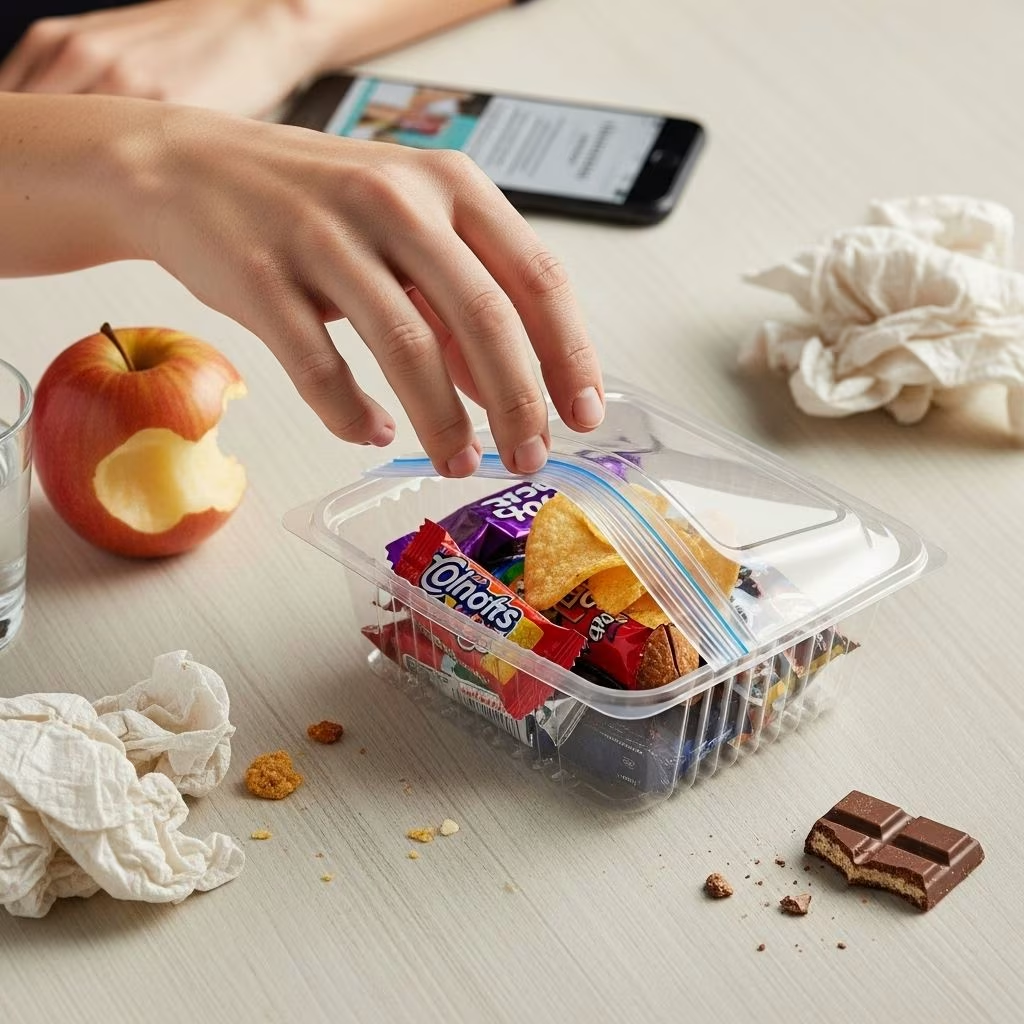
Food packaging is more than a tool for containing and protecting your snacks, cereals, and candies. It is a powerful force that silently influences your choices, appetite, and even the amount you consume. Recent research reveals that seeing what’s inside the package, the size of containers, and packaging design can dramatically impact your willpower and eating behavior. Understanding these hidden effects can help you make better decisions during your next grocery run or snack break.
Packaging Psychology: The Power of Visibility
One of the most significant discoveries in food science and marketing is how transparent packaging affects consumption:
- Showcases tempting food: Transparent packages put the food on display, making it look more appealing and stimulating your appetite.
- Enables self-monitoring: Seeing how much you’ve eaten allows you to track intake, in theory, helping with portion control.
But these opposing effects interact in curious ways. In controlled studies where participants ate food while watching TV, transparent packaging led to people consuming significantly more:
- 69% more Fruit Loops
- 58% more M&Ms
- 38% fewer cookies
- 78% fewer baby carrots
There was little difference between transparent and partially transparent packages, highlighting that full visibility is the key factor.
The Appetite Tug-of-War: Wanting vs. Willpower
Why does transparency sometimes amplify cravings, while in other cases, it encourages restraint? It hinges on two forces:
| Force | Effect | When It Dominates |
|---|---|---|
| Showcasing Food | Sparks desire, entices you to eat more | Tasty, visually appealing snacks |
| Self-Monitoring | Helps you track and possibly limit intake | Less tempting or larger foods |
The more delicious or colorful a food looks, the harder it is to resist transparency’s allure. For bland or healthy items, visibility nudges people to eat less.
Bite-Size Temptations: Why Small Equals More
Another crucial finding in food packaging research is about food size. Experts discovered that bite-sized foods in clear containers are particularly irresistible. When you can see many small pieces (like M&Ms), you tell yourself: “It’s just one piece…”—then repeat this indulgence again and again.
- Bite-sized items lead to repeated snacking behavior
- Larger foods trigger conscious willpower before eating, encouraging people to plan to stop after one or two pieces
This effect was clear in studies, with participants overeating small, colorful snacks but showing restraint with larger cookies in transparent packaging. The perceived effort of eating bigger items taps into willpower sooner.
Healthy Foods: Visibility Encourages Better Choices
Counterintuitively, transparent packaging can help you eat more of healthy foods (like carrots) and less of calorie-dense treats. When carrots were packed in clear containers, participants ate even fewer than when carrots were hidden. In contrast, tasty cereals and candies were gobbled up in greater amounts when their colors and shapes were in plain sight.
- Visibility reduces intake of plain or healthy foods for some
- Visibility increases intake of colorful, sugary foods
Researchers suggest that you should store unhealthy bite-sized snacks in opaque containers to minimize cravings, while transparent containers for vegetables may nudge you to snack on them instead.
The Science of Packaging: Strategies That Can Curb Overeating
Numerous studies, including systematic reviews, reveal that packaging design has a profound impact on consumption beyond transparency. These strategies include:
- Packaging Size: Larger packages tend to encourage eating more, as people feel less compelled to stop; smaller single-serve packs provide a psychological barrier to overeating.
- Partitioning: Dividing food into smaller, separate packs limits intake, as opening a new pack gives people a chance to pause and consider their consumption.
- Images and Design Cues: Attractive images and nutritional guidance on the front of packages can alter the quantity consumed and influence choices.
- Resealability: Packaging that can be closed up after opening helps restrain further eating, while open packages invite continued snacking.
All these structural features either help guide portion control or nudge consumers toward healthier behaviors, especially in environments that typically encourage mindless eating.
Environmental Cues: The Role of Your Surroundings
Renowned researcher Brian Wansink found that people are far less in control of their diet than they believe. Environmental cues such as the size and visibility of packaging shape the majority of our eating decisions.
- Participants ate twice as many candies from a clear container compared to an opaque one.
- People with cereal visible on their kitchen counters weighed an average of 20 pounds more than those who kept it out of sight.
- Smaller packages caused people to eat half as much as a single large package—and many were willing to pay more for this built-in portion control.
We eat predominantly with our eyes; our stomach is a poor judge of consumption, making visual cues an even more powerful driver of our habits.
Barriers to Willpower: Packaging Pitfalls and Overcoming Them
Many people report struggling to resist eating when faced with large packs or multipacks. The mere presence of food in substantial quantities, whether in bulk or multi-serving containers, makes it difficult to stop at a healthy portion.
- Large packages prompt overconsumption because they provide implicit permission to eat more
- Multi-packs can act as a psychological stop point for some, but others treat them as too small and eat additional packs to compensate
- Packaging designed for families or shared consumption can lead single eaters to consume more than necessary
People often misjudge portion sizes, especially when packaging cues are unclear or designed for larger groups.
Self-Monitoring Strategies That Work
- Choose smaller package sizes for high-calorie snacks
- Keep unhealthy foods in opaque containers, out of sight
- Display fruits and vegetables in clear containers, prominently in your kitchen
- Opt for partitioned or individual servings to help create stopping points
- Pay attention to package design cues and labeling for portion control guidance
Practical Takeaways: How to Outsmart Packaging Traps
Harness the power of food packaging to reinforce good eating habits and bolster your willpower:
- Opaque for treats: Hide bite-sized candies, chocolates, and snacks in non-transparent containers to lower temptation.
- Clear for produce: Store carrot sticks, cucumbers, and vegetables in see-through containers on your fridge’s top shelf or kitchen counter.
- Downsize portions: Buy, or portion out, large packs into smaller servings. Snack manufacturers and supermarkets increasingly offer single-serve options for this reason.
- Read labels and design cues: Seek packaging with clear portion control guidance and avoid misleading images that encourage overeating.
- Remove bulk from easy reach: Keep large packages and multipacks in more difficult-to-access places, so you need extra effort to snack mindlessly.
FAQs About Food Packaging and Willpower
Q: Does food packaging really affect how much I eat?
A: Yes. Research consistently shows transparent packaging, large containers, and visible cues all prompt greater food intake, especially with tempting foods.
Q: Should I buy food in smaller or larger packages to control overeating?
A: Smaller single-serve packages and partitioned servings are effective at curbing overeating and supporting willpower, even if they cost slightly more.
Q: Is packaging design a substitute for personal willpower?
A: Not entirely, but packaging can either support or undermine your willpower. The right environment makes healthy choices easier and helps you resist tempting foods.
Q: How can I use packaging tricks to eat healthier at home?
A: Keep produce in clear containers and eye-level spots. Hide or repackage unhealthy snacks in opaque or hard-to-reach containers. Prefer buying snacks in portion-controlled or partitioned packs.
Q: Does packaging affect children’s eating habits too?
A: Yes. Bright, visible snacks in transparent packaging can prompt overeating in children just as in adults. Use opaque containers for sweets, and keep healthy foods visible to encourage better habits.
Summary: Make Food Packaging Work For You
Food packaging isn’t just decorative — it’s a decisive factor in your diet and health journey. The visibility, size, and design of packages play vital roles in influencing how much we eat, what we crave, and how much self-control we might muster. By understanding these packaging secrets, you can set your environment to help you eat less of unhealthy snacks and more of nutritious foods. Remember: outsmart the package, and you empower your willpower.
References
- https://www.prevention.com/weight-loss/a20458116/how-food-packaging-affects-your-willpower/
- https://pubmed.ncbi.nlm.nih.gov/34197837/
- https://pmc.ncbi.nlm.nih.gov/articles/PMC3734152/
- https://ideas.ted.com/want-to-eat-well-forget-about-willpower/
- https://onlinelibrary.wiley.com/doi/10.1111/nbu.12688
- https://www.foodnavigator.com/Article/2022/01/04/Food-environment-undermines-weight-loss-efforts-It-s-just-not-about-willpower-or-self-control/
- https://www.cam.ac.uk/stories/cannot-stop-eating
- https://imaginemd.com/blog/an-alternative-to-willpower-for-losing-weight-distraction-avoidance-and-acceptance/
- https://www.lark.com/resources/how-you-can-lose-weight-with-less-willpower


