


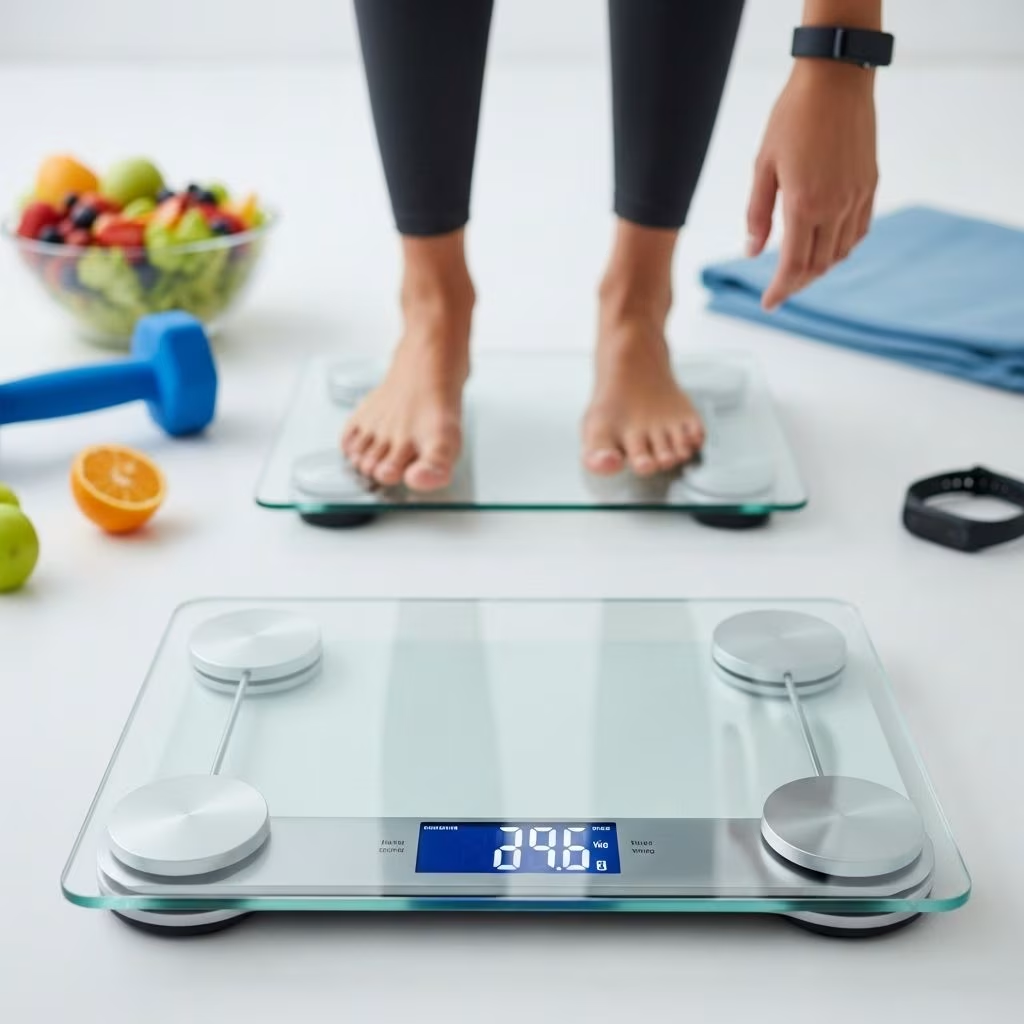
How Smart Scales Revolutionize Your Weight Loss Journey
In the age of advanced wellness technology, smart scales have emerged as game-changers for anyone pursuing weight loss or improved health. Unlike traditional scales, these innovative devices track a range of metrics, sync with fitness apps, and empower users with actionable insights that extend far beyond a single number on the display.
What Are Smart Scales?
Smart scales are digital scales equipped with connectivity and advanced sensors that record not only body weight but also other physiological measurements. By linking with smartphones or fitness trackers, they offer detailed feedback that can help you manage your progress and stay motivated.
- Bluetooth or Wi-Fi Connectivity: Syncs measurements automatically with apps.
- Bioelectrical Impedance Analysis: Measures body composition via electrical currents (safe for most users).
- Multiple Health Metrics: Tracks weight, BMI, fat percentage, muscle mass, and more.
- User Profiles: Allows multiple users to monitor individual progress.
Why Tracking More Than Weight Matters
Traditional scales focus solely on weight, which can be misleading. Healthy progress involves fluctuations in fat, muscle, and water, and the ability to monitor these changes provides a clearer picture of overall health. With smart scales, you can:
- Understand changes in body composition (fat mass versus muscle mass).
- Get long-term trends that show the impact of lifestyle changes.
- Track Body Mass Index (BMI) for context about your weight relative to height.
- Monitor hydration levels and adjust habits accordingly.
How Smart Scales Support Weight Loss
Research and expert opinion suggest that regularly monitoring your weight and related metrics with a smart scale increases awareness, accountability, and motivation. A notable University of Manchester study found that users who regularly engaged with smart scales lost more weight than those who didn’t. Their ability to record data day-to-day can encourage healthy choices and keep you focused.
Ways Smart Scales Enhance Progress:
- Real-Time Feedback: Immediate visibility into your daily changes supports habit formation and positive reinforcement.
- Visualization of Trends: Graphs and charts in companion apps show progress over weeks and months, helping you see big-picture results beyond daily fluctuations.
- Data Integration: Connects with apps (Apple Health, Fitbit, Garmin, etc.) for holistic health records, combining weight tracking with sleep, activity, and nutrition data.
- Goal Setting: Quantify objectives like percentage of body fat, or muscle gain, personalizing your journey and adjusting your plan as needed.
Features That Make Smart Scales Stand Out
Today’s best smart scales go beyond basic tracking. Here are top features to look for:
| Feature | What It Does | Why It Matters |
|---|---|---|
| Multi-User Profiles | Supports several users on one device with personalized data | Ideal for households or shared spaces |
| App Compatibility | Syncs with third-party health apps or has a proprietary app | Keeps all health stats in one digital location |
| Bioelectrical Impedance | Estimates fat, muscle, and water percentages | Presents a more accurate picture of health than weight alone |
| Safe Modes | Special settings for pregnancy, pacemakers, or children | Increases safety and usability for all users |
| Visual Progress Reports | Displays graphs, trends, and milestones | Makes tracking engaging and less overwhelming |
Using Smart Scales: What to Expect
Setting up a smart scale usually involves:
- Connecting the scale to your smartphone via Bluetooth or Wi-Fi.
- Downloading the companion app and creating your profile.
- Stepping on the scale regularly at a consistent time each day or week.
- Reviewing metrics like weight, fat percentage, muscle mass, and BMI.
- Receiving progress feedback, motivational reminders, and custom tips.
Consistency in use—not just the data itself—is the foundation for successful long-term progress.
Potential Downsides and Considerations
- Obsessive Tracking: For individuals with body image concerns or a history of eating disorders, constant data monitoring can be unhealthy. Consult with a healthcare provider if you’re unsure.
- Device Limitations: Some smart scales only sync with select apps, may lack household-safe modes, or have weight limits. Review device specs before making a purchase.
- Bioelectrical Impedance Cautions: Not recommended for those with pacemakers or certain medical devices due to the mild electrical current used.
- Accuracy Caveats: Body composition estimates may be helpful for tracking trends, but they’re not fully diagnostic. Don’t substitute professional health advice with smart scale readings.
Choosing the Right Smart Scale for You
With a broad market, selecting the best smart scale involves matching features to your personal needs:
- Prioritize metrics: Do you want just weight and BMI, or full body composition?
- Check app compatibility: Ensure it works with your workout, nutrition, or health monitoring apps.
- Consider number of users: Household models can support multiple profiles, while solo devices focus on individual progress.
- Safety and accessibility: Look for modes for pregnancy or special health conditions.
- Quality and reliability: A well-built model ensures longevity and consistent performance.
- Price versus features: Budget-friendly models may cut corners on data points or app connectivity, while higher-end designs maximize insights and flexibility.
Comparison: Smart Scales vs. Traditional Scales
| Aspect | Smart Scale | Traditional Scale |
|---|---|---|
| Metrics Tracked | Weight, BMI, fat %, muscle mass, hydration | Weight only |
| App Integration | Yes | No |
| User Profiles | Multiple, personalized | Single, generic |
| Body Composition | Bioelectrical impedance analysis | None |
| Motivation & Feedback | Interactive reports and reminders | None |
Building Healthy Weigh-In Habits
Frequency matters: Daily or weekly weigh-ins can help, but avoid obsessing over every fluctuation. Experts recommend integrating measurements into a consistent, healthy routine—using the data to guide changes, not fuel frustration.
- Time of Day: Weigh in at the same time each session (usually morning) for truer trends.
- Attitude: Focus on long-term progress, not short-term dips or spikes.
- Combine with Other Markers: Use scale data alongside fitness, nutrition, and wellness habits for balanced insights.
Real-Life Success Stories
Many users find that smart scales, paired with fitness apps and online communities, provide the motivation needed for lasting change. For example:
- Shared household goals foster support and accountability.
- Visual progress charts help overcome plateaus, making small wins more apparent.
- Integrated tips from companion apps guide nutrition, exercise, and hydration adjustments to boost results.
Remember: The journey to better health is personal. Smart scales are tools—not solutions by themselves. Their greatest power lies in their ability to turn small daily changes into rewarding routines.
Frequently Asked Questions (FAQs)
What is the main benefit of a smart scale?
The main benefit is the ability to track multiple health metrics (such as weight, body fat percentage, muscle mass), store data over time, and integrate results with other fitness and wellness apps for a comprehensive view of progress.
Is it safe to use a smart scale with a pacemaker?
No. Scales that use bioelectrical impedance analysis should not be used by individuals with pacemakers or implanted defibrillators, as the electric current may pose risk.
How often should I weigh myself?
Experts note that daily weigh-ins can support weight loss, but weekly tracking is reasonable and less likely to encourage obsessive behavior. Consistency is key for accurate trends.
Can smart scales motivate weight loss?
Several studies support that regular use and data monitoring with smart scales are associated with greater weight loss, mainly by reinforcing positive routines and helping visualize progress.
Do smart scales work for people with multiple health profiles in one household?
Most smart scales support several user profiles, allowing each person to track data separately and securely.
Tips for Getting the Most Out of Your Smart Scale
- Set measurable, realistic goals so you can see steady improvement.
- Track consistently at the same time and under similar conditions.
- Review trends and use visual reports to spot patterns and make informed adjustments.
- Integrate with additional apps for nutrition, sleep, and activity for comprehensive health management.
- Focus on body composition metrics to measure real progress beyond just weight.
Final Thoughts: Smart Scales as Sustainable Wellness Tools
Smart scales represent a new era in home health technology. They offer actionable insights, foster motivation, and simplify the tracking process—delivering benefits that extend far beyond what traditional scales can offer. For those committed to healthy, lasting change, a smart scale is more than a device; it’s a partner in progress.
References
- https://www.garagegymreviews.com/best-smart-scales
- https://www.prevention.com/weight-loss/g20472182/scales-that-measure-more-than-your-weight/
- https://www.health.harvard.edu/heart-health/device-of-the-month-body-weight-scale
- https://www.tomsguide.com/us/best-smart-scales,review-3469.html
- https://shop.prevention.com/index-s2-smart-scale-black-1733418004908-100609/p?bvstate=pg%3A24%2Fct%3Ar
- https://pmc.ncbi.nlm.nih.gov/articles/PMC8122302/
- https://www.healthline.com/health/body-fat-scale-accuracy


