


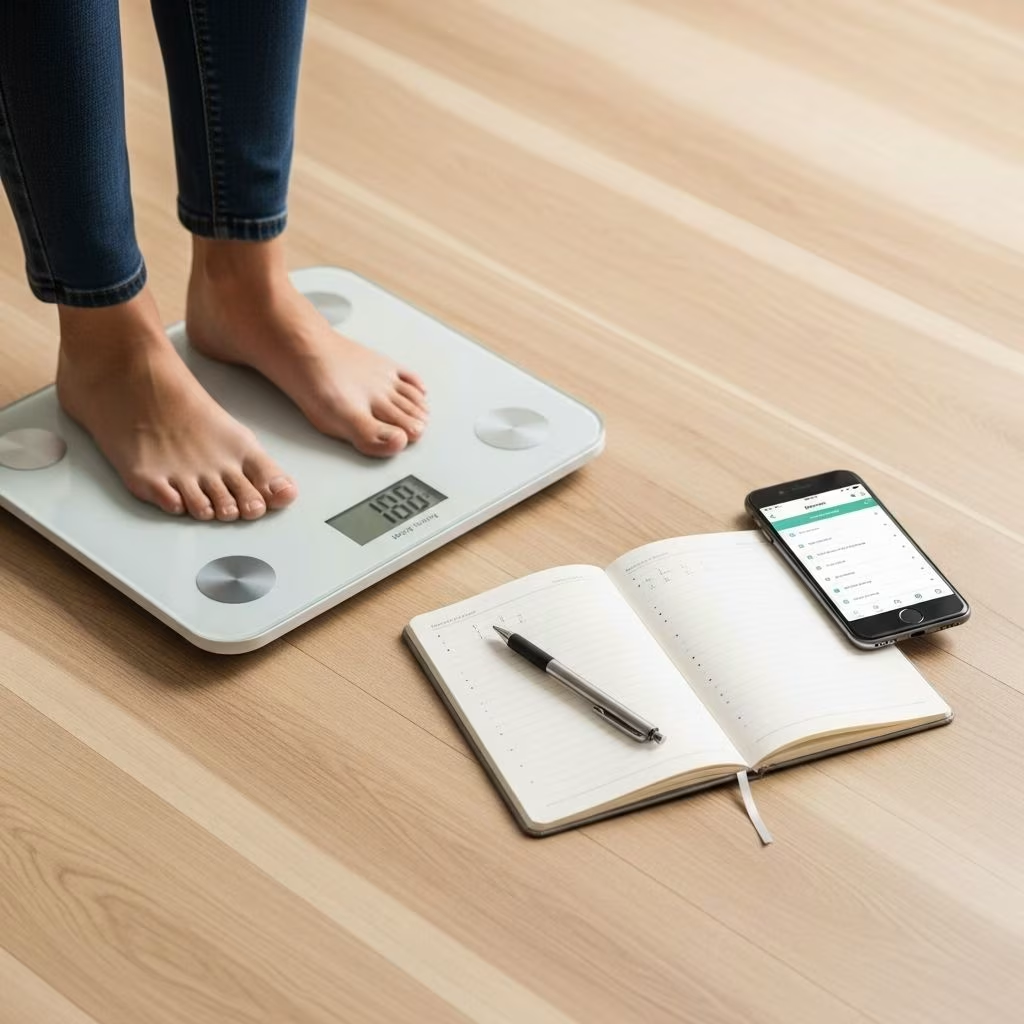
Why You Should Track Your Body Weight—And How to Do It Right
When it comes to weight loss or healthy weight management, accurately tracking your progress is crucial. While many people rely on subjective feelings or loosely estimated changes, consistently monitoring your body weight is a proven, evidence-based strategy for staying on track with your health goals. Understanding the value of the scale—and using it wisely—can make a significant difference in your journey toward lasting wellness.
Estimating vs. Measuring: The Power of Objective Data
It’s easy to convince yourself that you can “just tell” whether you’ve gained or lost weight based on how your clothes fit or how you feel. However, numerous psychological studies confirm that humans are remarkably poor at estimating changes in their own bodies. Without tangible data, it’s nearly impossible to get an accurate sense of progress—or identify setbacks before they get out of control.
Research has shown that many individuals, when relying on memory or perception alone, tend to:
- Underestimate how much weight they’ve gained after holidays or stressful periods
- Miss early signs of plateauing weight loss
- Overlook small but consistent gains that can add up over time
This is why consistent, objective tracking of body weight is recommended as a central tool in most weight management programs.
Why the Scale Still Matters—And How It Fits with Other Tools
Despite skepticism around daily weighing, the scale remains a reliable tool for tracking long-term weight trends, when used correctly. It’s true that your weight can fluctuate naturally day to day. Factors such as hydration, sodium intake, hormonal changes, and recent meals can cause short-term upswings or dips. However, over time, regular weighing allows you to spot trends and respond proactively to changes.
Scales work especially well in combination with other metrics, such as:
- Waist circumference
- Body Mass Index (BMI)
- Clothing fit
- Photos taken at regular intervals
It’s important to remember that the scale is not a moral arbiter or a diagnosis—it is just one data point among many for assessing your health, fitness, and progress.
How Often Should You Weigh Yourself?
This is one of the most commonly debated topics in weight management. Should you step on the scale every morning, once a week, or less often?
| Frequency | Pros | Cons |
|---|---|---|
| Daily |
|
|
| Weekly |
|
|
| Monthly or Less |
|
|
Large-scale research suggests that people who weigh themselves daily or several times per week tend to achieve the best long-term results. For most, weighing in at the same time each morning—preferably after waking up and using the bathroom—offers the most consistent baseline.
Understanding Weight Fluctuations: What Causes Day-to-Day Changes?
It is important to realize that scale readings can jump up or down several pounds over short periods, even if your “true” weight has barely budged. Reasons for these fluctuations include:
- Water retention from salty food, hormonal shifts, or high-carb meals
- Glycogen storage changes after exercise or dietary shifts
- Time of day and natural bodily rhythms
- Clothing or objects in pockets
- Bathroom schedule
These swings are entirely normal, and should not cause alarm. It’s the longer-term trend that matters, which is why it’s wise to look at your weekly average rather than any single reading.
Best Practices: How to Weigh Yourself for Useful Results
Maximize the value—and minimize the stress—of using the scale with these evidence-based tips:
- Pick a consistent time: Weigh in at the same time each day, ideally first thing in the morning, after using the restroom and before eating or drinking.
- Wear minimal clothing or use the same outfit every time to reduce variation.
- Place the scale on a hard, flat surface (avoid carpet or uneven flooring).
- Use the same scale each time, as different models can vary slightly in calibration.
- Record your weight in an app or journal to track trends over time.
The Psychological Side: When the Scale Becomes a Problem
For some, the scale can trigger negative feelings—anxiety, shame, or even disordered eating behaviors. If you notice that weighing yourself causes undue stress or starts to impact your mood or self-worth, it might be wise to:
- Take a break from daily weighing and try weekly or biweekly check-ins instead
- Focus on non-scale victories like improved stamina, mood, or fitness milestones
- Consult a healthcare or mental health professional if distress persists
The goal is to use the scale as a neutral feedback tool, not as a judge of your success or value.
Other Ways to Track Progress: Beyond the Scale
While the scale is helpful, pairing it with other tracking methods offers a fuller, more nuanced picture of your journey. Consider incorporating:
- Body measurements (waist, hips, chest, thighs, arms) using a flexible tape measure
- Progress photos taken under similar lighting and posture
- Fitness tracking apps or wearables (to log steps, workouts, and activity levels)
- How your clothes fit
- Energy, sleep, and mood journals
What About BMI, Body Fat Percentage, and Advanced Metrics?
While Body Mass Index (BMI) is a widely used method for assessing weight status, it’s far from perfect. BMI does not account for muscle, bone density, or fat distribution, so very muscular or athletic people may be misclassified. However, BMI is still valuable in population health studies and can serve as a general guideline:
- BMI under 18.5: Underweight
- BMI 18.5–24.9: Healthy weight
- BMI 25–29.9: Overweight
- BMI 30 and above: Obese
Other advanced methods—like body fat scales, bioelectrical impedance, calipers, or even DEXA scans—provide further insight, but are often less accessible, more expensive, and can also be prone to inconsistencies if not performed under standardized conditions.
Staying Motivated: Using Weigh-Ins as a Tool, Not a Trap
Weighing yourself should feel empowering, not discouraging. Here are some tips for keeping the scale in perspective:
- Remember: Progress is not always linear. Plateaus and fluctuations are normal.
- Focus on long-term habits, not just short-term numbers.
- Celebrate positive behaviors—like improved nutrition or better sleep—even if the scale stalls.
- Consider recruiting a friend or joining an accountability group for support.
FAQs: Tracking Body Weight and Healthy Weight Management
Q: Why does my weight fluctuate so much from day to day?
A: Normal day-to-day shifts—due to water retention, dietary changes, and hormonal cycles—can cause your weight to fluctuate by several pounds, especially in women. These fluctuations are normal and do not reflect true fat gain or loss.
Q: What if weighing myself makes me feel anxious?
A: If the scale triggers negative emotions or stress, consider weighing in less frequently or focusing on other methods of tracking progress such as measurements, how your clothes fit, or energy levels. If negative feelings persist, consult a health professional.
Q: Is it possible to lose fat but not see changes on the scale?
A: Yes. If you’re gaining muscle (which weighs more than fat by volume), you may lose body fat while your weight remains the same or even increases slightly. This is why using body measurements and how your clothes fit are also valuable indicators.
Q: Does weighing daily help with long-term weight loss?
A: Research suggests people who monitor their weight frequently are better able to maintain healthy habits and lose weight over time, provided they use the information as feedback rather than judgment.
Q: Should I weigh before or after exercising?
A: For the most consistent results, weigh in at the same time each day—ideally first thing in the morning before eating or exercising.
Takeaway: Make the Scale Work for You
Ultimately, tracking your weight is about empowering yourself with data—so you can make informed, healthy decisions. By approaching the scale as a neutral tool, understanding its place within a broader context of health, and using multiple indicators of progress, you’ll set yourself up for success. Remember: the scale measures weight, not worth.
References
- https://pmc.ncbi.nlm.nih.gov/articles/PMC2769821/
- https://pmc.ncbi.nlm.nih.gov/articles/PMC11325471/
- https://www.prevention.com/weight-loss/a20504464/track-your-weight-loss-without-a-scale/
- https://www.prevention.com/weight-loss/a36065492/rethinking-body-weight/
- https://www.prevention.com/health/a46433855/age-proof-your-body/
- https://www.prevention.com/weight-loss/a38256590/is-bmi-accurate/
- https://www.prevention.com/weight-loss/
- https://www.prevention.com
- https://www.cdc.gov/healthy-weight-growth/about/index.html


