


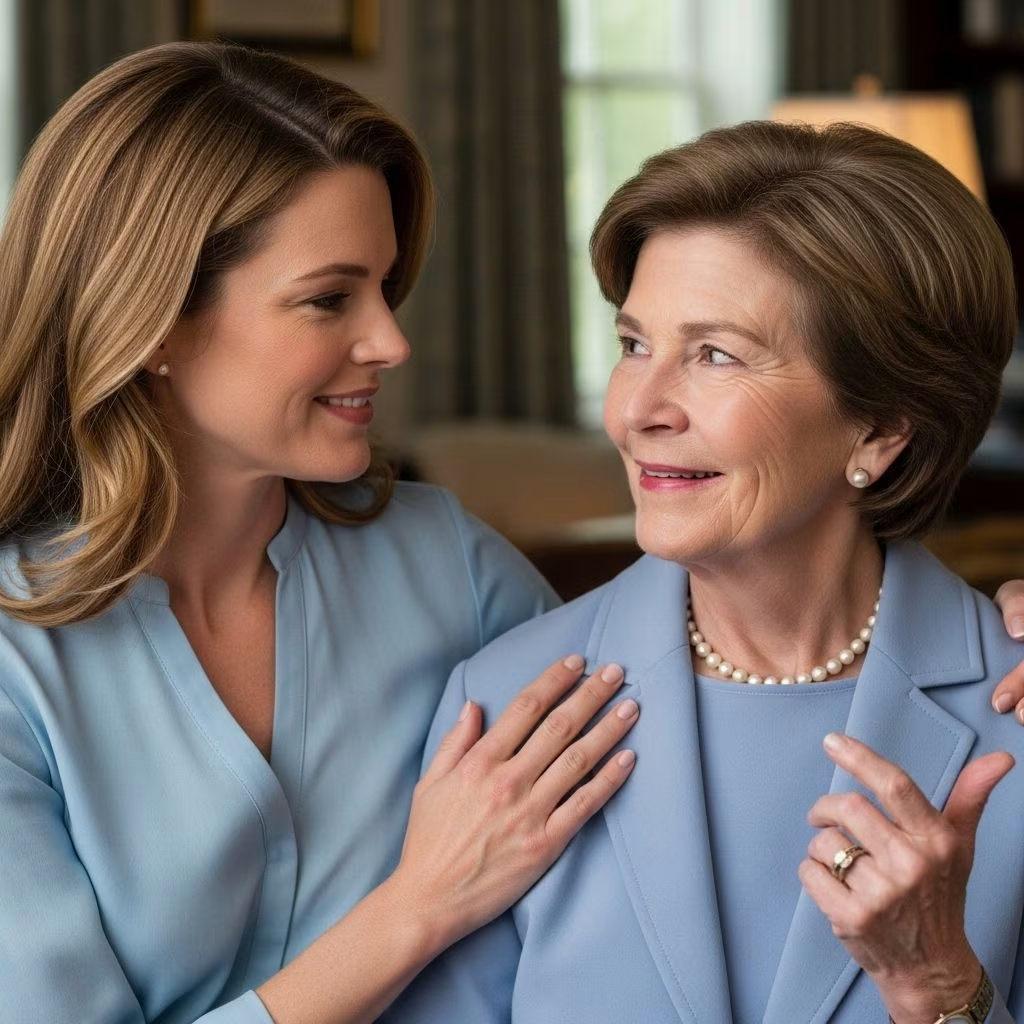
Jenna Bush Hager Praises Laura Bush’s Silent Approach to Weight & Body Image
Jenna Bush Hager, known for her candid presence as co-host of TODAY With Hoda and Jenna, recently opened up about a moment that underscored her commitment to mindful parenting—and the subtle role her mother, Laura Bush, played in shaping her beliefs about weight, body image, and self-talk.
This story, which Jenna recounted on national television, is more than just a tale about a magazine headline—it’s a reflection on generational wisdom, changing cultural norms, and what it means to model self-acceptance for your children.
Setting the Scene: An Unexpected Lesson at the Grocery Store
During a routine grocery shopping trip with her daughters, Mila (8) and Poppy (6), Jenna found herself at the register when her daughters spotted a magazine featuring Jenna’s photo alongside a headline about “losing 30 lbs.”
- Mila, confused, asked: “What are ‘lbs’?”
- Jenna responded simply: “Oh Mila, nothing.”
- A store employee read aloud, “It says here, ‘Jenna dropped 30 lbs,’” prompting a brief, awkward moment.
This exchange demonstrated Jenna’s resolve not to make weight a point of discussion in front of her children, echoing the approach her mother took decades before.
Why Jenna Bush Hager Chooses Silence On Weight Conversations
The lesson Jenna learned from Laura Bush wasn’t rooted in what her mother said—but rather in what she chose not to say.
- Laura Bush never spoke negatively about her own appearance, weight, or body in front of Jenna and her twin sister, Barbara.
- Jenna said: “She never said things like, ‘Gosh, my hair looks terrible,’ or ‘I look terrible,’ or ‘this dress looks bad on me.’”
- When questioned by others, Jenna clarified: “I’m sure she said it to herself, but she never said it out loud in front of her girls.”
For Jenna, these choices weren’t just about avoiding negativity. They were an active lesson in grace, self-acceptance, and consideration for the psychological wellbeing of her children.
Parenting Philosophy: Passing Down Silent Wisdom
Jenna’s public insistence that she “will never” discuss weight with her children stems directly from her mother’s quiet influence.
- She wants her daughters to value more than just outward appearance or scale numbers.
- She told Hoda: “I still felt like a chubby child. But it wasn’t because of her; I think it was because I was chubby.” Jenna points to her own experiences rather than family dynamics as the source of those childhood feelings.
- Laura Bush, even now, encourages Jenna to “give [herself] grace”—espousing body positivity made real through self-compassion and perspective.
Jenna believes that helping her children avoid negative self-talk starts with the silence—or the absence of critical body-related language—in the household.
Why Silence Matters: Psychological Insights & Parental Impact
In the age of social media and rampant diet culture, children are increasingly exposed to outside messages about body image and weight. Jenna’s story highlights the psychological power of household language.
- Research suggests that even offhand comments about weight, body, or appearance from parents can influence children’s own self-perceptions and risk of body dissatisfaction.
- By keeping negative body talk private—or refraining from it altogether—parents can create a healthier environment where children are less likely to internalize appearance-focused anxieties.
Laura Bush’s method isn’t just parenting advice—it’s a real-world buffer against societal pressures that children may confront elsewhere.
Hoda Kotb’s Reaction: Applauding Jenna’s Strategy
Co-host Hoda Kotb publicly congratulated Jenna for her choices, saying: “You didn’t bring it up.” She viewed Mila’s unfamiliarity with the concept of “lbs” as proof that Jenna had succeeded in shielding her children from scale-focused thinking.
- Hoda called the strategy “a big life lesson,” affirming the value of not centering conversations around weight with children.
Weight Loss Headlines and Media Influence: Separating Fact From Fiction
The magazine that sparked the conversation was, in fact, misleading: Jenna clarified she had not lost 30 lbs, despite the headline.
- Such headlines exemplify how media projects body change—and often promotes unrealistic, sensationalized portrayals of health.
- Viewers, however, commented on Jenna’s apparent health and fitness, with many admiring her toned legs seen during a recent broadcast.
Media narratives can shape not only public perception but also individual self-esteem, especially when they enter the family space.
Jenna’s Real Health Routine: Strength Over Scales
Rather than focusing on pounds lost, Jenna shared her current fitness regimen:
- She practices an “old school” workout involving squats on all fours—”Wearing leg weights like in the ‘80s,” she describes, “and you’re kicking back, back, back.”
- She enjoys beach activities and aims for strong, healthy legs.
This commitment to strength and functional fitness over chasing scale numbers reinforces Jenna’s philosophy of prioritizing well-being and sustainable health over superficial goals.
Embodying Grace: Balancing Parenthood and Self-Acceptance
Jenna, a mother of three, shared familial wisdom: “I had three babies, so [my body is] going to look this way. And would I choose perfect abs or them?” The answer is clear—her children take priority over any appearance goals.
This mentality aligns with research suggesting parents who encourage self-acceptance, rather than perfection, help cultivate resilient, confident children.
Generational Change: How Modern Parenting Is Adapting to Body Image Concerns
The Bush family’s story isn’t unique, but it is exemplary. More parents today are consciously:
- Declining to discuss weight, diets, or negative body talk in front of children
- Encouraging sports, movement, and mindfulness as ways to be healthy
- Modeling self-compassion and healthy emotional coping mechanisms
This shift reflects a growing understanding of how direct and indirect messaging can profoundly affect children’s lifelong relationships to their bodies.
Jenna’s Writing: Continuing the Conversation Beyond TV
Jenna Bush Hager is also an accomplished author, having written:
- Three children’s books
- A joint memoir with twin sister Barbara, focused on growing up in the Bush family
Her public and literary roles enhance her influence as an advocate for mindful parenting and healthful self-talk.
Table: Side-by-Side—Traditional vs. Mindful Parenting on Body Image
| Traditional Approach | Laura Bush/Jenna Bush Hager Approach |
|---|---|
| Discussing weight openly at home | Avoiding all weight-related discussions in front of children |
| Commenting on self-appearance negatively | Focusing on self-acceptance, never vocalizing negative self-talk |
| Linking health to appearance or scale numbers | Promoting fitness, strength, and grace over numbers |
| Reacting emotionally to media portrayals | Deflecting media sensationalism and encouraging healthy skepticism |
Lessons Learned: What Parents Can Take Away
- Words Matter: Children absorb even indirect messages about body image, scale, and appearance.
- Silence Can Be Powerful: Not discussing weight or negative self-talk out loud shields children from unnecessary anxiety.
- Modeling Self-Acceptance: Parents who show grace create an environment for emotional and physical wellbeing.
- Media Literacy: Teaching skepticism toward sensationalized weight-loss headlines helps build resilience.
- Prioritizing Health Over Appearance: Emphasizing strength, movement, and happiness leads to healthier lifestyle choices.
Frequently Asked Questions (FAQs)
Q: Why did Jenna Bush Hager choose not to talk about weight with her children?
A: Jenna was inspired by her mother Laura Bush’s silent approach—never discussing weight or appearance negatively—which helped foster an environment of grace and self-acceptance.
Q: How has media coverage affected Jenna’s family conversations?
A: Sensationalized magazine headlines prompted awkward questions from Jenna’s children, but Jenna handled it by deflecting attention from weight and emphasizing that these numbers do not matter.
Q: What kind of workouts does Jenna Bush Hager do?
A: Jenna prefers “old school” workouts, including squats on all fours with leg weights and beach activities, focusing on strength and health rather than weight loss.
Q: Does Jenna Bush Hager encourage body talk at home?
A: No, she consciously avoids all body criticism and weight-related discussions in front of her children, upholding the philosophy her mother practiced.
Q: What is the broader impact of avoiding weight discussions in families?
A: Such avoidance helps prevent the development of body image issues in children and supports them in building self-esteem and emotional wellbeing.
Final Thoughts: Quiet Wisdom, Loud Impact
Jenna Bush Hager’s story, inspired by her mother Laura Bush’s quiet avoidance of weight talk, underscores a powerful parenting strategy for the current era. By choosing silence in certain conversations, parents can foster environments of self-love, resilience, and strong mental health—giving children a foundation to weather society’s messages about appearance, weight, and worth.
As Jenna Bush Hager continues to speak and write publicly, her nuanced approach serves as a blueprint for families everywhere seeking to change the narrative around body image for generations to come.
References
- https://www.hellomagazine.com/healthandbeauty/health-and-fitness/20220402136990/jenna-bush-hager-emotional-story-daughters-weight-loss-magazine-cover/
- https://www.prevention.com/weight-loss/a39629306/jenna-bush-hager-applauds-mom-laura-bush-for-never-speaking-about-weight-growing-up/
- https://littlethings.com/family-and-parenting/jenna-bush-hager-laura-bush-weight
- https://www.morninghoney.com/p/jenna-bush-hager-weight-loss-daughters


