


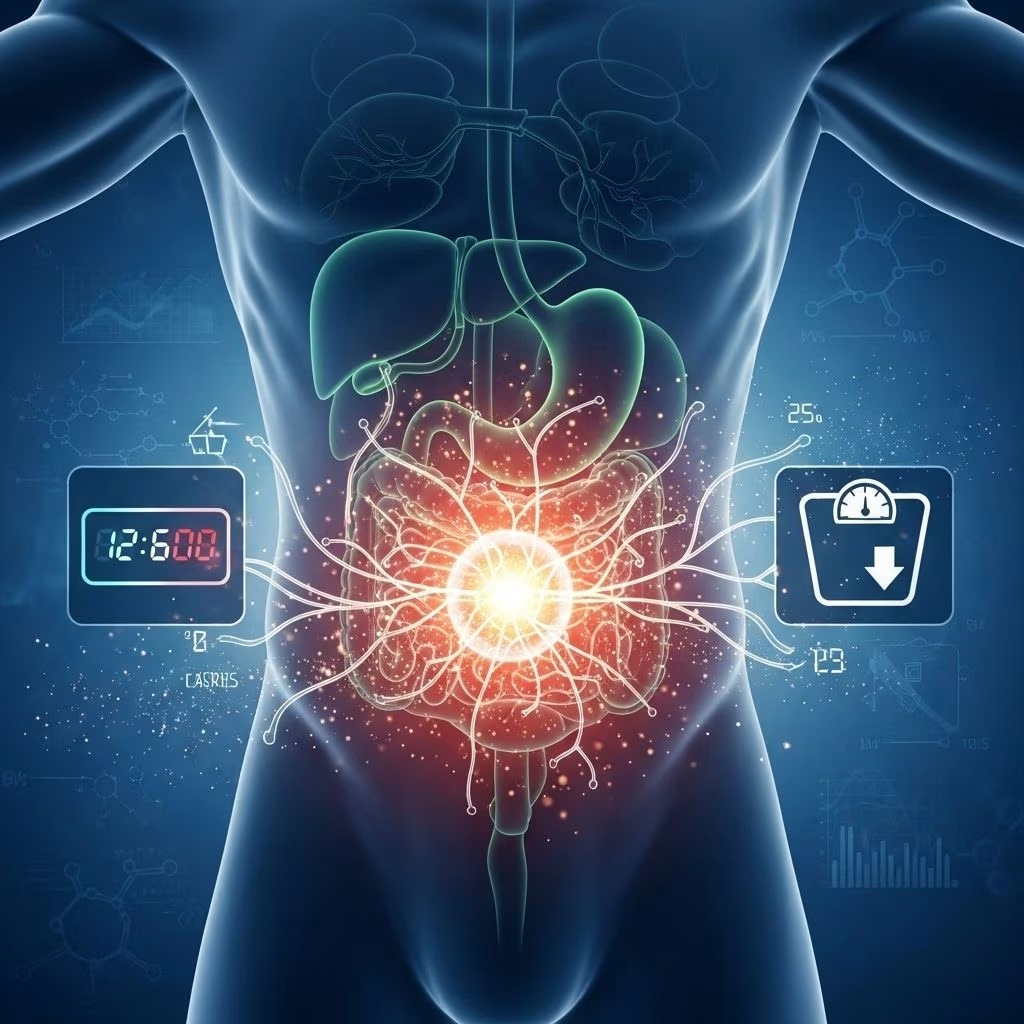
Metabolism and Weight Loss: How Your Body Burns Calories
Many of us blame a “slow metabolism” for stubborn weight that refuses to budge, while others credit a “fast metabolism” for effortless thinness. But what exactly is metabolism, and how does it truly impact weight loss? This guide unpacks the science behind metabolism, explains its role in determining how many calories your body burns, and offers clear, evidence-based strategies for supporting your weight loss journey.
What Is Metabolism?
Metabolism refers to the complex set of chemical reactions that sustain life by converting the food and drinks you consume into energy. Every process in your body that requires energy—from breathing and circulating blood to growing and repairing cells—relies on your metabolism at work. In simple terms, metabolism is your body’s engine for burning calories.
- Catabolism: The breakdown of food to release energy.
- Anabolism: The building and repair of body tissues using energy.
Your metabolic rate is how quickly your body burns calories to fuel all these processes. It varies from person to person and can significantly affect your ability to maintain, gain, or lose weight.
Basal Metabolic Rate (BMR): The Core of Your Calorie Burn
Basal Metabolic Rate (BMR) is the number of calories your body needs to perform its most basic life-sustaining functions, such as keeping your heart beating and your lungs breathing. BMR accounts for roughly 60–75% of your total daily calorie burn, making it the single biggest component of your metabolism and daily energy expenditure.
- Basic activities covered by BMR:
- Breathing
- Circulating blood
- Controlling body temperature
- Cell growth and repair
Understanding your BMR can help tailor a weight loss plan that works in harmony with your unique metabolism.
What Determines Your BMR?
Several key factors influence your basal metabolic rate; some are within your control, while others are not:
- Age: BMR drops as you get older, partly due to changes in muscle mass.
- Sex: Men typically have a higher BMR than women due to more muscle and less fat tissue.
- Body size and composition: More muscle means a higher BMR, while higher body fat reduces it.
- Genetics: Family history plays a significant role.
- Hormones: Thyroid and other hormonal imbalances can speed up or slow down metabolism.
- Physical activity: Movement and exercise boost calorie expenditure above your BMR.
Energy Expenditure: Beyond the Basal Rate
Your total daily calorie burn—also known as Total Daily Energy Expenditure (TDEE)—includes:
- BMR: 60–75% of your daily calorie needs.
- Physical activity: 15–30%, varying widely based on exercise habits and daily movement.
- Thermic effect of food (TEF): 5–10%, the calories burned while digesting and processing food.
Even when you’re at rest, your body continuously burns calories; activity and diet can further increase your calorie needs.
How Metabolism and Weight Loss Are Interlinked
Weight loss fundamentally comes down to the simple equation of calories in versus calories out. If you consistently burn more calories than you consume (a calorie deficit), you’ll lose weight. If you consume more than you burn, you’ll gain weight.
- Metabolic rate determines your calorie needs. Higher metabolism makes it easier to create a calorie deficit for weight loss.
- Muscle is key: Muscle tissue burns more calories at rest than fat does; more muscle increases your metabolic rate.
- Age, sex, genetics, and lifestyle all play important roles.
It’s important to note that having a high metabolism does not guarantee weight loss—overeating or not moving enough can still result in weight gain. Conversely, a slow metabolism may make it somewhat harder to lose weight, but weight loss is still possible by adjusting calorie intake and increasing activity level.
Adaptive Thermogenesis: How the Body Fights Weight Loss
When you cut calories and lose weight, your body adapts—a phenomenon known as adaptive thermogenesis.
- Your metabolic rate declines as your body weight drops.
- The body may become more efficient, burning fewer calories and making further weight loss harder.
- This is often called going into “starvation mode.” Drastically slashing calories can trigger this effect, slowing metabolism to conserve energy.
| Factor | Effect on Metabolic Rate |
|---|---|
| Calorie Deficit | Lowers metabolic rate (body adapts to use fewer calories) |
| Muscle Loss | Reduces BMR further, as muscle tissue burns more calories |
| Large Weight Loss | Maintenance requires fewer calories than before |
Common Metabolism and Weight Loss Myths
There are plenty of misconceptions about metabolism that can derail your weight loss efforts. Here are some of the most common myths debunked:
- Myth 1: Eating late at night slows your metabolism.
Truth: Meal timing matters far less than the total amount and quality of calories consumed. - Myth 2: Slim people always have faster metabolisms.
Truth: Body composition (muscle vs. fat) impacts metabolic rate more than size or weight. - Myth 3: Metabolic rate is set and unchangeable.
Truth: While genetics set a baseline, lifestyle habits like physical activity, food choices, and muscle building can influence your metabolism. - Aging: Muscle mass tends to decrease with age, lowering BMR.
- Severe calorie restriction: Can put the body into starvation mode.
- Lack of physical activity: Leads to loss of muscle mass and slower metabolism.
- Poor sleep: Disrupts metabolic hormones.
- Dehydration: Makes metabolism less efficient.
- Build lean muscle with strength training. The more muscle you have, the more calories you burn—even at rest.
- Stay active throughout the day. Include regular bursts of high-intensity activity, like interval training.
- Eat protein with every meal. Protein requires more energy to digest and supports muscle maintenance and growth..
- Don’t skip meals or drastically restrict calories. This can slow your metabolism as your body adapts to conserve energy.
- Stay hydrated. Water is essential for efficient metabolic function.
- Get enough sleep. Sleep deprivation can disrupt hormones that control hunger and metabolism.
- Lift weights or do resistance training 2–3 times per week.
- Choose protein-rich foods like lean meat, eggs, dairy, legumes, and nuts.
- Stay active with daily movement—aim for regular walks, use stairs, and avoid prolonged sitting.
- Drink water consistently throughout the day, not just when thirsty.
- Maintain a regular sleep schedule and aim for 7–9 hours per night.
- For individualized advice, consult with a registered dietitian or certified health professional.
- Further reading: Mayo Clinic, National Institutes of Health, and American Heart Association resources on metabolism and weight management.
- https://www.eastsidefamilyhealth.com/blog/weight-loss-and-metabolism-how-the-two-are-interlinked
- https://medmate.com.au/news/understanding-metabolism-and-its-impact-on-body-weight/
- https://lifemd.com/learn/your-metabolism-and-weight-loss-what-you-should-know
- https://www.ncbi.nlm.nih.gov/books/NBK572145/
- https://www.jeffersonhealth.org/your-health/living-well/what-is-metabolism-how-it-works-and-relates-to-weight-loss
- https://my.clevelandclinic.org/health/body/21893-metabolism
- https://www.health.harvard.edu/blog/exercise-metabolism-and-weight-new-research-from-the-biggest-loser-202201272676
- https://www.mayoclinic.org/healthy-lifestyle/weight-loss/in-depth/metabolism/art-20046508
- https://www.axahealth.co.uk/staying-healthy/diet-and-nutrition/metabolism-and-weight-loss-myth-vs-fact/
Factors That Slow Down Metabolism
How to Boost Your Metabolism Naturally
While there’s no magic fix, you can support a healthy metabolism with some proven lifestyle strategies:
Medical Approaches to Boosting Metabolism
For some individuals, weight loss medications or clinical interventions may be appropriate. These are most effective when combined with lifestyle changes and under medical supervision. However, there’s no substitute for healthy habits in maintaining a long-term healthy weight and metabolic health.
Frequently Asked Questions (FAQs)
Q: What is metabolism and why is it important for weight loss?
A: Metabolism is your body’s process of converting food into energy. It’s essential for weight loss because a faster metabolism burns more calories, helping you create the calorie deficit needed for losing weight.
Q: Does having a fast metabolism mean I can eat anything I want?
A: No. While a fast metabolism allows you to burn more calories, overeating can still lead to weight gain regardless of metabolic speed.
Q: How can I find out my BMR?
A: Use online calculators that consider your age, sex, height, and weight, or consult with a healthcare professional for more precise measurements.
Q: Can drinking water increase my metabolism?
A: Drinking water can temporarily increase your metabolism, especially when you’re dehydrated. Staying hydrated is essential for optimal metabolic function.
Q: Does starvation mode really exist?
A: Yes, to some extent. When you significantly reduce calorie intake, your body adapts by lowering metabolic rate to conserve energy, making long-term weight loss harder.


