


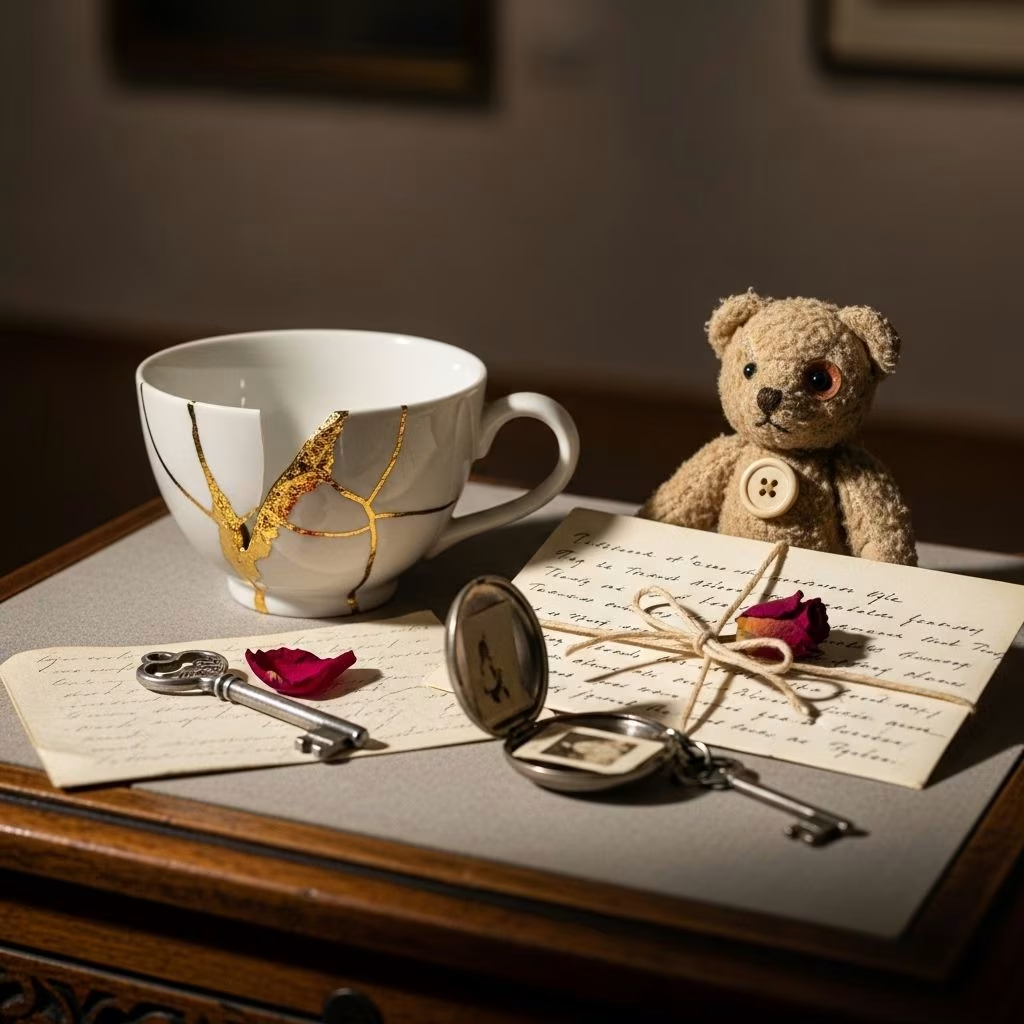
Breakups leave us with more than just emotional scars. They leave us with physical remnants: ticket stubs, photographs, clothing items, and countless small objects that once held meaning. While conventional wisdom suggests we should dispose of these reminders and move forward, there’s an alternative approach that’s both therapeutic and transformative. By turning the artifacts of broken relationships into art, we can process our pain, celebrate our resilience, and connect with others who’ve walked similar paths.
The Museum of Broken Relationships stands as a testament to this philosophy, offering visitors a profound journey through the landscape of human connection and loss. This innovative institution has redefined how we think about breakups, memorialization, and the healing process itself.
A Revolutionary Approach to Heartbreak
The Museum of Broken Relationships represents something unprecedented in the art world. Unlike traditional museums that house priceless artifacts or celebrated masterpieces, this institution thrives on the ordinary, the mundane, and the deeply personal. It’s a space where heartbreak becomes communal, where individual pain transforms into collective understanding.
What makes this museum truly extraordinary isn’t the objects themselves, but the stories they carry. Visitors don’t simply walk past displays with cursory glances. Instead, they find themselves compelled to read every description, every narrative attached to each piece. The experience proves profoundly worldview-shattering, leaving few visitors unchanged by what they encounter.
The museum emerged from a simple yet powerful recognition: everyone experiences heartbreak, yet we often suffer in isolation. By creating a physical space dedicated to these universal experiences, the museum validates feelings that society often dismisses or minimizes. It tells visitors that their pain matters, their stories deserve to be heard, and their journey toward healing is worth honoring.
The Vision Behind the Museum
Alexis Hyde, the director of the Museum of Broken Relationships, brought a unique perspective to this project. With approximately ten years of experience in the Los Angeles art world, Hyde had built a career around taking on unconventional challenges. Her professional journey included managing artist studios, directing galleries, and overseeing various installations, but the underlying theme throughout her work remained “the improbable.”
When faced with seemingly impossible questions about whether something could be done, Hyde’s characteristic response was always: “We’ll find out.” This philosophy of embracing uncertainty and pushing boundaries made her the perfect person to helm such an unconventional museum.
The museum’s call for submissions, launched in February, initially aimed for modest participation. Hyde hoped to receive perhaps fifty donated pieces at most. The actual response exceeded all expectations dramatically. The museum received over 300 donated pieces, with submissions continuing to arrive by mail even as the opening approached.
Curating Heartbreak: The Selection Process
With such an overwhelming volume of submissions, the curation process became both a privilege and a challenge. Hyde and her team couldn’t simply include everything they received. Instead, they needed to carefully select pieces that would resonate most powerfully with visitors while creating a cohesive, meaningful experience.
The team’s approach to curation proved thoughtful and deliberate. By starting their call for submissions months before the opening, they gave themselves valuable time to live with the stories. Hyde described their process: they would read a story and then wait to see if it continued to resonate. If a particular narrative still lingered in their thoughts a week later, it earned serious consideration for inclusion.
This temporal approach to curation allowed the team to identify which stories possessed lasting power. Some submissions might seem impactful upon first reading but fade from memory quickly. Others would burrow into consciousness, prompting reflection and emotional response days or weeks later. These were the stories that deserved space in the museum.
Beyond individual impact, the team also considered how pieces would work together. The museum needed to function as more than just a collection of disconnected objects. While visitors could start anywhere and move through the space in any order, the overall experience needed to feel coherent and intentional.
The Unexpected Emotional Impact
Even Hyde, who had spent months immersed in these stories and objects, found herself unprepared for the emotional power of the completed exhibition. Despite her intimate knowledge of every piece, walking through the finished museum left her “punched in the gut, heart ripped out, and uplifted all at the same time.”
This simultaneous experience of devastation and elevation speaks to the museum’s unique character. It doesn’t simply wallow in sadness or celebrate endings cynically. Instead, it acknowledges the full complexity of human relationships: the pain of loss, the beauty of connection, the courage required to love, and the resilience necessary to survive heartbreak.
Hyde described floating out of the space “on a cloud of possibility and bravery and human connection” that exceeded anything she could have anticipated. This response from someone so deeply involved in the project’s creation suggests the museum’s power to surprise and transform even those who think they understand it completely.
The Poetry of Everyday Objects
One of the museum’s most profound revelations concerns the nature of the objects themselves. Visitors expecting to see grand romantic gestures frozen in time—engagement rings, anniversary gifts, or souvenirs from exotic vacations—discover something quite different. Most pieces represent the mundane, everyday aspects of relationships rather than special occasions.
This focus on the ordinary proves remarkably powerful. As Hyde observed, many stories don’t revolve around birthday or anniversary gifts. Instead, they illuminate the daily nature of relationships. This emphasis on routine and repetition carries an important message: you can’t sustain a relationship on one vacation and expect everything to remain fine for the next year. It’s the daily things that matter, the consistent communication and small gestures that build or erode connection.
A coffee mug used every morning, a specific brand of soap, a worn t-shirt, keys to a shared apartment—these unremarkable items become charged with meaning through the relationships they represent. They testify to the countless unremarkable moments where relationships either thrive or flounder. They remind us that love isn’t primarily about grand gestures but about showing up consistently in the small, unglamorous moments that constitute daily life.
The Physical Weight of Emotional Baggage
The museum also challenges conventional wisdom about moving on from relationships. Popular advice frequently emphasizes getting rid of physical reminders: box up their belongings, delete photos, purge your space of anything connected to your ex. This “slash and burn” approach works for some people, offering a clean break and fresh start.
However, the reality of moving on often proves more complicated than simply filling donation boxes. As Hyde notes, most of the museum’s pieces aren’t very large. They wouldn’t take up much space in a drawer, closet, or life. Yet these small objects can carry enormous emotional weight disproportionate to their physical size.
The museum offers an alternative to both hoarding and purging: transformation through sharing. Every person who donated an object to the museum ultimately decided it was time to let that item go. They felt better for releasing it. But rather than simply discarding these meaningful objects, they gave them new purpose and context.
Healing Through Shared Experience
Knowing that donated objects will take on new lives as part of the museum contributes to the healing process. These items won’t languish in landfills or confuse thrift store shoppers. Instead, they’ll touch countless lives, helping others feel less alone in their pain. They’ll validate experiences, provoke reflection, and perhaps even inspire healing in people the donors will never meet.
This transformation from personal pain to public art represents a profound form of alchemy. What began as a private memento of loss becomes a gift to strangers, a contribution to collective understanding of love and heartbreak. The donor releases their attachment while simultaneously honoring what that object represented.
For visitors, the museum offers validation and perspective. Seeing hundreds of stories from broken relationships reminds us that heartbreak is universal. The specific details vary—the reasons for splitting, the length of relationships, the particular objects that carry meaning—but the underlying emotions prove remarkably consistent across cultures, ages, and circumstances.
Changing How We See the World
Hyde suggests the museum will forever change how visitors view thrift stores, though whether that’s for better or worse depends on imagination and perspective. Every item in a secondhand shop carries a history, represents relationships and lives we’ll never fully understand. That coffee mug might have been shared by lovers every morning for years. Those shoes might have walked through someone’s happiest and saddest moments.
This awareness can feel melancholic, turning casual shopping into meditation on loss and change. Alternatively, it can feel hopeful and connecting, reminding us that we’re all part of an enormous human tapestry of love, loss, and resilience. Objects outlast relationships, carrying their stories forward to touch new lives in ways we cannot predict.
The Therapeutic Value of Creating Relationship Art
While not everyone can or should donate to the Museum of Broken Relationships, the principles behind it offer valuable lessons for anyone processing heartbreak. Creating art from your broken relationship—whether through physical objects, writing, photography, music, or any other medium—provides numerous therapeutic benefits.
First, it transforms passive suffering into active creation. Rather than simply enduring pain, you channel it into something tangible and meaningful. This shift from victim to creator can feel empowering during a time when much feels out of control.
Second, creating art from heartbreak requires reflection and processing. You must examine your experience, identify what mattered most, and find ways to express complex emotions. This work, while sometimes painful, facilitates healing more effectively than avoidance or denial.
Third, sharing your art—whether publicly like museum donors or privately with trusted friends—combats the isolation that often accompanies heartbreak. It invites connection and understanding, reminding you that others have survived similar pain and emerged stronger.
Practical Steps to Transform Your Heartbreak
If you’re inspired to transform your own broken relationship into art, consider these approaches:
Start a breakup journal: Write freely about your feelings, memories, and insights. Don’t censor yourself or worry about craft. Simply let words flow onto the page, creating a raw, honest record of your emotional journey.
Create a memory box: Rather than keeping reminders scattered throughout your space, gather meaningful objects into a single container. Write brief descriptions of why each item matters. This practice honors the relationship while containing its physical presence in your life.
Take photographs: Document places, objects, or moments connected to your relationship. Through the camera lens, you can observe these elements with some emotional distance, finding new perspectives on familiar scenes.
Write letters you never send: Compose messages to your ex expressing everything you wish you could say. These letters aren’t meant for mailing—they’re for your own processing and release.
Create a playlist: Music often captures emotions words cannot. Curate songs that reflect your experience, creating an audio narrative of your relationship and its ending.
Make visual art: Paint, draw, collage, or craft your way through heartbreak. Visual expression can access emotions that remain buried when we rely solely on language.
When to Let Go and When to Hold On
The museum raises interesting questions about timing. Every donor ultimately decided their moment had come to release their object. But how do you know when you’re ready? And is keeping reminders necessarily unhealthy?
There’s no universal answer. Some people need immediate distance from anything connected to their ex. Others find comfort in certain mementos, at least temporarily. The key is honest self-assessment: Are these objects helping or hindering your healing? Do they bring more comfort or pain? Are you holding onto things because you genuinely value them, or because you’re not ready to accept the relationship has ended?
Consider, too, that your relationship with these objects may evolve. Something too painful to keep immediately after a breakup might become meaningful again once you’ve healed. A letter that once brought tears might eventually remind you of personal growth and resilience.
Frequently Asked Questions
Q: How many pieces are typically displayed at the Museum of Broken Relationships?
A: The museum received over 300 donated pieces for its exhibition, though not all submissions are displayed simultaneously. The curators carefully select pieces that resonate most powerfully and work well together as a cohesive collection.
Q: Do you need to have experienced a breakup to appreciate the museum?
A: No. While the museum focuses on broken relationships, its themes of loss, connection, resilience, and human emotion resonate with anyone who has experienced change or transition in life. Many visitors find the experience meaningful even if they haven’t personally gone through romantic heartbreak.
Q: Is creating art from a breakup just avoiding moving on?
A: Not at all. Creating art from heartbreak is a form of active processing rather than avoidance. It requires examining your experience, acknowledging emotions, and transforming pain into something meaningful. This work facilitates healing rather than preventing it.
Q: How long should you wait after a breakup before creating art about it?
A: There’s no required waiting period. Some people find creating art immediately after a breakup helpful for processing raw emotions. Others prefer to wait until they have some distance and perspective. Trust your instincts about what feels right for your healing journey.
Q: Should you show your breakup art to your ex?
A: Generally, no. Breakup art is primarily for your own healing and processing. Sharing it with your ex can create complications and potentially re-open wounds. Focus on creating for yourself rather than attempting to communicate with your former partner through art.
References
- https://www.elitedaily.com/envision/after-breakup-turn-broken-relationship-into-art/1510283
- https://www.elitedaily.com/p/5-big-decisions-to-avoid-making-after-a-breakup-because-now-is-not-the-time-12622806
- https://www.aubreenichols.com/published-article/2018/9/26/my-past-abusive-relationship-makes-it-hard-for-me-to-say-no-to-men
- https://www.exboyfriendrecovery.com/about-chris/


