


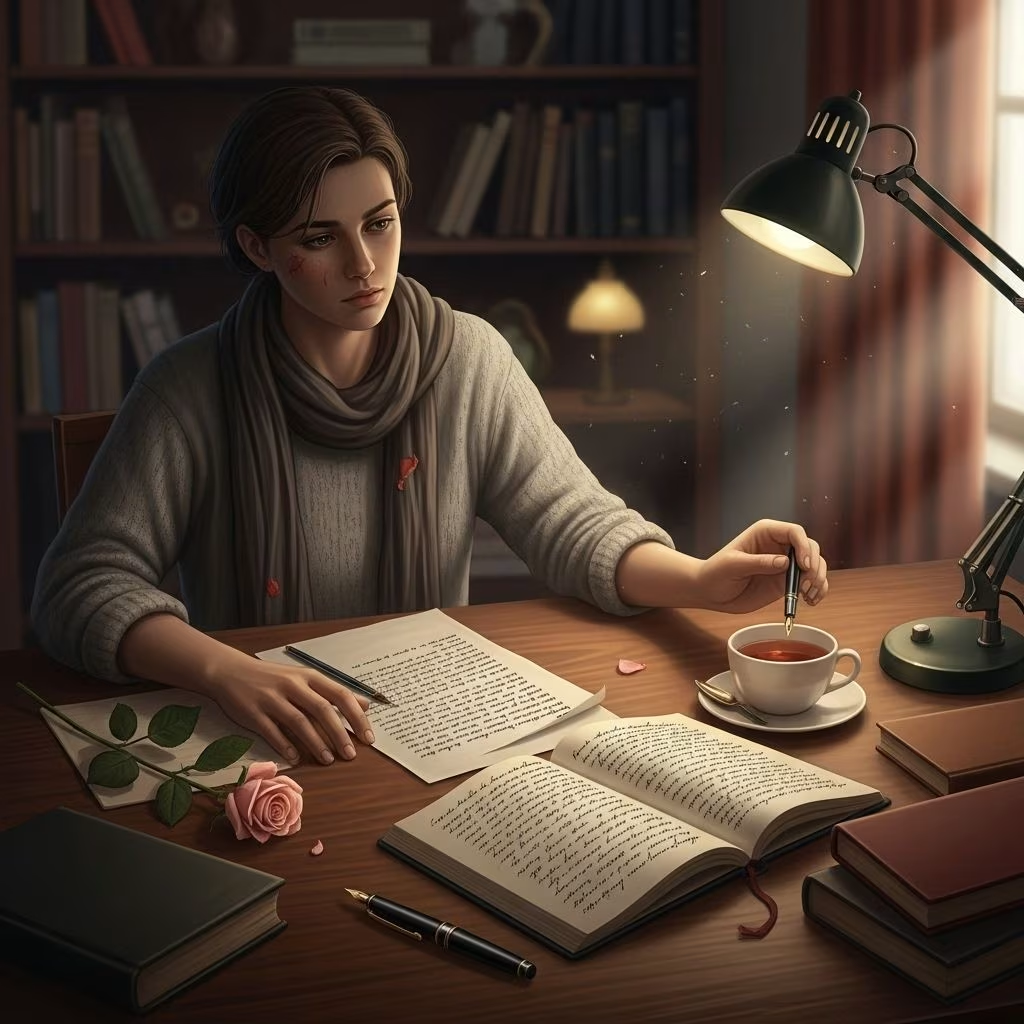
Why Do Writers Hold Back in New Relationships?
Writers are often praised for their emotional depth, their ability to articulate complex feelings, and their insight into human relationships. Paradoxically, though, many writers find themselves holding back in real-life romance, especially in the early stages of a new relationship. Why do people who spend so much time exploring emotions on the page struggle to express them in person? This article explores the unique dynamics at play when writers fall in love, examining the psychological, emotional, and creative factors that can turn vulnerability into a foreign concept even for the most eloquent among us.
The Writer’s Paradox: Words vs. Real-Life Vulnerability
For many writers, words are both a shield and a sword. On one hand, writing provides a safe space to express thoughts and feelings without immediate judgment or consequence. On the other, it’s often easier to explore emotions through fictional characters or autobiographical essays than in face-to-face communication with a romantic partner.
This paradox means that while writers may be exceptionally good at describing love, heartache, and longing for an audience, they can be surprisingly reticent when it comes to discussing these feelings directly with someone they love. The act of translating real-life emotions into creative work can sometimes distance writers from those very same feelings, making genuine emotional vulnerability harder to achieve in real-time relationships.
Barriers Writers Face in New Relationships
- Fear of Getting Hurt: Writers are often introspective and sensitive, which can make the risk of heartbreak feel even more daunting. Previous romantic disappointments may lead to emotional walls.
- Perfectionism: Authors, who labor over every word, may hesitate to reveal flawed, imperfect sides of themselves—fearing that their real-life selves won’t live up to their written personas.
- Overthinking: Writers are prone to analyzing situations from every angle, which can turn simple romantic moments into complex webs of what-ifs and worst-case scenarios.
- Protecting Creative Energy: Many writers feel they must reserve their emotional energy for their craft, fearing that romantic entanglements will distract from or dilute their creative output.
- Hiding Behind Words: It’s tempting for writers to communicate their feelings indirectly—through stories, poems, or texts—rather than having difficult or vulnerable conversations face-to-face.
The Impact of Past Experiences on Present Relationships
Everyone carries baggage, but for writers, emotional wounds can become the source of both pain and inspiration. Past betrayals, failed relationships, or unrequited loves often find their way onto the page, but these experiences can also make writers cautious in new romantic pursuits. The habit of transmuting pain into art can sometimes delay or complicate the process of healing and moving on, as the writer remains immersed in the emotion rather than processing it in the context of a new relationship.
| Challenge | How Writers Respond | Potential Solution |
|---|---|---|
| Fear of vulnerability | Withhold true feelings, communicate only indirectly | Practice direct, honest communication outside of writing |
| Overthinking | Spiral into analysis paralysis, anticipate rejection | Set boundaries for overanalyzing, focus on the present moment |
| Past hurt | Distant, quick to assume the worst, slow to trust | Acknowledge past pain, but don’t let it define the present |
| Perfectionism | Hide flaws, reluctant to show “messy” sides | Embrace imperfection as part of the human experience |
How Writers Compare to Other Creative Types in Relationships
Artists of all kinds—musicians, painters, actors—can struggle with intimacy, but writers face unique challenges. Unlike visual or performing artists, whose work is often more immediately collaborative or public-facing, writers spend much of their creative process alone. This solitude can foster self-sufficiency but also social hesitancy. While actors may be used to performing emotions for an audience, and musicians to expressing feelings through sound, writers are experts at crafting emotions in private, for private consumption. This can make the transition to open, real-time emotional exchange with a partner more fraught.
Breaking the Cycle: Moving From Holding Back to Opening Up
The process of learning to be emotionally available in a new relationship can be especially challenging for writers, but it is far from impossible. Here are some steps writers can take to transition from holding back to genuine openness:
- Recognize the Pattern: Acknowledge how the act of writing can serve as both an emotional outlet and a barrier to direct communication.
- Practice Honesty in Conversations: Make a conscious effort to have difficult conversations verbally, not just through written words.
- Challenge Perfectionism: Allow yourself to be imperfect with your partner—just as you would with your early drafts.
- Set Boundaries With Overthinking: Give yourself permission to experience love without analyzing every angle.
- Seek Support: Consider therapy or creative coaching to work through emotional blocks.
- Embrace Vulnerability: Accept that being vulnerable is not a weakness, but a strength that can deepen intimacy and creative energy.
How Holding Back Affects the Relationship
When writers hold back emotionally, the relationship can suffer in several ways. Partners may feel shut out, misunderstood, or uncertain about where they stand. Over time, this emotional distance can lead to confusion, resentment, or a sense of emotional unavailability.
On the flip side, when a writer learns to open up, the relationship can benefit from the very qualities that make writers unique: empathy, insight, and a gift for articulation. Openness allows both partners to feel truly known and connected.
FAQs: Writers and Relationships
Q: Why is it hard for writers to show vulnerability in relationships?
Writers often use their craft to process emotions from a safe distance. The act of writing can become a substitute for direct emotional communication, making it harder to be vulnerable in real-time, face-to-face interactions.
Q: Can writing about your feelings for your partner help the relationship?
Yes, writing can be a valuable tool for reflection and expression. However, it’s important not to rely solely on the written word—sharing feelings directly with your partner is crucial for intimacy.
Q: Do all writers struggle with emotional availability?
Not all, but many do. The tendency to process emotions through writing, combined with the solitary nature of the work, can create barriers. However, with awareness and effort, writers can become just as emotionally available as anyone else.
Q: How can a partner support a writer who is emotionally guarded?
Patience, understanding, and open communication are key. Encourage your partner to talk about their feelings, respect their need for solitude, and celebrate small steps toward openness.
Q: Can being in a relationship actually help a writer’s creative work?
Absolutely. Healthy, supportive relationships can provide inspiration, emotional depth, and a sense of safety that fuels creativity—as long as the writer remains open to the experience.
Conclusion
Writers, by the nature of their craft, live in a world of both heightened sensitivity and creative detachment. While this duality can make new relationships challenging, it also offers unique opportunities for growth, connection, and artistic inspiration. By recognizing the ways in which writing can both help and hinder emotional openness, writers can learn to embrace vulnerability—not just on the page, but in their hearts and relationships as well.
Ultimately, the most compelling love stories are lived, not just written. And for writers, the truest creative act may be the willingness to risk their hearts in real life, not just in fiction.
References
- https://www.elitedaily.com/dating/dating-partner-skeletons-secrets/1442619
- https://www.elitedaily.com/dating/barriers-holding-back-falling-in-love/1673134
- https://leadconfidently.org/idea-vs-reality/
- https://thehobbyistpost.wordpress.com/elite-daily/
- https://www.scarymommy.com/gtf-daily-text-happy-relationship
- https://goodmenproject.com/author/elite-daily/page/2/


