


When Should You Leave Stuff at Your Partner’s Place?
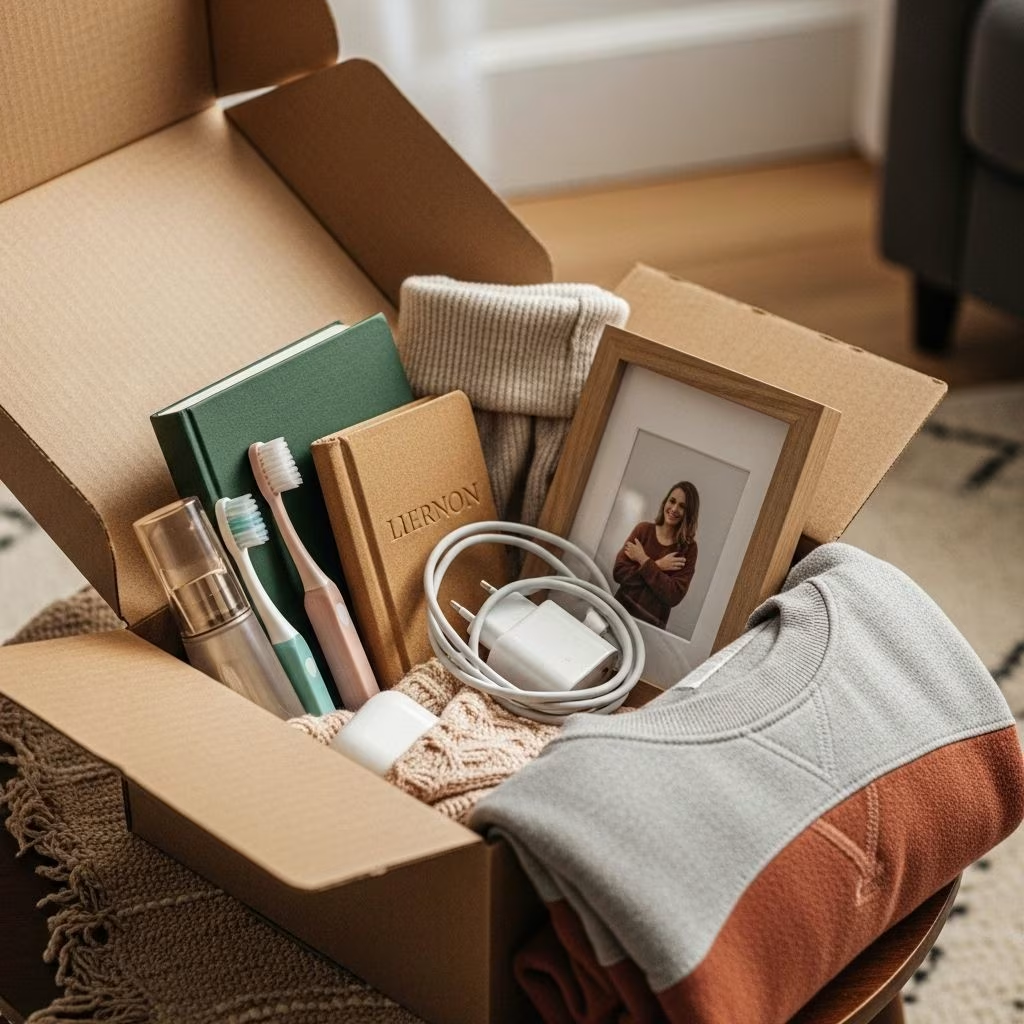
Few relationship moments feel as loaded with symbolism as the first time you leave something behind at a new partner’s place. Whether it’s a toothbrush subtly stashed in the bathroom or a sweater draped over a chair, the simple act of leaving a belonging can feel like a mini milestone signifying trust, intimacy, or the desire for continuity. But the timing, meaning, and experience of this gesture can dramatically vary.
- For some, it’s a quiet signal of deepening connection.
- For others, it’s a practical step for comfort and convenience.
- For most, there’s curiosity — even anxiety — about what “the right” time is.
To uncover the realities, we explore stories from five different people in various relationship stages, mix in expert advice, and present practical tips for navigating this small but significant threshold.
Decoding The Meaning of Leaving Stuff Behind
Leaving possessions at someone else’s home isn’t just a logistical move — it’s inherently emotional. For some, it marks the first major step toward relationship permanence. For others, it’s nothing more than forgetting a pair of socks. The meaning lies in how each partner perceives it and what it signals for the partnership’s future.
The symbolism can include:
- Growing Comfort: Feeling at ease enough to not pack up every belonging after each visit.
- Signal of Commitment: Suggesting some assurance that you’ll be back again — and often.
- Vulnerability: Risking rejection or discomfort if your partner isn’t on the same page.
- Practicality: Realizing it genuinely makes things easier, especially with frequent sleepovers.
Real Stories From People in the Dating Trenches
Case Study 1: The Accidental Sweater
For Jess, a twenty-something living in a big city, the first time she left something at her girlfriend’s place wasn’t intentional. She absent-mindedly hung her favorite sweater on a hook in the bathroom after a date and only realized it when she received a text the next day. Rather than feeling flattered, she sensed an awkwardness in the message — as if her presence was slightly too much too soon. The relationship fizzled soon after. Jess is convinced the sweater wasn’t the catalyst, but it highlighted how ambiguous these early milestones can feel.
Case Study 2: Ready When You Are
Dev and Marcus had been casually dating for a few weeks when Marcus suggested leaving a spare toothbrush at Dev’s place, given how frequently he stayed over. “It wasn’t a big deal,” recalls Dev. “Honestly, I was more grateful to not have to lend him mine anymore.” For them, the issue was practical, and marked an unspoken agreement that overnights would be the norm — but not necessarily a serious commitment.
Case Study 3: Holding Back
Taylor, single and often wary, shares that she refrains from leaving anything until she’s sure of exclusivity. “It’s a self-protection move,” she explains. “I don’t want to have to ask for my stuff back if he’s seeing someone else.” For Taylor, it’s not about defining the relationship, but about avoiding emotional risk and potential embarrassment.
Case Study 4: Slow and Steady Wins
Zara reflects on a measured approach. She and her partner discussed leaving things only after a month of frequent dates and several sleepovers. For them, communicating directly about comfort levels and intentions made the transition smooth — there were no misunderstandings.
Case Study 5: “It Means Nothing… or Everything”
Ryan, currently single, laughs at the memory of leaving half his wardrobe at his ex’s apartment within weeks of meeting. “Looking back, it had more to do with always running late for work and living an hour away than any statement of romance.” For Ryan, the objects left behind meant very little — but his partner read it as a leap toward cohabitation.
Expert Insights: There’s No Universal Timeline
Is there a perfect amount of time to wait before leaving your things? According to psychologists and relationship coaches, no exact number exists. It’s far more about mutual comfort and reasonable communication than checking days or weeks off a calendar.
- Experts recommend:
- Gauge your partner’s feelings before springing a drawer-full of toiletries on them.
- Start with something basic and unobtrusive — a toothbrush, deodorant, or a change of clothes.
- Look for signs of exclusivity, increased intimacy, or routine overnights as a possible green-light.
- Above all, discuss it openly if you’re unsure or if it starts to feel like a bigger step.
Questions to Consider Before Leaving Things
- Are both of you seeing other people, or has exclusivity already been established?
- How would you feel if your partner asked the same of you?
- Does the idea make you excited or nervous?
- Have you spent consecutive nights together, or does it only happen now and then?
- Are you anticipating practical benefits, or using your left-behind item to stake a gentle claim?
Common Items to Leave (and When)
| Item | When It’s Usually Left | Why It Matters |
|---|---|---|
| Toothbrush | Early, within first few sleepovers | Small, hygienic, practical test of comfort |
| Sweater/Hoodie | First month, often by accident | Lends comfort, signals return visits |
| Makeup/Skincare | After a few regular stays | Saves packing, hints at increased proximity |
| Book/Journal | Sporadically; can be intentional or not | Low-stakes, but may prompt partner’s curiosity |
| Drawer Full of Clothes | After “the talk” or defined exclusivity | Definitive gesture, often follows conversation |
What If You’re Not Ready?
It’s perfectly normal to want to keep your belongings (and emotional investment) close until the relationship feels more secure. Assessing your own comfort and your partner’s cues is far more important than following some imagined deadline. If you’re unsure, ask yourself:
- Would leaving something behind reduce stress — or create more?
- Do you trust your partner to respect your privacy and property?
- Are you leaving things because you want to see your partner again, or as an excuse to return?
When in doubt, communicate openly rather than guessing or making assumptions.
Tips for Navigating The Conversation
- Start light: “Mind if I leave my toothbrush here?” is less fraught than asking for closet space.
- Be honest about your reasons: “It’s easier than carrying it back and forth.”
- Read their reaction: If they hesitate or seem surprised, it might be best to slow down.
- If offered, accept kindly — being invited to leave your things is a positive sign of growing closeness!
- Revisit the discussion: Needs and comfort can change as a relationship develops.
Frequently Asked Questions: Leaving Stuff at Your Partner’s Place
Q: Is it a big deal to leave things at someone’s place early on?
A: For many, leaving belongings is a small act of practicality, but for others, it signals rising intimacy. If you’re worried, communicate your intentions openly — it can prevent misunderstandings and awkwardness.
Q: What should I do if my partner doesn’t seem comfortable?
A: Respect their boundaries, and use it as an opportunity for honest conversation about expectations and timing. It’s important to recognize that discomfort doesn’t always mean hesitation about you — sometimes, it’s just a matter of personal pace.
Q: Are there items that are safe to leave before others?
A: Yes. Toothbrushes, deodorant, or a spare T-shirt are low-stakes items that don’t imply commitment. Things like drawers of clothes or valuables should usually wait until exclusivity feels established and both partners are enthusiastic.
Q: Can leaving things too early harm a new relationship?
A: It’s possible, particularly if your partner isn’t at the same place emotionally. Moving too fast with milestones can create pressure, but each relationship grows at its own unique rhythm.
Q: What if I accidentally leave something behind?
A: Don’t panic. Wait and see how your partner reacts. An accidental leave-behind can often prompt valuable conversations about feelings, expectations, and future plans.
Key Takeaways: Making the Milestone Meaningful
- There is no set timetable — move at your own pace, paying attention to comfort and communication.
- Small gestures matter — even a toothbrush can open the door to real conversations about expectations.
- Open dialogue is essential — don’t leave your feelings (or socks) behind without clarity.
- Personal meaning trumps “rules” — what it means to you and your partner should always outweigh external advice or pressure.
Every relationship milestone, no matter how minor, has the potential to bring partners closer or expose nerves. Ultimately, the question isn’t about how soon is too soon, but how you listen, communicate, and honor both your feelings and those of your partner. The right time to leave something behind is when it feels right for the both of you.
References
- https://www.elitedaily.com/p/when-to-start-leaving-your-stuff-at-his-house-in-a-new-relationship-8655472
- https://www.elitedaily.com/p/how-long-should-you-date-before-leaving-stuff-at-their-place-heres-what-experts-say-13257727
- https://www.iheart.com/content/2019-03-26-how-long-should-you-date-someone-before-you-leave-stuff-at-their-place/
- https://www.elitedaily.com/p/heres-when-to-leave-stuff-at-someones-place-when-youre-in-a-new-relationship-according-to-5-people-16790575
- https://www.elitedaily.com/p/how-to-have-the-talk-about-leaving-stuff-at-your-partners-place-8615565
- https://www.elitedaily.com/p/when-should-you-give-your-partner-a-drawer-at-your-place-expert-weighs-in-7988417
- https://www.elitedaily.com/p/if-your-significant-other-gives-you-a-drawer-at-their-place-heres-what-it-means-15993292
- https://www.elitesingles.co.uk/em/from-single-to-couple/ending-a-relationship


