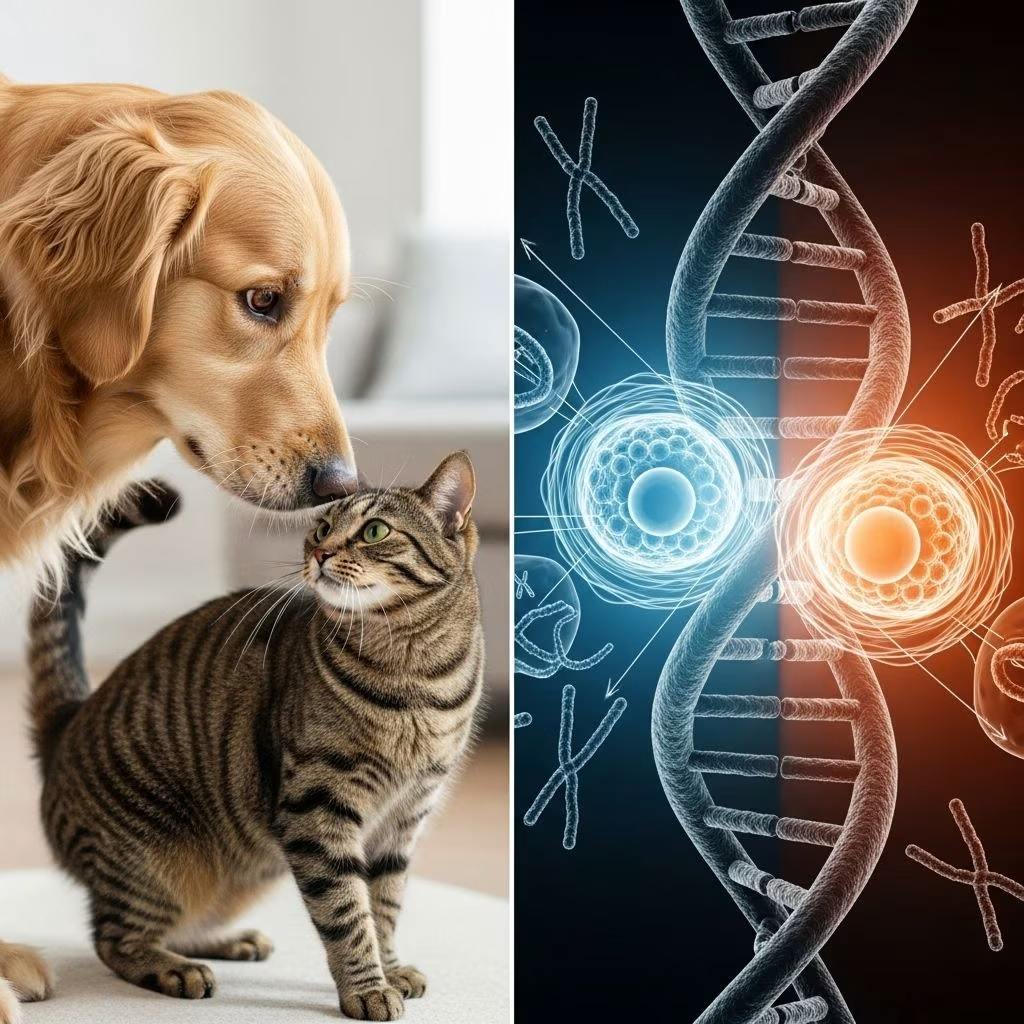
Can a Dog Get a Cat Pregnant?
It’s not uncommon for dog and cat owners to spot odd or even worrisome behavior between their pets, such as a dog trying to mount a cat. Such events often spark the question: Can a dog get a cat pregnant? The clear answer, grounded in veterinary science and basic biology, is an emphatic no.
- Dogs and cats are entirely different species.
- Their reproductive systems are incompatible.
- Genetic and physiological barriers prevent crossbreeding.
Let’s delve into the scientific facts behind this impossibility, address common misconceptions, clarify mounting behavior, and explore what you as a pet owner should know and do in these situations.
Understanding the Basics: Why It’s Biologically Impossible
Dogs and cats cannot breed with each other because their genetic makeup and reproductive biology are fundamentally incompatible. The inability to produce offspring together is not just a matter of physical difference or lack of interest; it is rooted in the most basic laws of nature governing species reproduction.
- Species Separation: Dogs are members of the family Canidae, while cats belong to Felidae. These families diverged over 40 million years ago and have evolved into distinct genetic lines.
- Different Number of Chromosomes: Dogs have 78 chromosomes (39 pairs), while cats have just 38 chromosomes (19 pairs). For fertilization to be possible, chromosome numbers must typically align.
- Genetic Barriers: These differences mean that even if sperm from a dog were to meet an egg from a cat, the genetic instructions simply do not correspond. The egg would not be able to develop into an embryo.
- Reproductive Anatomy: Even their anatomy is mismatched. The mating organs and reproductive triggers are species-specific and do not facilitate successful reproduction between a dog and a cat.
| Feature | Cats | Dogs | Significance for Reproduction |
|---|---|---|---|
| Chromosome Number | 38 (19 pairs) | 78 (39 pairs) | Mismatch prevents fertilization |
| Family | Felidae | Canidae | Separated by over 40 million years of evolution |
| Ovulation Trigger | Induced (after mating, requires penile barbs) | Spontaneous (egg released on regular cycle) | Cycle mismatch prevents conception |
| Penile Anatomy | Barbed (stimulates ovulation) | Not barbed | Cats would not ovulate after canine mating attempt |
The Genetic Factor: Chromosomes Explained
Every living creature carries genetic material arranged in chromosomes. For sexual reproduction to work, the mother and father’s chromosomes must be compatible. If not, embryo development stops immediately.
- Cats: 38 chromosomes
- Dogs: 78 chromosomes
This fundamental difference means the egg and sperm cannot combine to create viable offspring. It’s as if two entirely different sets of instructions are trying to assemble a creature—they don’t fit together, making breeding impossible.
What About Animal Hybrids?
Some people are intrigued by the idea of “cat-dog” hybrids, pointing out that certain hybrids—for example, mules, ligers, or Savannah cats—do exist. But these hybrids are only possible because the parent species are closely related (such as horse and donkey, lion and tiger, or domestic cat and serval) and have compatible chromosomes and reproductive systems.
- Mules: Cross between a horse and donkey (same genus, similar chromosomes)
- Ligers: Cross between lion and tiger (same genus, close genetic makeup)
- Savannah cat: Offspring of a domestic cat and a serval, both from the Felidae family
Cats and dogs are not only entirely different species but belong to distant families with incompatible genetics and reproductive physiology. No credible biological evidence of a hybrid between a dog and a cat has ever been recorded.
If Dogs Mount Cats, What Does It Mean?
If you’ve seen your dog attempt to mount your cat, it’s reasonable to feel alarmed or at least curious. But mounting does not equal mating.
- Mounting is common behavior among dogs, not always linked to sexual interest.
- It’s often a display of play, dominance, excitement, stress, or confusion, not a genuine mating attempt.
- Cats usually do not tolerate mounting behavior and will walk away or resist.
The presence of such behavior in your home might require action—not due to pregnancy concerns, but because the interaction could result in stress or injury to one or both animals.
Potential Risks of Forced or Aggressive Mounting
- Injury: Differences in size or physical strength can lead to accidental harm.
- Stress: Both pets might become stressed or anxious by these encounters.
- Disease Risk: Though not related to reproduction, possible transmission of skin infections or minor injuries could occur if play becomes too rough.
- Habit Formation: If not managed, mounting behavior can become habitual.
What Should Pet Owners Do?
- Monitor Behavior: Occasional mounting is not unusual, but persistent or aggressive attempts should be addressed.
- Redirect Attention: Distract your dog with toys, treats, or other positive reinforcement techniques when the behavior starts.
- Separation: If one animal seems stressed or at risk of injury, keep them separated until you can consult a professional.
- Consult a Veterinarian or Animal Behaviorist: Persistent mounting can sometimes indicate underlying stress, anxiety, or medical issues.
FAQ: Dogs, Cats, and Pregnancy Myths
Can a male dog get a female cat pregnant?
No. Fundamental biological differences (chromosome number, genetics, anatomy) make this absolutely impossible.
Can a female dog get pregnant by a male cat?
No. The incompatibility goes both ways; neither species can fertilize the other’s eggs.
Can dogs and cats produce babies together?
No. The idea exists only in fiction and cartoons—there’s no scientific evidence of a dog-cat hybrid ever existing or even being possible.
Why do dogs sometimes mount cats?
Mounting is usually about play, dominance, excitement, or stress. It does not indicate a potential for pregnancy or hybrid offspring.
Are there any risks if my dog and cat interact this way?
While there’s no risk of pregnancy, ongoing aggressive or rough mounting can cause injury or stress. Behavioral management may be necessary.
Comparing Canine and Feline Reproductive Systems
| Attribute | Cats | Dogs |
|---|---|---|
| Family | Felidae | Canidae |
| Number of Chromosomes | 38 | 78 |
| Ovulation | Induced (by mating event) | Spontaneous (on cycle) |
| Reproductive Cycle | Seasonal polyestrous | Bi- or mono-estrous, depending on breed |
| Hybridization potential | Can hybridize with some wild felines (e.g., serval) | Can hybridize with wolves, coyotes |
| Pregnancy Length | ~63-65 days | ~63 days |
Debunking Common Myths
- Myth: “If animals from different species can mate, they can produce offspring.”
Fact: Conceiving a hybrid animal requires the parent species to be closely related, which is not true for dogs and cats. - Myth: “No one has seen a cat-dog, but maybe it could happen!”
Fact: The complete lack of any verified account—despite both species living in close quarters with humans for millennia—confirms scientific findings. - Myth: “If my dog mounts my cat, kittens or puppies could result.”
Fact: Mounting is behavioral, not reproductive, when it occurs between dogs and cats.
When to Be Concerned (And When Not To)
You never need to worry about the possibility of a dog impregnating a cat or vice versa, regardless of how often mounting occurs. However, you should address the behavior if:
- It results in injury.
- It causes stress or fear in either animal.
- It becomes frequent or obsessive.
Behavioral training and professional advice can be valuable if your pet’s interactions become problematic.
What to Do If You See This Behavior
- Stay calm and intervene only if the animals seem distressed or at risk.
- Use distraction and redirection techniques rather than punishment.
- Consider consulting a veterinarian or trained behaviorist if behavior persists.
Summary: Key Takeaways for Pet Owners
- Dogs cannot impregnate cats, and vice versa.
- All mounting behavior between them is strictly a behavioral, non-reproductive event.
- Genetic, anatomical, and behavioral barriers make crossbreeding impossible.
- Pet owners do not need to worry about hybrid “cat-dog” offspring.
- Monitor behavior for signs of stress or injury and manage as needed.
Frequently Asked Questions (FAQs)
Q: Can a female dog become pregnant from a male cat?
A: No. Their reproductive organs, hormones, and chromosome numbers are incompatible, making interspecies pregnancy impossible.
Q: Why do dogs mount cats?
A: This is often linked to play, excitement, dominance, or confusion, not reproduction.
Q: Is there any way a dog-cat hybrid could exist?
A: There is no scientific or medical method for creating a hybrid of dog and cat.
Q: Should I stop my dog from mounting my cat?
A: Yes, especially if it causes stress or risk of injury to either pet. Positive redirection or professional help may be warranted.
Q: Could medical advances ever make dog-cat hybrids possible?
A: There are no reasonable prospects for dog-cat hybrids, as species differences are too profound for natural or artificial methods to succeed.
References
- https://www.catster.com/cat-health-care/can-a-dog-get-a-cat-pregnant/
- https://basepaws.com/blog/can-a-dog-get-a-cat-pregnant
- https://www.glendalevetclinic.com/useful-links/8-news-articles/21-pregnancy-in-cats-and-dogs
- https://www.merckvetmanual.com/management-and-nutrition/management-of-reproduction-dogs-and-cats/prevention-or-termination-of-pregnancy-in-bitches-and-queens
- https://www.ovrs.com/blog/pregnancy-in-dogs-and-cats/
- https://www.dogster.com/dog-health-care/can-a-dog-get-a-cat-pregnant
- https://www.mensreproductivehealth.com/post/paws-claws-and-conception-what-every-couple-needs-to-know-about-pets-and-fertility