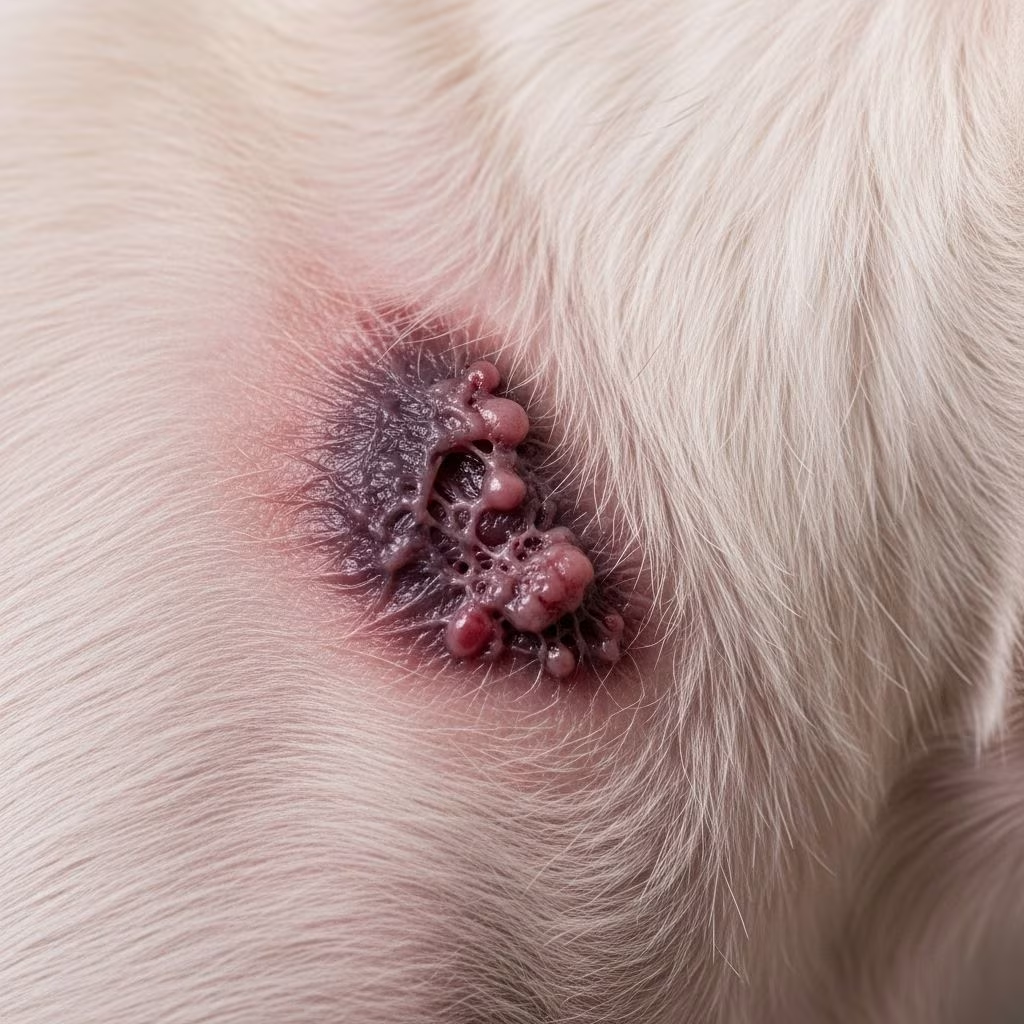
Cutaneous hemangiosarcoma is a form of cancer that arises from the blood vessels within a dog’s skin. While it is less common than some other types of dog cancer, it poses significant risks due to its aggressive behavior and potential for recurrence. Understanding the causes, symptoms, and treatment options for this disease is crucial for prompt detection and effective management, giving affected dogs the best possible chance at a healthy life.
Overview: What Is Cutaneous Hemangiosarcoma?
Hemangiosarcoma is an aggressive, malignant tumor originating from endothelial cells—the cells lining blood vessels. In dogs, the skin version of this cancer is called cutaneous hemangiosarcoma. It is one form among several types of hemangiosarcoma, which also affect organs such as the spleen, heart, and liver. Cutaneous hemangiosarcoma specifically refers to cancer that begins or stays within the skin or just beneath it.
- This cancer forms abnormal, fragile blood vessels in or beneath the skin.
- Tumors are usually reddish-purple, round, and may appear raised or ulcerated.
- Cutaneous hemangiosarcoma can be either actinic (linked to sun exposure) or non-actinic (unrelated to sun exposure).
- Dogs most often affected are middle-aged or older but any dog can develop the disease.
How Common Is Skin Hemangiosarcoma in Dogs?
Cutaneous hemangiosarcoma accounts for about 14% of all hemangiosarcoma diagnoses and less than 5% of all canine skin tumors in North America, but rates may be higher in sunnier regions such as parts of Brazil. With both actinic and non-actinic forms, the condition is most commonly diagnosed in dogs aged 8–15 years, affecting both males and females equally.
Main Causes and Risk Factors
The exact cause of hemangiosarcoma in the skin is not entirely understood. However, veterinarians recognize several factors that can increase a dog’s risk:
- Sun (Ultraviolet) Exposure: Dogs with light-colored, thin, or hairless skin are more susceptible to UV radiation, which significantly raises the risk of actinic cutaneous hemangiosarcoma.
- Breed Predisposition: Breeds with little pigment and sparse coats—such as Whippets, Greyhounds, Dalmatians, and Basset Hounds—are at higher risk for the actinic type.
- Age: Most cases occur in middle-aged to elderly dogs.
- Genetic Factors: Some lines may be genetically more susceptible, although this is less clearly defined.
- Previous Skin Trauma or Chronic Skin Conditions: Long-term irritation or damage can increase the likelihood of skin cancers.
It is important to note that while solar (actinic) damage is a clear risk for some dogs, non-actinic forms can develop in dogs with darker skin, thick coats, and no history of chronic sun exposure.
Symptoms and Appearance
The most common sign of cutaneous hemangiosarcoma is the presence of a mass, nodule, or lesion on your dog’s skin. These skin tumors can appear in various ways, making them easy to mistake for other types of growths or even benign conditions.
- Physical appearance:
- Red, purple, or black raised nodules
- Flat or dome-shaped growths
- Can range from small (few millimeters) to several centimeters in diameter
- Bleeding, ulceration, or crusting, especially if traumatized
- Location:
- Most commonly found on poorly haired, lightly pigmented skin—abdomen, groin, inner thighs, prepuce (penis), and feet
- Can occur anywhere on the body
- May be solitary or, in cases related to extensive sun damage, multiple lesions may be present
- Other signs:
- Bruising, swelling, or local inflammation
- Bleeding or oozing from the mass
- Pain or sensitivity at the affected site
- In rare, advanced cases: lethargy, fever, or general malaise
How Is Cutaneous Hemangiosarcoma Diagnosed?
Diagnosing cutaneous hemangiosarcoma involves a combination of physical examination, medical history, and specialized diagnostic tests. Since many skin masses in dogs are benign, accurate diagnosis is essential.
- Veterinary Examination: A thorough check of the skin and overall health.
- Fine Needle Aspiration: A needle is used to collect cells from the mass for cytological interpretation.
- Biopsy: Surgical removal (or partial removal) of the mass for histopathological examination is the gold standard for diagnosis.
- Imaging (Staging):
- X-rays or ultrasound: Assess for possible spread (metastasis) to internal organs
- Advanced imaging (CT/MRI): Sometimes used for complex cases or surgical planning
Physical appearance alone is not enough to confirm a diagnosis, as other benign and malignant skin tumors can look similar.
Types of Cutaneous Hemangiosarcoma
| Type | Characteristics | Main Causes | Common Sites |
|---|---|---|---|
| Actinic (Sun-Induced) | Related to chronic sun exposure; often multiple, shallow lesions | UV exposure, lightly pigmented skin, sparse hair coat | Abdomen, groin, inner thighs, prepuce, feet |
| Non-Actinic | Occurs in non-sun-exposed areas; usually solitary, deeper lesions | Unknown, not linked to UV exposure | Can occur anywhere; commonly on trunk or limbs |
Treatment Options for Skin Hemangiosarcoma
The primary goal of treatment is complete removal and control of the cancer. The main strategies include:
- Surgical Excision: Removal of the tumor with a margin of normal tissue is the standard and usually first-line treatment. If the mass is small, localized, and completely excised, the long-term outcome can be excellent.
- Additional Therapies: For incomplete removal, deep tissue involvement, or recurrence, your veterinarian may recommend additional treatments:
- Chemotherapy: Used when cancer is aggressive, there is a risk for spread, or complete surgical excision is not possible. Drugs like doxorubicin are standard.
- Radiation Therapy: May be considered for local control after surgery, especially if surgical margins are not clear.
- Monitoring: Regular rechecks are necessary even after successful removal, as hemangiosarcoma can recur or metastasize (spread).
Managing Advanced or Metastatic Cutaneous Hemangiosarcoma
For tumors that have spread (metastasized) or involve deeper tissues, a combination of surgery, chemotherapy, and/or radiation is necessary. In some cases where treatment is not possible or the disease is advanced, palliative care to manage pain and maintain quality of life becomes the focus.
Prognosis: What to Expect
The outlook for dogs diagnosed with skin hemangiosarcoma depends on several factors:
- Location and Depth: Tumors limited to the superficial skin tend to have an excellent prognosis, especially when completely removed surgically.
- Metastasis: Hemangiosarcoma that has spread to internal organs, deep tissues, or distant sites generally has a much poorer outcome.
- Type: Actinic (sun-induced) forms are typically less likely to metastasize than non-actinic forms.
If detected early and completely excised, many dogs live disease-free for years or even have a cure. However, for deeper or metastatic disease, even with aggressive treatment, average survival times are often measured in months rather than years.
Preventing Skin Hemangiosarcoma in Dogs
- Limit sun exposure for at-risk breeds, especially dogs with light skin and thin coats.
- Apply dog-safe sunscreen to exposed, lightly pigmented areas when outdoors.
- Schedule regular veterinary check-ups for early detection of abnormal skin lesions.
- Promptly report new lumps, bumps, or skin changes to your veterinarian.
Complications to Watch For
- Secondary bacterial infections due to ulceration or trauma of the tumor
- Excessive bleeding from fragile, blood-vessel rich tumors
- Pain and discomfort affecting mobility or appetite
- Rapid progression or spread in more aggressive cases
Frequently Asked Questions (FAQs)
Q: Is cutaneous hemangiosarcoma curable?
A: When diagnosed early and completely removed from the skin, cure is possible. Prognosis worsens with incomplete removal or metastasis.
Q: What breeds are most at risk?
A: Breeds with light or thin coats, such as Whippets, Greyhounds, and Dalmatians, are more prone, especially to the actinic (sun-induced) form.
Q: How quickly does the cancer progress?
A: Superficial, actinic lesions may grow slowly, while deeper, non-actinic hemangiosarcomas can be aggressive and rapidly spread.
Q: Can I do anything at home to prevent it?
A: Minimize sun exposure for susceptible dogs, use protective clothing or sunscreen on lightly pigmented skin, and seek prompt veterinary care for any unusual skin changes.
Q: Should other pets in my home be checked?
A: If you have pets with similar risk factors (age, breed, light skin), regular checks are advisable, but hemangiosarcoma is not contagious between animals.
Key Takeaways for Pet Owners
- Monitor your dog’s skin for new lumps, bumps, or odd-colored lesions—especially on sun-exposed or lightly pigmented skin.
- Early veterinary attention improves outcomes for suspicious skin growths.
- Surgical removal offers the best prognosis for superficial cutaneous hemangiosarcoma.
- Follow your veterinarian’s recommendations for monitoring and treatment post-surgery to manage possible recurrence.
Useful Resources for Further Reading
- PetMD: Articles on canine cancers and treatment options
- Veterinary oncologists: Expert consultation for diagnosis and advanced care
- Animal cancer centers: Information on cutting-edge therapies and support
References
- https://vetster.com/en/conditions/dog/cutaneous-hemangiosarcoma
- https://www.petmd.com/blogs/thedailyvet/jintile/2013/jan/hemangiosarcoma-or-benign-tumors-in-pets-and-treatment-29765
- https://pmc.ncbi.nlm.nih.gov/articles/PMC10093745/
- https://www.petmd.com/dog/conditions/cancer/hemangiosarcoma-dogs
- https://www.petmd.com/dog/conditions/cancer/c_dg_hemangiosarcoma_skin
- https://www.petmd.com/dog/conditions/cancer/dog-tumors
- https://www.csuanimalcancercenter.org/2020/02/28/hemangiosarcoma-in-dogs/
- https://metro-vet.com/canine-splenic-hemangiosarcoma-2/