


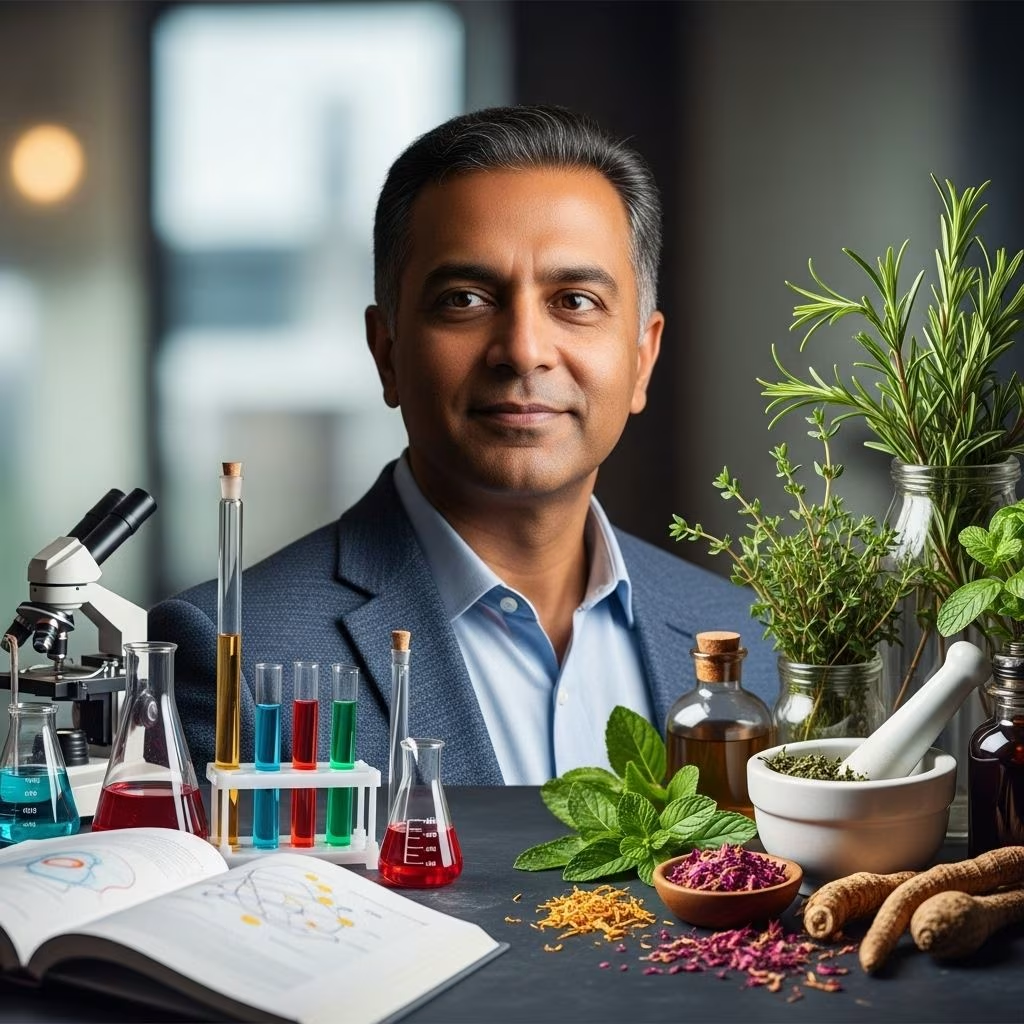
Suresh Lakshmikanthan, PhD, BPharm: Advancing the Science of Natural Remedies
Natural remedies, enriched by centuries of tradition and now fortified by modern scientific rigor, are making a significant impact on global healthcare. Few exemplify this confluence better than Dr. Suresh Lakshmikanthan, whose investigative journey bridges India’s deep-rooted herbal traditions and cutting-edge biomedical research. In this article, we chronicle Dr. Lakshmikanthan’s background, research focus, passion for natural products, and his growing influence in the field of plant-based therapeutics. We also explore the wider context of medicinal plants in health and highlight the promise and challenges of integrating these remedies into mainstream medicine.
Background and Education
Dr. Suresh Lakshmikanthan’s academic trajectory is distinguished by a rare blend of traditional pharmaceutical knowledge and advanced biomedical research. Born and raised in India, Dr. Lakshmikanthan earned his Bachelor of Pharmacy (BPharm) from one of the country’s renowned universities. His early exposure to the uses of native medicinal plants—ingrained in his family’s and community’s daily life—fostered a lifelong interest in the therapeutic potential of botanicals.
This foundational curiosity led him to pursue a PhD in Biomedical Science in the United States, focusing on molecular mechanisms and translational applications of plant-derived compounds. Through this, Dr. Lakshmikanthan honed his expertise at the crossroads of traditional and evidence-based healthcare.
Research Interests and Scientific Approach
Central to Dr. Lakshmikanthan’s research is the scientific validation of traditional medicinal plants, especially those with significant ethnobotanical use in South Asian and global cultures. His work integrates:
- Phytochemistry: Isolating active compounds responsible for therapeutic effects.
- Pharmacology: Understanding how plant compounds interact with molecular targets in the human body.
- Clinical translation: Identifying how validated botanicals can fill therapeutic gaps in modern medicine.
His methodology is marked by a rigorous commitment to peer-reviewed research, reproducibility, and translational impact, always seeking to bridge the gap between traditional knowledge and modern clinical standards.
The Role and Relevance of Natural Remedies in Modern Healthcare
Dr. Lakshmikanthan’s scholarship is part of a broader resurgence of interest in natural remedies, as herbal medicine and plant-derived substances continue to supply crucial tools for patient care. According to the World Health Organization (WHO), among the 252 essential medicines, 40% are drawn directly from nature or traditional medical knowledge, including breakthrough drugs such as aspirin and artemisinin. Around the world, over 170 countries report the regular use of traditional medicines, underscoring their cultural and medical value.
Key Contributions of Medicinal Plants to Drug Discovery
- Aspirin: Developed from compounds found in willow bark, long used as an analgesic.
- Artemisinin: Derived from sweet wormwood, now the first-line treatment for malaria.
- Vinblastine and Vincristine: Childhood cancer drugs originally isolated from Madagascar periwinkle.
- Cardiac glycosides: Relied on digitalis (foxglove) for the treatment of heart failures.
- Statins and antibiotics: Fungi and plants have also yielded cholesterol-lowering drugs and antibiotics essential to modern healthcare.
Natural products are particularly relevant for chronic and challenging conditions like cancer, infections, cardiovascular disease, and autoimmune disorders.
How Plant-Based Medicines Are Used
Herbal medicines can be consumed or applied in various forms:
- Teas and decoctions
- Capsules and tablets
- Essential oils and ointments
- Syrups and topical rubs
The efficacy and compound composition of each preparation can vary according to how it is processed, the plant source, extraction method, and even regional climate. This complexity is an area Dr. Lakshmikanthan continually seeks to standardize in his work.
Dr. Lakshmikanthan’s Research: Bridging Traditional Wisdom and Modern Science
The uniqueness of Dr. Lakshmikanthan’s career lies in his ability to meld his personal heritage of natural healing with formal scientific inquiry. His most notable research endeavors include:
- Elucidation of Active Phytochemicals: Identifying the bioactive principles in plants used in Ayurveda, Chinese, and folk medicine.
- Experimental Pharmacology: Investigating anti-inflammatory, antioxidant, and anti-cancer activities of isolated compounds using laboratory models.
- Collaboration with Ethnobotanists: Documenting folk medicinal practices and targeting under-investigated plants for laboratory analysis.
- Translational Science: Advancing plant-based interventions into animal models and early-phase clinical trials.
Examples of Noteworthy Plants Studied
Some commonly investigated botanicals with promising therapeutic profiles include:
| Plant | Traditional Use | Modern Findings |
|---|---|---|
| Echinacea | Immune stimulation, infections | May support immune response |
| Garlic | Heart health, immunity | Supports cholesterol reduction, anti-microbial |
| Ginger | Digestive ailments, nausea | Efficacious for nausea |
| St John’s Wort | Low mood, anxiety | Effectiveness for mild to moderate depression |
| Foxglove (Digitalis) | Heart failure | Source of digoxin, a key heart drug |
Current Challenges and Critical Perspectives
Despite their promise, Dr. Lakshmikanthan emphasizes a balanced view of natural remedies. His advocacy for evidence-based integration manifests in rigorous assessment of safety, efficacy, and quality:
- Standardization challenges: Consistency in active ingredient concentration often varies across batches and producers, complicating dosage and predictability.
- Safety and Drug Interactions: Some herbs may interact adversely with prescription medications or have their own side effects. For example, St John’s Wort can reduce the effectiveness of oral contraceptives.
- Research Gaps: Botanical therapies often lack the scale of randomized trials required for mainstream adoption, partly due to funding and intellectual property challenges.
- Regulatory oversight: Herbal preparations are not subject to the same rigorous testing and standardization as pharmaceuticals in many countries, leading to product quality concerns.
Dr. Lakshmikanthan underscores the ethical responsibility of researchers and practitioners to advocate only for those botanicals with robust safety and efficacy evidence, while remaining open to the potential in emerging traditional medicines.
Integrative Medicine: The Future of Healthcare?
With the rising prevalence of chronic diseases and limitations of synthetic drugs, integrative medicine—combining the best of traditional and scientific paradigms—is gaining ground. In this evolving landscape, Dr. Lakshmikanthan’s work illuminates how natural remedies can complement, rather than compete with, conventional care. Potential roles include:
- Filling gaps in chronic disease management
- Serving as adjuncts to lower pharmaceutical dosages or side effects
- Supporting holistic wellness and preventative health strategies
- Generating leads for third-generation pharmaceuticals
While the vision is compelling, he cautions that progress depends on a bedrock of scientific integrity and inter-disciplinary consensus.
Dr. Lakshmikanthan’s Outreach and Educational Efforts
Beyond the laboratory, Dr. Lakshmikanthan is an active voice in scientific communication and education:
- Publishing peer-reviewed articles and reviews on medicinal plant research.
- Presenting at international conferences on pharmacognosy and integrative medicine.
- Mentoring students across pharmacy, biology, and public health disciplines.
- Collaborating with public health organizations to improve awareness of safe natural remedy use.
He advocates for a global pharmacopoeia where traditional medicinal knowledge and scientific research are not rivals, but partners in health innovation.
The Clinical and Cultural Impact of Natural Remedies
Dr. Lakshmikanthan’s research is further contextualized by the societal impact of medicinal plants. Herbal remedies are not only important clinically, but also culturally, providing communities with affordable and locally accessible healthcare solutions. Indigenous medical knowledge, long disparaged as prescientific, now finds validation in evidence showing many such remedies have therapeutic basis and have inspired revolutionary drugs.
Major pharmaceutical developments sourced directly from traditional medicine include:
- Quinine: From cinchona bark, is instrumental in malaria control.
- Penicillin and antibiotics: Sourced from fungi and improved upon by chemists, antibiotics revolutionized infection control.
- Lipid-lowering agents (statins): Derived from fungal sources, now cornerstones in cardiovascular disease management.
Beyond scientific validation, Dr. Lakshmikanthan affirms the ethical imperative of respecting indigenous contributions and ensuring fair benefit-sharing when commercializing traditional remedies.
Key Principles for Responsible Use and Research
- Always seek medical advice before starting herbal products, especially alongside prescription drugs.
- Recognize the difference between ‘natural’ and ‘safe’—plant-based substances can be potent or toxic.
- Support research and policies that bring scientific rigor, quality control, and consumer protections to the field.
Frequently Asked Questions (FAQs) About Natural Remedies and Dr. Suresh Lakshmikanthan
Q: What are natural remedies and how do they work?
A: Natural remedies refer to plants, fungi, or minerals used for their therapeutic properties to maintain health or treat disease. They work via active compounds that interact with biological pathways in the body, sometimes mimicking or enhancing natural physiological processes.
Q: Has Dr. Suresh Lakshmikanthan developed new drugs from plants?
A: Dr. Lakshmikanthan’s primary contributions lie in identifying promising plant compounds, demonstrating their mechanisms and therapeutic effects in laboratory and preclinical studies, and shepherding these discoveries towards potential clinical application. While he collaborates with pharmaceutical partners, most of his recent work focuses on the preclinical validation of botanicals for future medical use.
Q: Why aren’t all herbal remedies mainstream?
A: Herbal remedies must undergo rigorous scientific validation for safety, efficacy, and quality, similar to pharmaceutical drugs. Variability in plant composition, lack of large-scale clinical trials, and regulatory hurdles slow the transition from traditional to mainstream therapy.
Q: Are natural remedies always safe?
A: Not always. Some plant-based substances are potent and can cause allergic reactions, toxicity, or interact with prescription medications. Consultation with healthcare professionals is essential, and ongoing research aims to clarify safe usage.
Q: What is the future of plant-based medicine?
A: The future is promising, with ongoing scientific research uncovering new therapeutic possibilities from nature. Advances in genomics, analytical chemistry, and integrative clinical approaches are making plant-based and natural remedies more evidence-based and personalized, which Dr. Lakshmikanthan champions through both research and education.
References
- For further reading on herbal medicine and plant-derived drugs: NCBI Bookshelf, WHO Feature on Traditional Medicine, Better Health Channel
References
- https://www.ncbi.nlm.nih.gov/books/NBK92773/
- https://www.who.int/news-room/feature-stories/detail/traditional-medicine-has-a-long-history-of-contributing-to-conventional-medicine-and-continues-to-hold-promise
- https://www.betterhealth.vic.gov.au/health/conditionsandtreatments/herbal-medicine
- https://www.nature.com/articles/s41573-020-00114-z
- https://medlineplus.gov/ency/patientinstructions/000868.htm
- https://www.nccih.nih.gov/health/know-science/natural-doesnt-mean-better
- https://www.urmc.rochester.edu/encyclopedia/content?contenttypeid=1&contentid=1169
- https://www.nhs.uk/tests-and-treatments/herbal-medicines/


