


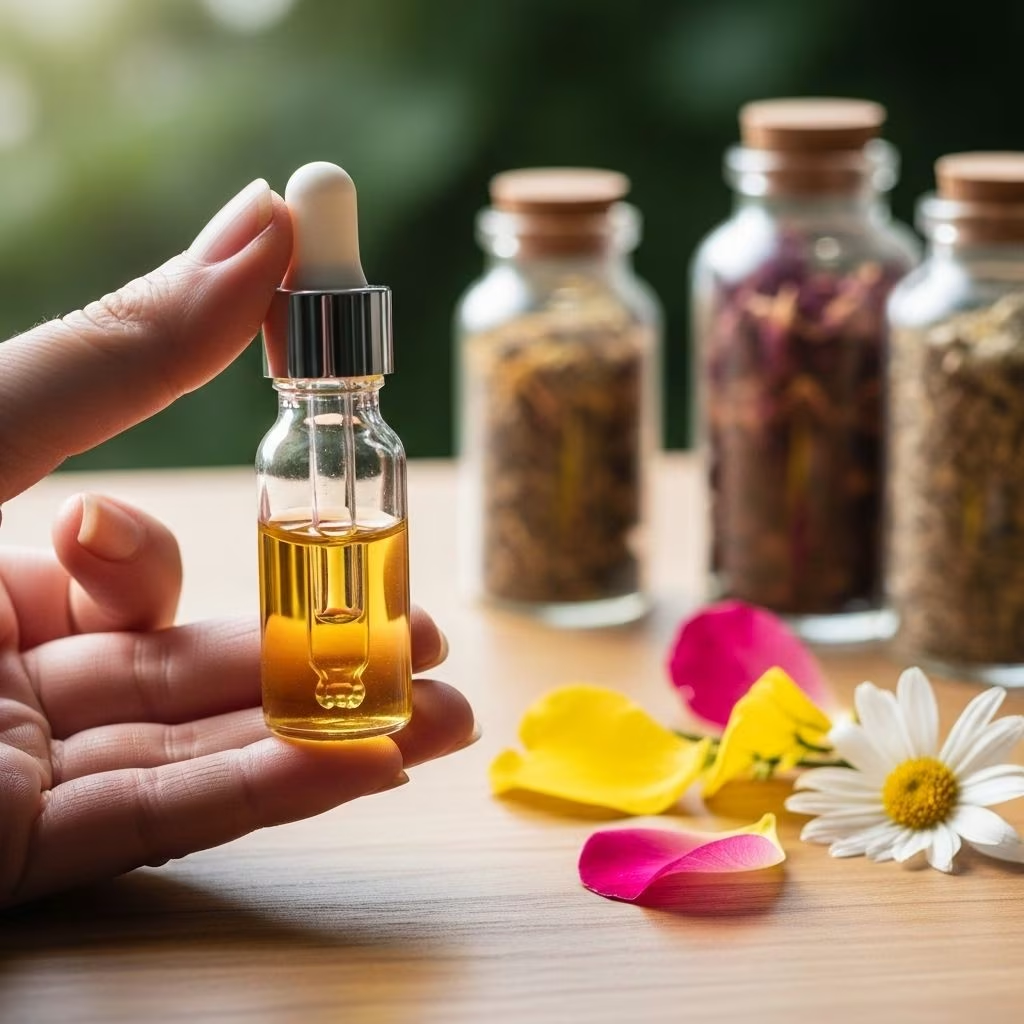
Bach Flower Remedies: A Comprehensive Guide to Natural Emotional Healing
Bach Flower Remedies are a system of natural healing developed in the early 20th century by Dr. Edward Bach, an English physician and homeopath. This gentle, holistic approach utilizes the energetic essence of wildflowers to address a broad range of emotional and mental states. Widely recognized for their simplicity and accessibility, Bach Flower Remedies continue to support individuals seeking well-being and emotional harmony through natural means.
Introduction to Dr. Edward Bach’s Healing Philosophy
Dr. Edward Bach (1886–1936) was a British physician who became increasingly interested in holistic health, homeopathy, and the emotional components of disease. Over time, Dr. Bach concluded that emotional well-being is critical to overall health, and that disharmony within the mind could manifest as physical symptoms. His ambition was to find simple, natural remedies derived from wildflowers and trees that could help restore inner harmony and peace.
Dr. Bach’s philosophy emphasizes:
- Simplicity: Natural healing should be accessible to all.
- Emotional Awareness: Recognizing and addressing emotional states is key to wellness.
- Self-Empowerment: Remedies are designed for self-use as well as by practitioners, empowering individuals to care for their own mental health.
Origin and Development of Bach Flower Remedies
The journey began with Dr. Bach’s clinical practice, where he observed the influence of emotions on physical health. Dissatisfied with conventional approaches, he set out to find natural alternatives that support the body’s ability to heal emotionally. Between 1928 and 1935, Dr. Bach identified 38 different wildflowers and plants, each corresponding to a specific emotional or mental state. With gentle methods—sun infusion and boiling—he captured the vibrational essence of each flower in water.
Dr. Bach’s method was unique in its simplicity and focus on emotional healing rather than physical symptoms. His legacy lives on through the widespread use of Bach Flower Remedies in over 70 countries.
Principles and Philosophy Behind Bach Flower Remedies
The foundational principle behind the Bach system is that emotions can greatly impact one’s health and quality of life. By realigning negative emotions with positive qualities, the remedies help restore a greater sense of balance.
- Each remedy targets a specific negative emotion—such as fear, loneliness, uncertainty, or despair—and gently transforms it into a positive, harmonized state.
- The approach is non-toxic, non-habit-forming, and safe for all ages, including children, animals, and plants.
- Bach Remedies are designed to be straightforward and safe, fostering independence and self-awareness in those who use them.
The system is built on empowerment rather than treating symptoms, with users encouraged to recognize, understand, and gently shift their emotional responses for long-term well-being.
The 38 Remedies and Their Emotional Groups
Dr. Bach classified the 38 flower remedies into seven broad emotional groups. Each group addresses a category of emotional challenge, making it easier for users to identify the remedies that suit them best.
| Group | Emotional Theme | Main Remedies in the Group |
|---|---|---|
| Fear | Fearful states – anxiety, phobias, terror, apprehension | Rock Rose, Mimulus, Cherry Plum, Aspen, Red Chestnut |
| Uncertainty | Self-doubt, indecision, pessimism, lack of direction | Cerato, Scleranthus, Gentian, Gorse, Hornbeam, Wild Oat |
| Insufficient Interest in Present Circumstances | Detachment, escapism, nostalgia, weariness, lack of attention | Clematis, Honeysuckle, Wild Rose, Olive, White Chestnut, Mustard, Chestnut Bud |
| Loneliness | Isolation, impatience, difficulty connecting with others | Water Violet, Impatiens, Heather |
| Oversensitivity to Influences and Ideas | Vulnerability to criticism or outside influences, hidden emotions | Agrimony, Centaury, Walnut, Holly |
| Despondency or Despair | Hopelessness, self-criticism, overwhelm, low confidence | Larch, Pine, Elm, Sweet Chestnut, Star of Bethlehem, Willow, Oak, Crab Apple |
| Over-Care for Welfare of Others | Excessive concern or control over others, rigid standards | Chicory, Vervain, Vine, Beech, Rock Water |
The 38 Bach Flower Remedies (Alphabetical List)
For easy reference, the 38 remedies are listed alphabetically, each addressing a specific mental-emotional state:
- Agrimony: Hides true feelings behind a cheerful facade; inner torment
- Aspen: Vague fears, anxiety without known cause
- Beech: Intolerance, critical towards others
- Centaury: Difficulty saying no, easily influenced
- Cerato: Lack of trust in own decisions; seeks advice from others
- Cherry Plum: Fear of losing control over thoughts or actions
- Chestnut Bud: Repeats mistakes, failure to learn from past
- Chicory: Overly possessive and controlling, self-pity
- Clematis: Dreamy, inattentive, lost in thoughts of the future
- Crab Apple: Feeling unclean or self-disgust, obsessive cleanliness
- Elm: Overwhelmed by responsibility
- Gentian: Easily discouraged following setbacks
- Gorse: Hopelessness, deep pessimism
- Heather: Overly talkative, self-absorbed, seeks attention
- Holly: Feelings of jealousy, envy, hatred
- Honeysuckle: Living in the past, nostalgia
- Hornbeam: Procrastination, mental exhaustion
- Impatiens: Impatience, irritability, fidgety nature
- Larch: Lack of confidence, expects failure
- Mimulus: Known fears (e.g., of illness, pain, embarrassment)
- Mustard: Deep gloom, depression with no clear reason
- Oak: Perseveres beyond endurance, exhaustion
- Olive: Complete mental or physical exhaustion
- Pine: Guilt, self-blame, apologetic attitude
- Red Chestnut: Over-concern for others, excessive worry about loved ones
- Rock Rose: Terror, panic, frozen fear
- Rock Water: Rigid self-discipline, denies self-pleasure
- Scleranthus: Indecisiveness, uncertainty between options
- Star of Bethlehem: Shock, grief, trauma
- Sweet Chestnut: Despair, intense anguish at the limits of endurance
- Vervain: Overly enthusiastic, strives to convert others
- Vine: Dominating, inflexible, commanding
- Walnut: Difficulty adapting to change, protection from outside influences
- Water Violet: Proud, aloof, prefers solitude
- White Chestnut: Persistent unwanted thoughts, mental looping
- Wild Oat: Uncertainty about life direction, ambition unfulfilled
- Wild Rose: Resignation, accept things as they are without effort
- Willow: Bitterness, resentment, feels victimized
Many people find it helpful to read the remedy descriptions and reflect on which emotions they most closely identify with.
How to Select and Use Bach Flower Remedies
The process of choosing and using Bach Flower Remedies is designed to be straightforward. Dr. Bach maintained that anyone could safely use the remedies for themselves or others, including children and even animals.
How to Select Remedies
- Reflect calmly on your current emotional state or the issues you are experiencing.
- Match your feelings or personality traits to the remedy descriptions.
- You may combine up to 7 different remedies in a single blend to address multiple overlapping feelings.
How to Use Bach Flower Remedies
- Single Remedy: Place 2 drops in a glass of water and sip at intervals throughout the day, or drop directly on the tongue.
- Multiple Remedies (Blending): In a mixing bottle (30ml capacity), add 2 drops of each remedy (up to 7), fill with spring water, and take 4 drops from the bottle at least 4 times daily.
- A small amount of brandy, glycerin, or apple cider vinegar may be added as a preservative if desired.
The remedies can be taken for as long as is needed, from a few days to several weeks. There is no risk of overdose or incompatibility with other treatments. See FAQs below for more on administration.
Frequently Asked Questions (FAQs)
Q: Are Bach Flower Remedies safe for children and pets?
A: Yes, Bach Flower Remedies are considered safe for all ages and can be used for animals as well as humans. For those who wish to avoid alcohol, alcohol-free versions are available.
Q: How quickly do the remedies work?
A: The effects of Bach Flower Remedies vary by individual. Some people feel benefits within hours, while for others it may take several days to notice a shift. Consistency in use increases effectiveness.
Q: Can I use Bach remedies alongside conventional treatments?
A: Yes, they are complementary and can be safely used with other medications without risk of adverse interactions. However, always consult your primary healthcare provider if you have concerns.
Q: Is there a risk of overdose or addiction?
A: No. Bach Flower Remedies are non-toxic, non-habit-forming, and cannot be overdosed. Overuse simply results in no additional effect.
Q: How should I store Bach Flower Remedies?
A: Store bottles in a cool, dark place away from direct sunlight to preserve potency. If your blend contains preservatives (brandy, glycerin, cider vinegar), it will last longer.
Conclusion
Bach Flower Remedies represent a gentle and natural way to support emotional well-being. By restoring the mind and emotions to balance, these remedies can help individuals navigate everyday stress, recover from setbacks, and cultivate greater self-awareness. Rooted in Dr. Bach’s vision of simple, self-empowering healing, this system continues to offer accessible and effective support for people worldwide in pursuit of personal transformation and inner harmony.
References
- https://www.nelsons.com/en-us/pages/how-to-use-bach-essences
- https://www.scribd.com/document/685342292/The-Bach-Flower-Remedies-Step-by-Step-A-Complete-Guide-to-Selecting-and-Using-the-Remedies
- https://www.thriftbooks.com/w/a-guide-to-the-bach-flower-remedies_julian-barnard/2451781/
- https://www.directlyfromnature.com/The_Bach_Flower_Remedies_Step_by_Step_p/book-0108.htm
- https://www.barnesandnoble.com/w/bach-flower-remedies-c-m-barrett/1122870852
- https://bachcentre.com/en/remedies/the-38-remedies/quick-reference-guide/


