


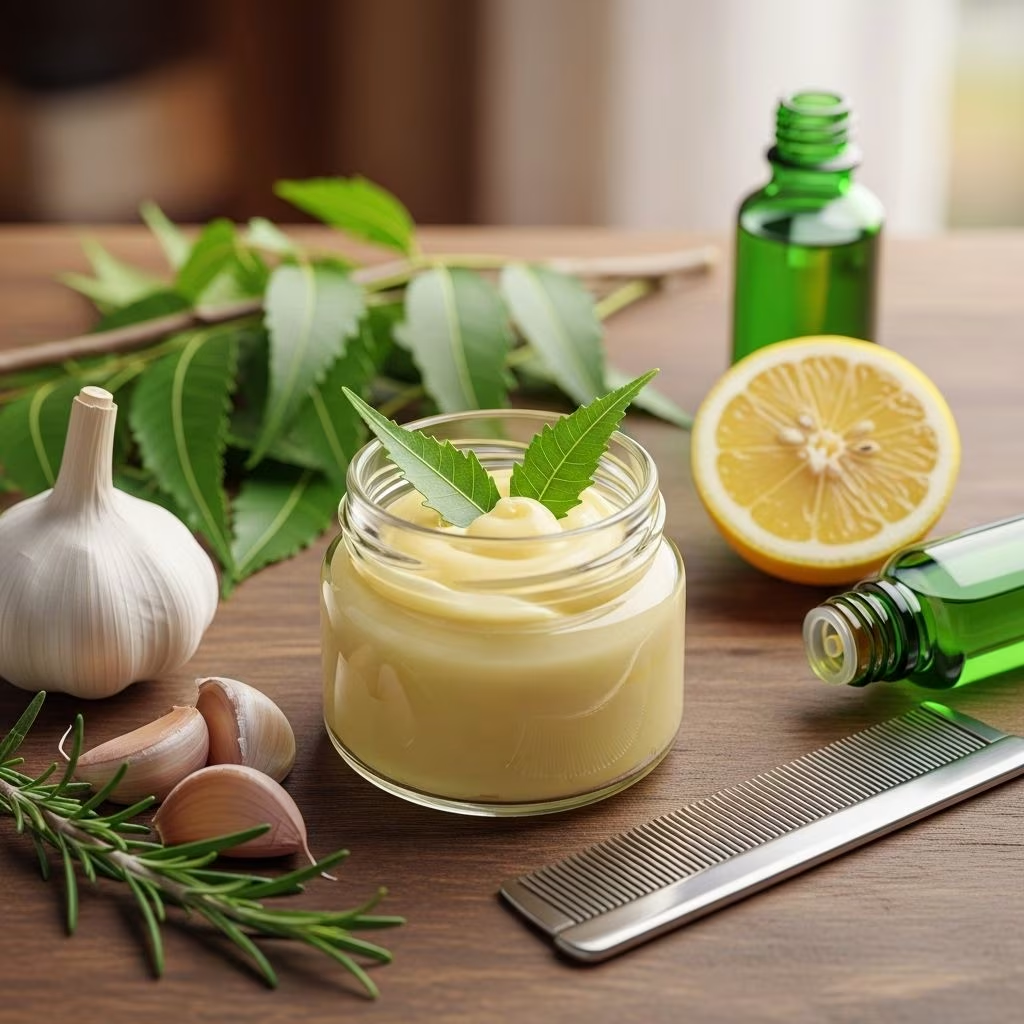
Natural Remedies for Dealing with Head Lice
Head lice are a common annoyance, especially among school-aged children, but they don’t have to be a source of shame or panic. While over-the-counter chemical treatments are widely available, many parents are seeking natural alternatives that are gentle, effective, and less likely to cause skin irritation. This article explores a range of scientifically informed, home-based approaches to managing head lice, emphasizing safety, efficacy, and practical implementation.
Understanding Head Lice
Head lice (Pediculus humanus capitis) are small, wingless insects that live on the scalp and feed on human blood. They spread mainly through direct head-to-head contact, though sharing hats, brushes, or bedding with an infested person can also transmit them. Contrary to popular belief, lice infestations are not a sign of poor hygiene and can affect anyone at any socioeconomic level. Lice do not carry diseases but can cause significant itching and discomfort due to allergic reactions to their saliva.
Why Consider Natural Remedies?
Chemical treatments, while effective, sometimes result in skin irritation or fail due to growing resistance among lice populations. Natural remedies are often favored for their mildness, affordability, and accessibility. Many of these approaches focus on suffocating or dehydrating lice rather than poisoning them, which may reduce the risk of resistance and provide a safer option for sensitive skin or young children.
Effective Natural Remedies for Head Lice
Wet-Combing (Nit Combing)
Wet-combing is a traditional, non-chemical method that involves systematically combing the hair with a fine-toothed lice comb, preferably after applying conditioner and while the hair is still wet. This process makes the lice and eggs (nits) more visible and easier to remove. The British Medical Journal recognizes wet-combing as an affordable and low-risk approach, though it requires patience and regular repetition over a period of weeks to ensure all lice and nits are removed.
- Apply conditioner to damp hair to immobilize lice.
- Use a fine-toothed comb to section and comb through the hair.
- Repeat every 3–4 days for at least two weeks.
Dimethicone
Dimethicone is a silicone-based compound found in many skin-care products. As a lice treatment, it works by coating and suffocating the insects, leading to dehydration and death. Unlike traditional insecticides, lice are less likely to develop resistance to dimethicone, making it a sustainable option for repeat infestations.
- Apply a 4% dimethicone gel or ointment to dry hair and scalp.
- Leave for 8–12 hours (overnight is ideal), then wash out with shampoo.
- Repeat after 7 days to catch newly hatched lice.
Essential Oils
Certain essential oils have demonstrated efficacy against head lice, particularly when used in combination with combing. Tea tree, lavender, neem, clove, eucalyptus, aniseed, cinnamon leaf, red thyme, peppermint, and nutmeg oils are among those showing promise in limited studies. However, caution is required: essential oils must be diluted with a carrier oil (like olive or coconut oil) and tested for skin sensitivity, as they can cause allergic reactions, especially in children.
| Essential Oil | Potential Efficacy | Notes |
|---|---|---|
| Tea Tree Oil | Shown to be effective in some studies | Can cause skin irritation/allergy in sensitive individuals |
| Lavender Oil | Often used for calming and lice treatment | Needs to be diluted before use |
| Neem Oil | Natural insecticide, may repel lice | Strong odor, also used in garden pest control |
| Aniseed Oil | Shown high efficacy in some studies | Further research needed for safety |
How to Use Essential Oils for Lice Treatment:
- Mix 15–20 drops of your chosen essential oil with 2 ounces of olive oil or 4 ounces of rubbing alcohol.
- Apply to the scalp and hair, cover with a shower cap, and leave overnight (at least 12 hours).
- Comb through the hair with a fine-toothed comb in the morning, then shampoo and rinse.
- Repeat once a week for 2–3 weeks to ensure all lice and eggs are eliminated.
Smothering Agents
Smothering lice with thick, occlusive substances like petroleum jelly, mayonnaise, olive oil, or coconut oil is a popular home remedy. The theory is that these substances block the lice’s breathing passages, leading to suffocation. However, scientific evidence for the efficacy of these treatments is mixed. A study found that petroleum jelly was more effective than other home remedies at killing lice, but no home remedy completely prevented egg hatching.
- Petroleum Jelly: Apply thickly to hair and scalp, cover with a shower cap, leave overnight, and wash out in the morning. Note: This can be messy and difficult to remove.
- Mayonnaise or Olive Oil: Apply generously, cover, leave for several hours or overnight, then comb and shampoo. While some swear by this method, research does not strongly support its efficacy.
Other Home Remedies
Vinegar, isopropyl alcohol, and melted butter are sometimes suggested, but there is little evidence that they are effective against lice. Extended water submersion does not reliably drown lice, so “drowning” them under water is not a practical solution.
What to Avoid
While natural remedies are generally safer than chemical pesticides, certain practices should be avoided:
- Never use undiluted essential oils directly on the scalp. Always dilute with a carrier oil and patch-test first to avoid allergic reactions.
- Do not use gasoline, kerosene, or other flammable products. These are extremely dangerous and can cause severe burns or poisoning.
- Avoid over-the-counter treatments if you suspect resistance. If repeated applications of chemical lice shampoos fail, consult a healthcare provider for alternative options.
The Role of Cleaning in Lice Prevention
While lice cannot survive long off the scalp, thorough cleaning of the home environment can help prevent reinfestation and transmission to others. Focus on:
- Washing bedding, hats, and recently worn clothing in hot water and drying on a hot cycle.
- Soaking combs, brushes, and hair accessories in hot water or alcohol for at least 10 minutes.
- Vacuuming carpets, upholstery, and car seats.
- Sealing non-washable items in a plastic bag for two weeks to starve any remaining lice.
Preventive Measures and Long-Term Strategies
Preventing lice is challenging, but these strategies can reduce risk:
- Avoid head-to-head contact with others, especially during outbreaks.
- Teach children not to share combs, hats, or hair accessories.
- Regularly check family members for lice, especially after sleepovers or camp.
- Consider using essential oil sprays (diluted in water or alcohol) as a preventive measure after treatment, though evidence for their effectiveness is anecdotal.
Frequently Asked Questions (FAQs)
Q: Can head lice jump or fly?
A: No, head lice cannot jump or fly. They spread mainly through direct head-to-head contact.
Q: Are natural remedies as effective as chemical treatments?
A: Some natural remedies, such as wet-combing and essential oils, can be effective, especially when used diligently and combined with thorough manual removal. However, chemical treatments may be necessary for stubborn cases or resistant lice.
Q: How often should I repeat natural treatments?
A: Most natural treatments should be repeated every 7–10 days for at least two cycles to catch newly hatched lice before they can reproduce.
Q: Are essential oils safe for children?
A: Essential oils should always be diluted and patch-tested first. Some oils, especially tea tree oil, can cause allergic reactions. Consult a healthcare provider before using on young children.
Q: Can pets get or spread head lice?
A: No, head lice are species-specific and only infest humans. Pets cannot get or spread head lice.
Q: How do I know if the treatment is working?
A: Continue regular combing and inspection. If live lice are still present after several treatments, consult a healthcare provider for alternative options.
Conclusion
Natural remedies for head lice offer a gentler alternative to chemical treatments, with options such as wet-combing, essential oils, and smothering agents showing varying degrees of effectiveness. While not all home remedies are scientifically proven, many families find success with diligent, repeated application of these methods. The key to managing head lice is persistence, thoroughness, and a calm, methodical approach. By combining natural treatments with preventive practices and proper hygiene, most families can effectively control lice infestations without resorting to harsh chemicals.
References
- https://www.healthline.com/health/lice-home-remedies
- https://www.scripps.org/news_items/4316-how-to-get-rid-of-head-lice
- https://www.mayoclinic.org/diseases-conditions/head-lice/diagnosis-treatment/drc-20356186
- https://pubmed.ncbi.nlm.nih.gov/15637580/
- https://www.baystatehealth.org/articles/treatment-for-drug-resistant-head-lice
- https://www.medicalnewstoday.com/articles/325844


