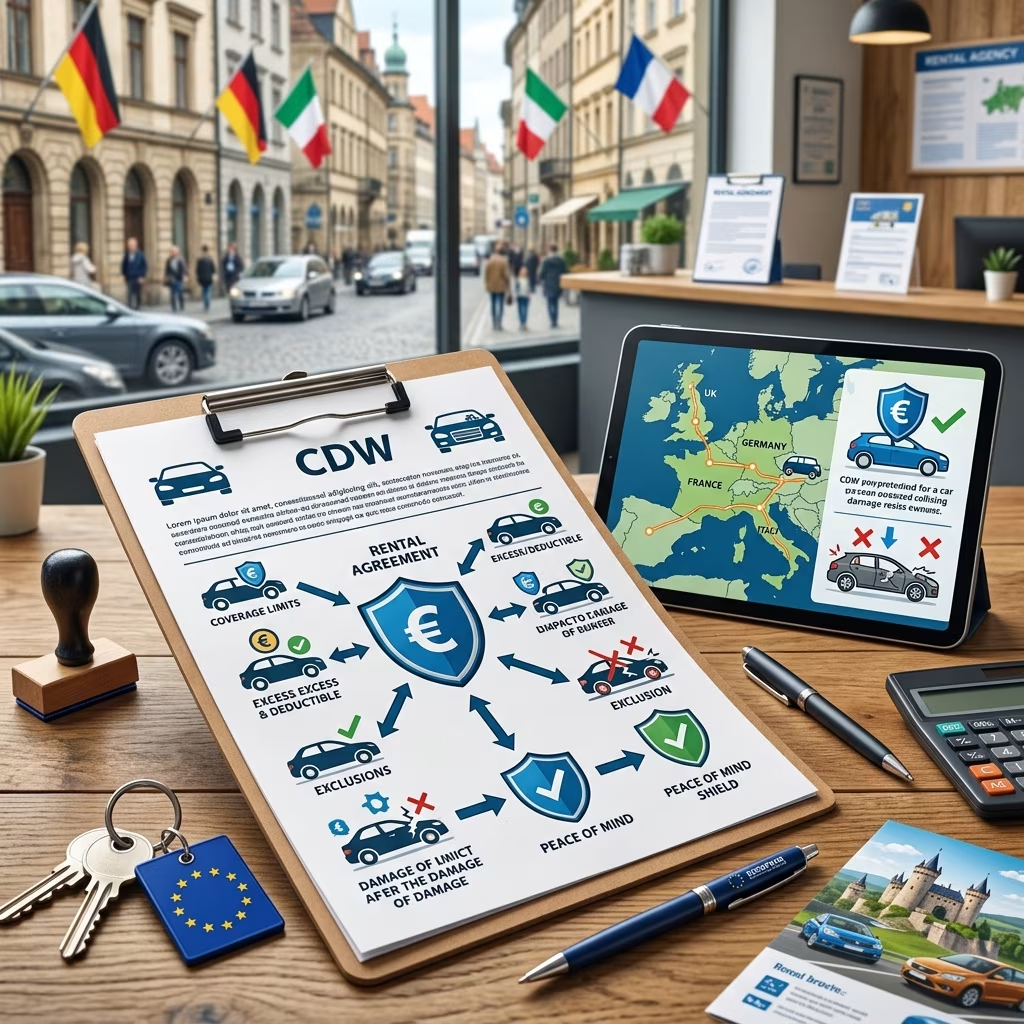
Understanding Collision Damage Waiver (CDW) in European Car Rentals
Renting a car in Europe offers the freedom to explore beyond the reaches of trains and buses but also exposes travelers to complex rental agreements and insurance choices. Among the most crucial elements is the Collision Damage Waiver (CDW)—an insurance add-on designed to limit your financial responsibility in the event your rental car is damaged or stolen. This guide demystifies CDW, other coverage options, common exclusions, costs, best practices, and essential tips that every traveler should know when renting a car abroad.
What Is Collision Damage Waiver (CDW)?
CDW, or Collision Damage Waiver, is not technically insurance. It is a waiver that relieves you, usually for a fee, of financial liability for damage to the rental vehicle (excluding certain items), provided you comply with the rental agreement. In practice, CDW is the standard way car rental agencies in Europe shift the risk of costly repairs to their customers in case of collision or theft. It usually comes with a deductible, meaning you still may owe hundreds or thousands of euros if the damage is significant. However, CDW can save travelers from a rental bill mounting into several thousands for full vehicle replacement.
- CDW limits your responsibility for damage or theft to the car.
- It is often mandatory in Europe or automatically included in rental quotes.
- There is typically an excess (deductible) you must pay if you make a claim.
- CDW coverage does not absolve you of responsibility for all kinds of damage.
Rental Car Insurance Options in Europe
Despite CDW seeming like the only protection on offer, travelers have several avenues for reducing their risk when renting a car in Europe. Here are the primary coverage options:
- Basic CDW provided by rental company: Included or mandatory; limits but does not eliminate liability.
- Super CDW (SCDW): Optional extra that further reduces the deductible or excess, sometimes to zero.
- Theft Protection (TP): Covers loss if the car is stolen; often bundled with CDW but may require additional payment.
- Your credit card coverage: Many premium credit cards offer secondary coverage for rental car damage or theft, provided you decline the rental company’s CDW. Check your card’s terms and requirements.
- Travel insurance policy: Some travel policies offer car rental coverage; again, verify exclusions and regional rules before relying on this option.
| Coverage Type | What It Covers | How To Get It | Common Exclusions |
|---|---|---|---|
| Standard CDW | Repairs for collision damages (minus deductible) | Included by rental company or for a fee | Wheels, tires, windows, underbody; violation of contract |
| Super CDW | Reduces/waives deductible for damages | Optional upgrade at rental desk | Same as above + additional coverage detail |
| Theft Protection (TP) | Value of car if stolen | Rental desk add-on or included | Theft due to negligence (keys left in car) |
| Credit Card Insurance | Secondary coverage for damage/theft | Provided by U.S. credit card company | Must decline rental company CDW; some cars/regions excluded |
| Travel Insurance | Typically mirrors credit card coverage | Third party insurance policy | Small print limitations; region-specific exclusions |
What’s Excluded From CDW?
Even if you buy CDW or Super CDW, certain damages may not be covered or may invalidate your coverage. Exclusions and violations may leave you liable for repair costs, so knowing what’s not covered is essential.
- Damage to tires, wheels, hubcaps.
- Glass (windows, mirrors, windshield).
- Underbody, roof, interior damage.
- Mechanical breakdown from driver error.
- Damage while breaking rental contract terms (e.g., driving off-road, drunk driving, unauthorized driver, leaving country without permission).
- Theft due to negligence (keys left inside, unlocked vehicle).
- Loss of use (compensation of rental company for time car is being repaired).
Read every line of your rental contract, ask questions at pickup, and document existing damage to avoid being charged for previous blemishes.
CDW vs. U.S. Car Rental Practices: Key Differences
Many Americans expect their home auto insurance or credit card to cover rental damages automatically. In Europe, coverage requirements, inclusions, and exclusions differ significantly:
- In Europe: CDW is often required, prices are higher, and exclusions are more common.
- In the U.S.: Personal auto insurance may provide coverage for rentals, and CDW is generally optional.
- U.S. credit card coverage may not apply or may be less comprehensive abroad. Always confirm with your provider.
Do You Need CDW in Europe?
Is CDW mandatory? In many European countries, CDW is either included in the quoted rate or legally required. Opting out is usually possible if you have a qualifying insurance policy (credit card, travel insurance), but proof of coverage is necessary, and rental desk staff may pressure you to buy their own product. Consider whether risking a total loss (often €15,000 or more) is worth it for a modest savings.
Deciding on CDW, SCDW, or Outside Coverage: A Step-by-Step Guide
- Check if your primary credit card offers rental car coverage overseas. Get written proof; print the benefits summary.
- Compare rental company CDW terms, look for exclusions, and check deductible size.
- Calculate the daily cost for CDW and Super CDW—sometimes pre-paying online is cheaper than buying at the counter.
- If relying on outside insurance, decline CDW at the rental desk and ensure staff records this.
- Photograph the car from all angles at pickup and return; note any pre-existing damage.
- Follow the country’s driving laws meticulously to avoid breaches that can nullify coverage.
How Much Does CDW Cost in Europe?
The price for basic CDW varies widely depending on country, rental company, size/type of car, and length of hire:
- Basic CDW: Can cost €12–€35 per day.
- Super CDW: Adds €10–€25 per day, may reduce deductible to zero.
- Theft Protection: Usually €5–€15 per day.
Total weekly costs for insurance alone often rise to €150–€250, potentially doubling the rental price.
Other Costs and Pitfalls for European Car Rentals
Beyond insurance, European car rental expenses can build due to a range of mandatory and hidden fees. Anticipating these costs is essential for setting your travel budget realistically.
- Airport/city pickup surcharge: Major airports and city centers often tack on extra fees; picking up in smaller towns may be cheaper.
- Drop-off in a different location: ‘One-way’ rental fees, especially if crossing a national border.
- Additional driver charges: Fees for extra drivers, even spouses, and partners.
- Fuel costs: Gasoline is substantially more expensive than in the U.S.
- Tolls and parking: Toll roads and paid parking can add up quickly.
- Refueling fees: Not returning the car with a full tank can lead to hefty charges.
- Mechanical breakdown or traffic fines: Not covered by CDW or other insurance policies.
Best Practices for Renting a Car in Europe
- Book in advance from home to get the best base rate and access to online discounts.
- Choose the smallest suitable car: European roads and parking spaces are narrow; small cars save on fuel and hassle.
- Opt for manual transmission unless automatics are essential—manuals are cheaper and more available.
- Inspect the vehicle thoroughly at pickup, photograph existing damage, and insist it’s noted on your contract.
- Fuel up before returning to avoid inflated gas fees and refueling charges.
- Compare rental companies—use aggregators like Expedia or Kayak, but verify the final price, not just the headline rate.
- Carefully plan pick-up and drop-off locations to reduce surcharges and avoid scheduling pitfalls.
- Understand local driving laws; carry an International Driving Permit where required.
Insider Tips for Saving Money on European Car Rentals
- Pick up your car outside major cities: Suburban or small-town branches often charge less and are easier to manage logistically.
- Time your pick-up and drop-off: Avoid small offices on weekends and holidays when they may be closed.
- Watch for second driver or cross-border surcharges: Factor these into your quote.
- Use credit card or travel insurance coverage: If robust, can save on expensive CDW.
- Online booking eliminations: Some insurers will not cover rentals booked through third-party sites—read the small print.
Frequently Asked Questions (FAQs)
Q: Is CDW mandatory for car rentals in Europe?
A: In most European countries, CDW is included or legally required. You may decline only if you have proven coverage via credit card or travel insurance.
Q: What does CDW actually cover?
A: CDW typically covers damage to the body of the car in case of collision or theft, up to a certain excess (deductible). It does not cover personal injury, liability to third parties, or many types of non-collision damage.
Q: Am I covered for windshields, tires, and underbody with standard CDW?
A: Usually not. These are frequent exclusions. Super CDW or additional waivers may cover them; always ask.
Q: Does my U.S. credit card cover European car rentals?
A: Many premium cards offer coverage, but only if you decline the rental company’s CDW. Always confirm with your provider what’s required and print proof.
Q: What should I do if I’m pressured to buy extra insurance?
A: Stand firm if your external coverage is valid, provide documentation, and ensure the rental company notes your refusal of extra waivers on your contract.
Q: Can I drive a rental car across European borders?
A: Often yes, but inform the rental company in advance as cross-border surcharges or restrictions may apply. Check if your insurance extends to other countries.
Q: Do I need an International Driving Permit (IDP)?
A: Yes, in countries like Italy, Spain, Greece, and others. Always check the regulations before traveling.
Q: How do I avoid paying for existing damage?
A: Always photograph the car at pick-up and ensure all damage is noted on the rental form. Copy any documentation and ask staff to co-sign for accuracy.
Conclusion: Renting a Car in Europe with Confidence
Armed with a clear understanding of CDW, the complexities of car rental insurance, and the nuances of European driving, you can travel assured that you won’t face unexpected expenses or disputes. Plan ahead by confirming coverage, booking early, choosing the right car, and keeping your paperwork organized. With these steps, you can explore Europe’s endless back roads and scenic routes with financial security and peace of mind.
References
- https://www.explore.com/1673984/car-rental-pick-up-tip-rick-steves-says-keep-mind-booking-avoid-city-europe/
- https://www.explore.com/1442861/rick-steves-tips-choosing-right-rental-car-european-vacation/
- https://www.islands.com/1591982/best-way-choose-company-rent-car-europe-according-rick-steves/
- https://www.ricksteves.com/travel-tips/transportation/booking-a-car
- https://www.ricksteves.com/travel-tips/transportation/car-rental-costs
- https://community.ricksteves.com/travel-forum/spain/first-time-renting-a-car-in-europe
- https://www.ricksteves.com/travel-tips/transportation/rental-car-requirements
- https://www.ricksteves.com/travel-tips/transportation/car-or-train
- https://www.ricksteves.com/travel-tips/transportation/rental-car-pick-up-return
- https://www.usatoday.com/story/travel/destinations/2014/06/21/driving-rental-car-europe/11105025/