The Intensity of Hebron: Exploring Faith and Friction in Palestine
Hebron, the largest Palestinian city in the West Bank, stands as a poignant symbol of both the sacred and the strife inherent in the Israeli-Palestinian conflict. A place both revered and burdened by its history, Hebron encapsulates centuries of faith, unwavering heritage, and the persistent realities of occupation and tension. Travelers who venture here experience a complex emotional tapestry that reflects the highest hopes and deepest sorrows of the Holy Land.
Between Sacred Stones and Broken Barriers
Sitting just 20 miles south of Jerusalem, Hebron is more than just a dot on a map—it is a spiritual epicenter for three of the world’s great monotheistic religions (Judaism, Christianity, Islam). Yet, it is also a city decidedly marked by its divisions, where faith, politics, and daily life converge in ways rarely witnessed elsewhere.
The focal point of this spiritual and social gravity is the Tomb of the Patriarchs. Revered by Jews, Muslims, and Christians alike, this ancient site is traditionally held to be the burial place of Abraham, Isaac, Jacob, and their wives. Hebron is believed to be the location of Abraham’s purchase of a burial cave, making it the first Jewish possession in the land of Canaan as described in the Book of Genesis.
Arriving in Hebron: A City Under Scrutiny
Traveling to Hebron from Jerusalem is both geographically and psychologically a short journey. The road south winds through the Judean hills, passing military checkpoints and drab stretches of Israeli-constructed separation barriers before revealing the sprawling, stone-built heart of Hebron. This is a city of about 250,000 Palestinians, with a minuscule but fiercely rooted Jewish presence of around 400 settlers in the heart of the old city.
- Palestinian Majority: Over 99% of residents in Hebron are Palestinian, mostly Muslim, with a small Christian community.
- Jewish Enclave: Several hundred Israeli settlers occupy heavily fortified compounds in and around the old city, especially close to the religious sites.
- Israeli Military Presence: To protect the settlers and maintain control, hundreds of Israeli soldiers are stationed throughout central Hebron—creating a palpable sense of occupation and constant surveillance.
The Tomb of the Patriarchs: Shared Reverence, Deep Divisions
At the city’s spiritual core stands the striking monument enclosing the Tomb of the Patriarchs, a site equally sacred—and fiercely contested—by both Jews and Muslims. The current structure was built by Herod the Great two millennia ago, and today the massive stone enclosure is divided by heavy bulletproof glass walls, razor wire, and soldiers who oversee an uneasy cohabitation of synagogue and mosque.
- For Jews: The site is the second-holiest in their tradition after Jerusalem’s Western Wall, and has deep historic resonance connected to Abraham and ancestral lineage.
- For Muslims: Known as the Ibrahimi Mosque, the complex is also revered as the burial place of Abraham (Ibrahim) and other prophets.
- Conflicted Access: Until 1967, Jews could only approach as far as the “seventh step” outside the tomb. Since then, Jewish prayer areas have been restored; today, the site is partitioned, with entrances and worship times strictly regulated.
The atmosphere is one of restricted devotion—worshippers approach their respective holy areas through militarized checkpoints, while police and soldiers monitor every movement. During certain religious holidays, each faith is granted exclusive access, shutting the other side out entirely—a vivid demonstration of how sacred space can both unite and sever communities.
Tragically, this division was seared into memory in 1994, when a Jewish extremist entered the mosque and killed 29 Muslim worshippers during Ramadan prayers. Since then, the intensity and heavy security at the site have only increased, a tragic reminder of the depths of tension that hover over even the holiest ground.
Ghost Streets and Living Markets: Contrasts in Daily Life
Beyond the imposing monument and its perimeters, Hebron’s old city is a labyrinth of contrasts. Its once-bustling market streets, some newly restored and others eerily deserted, reveal the scars of division and the resilience of traditions.
- Shuhada Street: Once the vibrant economic artery of Hebron, Shuhada Street today is largely closed off to Palestinians, with heavy barriers and checkpoints. Dusty, shuttered storefronts now watch over what is sometimes called “Ghost Street,” a poignant symbol of a city fractured by politics and occupation.
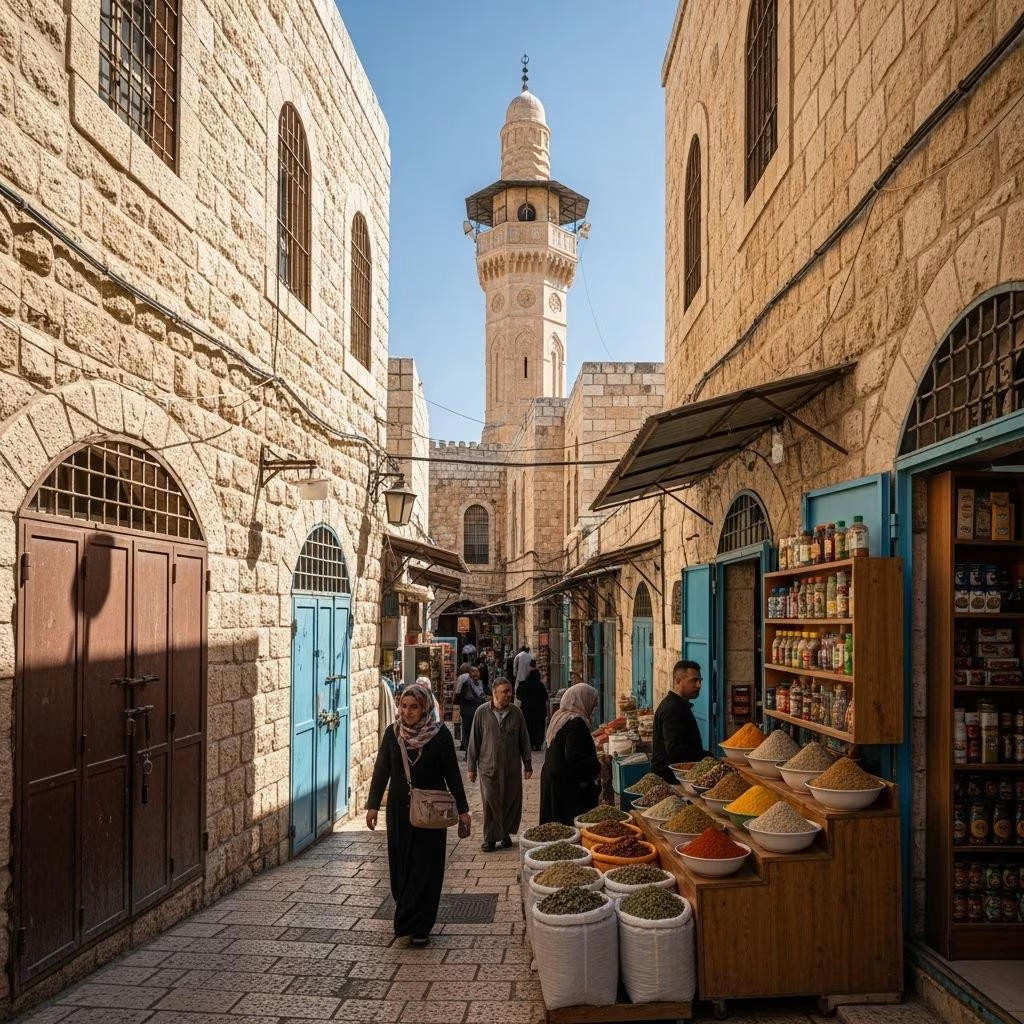
- Markets and Bazaars: A short walk away, Hebron’s souks come alive with the colors and sounds of daily commerce—vendors hawk pomegranates, olives, pastries, and the city’s famed glass and ceramics, while children dart between stalls.
- Overlapping Roofs: In parts of the old city, squatters’ apartments stand literally on top of traditional Palestinian homes. The sight of Israeli settlers on upper floors and Palestinian families below, separated by wire mesh (meant to catch refuse thrown from above), is a daily, visible reminder of the city’s uneasy “sharing.”
Daily life for Palestinians living in these areas is defined by checkpoints, surprise closures, and a constant tension between striving for normalcy and enduring the constant reminders of division.
Memories of the Intifada: Trauma in Stone
Many locals recall the worst of the violence, especially during the Palestinian uprisings, or Intifadas. Entire blocks of the old city were emptied, shops forced to close, families displaced. The walls are pockmarked by bullet holes, and faded banners commemorate both Palestinian casualties and moments of defiance.
- Checkpoints & Surveillance: Military outposts dominate street corners, their young Israeli conscripts watching from elevated towers or patrolling on foot.
- International Presence: Monitors from international missions occasionally scrawl through the city, tasked with observing human rights conditions, yet often powerless to intervene in daily frictions.
Despite this atmosphere, Hebron’s residents—Palestinians and Jews alike—cling to routines. Children head to school, shopkeepers open for business, and the call to prayer rings out over the rooftops, signaling continuity and faith beneath the unease.
Faith, History, and Identity Intertwined
Why do people choose to remain in such a fraught environment? For many, the answer lies in heritage and faith. The city’s Jewish settlers, many of them religious nationalists, see their presence as morally mandated by biblical ties and historical rights. For Palestinian inhabitants, Hebron is simultaneously ancestral home, economic lifeline, and a symbol of resistance and endurance.
Hebron has historically been a center for traditional crafts:
- Glassblowing and Ceramics: Artisans shape brilliant blue goblets and intricately painted tiles, continuing a craft tradition that dates back to Roman times.
- The Olive Harvest: Families work the fields surrounding Hebron, picking olives—a symbol of sustenance and the deep connection to the land.
Many Palestinian homes in Hebron showcase ornate mosaics and glass lamps, testifying to centuries of craftsmanship surviving against the odds. Despite military restrictions and economic hardship, the city’s soul endures in these small acts of creative persistence.
Abraham: A Patriarch Shared and Disputed
Amid the daily grind and flashpoints of tension, the figure of Abraham looms over Hebron—literally and figuratively. For Jews, Muslims, and Christians, Abraham represents a moment of spiritual kinship, the “friend of God.” Yet, what should be a point of unity instead underscores the divisions, as rival traditions manifest in physical partitions and mutual suspicion.
Within the Tomb of the Patriarchs, the bulletproof glass separating Muslims and Jews at Abraham’s tomb is at once a window and a barrier—a silent commentary on the intractable search for coexistence in this ancient city.
Everyday Struggles, Everyday Resilience
For many Hebronites, life is a daily negotiation with uncertainty—navigating security restrictions, economic challenges, and social rifts. Yet, family ties and a fierce sense of rootedness hold communities together. Gracious Palestinian hosts often welcome travelers into their homes, offering sweet tea, coffee, and an opportunity to hear unfiltered stories of endurance and aspiration.
- Education: Despite challenges, Hebron boasts several prominent schools and universities, nurturing the next generation and sowing hope for broader horizons.
- Economic Setbacks and Ambitions: Border closures, movement restrictions, and instability cripple commerce, yet many local entrepreneurs persist, adapting traditional businesses or embracing tourism in small, meaningful ways.
Challenges, Hopes, and the Path Forward
Hebron’s story is not only one of sorrow and division. For every act of restriction or aggression, there is one of outreach, hope, and determination. Palestinian and Israeli peace activists sometimes meet to foster dialogue, while international organizations work to improve living conditions and create opportunities for local youth.
- Peace Initiatives: Small grassroots projects bring together Jews and Muslims, youths and women, to work toward understanding, however modestly.
- Cultural Events: Occasional music festivals, art shows, and olive harvest celebrations offer moments of shared joy and remind all of the city’s enduring richness.
However, the road to genuine coexistence in Hebron remains long and fraught. The city is both an inspiration—timeless, beautiful, and storied—and a warning, with its stark reminders of how easily faith and history can become fuel for conflict.
Practical Tips for Travelers to Hebron
- Prepare for Intensity: A visit to Hebron is emotionally demanding—expect to encounter armed checkpoints, physical security barriers, and raw street-level tension.
- Guided Visits: Independent travel is possible, but joining a reputable guide or group offers context, safety, and deeper access to both Palestinian and Jewish narratives.
- Dress Modestly: Out of respect for local customs and conservative social norms, modest attire is recommended—especially when visiting religious sites.
- Be Open-Minded: Listen carefully to all sides. Each person you meet—Arab and Jew, guard and merchant—has a unique story that challenges easy narratives.
Frequently Asked Questions (FAQs)
What makes Hebron spiritually important?
Hebron is home to the Tomb of the Patriarchs, a site considered holy in Judaism, Islam, and Christianity. Abraham—patriarch of all three—is said to be buried here with his family, making the site a focal point of faith and history for millions worldwide.
Is it safe to visit Hebron as a foreign tourist?
While the experience is generally safe for international visitors who adhere to local guidelines and travel with experienced guides, travelers should be aware that the atmosphere is tense, with potential for spontaneous protests or security situations. Always check for current advisories before planning your visit.
Can visitors access both the synagogue and mosque sections of the Tomb of the Patriarchs?
Non-Muslims can visit the synagogue side, and non-Jews can enter the mosque at designated times. However, each section is usually reserved for worshippers of the respective faith, and access may be restricted during religious holidays or heightened security periods.
What is daily life like for residents of Hebron?
Palestinians in Hebron face difficulties including restricted movement, regular military checkpoints, closures, and economic challenges. Despite these hardships, communities remain resilient, maintaining family life, education, commerce, and vibrant cultural traditions.
How can travelers respectfully engage with locals?
- Be courteous and open-minded when discussing sensitive topics.
- Support local artisans and businesses to contribute positively during your visit.
- Acknowledge the complexities of life in Hebron, avoiding simplistic conclusions.
Final Thoughts: Lessons from Hebron
To walk through Hebron is to witness history in motion—sacred pasts and tangled presents woven into every stone and silence. Beyond the headlines, it is the people—shopkeepers, worshippers, children—who illuminate the city’s soul. Hebron challenges every visitor to see not only the divisions but also the extraordinary resilience, the dignity, and the hope that persist despite, and sometimes because of, adversity. In this troubled, beautiful city, faith, history, and humanity remain inseparable.
References
- https://www.camera.org/article/review-of-rick-steves-the-holy-land-israelis-and-palestinians-today/
- https://blog.ricksteves.com/blog/jews-and-muslims-sharing-abraham-in-hebron/
- https://www.ricksteves.com/watch-read-listen/video/tv-show/season-8/palestine
- https://www.camera.org/article/rick-steves-s-misguided-venture-into-the-israeli-palestinian-conflict/
- https://www.ricksteves.com/watch-read-listen/video/tv-show/tv-specials/holy-land
- https://blog.ricksteves.com/blog/the-lonely-hebron-walk/
- https://aptonline.org/offer/RICK-STEVES-HOLY-LAND-ISRAELIS-AND-PALESTINIANS-TODAY
- https://www.youtube.com/watch?v=4JAQJ16W6wg