Idyllic Istria: Croatia’s Enchanting Coastal & Hill Country
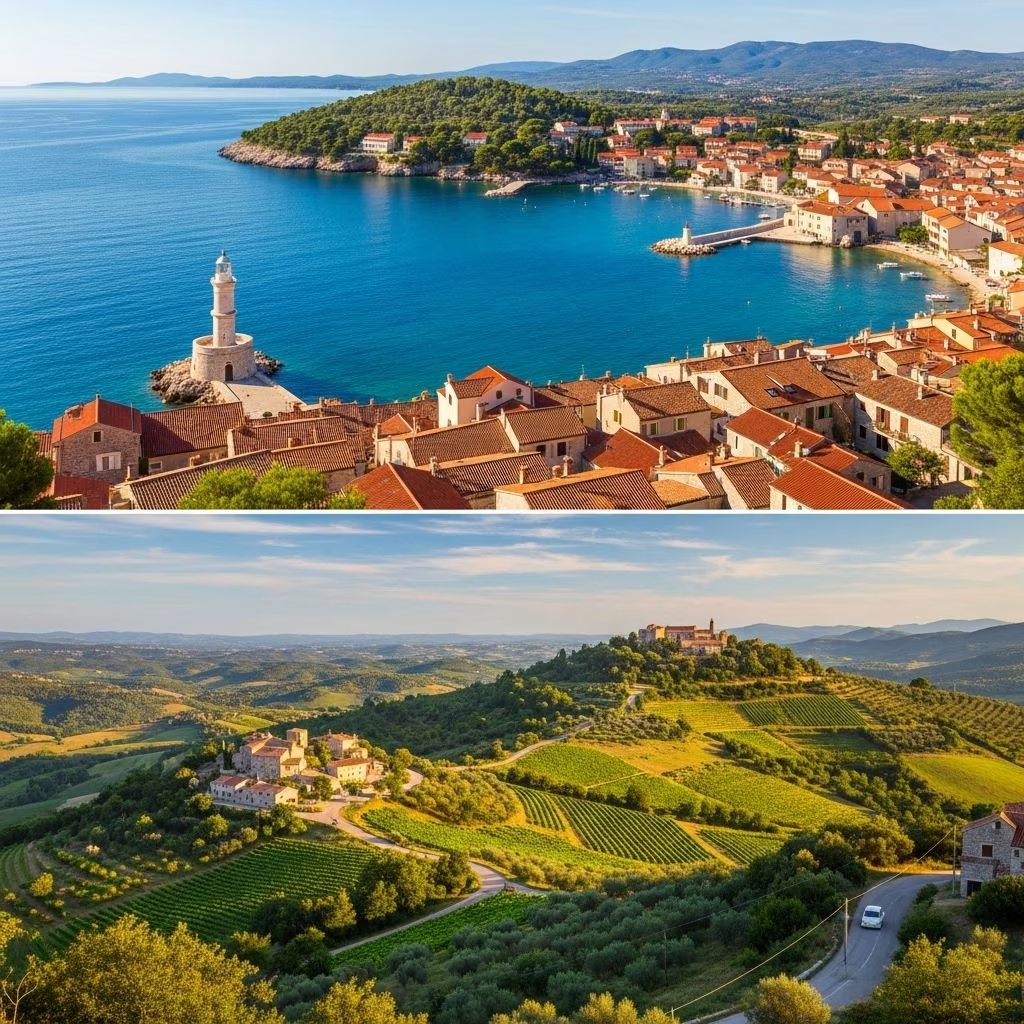
The Istrian Peninsula, rising distinctively from the northern Adriatic, is where Croatia’s rich mosaic of Roman heritage, Italian flair, and serene nature meets the Mediterranean dream. Here, coastal villages gleam with pastel hues, hill towns bask above lush vineyards, and olive groves spill over the ridges—a region that harmonizes epic history and relaxed living.
Istria at a Glance
The Istrian Peninsula juts confidently into the northern Adriatic Sea, just a stone’s throw from Italy and Slovenia. Shaped like an arrowhead, it captures travelers with its:
- Spectacular coastal towns with Venetian echoes
- Rolling interior dotted with vineyard-draped hills and scenic hamlets
- An alluring blend of Roman, Venetian, and Habsburg architectural and cultural influences
- Gastronomic treasures, from olive oil and seafood to the world’s coveted truffles
Compared to Croatia’s more famous Dalmatian Coast, Istria feels less trodden, retaining an inviting, almost Italian ambience with local twists, fewer crowds, and a gentle pace that urges you to linger.
Rovinj: The Little Venice of Croatia
Rovinj is often described as “a little Venice on a hill,” and for good reason. Its old town forms a knobby peninsula, rising dramatically from the sea and crowned by the slender bell tower of St. Euphemia’s church. Venetian influences shape its skyline, pastel-washed facades, and labyrinthine lanes, charms accented by the Mediterranean shimmer of the harbor.
Why Visit Rovinj?
- Picturesque old town: Cobbled streets snake upward through a patchwork of crumbling stone houses, flower-filled windows, and artist studios.
- Harbor life: Fishing boats bob in the marina, while locals and visitors sip espresso or Malvazija wine on lively squares.
- Venetian legacy: Once a Venetian outpost, symbolized by the winged lions carved over doorways and the Italian spoken by many residents.
- Romantic sunsets: The view from the Church of St. Euphemia is a must for sweeping vistas over the roofs and surrounding sea.
Despite its popularity, Rovinj maintains a working-fishing village character. Between the winding alleys, laundry flutters from stone balconies, and the aromas of truffle-laced pasta or grilled seafood drift from trattorias.
| Highlight | Why It’s Special |
|---|---|
| St. Euphemia’s Church | Baroque church with panoramic bell tower—climb for the best views of Istria’s coastline. |
| Carera Street | Rovinj’s lively main street, lined with shops, cafes, and galleries. |
| Harbor Promenade | Perfect for a leisurely evening stroll along the waterfront, people-watching and sunset viewing. |
| Batinic Street Art | Artisans display and sell local crafts, ceramics, and jewelry in open-air ateliers. |
Pula: Ancient Rome on the Adriatic
While Rovinj charms with romance, Pula impresses with raw history. As Istria’s largest city and an important port, Pula hums with industry, bustle, and urban contrasts—yet at its heart lies the soul of a Roman poet. Towering above the sprawl is a remarkably preserved amphitheater, alongside temples, triumphal arches, and centuries-old columns that recall an imperial past.
Roman Ruins Not to Miss in Pula
- The Pula Arena: Among the world’s best-preserved Roman amphitheaters—a fully intact, mini-Colosseum that once hosted gladiatorial spectacles.
- Temple of Augustus: A serene Roman temple in the forum square, still standing after 2,000 years.
- Triumphal Arch of the Sergii: An elegant, photogenic archway marking Pula’s historic entrance.
Outside its ancient city core, Pula may appear gritty and industrial, but give it time: the tangle of shipyards and traffic reveals unexpectedly vivid street life and excellent seafood restaurants tucked among reminders of many empires. Exploring the old town on foot unravels layers of Greek, Roman, Venetian, and modern Croatian tales.
Istria’s Hill Towns: Motovun & Grožnjan
Beyond the coast, Istria’s undulating interior harbors some of Croatia’s most atmospheric “hill towns.” Evolving under Roman, Venetian, and Habsburg hands, their medieval walls and narrow lanes command views over deep green valleys and endless vineyards. These towns channel the serene beauty of Tuscany—with far less tour bus traffic.
Motovun: A Fortress Above the Forest
Motovun stands on a 886-foot hill, its ancient ramparts overlooking cypress rows, patchwork fields, and oak forests teeming with truffles below. Inside, flagstone alleys wind up to a main square anchored by a late-Renaissance church—peek inside to see paintings by Venetian masters and marble statues of St. Stephen and St. Laurence.
- Try local specialties: Motovun’s restaurants excel in truffle dishes, handmade pasta (fuži), and hearty stews.
- Walk the ramparts: Circle the ancient city walls for panoramic vistas—especially striking at sunset.
- Festival spirit: Each summer, Motovun hosts a famous independent film festival under the stars.
Grožnjan: The Artists’ Village
Grožnjan is smaller but pulses with creativity. Inhabited since the Neolithic era, the town nearly faded from memory until revived by a new generation of artists. Today, cobbled lanes host jazz workshops, dance studios, and open galleries where painters and sculptors mingle with visitors in a laid-back, bohemian spirit.
- Jazz & arts festivals: Grožnjan’s musical soul comes alive in summer with internationally known jazz performances and arts fairs.
- Olive oil tastings: Local shops offer award-winning olive oils as well as artisanal cheeses and honey.
- History preserved: Concealed Neolithic vantage points and remnants of medieval city walls evoke centuries of watchful settlement.
Why Venture Inland?
- Experience traditional Istrian cuisine in rustic trattorias under vaulted stone arches.
- Travel scenic country lanes dappled by vineyards, olive groves, and poppies.
- Shop for regional delicacies: truffles, olive oils, honey, and handmade crafts.
- Enjoy a tranquil escape from the bustle of the more photogenic seaside hubs.
Flavors of Istria: Food, Wine, and Truffles
Istria’s gastronomy blends Adriatic freshness with rustic, Italian-inspired earthiness. It’s often considered the “Tuscany of Croatia,” not just for its scenery but for its mix of cuisine and hospitality. Culinary highlights include:
- Truffles: Local oak forests hide both prized white and black truffles, showcased in pasta, omelets (frittata), paté, cheese, and even gelato.
- Olive oil: Istrian olive oil is among the world’s finest, marked by a lush, fruity flavor.
- Malvazija & Teran wines: Local vineyards produce a refreshing white (Malvazija) and a bold red (Teran), perfect companions to the region’s fare.
- Seafood and Istrian ham: On the coast, savor fresh-caught fish alongside air-dried prosciutto (pršut) and sheep’s cheese.
Dining here is a deliberate, lingering affair. Meals unfurl in a parade of locally sourced delights, best complemented by conversation with hosts eager to share their lore—especially about truffle hunting and winemaking traditions.
Visiting Istria: Practical Tips
For travelers seeking the soul of coastal Croatia—and a dash of Italy—Istria is delightfully accessible, year-round. Whether you arrive by ferry from Venice, car from Slovenia, or domestic train, the peninsula is compact and inviting for road trips or cycling escapes.
- Best bases: Rovinj is ideal for coastal stays and atmosphere; Motovun or Grožnjan are perfect for slow-travel in the hill country.
- When to visit: Spring and early autumn offer mild weather and fewer crowds; summer features lively festivals and longer daylight.
- Getting around: Rental cars provide the most freedom for exploring inland towns and countryside lanes, though buses connect major towns.
- Language: Croatian is official, but Italian is widely spoken and understood in tourist areas.
- What to pack: Bring comfortable shoes for cobbled streets and country walks, and an appetite for culinary discovery.
Booking ahead is recommended in peak months—especially in Rovinj and during key festivals in the hill towns.
Frequently Asked Questions (FAQs)
Q: Is Istria part of Italy or Croatia?
A: Istria is in Croatia, but it was governed by Italy between the world wars and retains strong Italian cultural influences, including cuisine and language.
Q: What’s the best way to get to Istria?
A: Istria is accessible by car from Slovenia or Italy, by bus from major Croatian cities, and by ferry from Venice to Rovinj during summer months.
Q: Do I need a car to explore Istria?
A: Having a car offers maximum flexibility, especially for visiting inland hill towns and rural sights. However, it’s possible to visit main towns by public transport.
Q: What makes Istrian food special?
A: Istrian cuisine fuses Mediterranean seafood with Central European rustic flavors—don’t miss truffle dishes, olive oil, fine local wines, pršut, and fresh farm-to-table produce.
Q: Are English speakers common in Istria’s tourist towns?
A: Yes, English is widely spoken in tourist destinations and hospitality settings, especially in Rovinj and Pula.
Quick Facts: Istria at a Glance
- Location: Northwestern Croatia, bordering Slovenia and the Adriatic Sea.
- Major towns: Rovinj (seaside), Pula (Roman ruins), Motovun & Grožnjan (hill towns).
- Main attractions: Roman amphitheater (Pula), Venetian charm (Rovinj), wine roads, truffle forests.
- Population: Approx. 208,000 (entire peninsula).
- Languages: Croatian (official), Italian (widely spoken), English (common in tourism).
For those who believe travel should inspire, delight, and surprise—Istria is Croatia at its most enchanting: a meeting place of history, art, and the timeless joy of slow living.
References
- https://www.islands.com/1963206/rick-steves-croatian-hill-towns-better-coast/
- https://www.ricksteves.com/watch-read-listen/video/tv-show/croatia-adriatic-delights
- https://blog.ricksteves.com/cameron/category/croatia/istria
- https://www.ricksteves.com/watch-read-listen/read/articles/idyllic-istria
- https://www.youtube.com/watch?v=u7K4yHo5Blo
- https://community.ricksteves.com/travel-forum/croatia/istria-d1ab0a82-4b83-447e-80ad-7c7f82d876a9
- https://www.sfgate.com/travel/article/Rick-Steves-Europe-Istrian-Peninsula-2581223.php
- https://www.ricksteves.com/syndicated-content