The Zen of Travel Journaling
Among the many souvenirs one can collect on their travels, none is as enduring or personal as a travel journal. Unlike T-shirts or trinkets, a thoughtfully penned journal preserves the deep texture of your journey—the fleeting observations, candid conversations, and vivid feelings that define an adventure. In our digital age, travel journaling offers a refreshing opportunity to slow down, engage deeply, and turn fleeting moments into treasured keepsakes. Here we explore the philosophy, methods, and enduring value of journaling on the road.
Why Keep a Travel Journal?
Travel is inherently transformative. It stirs insight, unlocks creativity, and opens our minds. Yet, without active reflection, the lessons and colors of each trip easily fade. Journaling is the practice that bridges this gap, capturing the inner dialogue and outside wonders encountered along the way.
- Creates a Unique Keepsake: Unlike store-bought souvenirs, journals hold your voice, memories, and emotions—becoming more valuable with time.
- Sharpens Observation: Actively looking for details to record makes each moment richer and more vivid.
- Encourages Self-Discovery: Travel journals invite introspection, helping you relate new experiences to your broader life and sense of self.
- Heightens Appreciation: Writing about an experience anchors it, allowing you to savor and process what you might otherwise overlook.
- Inspires Others and Yourself: Re-reading journals revives lost details and can provide joy or insight for those who inherit them.
The Life-Long Ritual of Travel Journaling
The habit of capturing journeys on paper can begin at any age. Renowned travel writer Rick Steves began his journaling journey as a young teenager, tucking notes on postcards while wandering Europe. Over decades, the act became both a ritual and career—transforming observations into bestselling guidebooks and, more importantly, building a personal library of richly documented experiences.
But you don’t need the ambition to become a published writer to find value in this ritual.A travel journal is above all for you: a personal, evolving record that can chart your growth, clarify lessons, and connect fleeting moments across a lifetime of journeys.
Starting Your Travel Journal: Overcoming Barriers
- No Need to Be a ‘Writer’: The greatest misconception is that journaling requires eloquence. It doesn’t. Lists, observations, sketches, snippets of dialogue—all are fair game.
- Just Begin: Steves recommends making your very first entry before you even depart. Capture your hopes, anxieties, and intentions for the trip.
- Lower the Pressure: Most entries need not be lengthy or profound. Jot down what stands out, what moved you, or what puzzled you.
- Embrace Imperfection: Don’t edit yourself mid-journey. Raw thoughts and unfinished ideas often make for the most vivid memories when revisited years later.
How to Journal on the Road: Practical Tips and Approaches
- Small Notebook, Big Impact: Carry a pocket-sized pad for quick notes—phone numbers, impressions, or sketches—while on the move.
- Dedicated Time: Carve out a few quiet minutes each day. Early morning, a midday break at a café, or right before bed work well.
- Observe and Reflect: Let your writing mix the outer world with your inner reactions. Note not just what you see, but how it makes you feel.
- Don’t Sweat Chronology: Narratives need not be linear. Skip the mundane, and focus on the people, places, and moments that spark emotion.
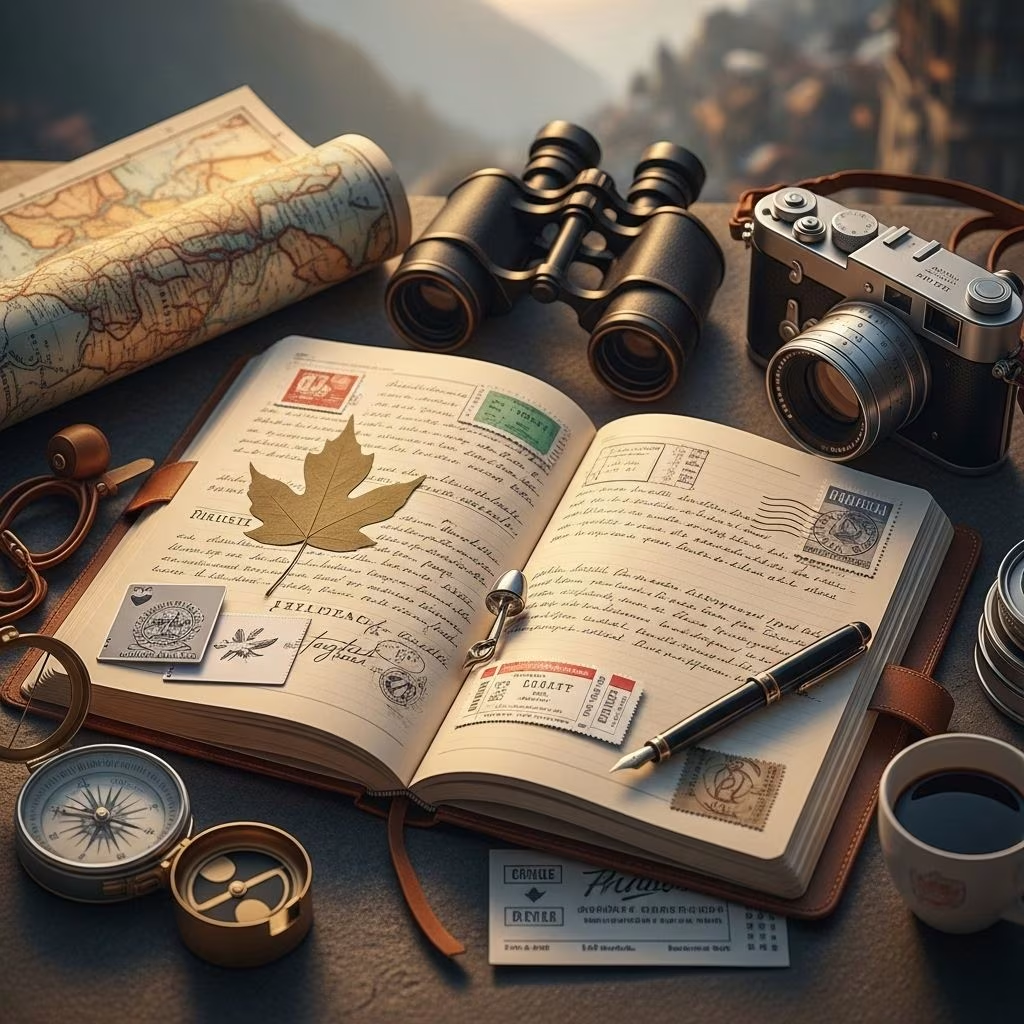
- Mix Media: Glue in ticket stubs, sketch a marketplace, paste maps, or fold in receipts. These tangible snippets will spark richer recollections years later.
- Electronic or Analog: While pen and paper offer a tactile charm, digital journaling via laptops or tablets is perfectly valid—choose what you’ll actually use consistently.
Journaling as a Tool for Deeper Encounter
Thoughtful journaling is not just a log of events—it’s a lens that can reveal the spirit of a place and its people. It strengthens the traveler’s ability to notice, compare, and question. As Steves observes, “If your life is a canvas, travels bring new color. And journaling is like being a painter who stands back every once in a while to both understand and enjoy the art as it unfolds.”
- Capture Details: Note overheard conversations, culinary sensations, or unexpected weather changes. These specifics restore the sense of immediacy long after the trip ends.
- Make Connections: Compare what you discover abroad to life at home. How are customs or attitudes different? What challenges your preconceptions?
- Reflect on Challenges: Include frustrations or mistakes—they’re often the most enlightening and make for honest, engaging entries.
- Pursue Metaphors: A street performer, a market, or a ruin can become symbols, sparking deeper musings on culture and self.
Journaling for Mindfulness and Personal Growth
Travel often shakes us out of routine, bringing about new awareness. Journaling harnesses this awareness, channeling fleeting thoughts into lasting insights. Writing during the trip—when the moment is “hot and steamy”—infuses accounts with raw energy that’s lost when memories settle or fade. Journaling serves as:
- Therapy: Processing feelings about challenges, homesickness, culture shock, or unexpected joys can be cathartic.
- Mindfulness: Sitting quietly to write clarifies what truly resonated, turning chaos into order.
- Legacy: Over time, journals become time capsules—windows into who you were, what you learned, and how you felt at specific moments.
Making Your Journal a Treasured Heirloom
A physical journal, curated and filled over the course of a trip, has a special gravitas. Bound volumes, scribbled in your own hand, gain a patina with each reading. Over decades, they can become family treasures—gifts for future generations to discover distant lands through your eyes.
- Personalize It: Select a notebook that inspires you—whether it’s leather-bound or whimsically decorated. Let it become a trusted companion.
- Add Keepsakes: Glue in pocketable souvenirs: ticket stubs, pressed flowers, or tiny sketches.
- Include Others: Invite travel companions to add their own notes or sketches, creating a collaborative story.
- Curate After the Trip: Upon return, read through your entries, organize them, or annotate photos for a vivid postscript.
Alternative Approaches: Journaling for Every Personality
Not all travelers are drawn to ritual pen-and-paper writing. Many find their own way to document and share experiences:
- Conversational Emails: Send daily updates to friends or family. Save copies to create a story arc after the journey—these can capture both anecdotal humor and heartfelt reflection.
- Photo Journaling: Accompany snapshots with quick captions or notes. Together, they become personalized visual diaries.
- Digital Apps: Use note-taking or journaling apps to capture voice memos, sketches, or geotagged memories.
- Social Media Reflections: Share long-form posts that dig deeper than surface-level updates. Later, export these for your own archive.
Common Journaling Challenges and How to Overcome Them
| Challenge | Tip for Overcoming |
|---|---|
| Perfectionism, fear of not writing well | Focus on recording impressions, not crafting literature. Future-you will value honesty over polish. |
| Forgetting to journal regularly | Set a daily routine: jot quick notes after meals, or reflect before sleep, even if for just a few minutes. |
| Finding time amid a busy itinerary | Use downtime: waiting for trains, sipping coffee, or at sites that invite reflection. |
| Losing motivation partway through a trip | Switch formats—try voice memos, sketches, or lists to keep things fresh. |
Real-World Inspiration: A Traveler’s Story
Some travelers find their own rhythm. One correspondent shared that, unable to maintain a traditional journal, she instead sent home daily emails to friends. These freeform updates, filled with humor, local color, and personal stories, ultimately became a complete oral history of the trip—preserved to enjoy long after the journey ended. This illustrates that journaling can be tailored to fit any personality or style.
Frequently Asked Questions (FAQs)
Q: Do I have to write every day?
A: Consistency adds value, but missing a day is not a failure. Even sporadic entries, if fresh and genuine, provide invaluable snapshots into your travel experience.
Q: What if I’m not a good writer?
A: Journaling is not about literary merit. It’s about honesty and personal reflection. Lists, fragments, sketches, and unedited thoughts are all perfect.
Q: Should I use paper or a digital format?
A: The best journal is the one you’ll actually use. Choose the format—analog, digital, audio, or photographic—that matches your habits and context.
Q: How much detail should I include?
A: Focus on capturing details that engage your senses, surprise you, or trigger strong emotions. These will spark the strongest memories later on.
Q: How can I turn my journal into a family keepsake?
A: Consider sharing your journal after each trip, binding it, or digitizing it for safekeeping. Adding artifacts such as sketches, photos, or mementos will make it more meaningful to others.
Through journaling, every trip becomes more than a series of places visited—it transforms into an evolving story, an inner journey as rich as the lands explored. Whether your log is a masterpiece or a simple list, the act of writing anchors your experience, creating a cherished treasure you’ll revisit for years to come.
References
- https://www.explore.com/1898137/rick-steves-travel-journal-treasured-keepsake/
- https://blog.ricksteves.com/blog/the-art-and-value-of-journaling-as-you-travel-2/
- https://blog.ricksteves.com/blog/the-zen-of-journaling/
- https://www.yolojournal.com/travel-reading/
- https://community.ricksteves.com/travel-forum/trip-reports/does-anyone-still-keep-a-written-travel-journal-anymore
- https://rolfpotts.com/dustin-grinnell/