Svalbard Bound: A Journey to Norway’s Far North
Tucked away in the Arctic Ocean, the Svalbard archipelago stands at the edge of Europe, offering travelers a glimpse into a world both bleak and breathtaking. While many dream of Norway’s photogenic fjords and bustling cities, Svalbard remains a remote outpost, its stark beauty and unique culture setting it far apart from the mainland experience. For the intrepid and the curious, Svalbard offers encounters with icy wilderness, Russian mining towns, and exhilarating adventures few places on Earth can match.
Impressions Upon Arrival: Longyearbyen and First Encounters
Most journeys to Svalbard begin at Longyearbyen, the largest settlement and logistical hub for visitors. Surrounded by jagged peaks and dusted with snow, Longyearbyen immediately feels isolated and extraordinary. Expect a frontier atmosphere and a community shaped by both scientific pursuit and a history of mining.
- Location: Situated on Spitsbergen, Svalbard’s largest island
- Population: Diverse mix of Norwegians, Russians, Ukrainians, and international researchers
- Climate: Arctic, with midnight sun in summer and polar night in winter
Visitors typically spend their first day immersing themselves in local culture and planning out excursions. Longyearbyen serves as the jumping-off point for venturing deeper into the archipelago’s wilderness.
Coastal Cruising: The Classic Spitsbergen Boat Trip
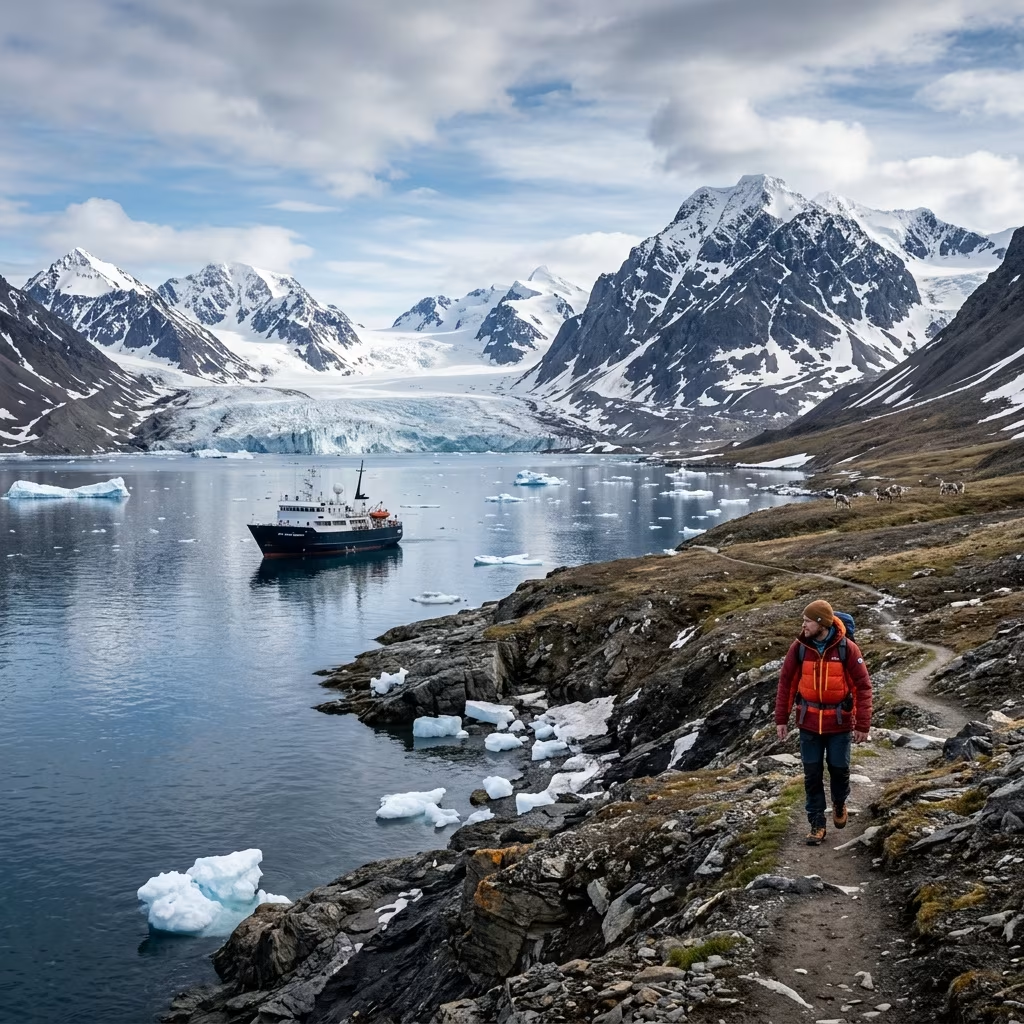
To truly grasp Svalbard’s grandeur, a day-long coastal boat trip is a popular choice. A small steamer, packed mostly with Norwegian tourists, sets out from Longyearbyen and heads down the coast of Spitsbergen. The trip offers:
- Panoramic views of dramatic black mountain ranges rising from the sea, with their snow-dusted peaks silhouetted against the horizon
- Wildlife opportunities: Seals often bask on ice floes, and polar bears occasionally haunt the more remote bays
- A sense of scale: The endless coastline and vast distances make you keenly aware of Svalbard’s immensity
Stop at Barentsburg: A Russian Mining Outpost in the Arctic
The centerpiece of the cruise is an hour-long visit to Barentsburg, a mining town that still feels like a fragment of Soviet Russia. The town is home to Russian and Ukrainian workers who maintain Svalbard’s coal industry, shipping the mineral back to the mainland.
- Distinct culture: Nearly everything feels Russian — from architecture to attitudes; the only clue you’re in Norway is the currency
- Surprising optimism: Residents, despite the town’s isolation, demonstrate a contentment unexpected for miners at the globe’s edge
- Visitor perspective: Barentsburg is one of those rare places where the visitor truly feels out of place, lending a unique flavor to Svalbard travel
Glacial Landscapes and Wildlife Encounters
On the return journey, the boat lingers near a bay clogged with pack ice and fed by an imposing glacier — a promised hotspot for polar bear sightings. While bears sometimes patrol the ice, guests may just as often spot lounging seals or catch a glimpse of other Arctic wildlife.
- Wildlife highlights: Seals, walruses, migratory seabirds, and (occasionally) polar bears
- Scenery: Sweeping vistas of glacier edges, floating icebergs, and untouched mountain backdrops
Despite the fascinating sights, some travelers describe these boat trips as engaging but not remarkably more impressive than Norway’s mainland fjord cruises. Svalbard’s attractions are sprawling and subtle, demanding time and patience to truly appreciate.
Dogsledding: The Quintessential Svalbard Adventure
For many, the highlight of a Svalbard visit is a dogsledding excursion across the snowbound wilderness. Several guide companies operate trips just outside Longyearbyen, ranging from brief outings to multi-day expeditions.
- Tangible isolation: After a short climb out of sight of civilization, sledders find themselves enveloped by 360 degrees of untouched snow, mountains, and Arctic silence
- Driving your own team: Visitors may have the chance to command their own sled and dogs, immersing themselves in a centuries-old polar tradition
- Scenic grandeur: Sledding through this landscape feels like a passage through uncharted territory, echoing the adventures of northbound explorers
- Pure experience: The cleanest air, the quietest moments, and the sheer thrill of moving through this environment by dog power
This activity often transforms a visitor’s impression of Svalbard, delivering the palpable sense of “being in the Arctic,” far removed from civilization. It is one of the earth’s truly unique experiences, impossible to duplicate elsewhere.
Beyond the Tourist Route: Longer Dogsled Expeditions
While brief sled trips are exhilarating, seasoned Arctic enthusiasts recommend multi-day journeys across Spitsbergen or even onto the glaciers and sea ice north of the island. These expeditions are typically organized in spring, when conditions are optimal for travel and wildlife viewing.
- Itinerary: Sledding treks may traverse rugged mountains, frozen valleys, and ice fields linked to the polar sea
- Wildlife viewing: Longer trips enhance chances of encountering polar bears, Arctic foxes, reindeer, and spectacular birdlife
- Arctic immersion: Sleeping in tents, traveling by dog team, and operating in isolated wildspaces provides unparalleled connection to the Arctic environment
- Tour operators: Several expert guides and companies tailor expeditions for varying skill levels and interests
Short visits to Svalbard may feel insufficient or unfair to the region’s scale and complexity. Unlike western Norway’s tightly packed fjords, Svalbard demands time and patience to reveal its essence — its attractions are neither obvious nor easily reached.
Overland and Coastal Exploration: Comparing Experiences
| Activity | Experience | Highlights | Best For |
|---|---|---|---|
| Day-long Boat Trip | Coastal cruise along Spitsbergen | Mountain and glacier scenery, visit to Barentsburg, wildlife sightings | First-time visitors, photography |
| Short Dogsled Trip | Two-hour sled on a plateau | Isolated wilderness, active participation, Arctic atmosphere | Adventure seekers |
| Multi-day Dogsled Expedition | Trek across islands/ice fields | Deep immersion, remote wildlife, camping, expert guidance | Arctic enthusiasts, wildlife watchers |
Life and Culture at the Edge: Svalbard’s Communities
Svalbard’s settlements are few and far between, mostly centered around scientific research or mining. Each community offers a distinct perspective shaped by isolation, multinational cooperation, and adaptation to extreme conditions.
- Longyearbyen: The primary administrative, scientific, and touristic center
- Barentsburg: Russian mining town with a Soviet flavor, culturally unique and welcoming to visitors
- Polar Settlements: Occasionally occupied by researchers, seasonal workers, or expedition teams
Despite its remoteness, Svalbard fosters a resilient spirit. Its residents adapt to perpetual darkness in winter, midnight sun in summer, and the omnipresent threat—and wonder—of Arctic wildlife.
Challenges of Svalbard Travel
- Logistics: Remote location and severe weather can complicate travel arrangements
- High cost: Trips to the islands are expensive and often unsuited to short, repeat visits
- Time commitment: Effective exploration requires more than a few days to do the region justice
- Wildlife safety: Polar bears are a real hazard; travelers must follow local safety advisories
Environmental Impact and Conservation
As the Arctic warms, Svalbard faces dramatic changes. Glaciers melt, wildlife habitats shift, and local people adapt to new realities. Responsible travel is essential for preserving this region for future generations.
- Support sustainable tourism initiatives
- Respect fragile local ecosystems
- Minimize environmental footprint while visiting
Frequently Asked Questions (FAQs)
Q: What is the best time of year to visit Svalbard?
A: The most popular months are late spring and summer (May–August) for milder temperatures and easier access. Winter (Feb–April) offers stunning polar night experiences and excellent conditions for dogsledding and northern lights.
Q: How do I get to Svalbard?
A: Most visitors reach Svalbard via direct flights from Oslo or Tromsø to Longyearbyen. No overland routes exist due to Svalbard’s Arctic location.
Q: What kind of wildlife might I see?
A: Svalbard hosts polar bears, seals, walruses, reindeer, arctic foxes, and abundant birdlife—especially near glaciers and remote shores.
Q: Can anyone try dogsledding in Svalbard?
A: Yes, most outfitters welcome beginners and provide training. Multi-day expeditions require some physical stamina and preparedness.
Q: Is Svalbard suitable for a short trip?
A: While brief visits offer unique sights, the archipelago’s real magic—as per many explorers—unfolds on longer, more immersive stays.
Final Thoughts: The Allure of Svalbard
At the top of the globe, Svalbard remains a place apart. Its landscapes demand both patience and awe. Whether you choose a coastal cruise, a thrilling dogsled trek, or a journey into the heart of Barentsburg’s Russian outpost, Svalbard challenges every visitor to think beyond typical travel pleasures and accept the wild, subtle, and enduring appeal of Arctic adventure.
For many, Svalbard is a once-in-a-lifetime experience. For the lucky few, perhaps it’s a reason to return—one more sledding trip, one more exploration, on islands where Earth’s most beautiful desolation reigns.
References
- https://www.ricksteves.com/watch-read-listen/read/articles/svalbard-bound
- https://www.ricksteves.com/watch-read-listen/audio/radio/programs/program-701
- https://www.intltravelnews.com/2017/exploring-svalbard-s-arctic-wilderness.html
- https://www.youtube.com/watch?v=BuimvwZrs_g
- https://community.ricksteves.com/travel-forum/norway/svalbard
- https://www.ricksteves.com/rss/podcast
- https://blog.ricksteves.com/blog/norway-old-country-new-outlook/
- https://www.ricksteves.com/watch-read-listen/video/tv-show/norways-west-fjords-mountains-and-bergen