Croatia’s Plitvice Lakes: Nature’s Water Wonderland
Deep in the heart of Croatia lies one of Europe’s most astonishing natural spectacles: Plitvice Lakes National Park, a realm where turquoise waters splash from one terraced basin to another in a dance orchestrated by nature itself. Few destinations worldwide conjure the raw intensity of Plitvice, described evocatively by travel expert Rick Steves as “Niagara Falls sliced and diced, sprinkled over a heavily forested Grand Canyon.” This UNESCO World Heritage site, Croatia’s largest and oldest national park, represents a triumph of geology, water, and time—all packed into a soothing green glen.
The Allure of Plitvice Lakes
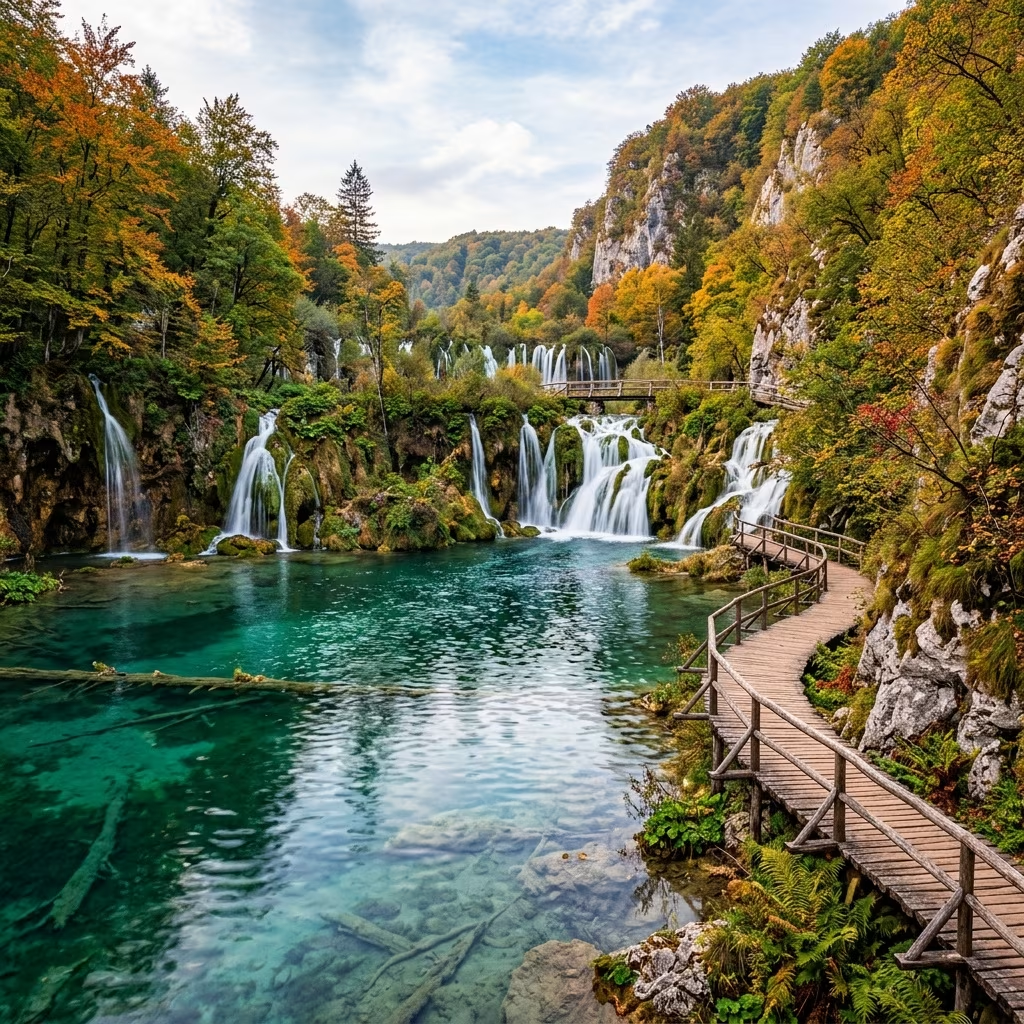
No matter the season, Plitvice Lakes inspires awe. Sixteen crystalline lakes, ingeniously laced together by more than 90 waterfalls and cascades, stretch across the landscape, divided neatly into Upper and Lower groups. Rivulets weave through forested canyons, feeding vibrant pools whose colors shift from emerald to sapphire under the sly Croatian sun. Miles of wooden plank trails and raised boardwalks thread through this watery maze, ensuring every visitor can be immersed in the spectacle without disturbing its delicate ecology.
- Lakes are fed by two rivers (Bijela and Crna) and connect in a cascading sequence.
- Water color changes due to minerals and microorganisms.
- Boardwalks offer close-up views, protecting fragile habitats.
- Countless small waterfalls and rapids dot the landscape.
Visitors often feel as though they’ve entered an enchanted garden sculpted for pleasure, adventure, and contemplation. Despite its dreamy calm, the park is blessedly compact: in just a few hours, one can walk its highlights, traverse its aquatic bridges, and still linger beneath its largest falls.
Geological Origins: Where Water, Limestone, and Moss Collide
Plitvice’s formation is a story millions of years in the making. The park is nestled in a rugged karst basin, where calcium carbonate plays a central role. As rain and rivers slowly dissolve limestone, travertine barriers grow—moss and grass channel water flow while providing scaffolding for new mineral deposition. This ceaseless cycle builds and erodes dams, shaping lakes and waterfalls in an endless metamorphosis.
- Travertine is a type of limestone deposited by airborne and aquatic minerals.
- Habitats are dynamic: dams break down, new ones develop, altering water levels and falls.
- Moss, algae, and aquatic plants steer the mineralization process.
Naturalists hail Plitvice as a “perfect storm” of climate, geology, and biology—an ecosystem in perpetual motion. The result is water that’s both exceedingly clear and dazzlingly vibrant, hosting a rich tapestry of fish, frogs, and aquatic insects that seem to thrive in this protected haven.
A Landscape Shaped by History
Though tranquil today, Plitvice Lakes has a turbulent human history. Established as Croatia’s first national park in 1949, it gained UNESCO World Heritage status three decades later. The lakes also witnessed violence: On Easter Sunday, 1991, the first shots of Croatia’s war for independence from Yugoslavia were fired here—resulting in the war’s first casualty, a park police officer named Josip Jovic.
- Park was occupied by Serb forces from 1991 to 1995.
- Local residents were displaced and became refugees until the war’s end.
- Subtle reminders of conflict can still be found in certain areas.
Today, the memory endures quietly while Plitvice has been restored as a peaceful, world-renowned destination, welcoming nearly 700,000 visitors each year from dozens of countries. Its status as a top Croatian attraction ensures steady investment in conservation and visitor infrastructure. Americans, though still a minority among tourists, are beginning to discover a park that easily outshines any manmade water park in spectacle and serenity.
Exploring the Park: Practical Tips
Plitvice Lakes National Park is designed for easy adventure, with two main entrances, ample amenities, and clear walking loops. Whether hiking solo or joining guided tours, visitors find navigation straightforward yet endlessly rewarding.
- Two official entrances (both with ticket counters, shops, and snacks).
- Lakes are split between Upper (Gornja Jezera) and Lower (Donja Jezera) regions—the Upper Lakes are wooded and tranquil, Lower Lakes dramatic and cliff-lined.
- Best explored with sturdy footwear due to damp, uneven surfaces.
- Boardwalk and trail networks offer paths suitable for all fitness levels.
- Electric boats traverse Lake Kozjak, allowing scenic passage between major sections.
Night stays offer intimacy: Arrive in late afternoon, visit Upper Lakes when crowds disperse, and enjoy morning mist before day-trippers descend. The park feels different in each season—spring brings thundering cascades and blossoms, autumn paints the forests in fiery colors, and winter, when open, creates a sparkling frozen tapestry.
Waterfalls: The Heartbeat of Plitvice
The most iconic features of Plitvice Lakes are its dramatic waterfalls. These range from delicate curtains to thundering drops, continually reshaped by nature’s artistry.
- Veliki Slap (Big Waterfall): At 78 meters, the park’s tallest waterfall and most popular photo spot.
- Galovački Buk: Another major cascade offering classic views.
- Countless smaller falls thread along the lakes, some accessible only from secluded trails.
Near the Big Waterfall, adventurous visitors may follow a branch trail to Šupljara Cave, where echoes of movie magic linger—a nod to Plitvice’s other claim to fame.
Cultural Connections: Film, Flora, and Fauna
Plitvice’s scenery feels strangely familiar to fans of classic spaghetti westerns. In the 1960s, multiple German and Italian westerns were filmed in the park and nearby regions, including the well-loved “Der Schatz im Silbersee (The Treasure in Silver Lake).” In this film, Šupljara Cave was the treasure’s hiding spot, and its enduring popularity ensures Plitvice receives German theme tours annually. The terrain—rugged, forested, with cliffs and canyons—mirrors the American West, at least to European eyes.
Beyond the silver screen, Plitvice’s biodiversity is remarkable. The park hosts hundreds of flower species, amphibians, birds, and mammals including deer, boar, and the elusive Eurasian wolf. Its aquatic habitats support thriving populations of trout and endemic fauna, protected from fishing and hunting.
- Photographers often create botanical “bouquets” from the myriad wildflowers along the trails.
- Unique geological structures—stalactites, travertine bridges—are visible in caves and certain lakes.
- Water is so pure that fish are abundant and largely unafraid of passing tourists.
Visiting Plitvice: Essential Advice
| Tip | Details |
|---|---|
| Best Time to Visit | Spring and autumn for waterfalls and forest color; summer for swimming nearby (not in park); winter for unique snow-and-ice landscapes. |
| How Long to Stay | One full day covers highlights; overnight stay allows early/late access to avoid crowds. |
| Crowds | Peak season (June–August) can be busy—arrive early, explore Upper Lakes first. |
| What to Bring | Comfortable hiking shoes, water bottles, snacks, camera, waterproof jacket. |
| Getting There | Accessible via bus or car from Zagreb (2 hours), Zadar, or Split. |
Frequently Asked Questions (FAQs)
Q: Can you swim in Plitvice Lakes?
A: No, swimming is strictly forbidden to preserve the unique ecosystem. Instead, try nearby rivers or lakes outside the park for a dip.
Q: Are guided tours available in Plitvice?
A: Yes, multiple tour operators offer guided walks, boat tours, and excursions tailored to specific interests, including ecology, photography, and history.
Q: How accessible are the trails for mobility-impaired visitors?
A: Some boardwalks are accessible, but much of the terrain is uneven; check ahead for the most suitable routes and services.
Q: Where can you eat or shop near the park?
A: Both main entrances feature snack kiosks, cafés, and souvenir shops. Several guesthouses and restaurants are located nearby for overnight visitors.
Q: Is Plitvice open year-round?
A: Yes, the park is usually open every day, though some trails and services may be restricted in winter due to ice or snow.
Why Plitvice Belongs on Your Bucket List
- Stunning natural beauty rivaling the world’s greatest lake regions.
- Unique blend of geology, history, and biodiversity.
- Accessible trails suitable for all visitors.
- Meeting place for cultures and cinematic legends.
- One of Croatia’s most cherished and well-protected destinations.
Few places weave together nature’s power and gentleness as Plitvice Lakes does. Whether you’re a hiker, photographer, history buff, or simply a lover of the outdoors, the misty valleys, vibrant waterfalls, and tranquil forests will leave an impression that endures long after you depart.
Related Resources
- Official Plitvice Lakes National Park Visitor Information
- Rick Steves Europe: Croatia Video Series
- Guided Tour Companies for Plitvice Lakes & Surrounding Regions
Embark on your journey to Plitvice Lakes and witness Croatia’s masterpiece—a flawless union of water, stone, and story.
References
- https://www.islands.com/1686690/croatia-lake-region-rick-steves-compares-to-niagara-falls-grand-canyon/
- https://www.transitionsabroad.com/publications/magazine/0411/rick_steves_croatia_plitvice_lakes.shtml
- https://www.ricksteves.com/watch-read-listen/video/tv-show/croatia-adriatic-delights
- https://www.ricksteves.com/watch-read-listen/video/plitvice-national-park
- https://www.ricksteves.com/europe/croatia/plitvice-lakes
- https://community.ricksteves.com/travel-forum/croatia/visit-to-plitvice-lakes
- https://www.ricksteves.com/europe/croatia