Pamplona’s Running of the Bulls: At the Heart of Spain’s Most Thrilling Festival
Every year, the medieval streets of Pamplona, in northern Spain, become the stage for one of the most spectacular, controversial, and iconic events in the world: the Running of the Bulls. Part of the weeklong Festival of San Fermín, this electrifying tradition has drawn both locals and international thrill-seekers since the Middle Ages and was catapulted onto the global stage by the likes of Ernest Hemingway. For nine days each July, the city pulses with a unique blend of ritual, revelry, danger, and spectacle.
The Festival of San Fermín: Ancient Rituals Meet Modern Revelry
The Festival of San Fermín, or Sanfermines, is much more than a mere backdrop for the bull run. It is a celebration deeply rooted in history, pagan harvest rites, and Christian devotion to Saint Fermín—a local martyr said to have been beheaded by Romans nearly two millennia ago. The red bandanas that participants wear are a direct nod to the saint’s bloody demise, lending a note of sobering symbolism to the carnival atmosphere.
The festival officially kicks off at noon on July 6th with a thundering firework, called the chupinazo, from the balcony of Pamplona’s City Hall. Over the next nine days, the city is transformed: traffic is banned from many central streets, homes and bars burst with music and laughter, and locals and visitors alike don white outfits with red sashes and neckerchiefs—a uniform that has become synonymous with Pamplona’s celebration.
- Traditional processions in honor of San Fermín wind through the streets each morning.
- Gigantic puppet figures—giants and big-heads—parade alongside bands and dancers.
- Bullfights, concerts, cultural events, and an endless stream of parties keep the energy flowing around the clock.
For many, the highlight, and the subject of endless debate, remains the daily running of the bulls, or encierro.
The Ritual in Motion: How the Running of the Bulls Unfolds
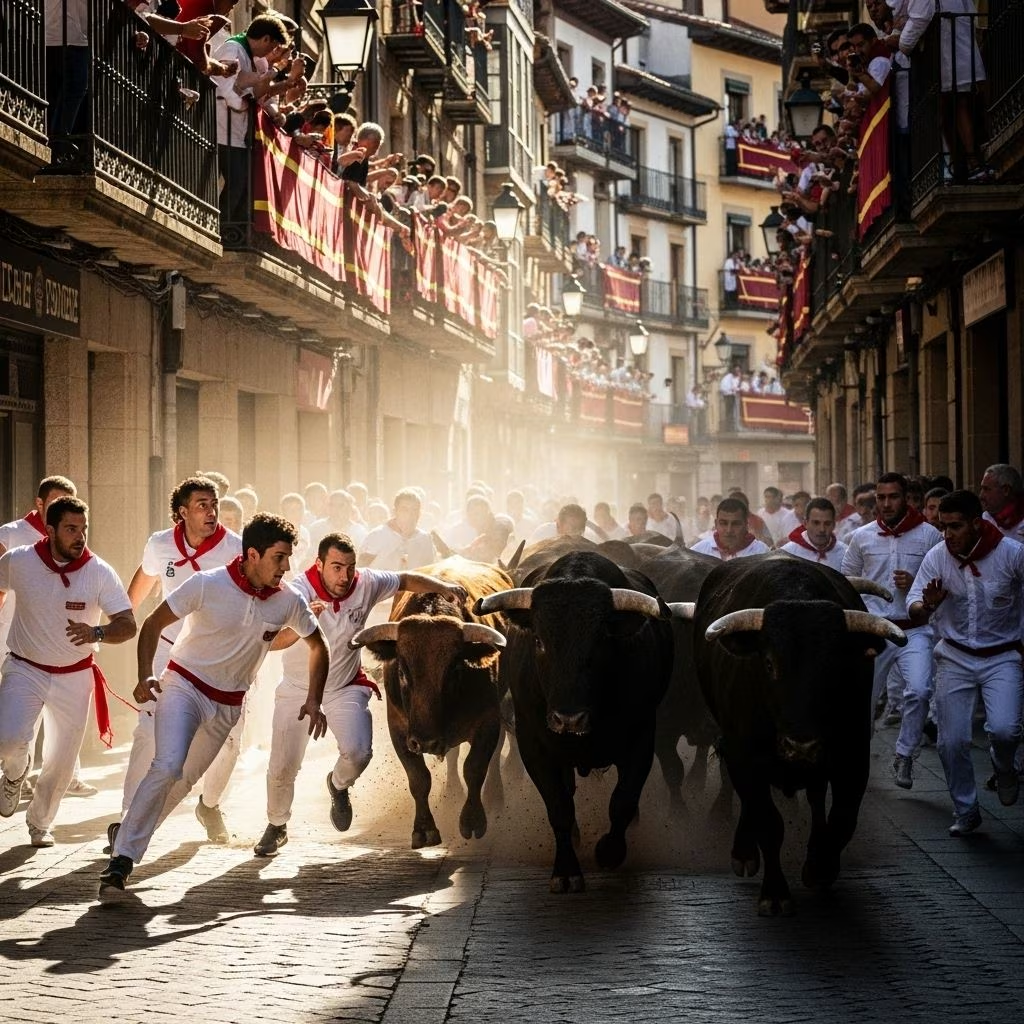
The Running of the Bulls is not simply a dash through Pamplona’s streets—it is a carefully choreographed ritual steeped in centuries-old traditions. Each morning, from July 7 to 14, at precisely 8:00 a.m., hundreds of daring runners and six burly fighting bulls (accompanied by several steers) rocket through a 875-meter route toward the city’s bullring. The chaos is over in a flash—typically in less than three minutes—but those moments are some of the most adrenaline-fueled in all of Europe.
- Preparation Begins Early: By the crack of dawn, spectators crowd along the double-layered wooden barriers that line the route. For many, it’s still late at night; the party never stops, and sleep is optional.
- Security Is Paramount: Police and cleaning crews sweep the streets clear of bottles, debris, and anyone intoxicated or ill-prepared to run. Announcements blare over loudspeakers in Spanish and English, emphasizing safety and protocol—”Do not touch the wounded. That’s the responsibility of health personnel.”
- The Runners—Mozos: Nearly all don the festival’s iconic white and red attire. The most devoted—known as mozos—view the run as an initiation, a test of courage, and a dance with fate.
- The Rocket Signals: At 8:00 a.m. sharp, the first rocket explodes, signaling the release of the bulls from their pens. A second rocket confirms all bulls are on the course, and a fresh surge of adrenaline rushes through the crowd.
Timeline of the Encierro
| Time | Event |
|---|---|
| 7:30 a.m. | Streets cleared, barriers inspected, cleaning crews finish sweep |
| 7:45 a.m. | Runners begin limbering up; nervous anticipation rises |
| 7:55 a.m. | Police make final safety announcement, runners are in place |
| 8:00 a.m. | First rocket launches—bulls are released onto the cobblestones |
| 8:02 a.m. | The run is typically finished; spectators rush to see the carnage and relief |
Experiencing the Run: Tension, Tradition, and Raw Adrenaline
The moments before the run are thick with expectation. Spectators lean over fences or crane from balconies, cameras poised, as runners hop in place—what looks like a sea of white and red pogo sticks—desperate to catch the first glimpse of the approaching herd. For a runner, picking the right segment of the route is crucial. The early stretches are notoriously dangerous; the sharp left turn at Dead Man’s Corner often proves catastrophic for unsuspecting participants and animals alike. Many experienced runners prefer the final segment near the arena, where the bulls are more spread out and the run is more technical than wild.
What draws so many to risk injury, or even death? For some, it is the test of nerve—”You know you’re really running with the bull when you feel the breath of the bull on your pants,” as one veteran runner told Rick Steves. For others, it’s about honoring tradition or achieving a once-in-a-lifetime brush with history and legend. And for many, the chance for global notoriety on televised broadcasts is impossible to resist.
- The run typically takes less than three minutes—sometimes as little as two minutes if the bulls remain together and charge at full speed.
- Each day can bring a “fast run” (bulls run like one herd), or a more treacherous “broken run” (bulls separated and nervous).
- When the bulls pass, chaos melts into relief: runners dust themselves off, nurses attend the wounded, and the city pivots from tension to triumph.
Cultural and Literary Impact: Hemingway’s Enduring Shadow
No name is more indelibly linked to Pamplona’s Running of the Bulls than Ernest Hemingway. The American author first visited for the 1923 festival and immortalized the spectacle in his 1926 novel, The Sun Also Rises. Hemingway’s vivid portrayal of the city’s wild energy and visceral connection between man and beast transformed Pamplona from a provincial outpost to a global pilgrimage site.
- Hemingway described the run as witnessing “two wild animals running together: one on two legs, and the other on four.”
- Pamplona honors Hemingway during the festival with commemorative statues, exhibits, and tributes.
- Thanks to Hemingway, attendance at the festival ballooned from tens of thousands to well over a million visitors annually.
Beyond the Run: Pamplona’s Nonstop Fiesta
The Running of the Bulls is far from the only highlight in Pamplona during San Fermín. Each day and night is packed with festivity—energetic, creative, and surprisingly inclusive:
- Parades of Giants: Towering puppet figures representing kings, queens, and other folkloric characters amuse children and adults alike, swirling through the packed avenues to the beat of traditional music.
- Street Performances & Concerts: Open-air concerts, dance shows, and street theater fill every available square and alley.
- Family Fun: Despite the event’s reputation for rowdiness, Pamplona is remarkably welcoming for families; children’s activities and daytime processions offer a gentler experience of festival spirit.
- All-Night Parties: After dark, the city transforms into a continuous street party. Revelers fill bars, plazas, and parks, many celebrating until sunrise and beyond.
As one longtime attendee reflected, the festival is “not just about the bulls, but about living life intensely, as part of a great, joyous crowd.”
Planning to Witness or Run: Tips for Visitors
Whether you’re planning to watch the spectacle or take part in the run, careful preparation is essential—not only to maximize enjoyment but to ensure safety:
- Accommodation: Secure lodging months in advance; Pamplona’s hotels, hostels, and rental apartments sell out quickly, and prices soar during festival week.
- Clothing: Wear the white-and-red uniform if you want to blend in and feel the spirit of the crowd. Closed-toe shoes with excellent grip are mandatory for runners.
- Safety First: Don’t run under the influence of alcohol or drugs. Follow police guidance—only experienced, fit individuals should attempt the run.
- Viewing Spots: Arrive early to claim a spot along the fence, or, for unbeatable views, reserve a balcony or press vantage point (sometimes available for rent from local families).
- After the Run: Many celebrate with a traditional Spanish breakfast (often churros and hot chocolate) and recount the adventure, watching replays on television.
The Aftermath: From Arena to Siesta
As swiftly as the run begins, it ends. Bullfights take place in the afternoon, the bulls meeting their fate at the hands of celebrated matadors. Streets once shaken by pounding hooves and wild energy quickly return to a convivial calm. Lockers, shop fronts, cafes, and hotels echo with stories, while survivors often crash into deep siestas to recharge for the next barrage of festivities.
By noon, the city’s rhythm shifts; “Do Not Disturb” signs line hotel corridors, testament to the all-night revelry that leaves even the hardiest partiers in need of rest. The cycle repeats, day after day, until the closing fireworks signal a year’s wait for the next San Fermín.
Ethics and Criticism: Danger, Animal Welfare, and Changing Times
The Running of the Bulls is not without its critics. The event’s lure of authentic tradition and high adrenaline comes with both human and animal risks:
- Injury and Fatality: Each year, dozens sustain injuries ranging from cuts and bruises to serious gorings. The death toll, though comparatively small, is a stark reminder of the event’s perils.
- Animal Rights: Growing numbers of activists decry the suffering inflicted on the bulls, both during the run and subsequent bullfights. Pamplona has seen protests and calls to reform or abolish the practice.
- Changing Culture: While passion for tradition remains strong, local attitudes are slowly evolving in response to wider debates about animal welfare and ethical tourism.
Nonetheless, for many Spaniards and thrill-seekers worldwide, the San Fermín festival remains an affirmation of life, courage, and communal joy.
Frequently Asked Questions (FAQs)
When is Pamplona’s Running of the Bulls held?
The event takes place every July during the nine-day Festival of San Fermín, which begins at noon on July 6th and concludes on July 14th.
How dangerous is the Running of the Bulls?
The run is inherently dangerous. While most injuries are minor, runners risk being trampled or gored. Only those physically fit and mentally alert should participate.
Can anyone participate in the run?
Yes, adults over 18 can participate if sober and physically able. Local authorities strictly prohibit intoxicated or unfit individuals from running.
Where is the best place to watch the run?
Prime spots include the double fences along the course, balconies rented from local families, and special press areas near the bullring. Arrive early to secure a good view.
What other activities can families enjoy during San Fermín?
The festival offers children’s parades, puppet shows, music performances, and daytime processions, making it family-friendly despite its wilder reputation at night.
References
- https://www.ricksteves.com/watch-read-listen/video/tv-show/northern-spain-and-the-camino-de-santiago
- http://www.worldhum.com/features/rick-steves/front-row-at-pamplonas-running-of-the-bulls-20100727/
- https://www.sfgate.com/travel/article/Pamplona-s-Running-of-the-Bulls-2331834.php
- https://www.ricksteves.com/watch-read-listen/read/articles/pamplona-feeling-the-breath-of-the-bull?extras=true
- https://www.youtube.com/shorts/27Q9DGbNRk0
- https://www.guide-collective.com/gc-magazine/f03dn9exbot4qtkj6gar9dy10tz1me