The Peloponnese: Greece’s Untamed Peninsula
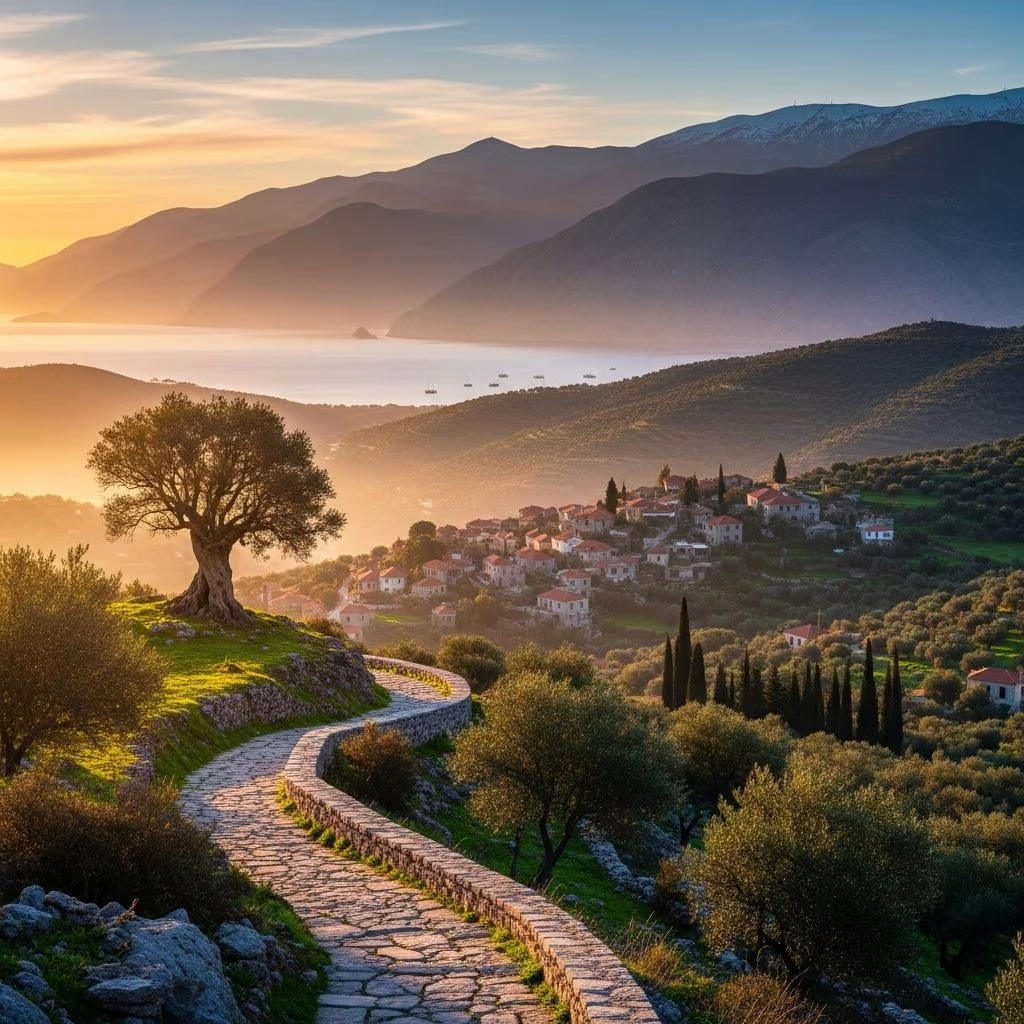
The Peloponnesian Peninsula—an hour’s drive from Athens—offers travelers a panorama of Greek history, wild landscapes, and inviting towns. It is a region where myth and memory linger on sacred stones, olive-clad hills, cliffside villages, and tranquil harbors. Despite its riches, it remains one of the least explored regions of Greece, rewarding those who venture beyond the mainstream with authentic encounters and stunning vistas.
Why Visit the Peloponnese?
- Historic Depth: From Mycenaean royalty to Ottoman fortresses, every era of Greece is represented here.
- Spectacular Landscapes: Mountain ranges, dramatic coastlines, and hidden coves create a sense of wildness rare in the Mediterranean.
- Cultural Richness: Vibrant towns, traditional villages, and some of Greece’s friendliest people.
- Unspoiled Escape: Far from mass tourism, the region retains its authenticity and tranquility.
Getting Oriented in the Peloponnese
The peninsula “barely hangs” from mainland Greece by a narrow isthmus west of Athens. Its mountainous terrain is scattered with remnants of ancient civilizations, Venetian castles, and timeless rural beauty.
| Town / Site | Highlights | Historical Importance |
|---|---|---|
| Mycenae | Hilltop fortress, Lion Gate, beehive tombs | Cradle of Mycenaean civilization (1600–1100 BC) |
| Nafplio | Elegant port, Venetian fortress, lively promenade | Greece’s first modern capital; links to nearby ancient sites |
| Epidavros | Ancient theater with world-famous acoustics | Healing sanctuary dedicated to Asklepios |
| Olympia | Temple ruins, ancient stadium | Birthplace of the Olympic Games |
| Kardamyli | Unspoiled beach town | Gateway to the rugged Mani Peninsula |
| Monemvasia | Monolithic peninsula, fortress town | Medieval and Byzantine heritage |
| Mani Peninsula | Remote stone villages, wild coast | Fiercely independent history, clan culture |
Nafplio: Harbor of History and Relaxation
Nafplio, once the capital of modern Greece, remains its finest midsized town. Nestled on the coast, it boasts an elegant old town, inviting harborfront cafés, and a cliff-topping fortress with sweeping views. The port’s couches and bars attract travelers and locals alike, who linger into the evening for fish dishes and the gentle Mediterranean atmosphere.
Nearby sit ancient Mycenae and Epidavros—perfect for day trips into Greece’s legendary past.
Mycenae: Kingdom of Ancient Legends
Towering above the Argolid Plain, Mycenae was the hub of a Bronze Age civilization that predated even ancient Athens. Visitors can wander through the Lion Gate, peer into massive beehive tombs, and imagine the era when kings ruled with mythic authority. The site’s connection to Homeric legends and the Trojan War is palpable in every stone.
Epidavros: Drama and Healing
The sanctuary at Epidavros is home to the best-preserved ancient theater in Greece. With more than 12,000 seats and flawless acoustics, it once entertained pilgrims seeking cures from Asklepios, the Greek god of medicine. Epidavros was not just a place of entertainment—it was the most famous healing center in the Greek world. In 400 BC, its hospital complex drew the sick from across the Hellenic world, hoping for miracles at the hands of doctor-priests.
- Key Sites at Epidavros:
- Theater of Epidavros
- Sanctuary of Asklepios
- Ruins of hospitals and sick wards
Did You Know?
Even today, the acoustics of the theatre allow an unamplified voice on stage to be heard perfectly at its highest tiers—a marvel of ancient engineering.
Olympia: Where the Games Began
Nestled among shady groves, Olympia evokes the spirit of ancient athletes and the marvels of religious ritual. It was, above all, a sanctuary dedicated to Zeus, its temples rising in reverence to Greece’s supreme deity. The Olympic Games, hosted here for over a millennium, drew participants and spectators from all corners of Greece.
The ruins—especially the ancient stadium and museum—offer an immersive journey through history and legend.
- Top Olympia Experiences:
- Visit the Temple of Zeus
- Walk the original Olympic track
- Explore the local museum’s masterpieces
Monemvasia: Fortress over Waves
Jutting into the blue of the Aegean, Monemvasia is Greece’s “Gibraltar”—a fortress town atop a massive rock peninsula. Its traffic-free cobbled lanes and blend of Byzantine and Venetian architecture evoke centuries of history. Million-dollar views meet medieval romance as you stroll through archways and gaze out over the glittering sea.
The Mani Peninsula: Greece’s Untamed South
Of all the Peloponnese’s regions, Mani is the most remote and mysterious. Divided from the rest by forbidding mountains, it has a reputation for wildness, independence, and stark beauty. In the Middle Ages, pirates and brigands forced villages up into the hills—and an epidemic of violent blood feuds shaped local culture for centuries. The Maniots, fiercely proud, guarded their autonomy, even as population loss and feuding continued into the twentieth century.
- What to Expect in Mani:
- Bare, wild landscapes as you circle the peninsula’s tip
- Ancient stone towns perched above the coastline (Vathia is a haunting highlight)
- Old churches adorned with fading frescoes
- Few tourists—off-the-beaten-path adventure
Driving is essential to fully experience Mani’s rugged beauty—twisting roads wind through villages that seem almost forgotten by time.
Culture, Cuisine and Daily Life
Peloponnese towns invite leisurely exploration. Harborfront promenades feature bars and tavernas serving fresh fish and classic Greek cuisine. Small cafes and restaurants encourage guests to linger—whether in sunlit squares or hidden lanes surrounded by Venetian and medieval architecture.
- Must-Try Peloponnese Dishes:
- Freshly grilled fish and seafood
- Olive oil-rich salads
- Slow-cooked lamb and vegetables
Beyond food, Peloponnese hospitality is legendary—locals are proud of their traditions and eager to share them with visitors.
Ancient and Modern History
The Peloponnese has witnessed the rise and fall of empires. Ancient Greeks built palatial Mycenaean cities and golden-age temples. Romans and Byzantines stamped their authority, followed by Venetian fortresses. In the 15th century, the region became part of the Ottoman Empire. Independence finally arrived in the 19th century, after centuries of struggle.
- Historical Highlights
- Mycenae: Center of Greece’s Bronze Age
- Epidavros: Healing and drama
- Olympia: Religious and athletic glory
- Monemvasia: Medieval stronghold
- Mani: Bastion of autonomy and feuds
Nature and Landscape
The peninsula’s terrain is as varied as its history. Stark mountains, olive groves, and jagged coastlines shape the landscape. The winding Mani hills recall the mythic labors of Hercules. Travelers can hike among ruins, wander wild beaches, and explore caves like Pyrgos Dirou.
Essential Tips for Travelers
- Renting a car is the best way to explore off-the-beaten-path villages and attractions.
- Allow time for leisurely meals; Greek hospitality flourishes at the table.
- Consider basing in Nafplio—the ideal jumping-off point for excursions to Mycenae, Epidavros, and beyond.
- For the Mani Peninsula, plan for at least a full day’s drive around its remote southern tip.
Frequently Asked Questions (FAQs)
What is the best time to visit the Peloponnese?
The region is delightful from April to October. Summer brings long, warm days and lively towns, while spring and fall offer mild weather and fewer visitors.
Is the Peloponnese suitable for self-driving tours?
Yes; in fact, self-driving is ideal for flexible exploration of remote landscapes, such as Mani and Vathia. Roads are generally good, but some mountain routes are winding and narrow.
Are the ancient sites accessible to visitors?
Most major ruins—Mycenae, Epidavros, Olympia—have well-maintained paths and signage. Museums offer context and artifacts to complement your visit.
Can I travel between major towns by public transport?
Intercity buses connect Nafplio, Olympia, and Monemvasia, but rural areas like Mani require a car. Organized tours are an alternative for those who prefer not to drive.
How does the Peloponnese compare to the Greek islands?
The Peloponnese provides as much charm as the islands, but with fewer crowds and more direct immersion in Greek history and culture.
Final Thoughts: The Heart of Greece Awaits
The Peloponnese is a journey through time. Ancient athletes and poets, Byzantine monks and Venetian merchants, rugged clans and modern Greeks—all have left their mark. Today’s traveler finds a landscape both wild and welcoming, epic and intimate. Those seeking authentic Greece will find it here, cradled in the ruins and rhythms of this unspoiled peninsula.
References
- https://www.tripadvisor.com/ShowTopic-g189483-i1277-k7397532-o10-Rick_Steves_Tour_vs_DIY_Itinerary-Peloponnese.html
- https://www.ricksteves.com/watch-read-listen/video/tv-show/greeces-peloponnese
- https://www.ricksteves.com/europe/greece/peloponnese
- https://www.ricksteves.com/watch-read-listen/read/articles/the-peloponnese-greeces-unspoiled-escape
- https://blog.ricksteves.com/blog/highlights-of-the-peloponnese/
- https://blog.ricksteves.com/blog/greeces-peloponnese-peninsula/
- https://www.ricksteves.com/watch-read-listen/read/articles/greeces-top-ten-stops
- https://community.ricksteves.com/travel-forum/greece/nice-article-on-peloponnese