Delving into Derry: Ireland’s Gateway to History and Rebirth
Among the patchwork of Ireland’s storied cities, Derry (also officially known as Londonderry) stands apart as a living tapestry of conflict, endurance, and transformation. With its formidable 400-year-old walls, Derry bridges centuries of contested history—it is Northern Ireland’s cultural heart and an unmissable stop for anyone seeking to understand the country’s complex soul.
The Walled Wonder: A Fortress Steeped in History
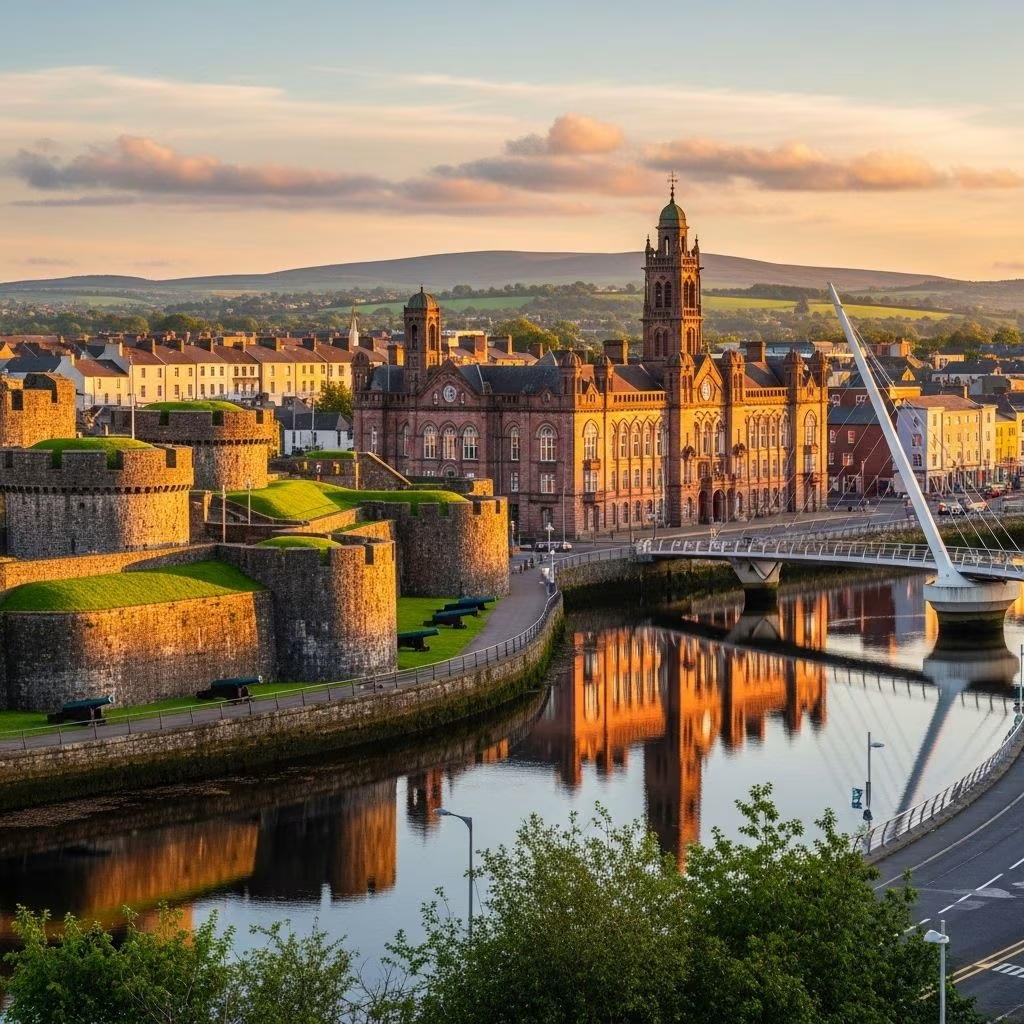
Derry’s most defining feature is its mile-long stone rampart, encircling the historic core. Raised between 1613 and 1618, these imposing walls—towering nearly 20 feet high and equally thick—were engineered by English and Scottish settlers as unyielding protection against the Irish. Today, a walk atop these battlements is a captivating promenade through time, offering panoramic views and a unique perspective on the city’s layout and turbulent legacy.
- Derry is the only fully walled city in Ireland, and one of the best-preserved fortified cities in all of Europe.
- The circle of stone has been called the city’s “necklace”—a symbol of both division and endurance.
- Twenty-four cannons still stand sentry, a reminder of Derry’s strategic significance and the violence endured here over centuries.
Walking the walls, visitors pass gateways named for prominent patrons (Shipquay, Butcher, Bishop, Ferry, and Double Bastion) and are treated to the classic 17th-century grid street plan unfurled below.
The Siege of Derry: Faith, Identity, and Unyielding Resolve
The walls’ most dramatic trial came during the Siege of Derry in 1689, a pivotal episode in both Irish and British history. After Catholic King James II was deposed and replaced by Protestant King William III, Derry became the last Protestant holdout against James’s campaign to retake the throne.
- For 105 desperate days, Derry’s defenders—led by the “Apprentice Boys”—resisted bombardment and starvation after slamming the city gates shut against James’s forces.
- Eventually, relief came by ship, and the siege was broken. This victory remains a formative legend in the Unionist and Protestant traditions.
- The site of the siege—Windmill Hill and the relics of an ancient windmill—highlight the strategic heights fiercely contested during the siege.
Each August, the Orange Order commemorates the siege’s end with parades and re-enactments, symbols of survival for some and reminders of sectarian division for others.
Names and Identities: Derry or Londonderry?
Even the city’s name is a window into its fractured past. To most locals and Irish Nationalists, it’s Derry. To Unionists, it’s Londonderry. The question is not just semantics—it reflects deep-seated political and religious affiliations.
- “Londonderry” was the name bestowed in the 17th century after the London-based guilds were charged with building and colonizing the city.
- Catholic and Nationalist residents overwhelmingly use “Derry,” while “Londonderry” endures in official British designations.
- This duality crystallizes the complex nature of modern Northern Irish identity and memory.
Cultural Crossroads: Walking Through Derry’s Old City
Setting off from the walls, visitors plunge into a compact but buzzing old town. The city’s maze of narrow streets, vibrant murals, and diverse neighborhoods tell stories of both division and creativity.
- St. Columb’s Cathedral—a solemn 17th-century church—stands as a spiritual beacon for many Protestants and a vestige of the city’s founding ethos.
- The Guildhall: an iconic Victorian building, often used for civic occasions, concerts, and exhibitions. Its ornate neo-Gothic interior and stained-glass windows recount Derry’s evolving history.
- Double Bastion: An overlook on the wall providing scenic and strategic views over the Bogside, the working-class Catholic district that became a flashpoint during the Troubles.
- First Derry Presbyterian Church: With roots back to the Plantation of Ulster, the church touches on the story of Scots-Irish migration and community resilience through periods of both tolerance and repression.
The Bogside: Murals, Memory, and the Troubles
Below the walls, the Bogside district is etched into modern history as an epicenter of civil rights agitation and tragedy. From the late 1960s to the 1998 Good Friday Agreement, Derry was repeatedly in the global spotlight during the period known as the Troubles.
- The Bogside’s sprawling murals—colorful, somber, and fiercely political—vividly narrate decades of struggle, resistance, and aspiration for justice and peace.
- Key locations:
- Free Derry Corner: The whitewashed gable emblazoned with ‘You Are Now Entering Free Derry’ became the unofficial gateway to a self-declared autonomous zone, echoing both local resolve and the influence of America’s civil rights movement.
- Bloody Sunday memorial: A somber granite obelisk and series of plaques commemorate the events of January 30, 1972, when British troops opened fire on unarmed civil rights demonstrators, killing 13.
- These events remain fiercely resonant, shaping Derry’s identity today—a place where communal memory is both painful and formative.
Religion, Emigration, and Cultural Intersections
Derry’s story cannot be told without referencing the diverse religious, political, and cultural traditions that have converged—and often clashed—here.
- The Partition of Ireland in 1921 transformed Derry into a border city and created a majority-Catholic urban population within a Protestant-majority Northern Ireland. Years of discrimination and marginalization fueled community grievances and spurred emigration—particularly among Presbyterians and Catholics.
- The city’s Presbyterian legacy, most visible at First Derry Presbyterian Church, links Derry to the wider Scots-Irish diaspora, particularly in America, where many descendants of siege survivors and emigrants played key roles in American history.
- Modern Derry is characterized by a renewed spirit of inclusion and pluralism, with churches, chapels, and community centers positioned side by side amid the echo of old divisions.
Modern-Day Derry: Resilience, Art, and Optimism
While Derry’s wounds run deep, the city has emerged as a thriving hub of art, music, literature, and optimism. Rejuvenated public spaces, festivals, and creative industries now define its modern face.
- Derry Halloween: Drawing thousands each year, the city’s Halloween celebration—famed as Europe’s largest—transforms Derry into a carnival of communal spirit.
- Peace Bridge: A strikingly modern pedestrian crossing spanning the River Foyle, physically and symbolically linking once-divided communities.
- Vibrant pub scene: Local watering holes, from music-filled Irish bars to cozy gastropubs, serve as gathering places for storytelling, live music, and cross-community engagement. Visitors are encouraged to be mindful of local sentiments and history when navigating the city’s social spaces.
Efforts at redevelopment, reconciliation, and new cultural institutions—including the Tower Museum and Museum of Free Derry—offer powerful testimonies to the spirit of survival, coexistence, and hope.
The Essential Derry Walking Tour: Sites Not to Miss
- The City Walls: Complete the full loop for historic insight and gorgeous views.
- St. Columb’s Cathedral: An emblem of Protestant heritage and city founding.
- Guildhall: For its stunning architecture and stained glass.
- Free Derry Corner and Bogside murals: For poignant visual storytelling of the city’s modern history.
- Peace Bridge: Symbolizing unity, with photo opportunities over the River Foyle.
- The Tower Museum: Detailed displays of Derry’s evolution, from its monastic roots to the present day.
- Local pubs and music venues: For traditional sessions and a taste of Derry’s welcoming energy.
Comparing Derry with Other Irish Destinations
| City | Feature | Historical Significance | Atmosphere |
|---|---|---|---|
| Derry | Fully intact 17th-century city walls, murals, Peace Bridge | The Troubles; Siege of Derry; Civil Rights | Compact, vibrant, historical, artistic |
| Dublin | Large capital city, River Liffey, museums | Norman, Viking, 1916 Rising, Literary | Energetic, cosmopolitan |
| Belfast | Titanic Quarter, murals | Shipbuilding, Troubles | Industrial, dynamic, edgy |
| Galway | Latin Quarter, Salthill prom, music | Medieval trading, Arts | Bohemian, relaxed |
Frequently Asked Questions (FAQs)
Q: Is Derry safe for tourists today?
A: Yes, Derry has undergone significant regeneration and is considered safe for visitors. Like any urban destination, exercise standard precautions, but most tourists find Derry welcoming and lively.
Q: Why do some maps say Londonderry and others Derry?
A: The name reflects ongoing political and religious identities. ‘Londonderry’ is the official British name, while ‘Derry’ is favored by Irish Nationalists and most locals.
Q: What are the top things to see in Derry?
A: Don’t miss the City Walls, St. Columb’s Cathedral, Guildhall, Bogside murals, Free Derry Corner, and the Peace Bridge. The Tower Museum and Museum of Free Derry offer excellent historical context.
Q: How can I learn more about the Troubles while in Derry?
A: The Museum of Free Derry, informative walking tours, and speaking with locals in the Bogside are excellent ways to gain insight into the city’s recent history.
Q: Is it appropriate for non-locals to join in Derry’s public commemorations or festivals?
A: Visitors are welcome and often encouraged to partake in festivals and public events, but it’s wise to respect the sensitivities and traditions that run deep within the community.
References
- https://www.explore.com/1854647/rick-steves-derry-northern-ireland-underrated-destination/
- https://www.irishamericanmom.com/a-guided-tour-of-derry-with-an-american-twist/
- https://classroom.ricksteves.com/videos/derry-or-londonderry-depends
- https://www.ricksteves.com/watch-read-listen/read/articles/delving-into-derry
- https://www.ricksteves.com/europe/ireland/derry
- https://www.sfgate.com/travel/article/Pretty-Derry-Ireland-has-painful-history-6775856.php
- https://www.ricksteves.com/watch-read-listen/audio/radio/program-312
- https://community.ricksteves.com/travel-forum/ireland/derry-to-sligo