Italian Sports: A Living Tradition of Passion and Community
Italy’s streets come alive with the rhythms of sport—from the deafening roar of soccer stadiums to the gentle clink of bocce balls in city parks. When you wander through an Italian city or village, you might witness spontaneous celebrations, hear shouts from a nearby bar during a match, or see families coming together in animated debate about their beloved teams. Italian sports are more than pastimes; they are a mirror of national pride, community identity, and even local rivalry. Let’s explore the world of Italian sport, where both heart and tradition reign supreme.
Italy’s Sports Landscape: More Than Just Soccer
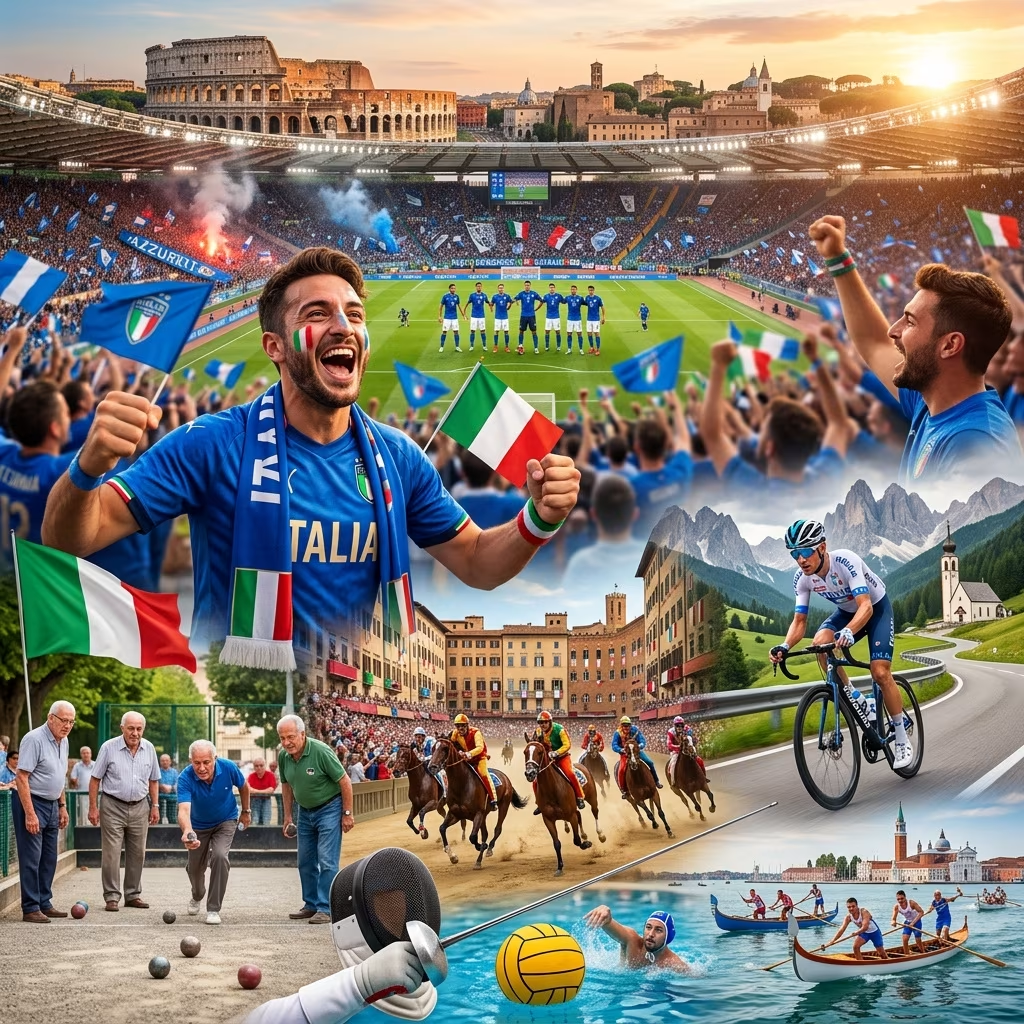
The heartbeat of Italian sports undoubtedly belongs to soccer—il calcio—with its unique rituals and deep-seated history. But the nation’s athletic enthusiasm goes far beyond the pitch, embracing chaos, elegance, speed, and sometimes, the profoundly quirky.
- Soccer: The omnipresent sport with the deepest roots and most fervent following.
- Motor racing: Home of Ferrari, Formula One, and wild motorcycle racetracks.
- Cycling: Centered around dramatic competitions like the Giro d’Italia.
- Winter sports: Skiing and snowboarding thrive in the northern mountain regions.
- Traditional games: Such as bocce and the historic Palio di Siena horse race.
- Emerging sports: Basketball and new American trends, slowly gaining ground.
Soccer: Italy’s Undisputed Sporting Obsession
In Italy, soccer is much more than a sport; it is, as one Italian said, “the religion of the country.” On match nights, the entire atmosphere changes: neighborhood bars overflow with passionate fans, while city streets erupt with callers blaring car horns and waving flags after a big win. Even the country’s largest daily newspaper is dedicated entirely to sports–primarily soccer.
Some core aspects of Italy’s soccer culture:
- The top league is Serie A, featuring clubs like Juventus, AC Milan, Inter Milan, AS Roma, and Napoli.
- Star players command celebrity status, rivaling film and pop stars in popularity.
- Fans often inherit their team allegiance from family; supporting a rival club can even be taboo within households.
- Violence and intense rivalry are not uncommon, necessitating strict policing and stadium rules to separate home and visiting fans.
- Soccer is a year-round topic—discussed, debated, and lived out well past the final whistle.
How an Italian Soccer Week Looks
The schedule for top Italian soccer players is a grueling juggling act:
- Sunday: Compete for their club in a crucial Serie A match.
- Mid-Week: Represent Italy internationally in World Cup or European qualifying matches, sometimes playing against their own club teammates.
- Weekends/Special Dates: Participate in the Champions League—continental showdowns watched by millions.
- Occasionally, play friendly matches against other top international squads.
This relentless pace means soccer’s narrative is continuous and ever-evolving, captivating Italian audiences year-round.
Motor Racing: Speeding into Italian Culture
While soccer dominates, motor racing holds its own as an iconic Italian sport, especially in the home country of high-performance automakers like Ferrari, Maserati, and Alfa Romeo.
- Formula One / Grand Prix: Italy’s races, such as the Monza Grand Prix, are legendary events in the motorsports calendar.
- Motorcycle racing (MotoGP): Italians have a long-standing love for powerful bikes and legendary riders.
- On any given weekend, it’s not uncommon to find fans crowding bars and piazzas to watch the latest races.
- This love affair often starts young, with many Italians first mastering a Vespa before cheering for elite racers.
Cycling: Pedaling Through History and Landscape
Italy’s passion for cycling runs deep, blending sporting tradition with the country’s awe-inspiring terrain.
The most notable event is the Giro d’Italia, a multi-stage race that draws massive crowds and festive celebrations in towns along the route. For nearly a month, media and public attention fixate on daily leaderboards, dramatic mountain climbs, and individual heroics.
- The Giro d’Italia transforms each host city into a carnival, with decorations, markets, and parades accompanying the race.
- Elite cyclists become household names, and their exploits are closely followed on TV and in print.
- Amateur cycling is also popular; locals of all ages ride for health, pleasure, or serious competition.
Other Popular Sports in Italy: From Bocce to Winter Thrills
Bocce: A Game for All Ages
Bocce, a traditional Italian lawn game akin to boules, is both spectator and participation sport. It’s played wherever a small patch of gravel or dirt can be found, from village piazzas to urban parks. The game’s simplicity and accessibility make it a favorite among young and old alike, providing a vital social outlet in many communities.
Winter Sports
Italy boasts world-class ski resorts in the Alps and Dolomites, attracting both local and international skiers and snowboarders. Alpine sports gain particular attention during Olympic years, when national pride runs high for homegrown athletes in events like downhill skiing and bobsledding.
Tennis and Golf
Both tennis and golf have dedicated followings. Tennis stars such as Adriano Panatta and Flavia Pennetta have inspired new generations, and major tournaments like the Rome Masters feature international fields.
Golf, though less pervasive than in some countries, is nonetheless part of Italy’s growing international sports profile, targeting younger professionals and tourists.
Traditional and Unique Italian Sports
Palio di Siena: A Medieval Relic
No examination of Italian sport is complete without the Palio di Siena, a centuries-old horse race run through the medieval city’s Piazza del Campo. Families, neighborhoods, and entire districts rally behind their chosen horse and rider, resulting in fierce (sometimes violent) displays of loyalty. The Palio’s rules are minimal; strategy, intrigue, and sometimes sabotage play crucial roles.
- The race is intense, dangerous, and brief—a few frantic laps around the piazza.
- Preparation and rivalries, however, can last the entire year.
- Winning brings immense local prestige and is celebrated with parades, feasts, and very vocal pride.
Emerging Trends: American Sports and Modern Fads
While baseball, American football, and hockey remain marginal, the impact of globalization has nudged some American sporting trends into Italian consciousness.
- Basketball has grown rapidly, now supporting professional leagues and sending both Italian players and coaches to top positions in the NBA.
- Extreme sports, beach volleyball, and skateboarding attract Italian youth in cities and along the coast.
- The NFL does maintain a “farm league” in Europe, though no teams are based in Italy.
- Interest is driven mostly by youth and cities with universities, reflecting broader cultural shifts.
Sportsmanship, Fandom, and Social Rituals
Italian fandom is intense, communal, and often theatrical. Whether at the stadium or around a TV in a neighborhood cafe, fans are rarely passive spectators. A few social customs stand out:
- Team loyalty is serious business—childhood allegiance often dictates lifelong fandom.
- Match rituals: Before, during, and after wins or losses, it’s common to see fans singing, waving flags, and setting off fireworks.
- Victory means car parades, horn honking, and spontaneous street celebrations, especially in major cities like Rome, Milan, and Naples.
- Media coverage amplifies every match, especially when the national team is involved. Entire editions of newspapers and prime-time TV coverage are dedicated to analysis, gossip, and post-game debates.
The communal nature of Italian sport means that victories and defeats are shared; they help define what it means to belong to a city, a family, or even the nation itself.
Frequently Asked Questions (FAQs)
Q: What is the most popular sport in Italy?
A: Soccer (il calcio) is by far the most popular and influential sport throughout Italy. Big matches dominate public life, and top clubs attract huge national and international attention.
Q: Are there any uniquely Italian sports?
A: Yes, bocce and the Palio di Siena are distinctively Italian, with centuries-old roots and unique local customs.
Q: Why are Italian sports fans so passionate?
A: Sport—especially soccer—is closely intertwined with family, regional history, and local pride. Supporting a team is often a matter of identity passed down generations, and victories or defeats are celebrated (or mourned) as a community.
Q: How dangerous are stadium experiences in Italy?
A: While the atmosphere can be raucous and rivalries sometimes spill into violence, stadiums maintain strict security and segregated seating for home and visiting fans. Most matches are safe when standard precautions are observed.
Q: What are the best times for visitors to experience Italian sports?
A: Anytime during the Serie A soccer season (generally late August to May) offers peak excitement. Summer months are ideal for watching the Giro d’Italia cycling race, while winter is best for skiing and snowboarding in the Alps.
Conclusion: The Enduring Magic of Italian Sport
In every corner of Italy, from the bustling north to the sun-baked south, sports are woven into the fabric of society. Whether roaring for a local soccer team, marveling at world-class racers, or cherishing traditional games in a centuries-old piazza, Italians reveal their passion, unity, and the enduring value of play. To understand Italy is to understand its love of sport—a celebration of both individuality and community, history and modernity, pride and joy.
References
- https://www.ricksteves.com/watch-read-listen/read/articles/understanding-football-in-italy
- https://www.ricksteves.com/watch-read-listen/read/articles/italian-sports
- https://www.ricksteves.com/watch-read-listen/read/articles/when-in-europe-succumb-to-soccer-fever
- https://www.ricksteves.com/watch-read-listen/video/tv-show/alps
- https://www.ricksteves.com/syndicated-content
- https://community.ricksteves.com/travel-forum/tech-tips/watching-us-baseball-games-in-europe-italy-mexico
- https://www.ricksteves.com/watch-read-listen/read/articles
- https://www.ricksteves.com/watch-read-listen/video/tv-show
- https://www.ricksteves.com/europe/italy
- https://www.sfgate.com/travel/article/Rick-Steves-Europe-Communicating-in-Italy-5799136.php